Browsing: La Scena Online

La Scena Online is the digital magazine of La Scene Musicale.Contents: News, Concert reviews, CD reviews, Interviews, Obituaries, etc; Editor: Wah Keung Chan; Assistant Editor: Andreanne Venne
ISSN: 1206-9973

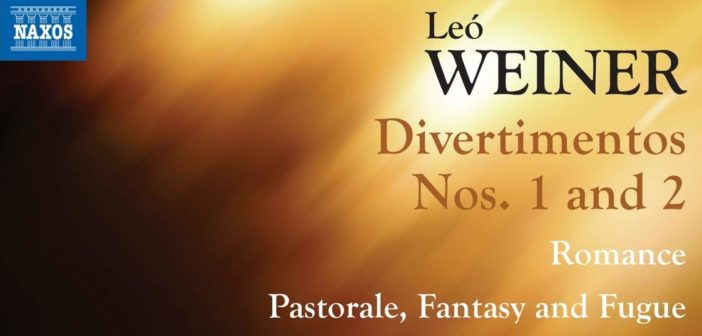
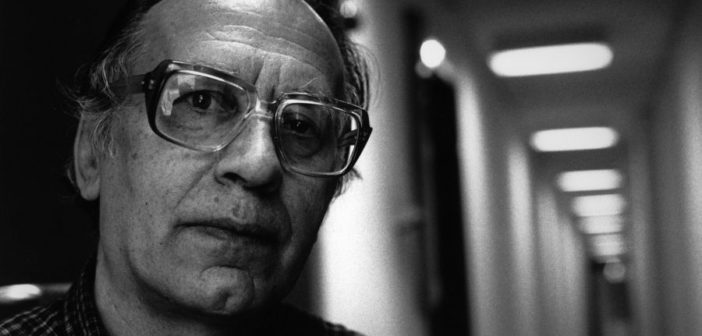
Georg Solti used to say that Leo Weiner (1885-1960) was his best teacher in Budapest. Since his other professors at the Franz Liszt Academy included Bela Bartok and Zoltan Kodaly, this was no small compliment. Weiner, who shared Solti’s Jewish identy, was a selfless bachelor who took vicarious pleasure in his pupils’ successes and was reluctant to promote his own works. Solti aside, his students included the conductors Eugene Ormandy (Philadelphia), Fritz Reiner (Pittsburgh, Chicago), Antal Dorati (Minneapolis, Detroit, Washington) and the cellist Janos Starker (Cleveland). He may have done more than any individual conductor to shape the sound of…

Share:

So much nonsense is being spouted these days about ‘decolonising’ western music that we’ve forgotten it’s not western at all. It’s southern and eastern, arising around the Mediterranean Sea and spreading upwards into the European continent by a process of conquest and cultural supremacism. Europe was successively colonised by the Greeks, the Romans, the Mongols and the Arabs before it ever thought of spreading ‘civilisation’ to other parts of the world. This new release is a blessed relief from the decolonising agenda. It blends music from the major seaboard cultures – Greek, Italian, Judeo-Spanish and Arab – with arias from…

Share:

Not your usual opening night. Small crowd. No mingling. No buzz. Except insofar as the Montreal Symphony Orchestra under Bernard Labadie proved itself equal on Sept. 11 to the repertoire at hand. This band has met only sporadically since March, mostly in popup chamber concerts that remained stubbornly under the radar. Apparently the players have not lost their team spirit and pride in playing well. Even in social-distance formation – 43 looking more like 60 as spread across the stage of the Maison symphonique – the MSO sounded like a balanced and cohesive ensemble. The start could not have been…

Share:

I often wonder when listening to Silvestrov’s music why he is not one of the most performed living composers. His music is at once mentally challenging and aurally agreeable, beautifully constructed and unexpectedly affecting. He ought to be in every concert season. Born in Kiev in 1937 and a major catalyst in the 1960s Moscow avant-garde, Silvestrov was named ‘one of the greatest composers of our time’ by such distinguished colleagues as Alfred Schnittke and Arvo Pärt. Yet as far as western conductors are concerned he might as well be an Mongolian herdsman for all the attention they pay to…

Share:

Here’s a first – a record that resists categorisation. To give it one star would be an insult, two stars a gross over-estimation. No stars is as close as I can get to describe the distinctly uncomfortable feeling I get from hearing John Williams conduct his film scores with the Vienna Philharmonic Orchestra. No discredit to Williams, a capable conductor with years of experience as director of the Boston Pops. No credit whatsoever to the Vienna Phil, an orchestra that has guarded its pedigree for almost 180 years, only to squander it on sheets of music that were written for…

Share:

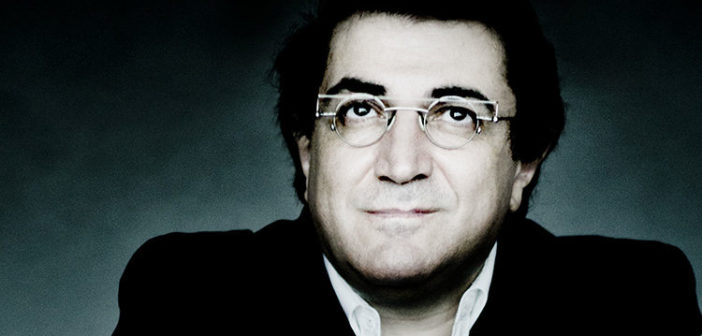
The arrival of an altogether astonishing album has made me break my solemn (and unrealistic) pledge to review only neglected composers during the Covid pandemic. Nobody could possibly call Rachmaninov neglected, although with the disruption of a regular supply of live music with a living, breathing audience this recital of solo pieces has the shock of the new – the more so when played by the Armenian artist Sergei Babayan, in his major-label debut. Babayan, 59, is best known as the teacher of Daniil Trifonov and occasional four-hand partner of Martha Argerich. Based in New York, he is an unobtrusive…

Share:

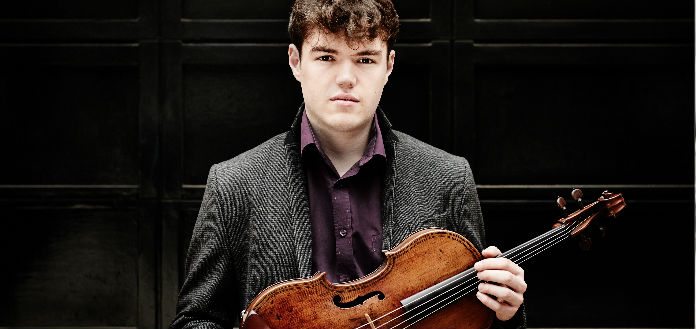
It has been a while since the viola last had a powerful advocate. Timothy Ridout, 24 and British, is being touted as the next star violist. The evidence is laid out in these attractive performances with the Lausanne chamber orchestra, conducted by another gifted young Brit, Jamie Phillips. The 1934 suite for viola and orchestra and orchestra by Ralph Vaughan Williams demands a sympathy for the rolling contours and modest beauties of the English countyside. The suite is stitched together from English folksongs, none of them individually arresting, which gives the soloist free rein to invest them with breath and…

Share:

Mikis Theodorakis, who turned 90 last month, earned worldwide fame for the music to the 1964 film Zorba the Greek and remained a poster-boy to the international Left for his unwavering commitment to Communism. Aside from his film music, his song-cycle The Ballad of Mauthausen ranks among the most beautiful music ever written about the Nazi Holocaust. Less familiar are the composer’s classical roots. In 1954, Theodorakis went to Paris to study at the Conservatoire with Olivier Messaien and Eugene Bigot. He stayed for five years, writing a lot of music in a range of Francophone styles. The discoveries on…

Share:

In the latter years of the Soviet Union, a composer could be cast out by the system and still sustained by it. Alfred Schnittke, when his symphonies were removed from performance, was given commissions to write music for the film industry by the Composers Union chief Tikhon Krennikov, the very apparatchik who had ordered the ban on his symphonies. Nikolai Kapustin, who wrote disapproved jazz scores, was for much of his career the resident pianist of the main symphony orchestra of Moscow Radio, an ensemble which occasionally agreed to perform his non-socialist works, only to refuse at the last moment. This two-faced…

Share:

When Christopher Rouse died ten months ago, aged 70, it seemed to spell the end of a line of American composers who placed the symphony at the heart of their art. And not just Americans. Apart from Kalevi Aho and Leif Segerstam in Finland, David Matthews and Philip Sawyers in the UK and one or two Russians and Germans,  composers seem to have given up on the symphony in the 21st symphony. The assumption is that audiences have lost interest. Is that really the case? In these Covid times, we have no way of judging except on record. Rouse, an…

Share:
1 74 75 76 77 78 172