Browsing: La Scena Online

La Scena Online is the digital magazine of La Scene Musicale.Contents: News, Concert reviews, CD reviews, Interviews, Obituaries, etc; Editor: Wah Keung Chan; Assistant Editor: Andreanne Venne
ISSN: 1206-9973

What would you say if I gave up star ratings? They are only the vaguest approximation of a critic’s opinion and they might well be affected by the weather, or the latest Covid numbers. I’ve seen ratings that barely reflect the text of a review, just as footballers get marks out of ten that bear no relation to their influence on a game. I know some readers look no further than the star rating before making up their minds. But for those who actually read, does the rating make any difference to you? Do tell. Take the present pair of…

Share:
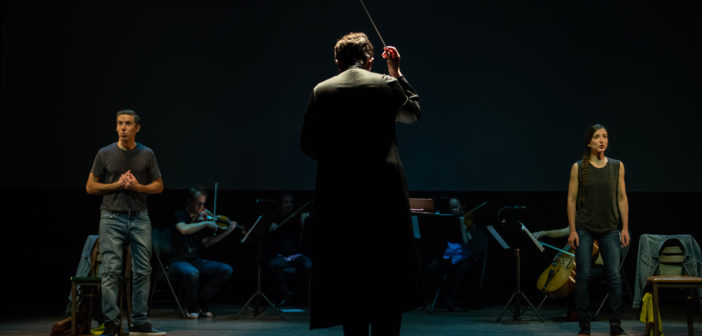
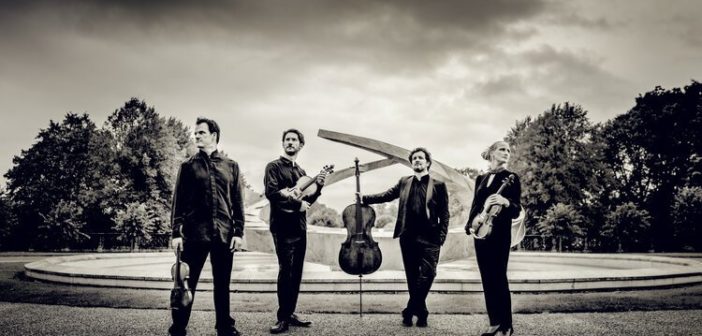
As One might not be the only opera written for two vocal manifestations of the same character, but there cannot be many others. The risk involved in the undertaking lies not necessarily in the subject matter – the phenomenon of trans identity has been headline material for a while – as in the need to create drama without supporting characters. It says something about the virtues of this work of 2014 and the quality of its online Quebec premiere Friday under the auspices of the Orchestre classique de Montréal that two singers and a string quartet could hold the stage successfully…

Share:

I chucked out a bunch of new releases this week, mostly solo recitals on esoteric instruments like the harp, the mandolin and the saxophone, though also viola, voice and harpsichord, some on so-called major labels. These recitals tend to be paid for by the soloist after a label decides they are uncommercial. Knowing that people are unlikely to buy it, why would I waste valuable time reviewing it and you reading about it? In these fragile times when every hour of life is doubly precious, artists need to think twice and think again before pushing out more and more of…

Share:

The second piano by Sergei Prokofiev was the least performed of the five until Evgeny Kissin came along a decade ago and showed it was not only playable but pleasant. At this early stage in his emergence – the opus number is in the low teens – Prokofiev was more inclined to be rebarbative than agreeable. But once Kissin stripped off the barbed wire, an underlying soft centre was exposed and other pianists piled in to make the once-deterrent concerto practically an audience draw. The Vienna Philharmonic were touring it only this week in Japan. Of the half-dozen interpretations I…

Share:

Just by reviewing this recording I will be accused of taking sides in the war between Armenia and Azerbaijan over the territory of Nagorno-Karabakh, such is the ferocity and pettiness of the largely unreported conflict. Mansurian is, as his name suggests, Armenian. Born in Beirut in 1939 to refugees from the Turkish genocide in Armenia, he returned to Yerevan in the 1950s and lived there fruitfully under Soviet rule and after. The title track of this album is a meditation for sextet on the 13th string quartet of Dmitri Shostakovich composed in a mixture of Kurtag-like fragments and long devotional…

Share:

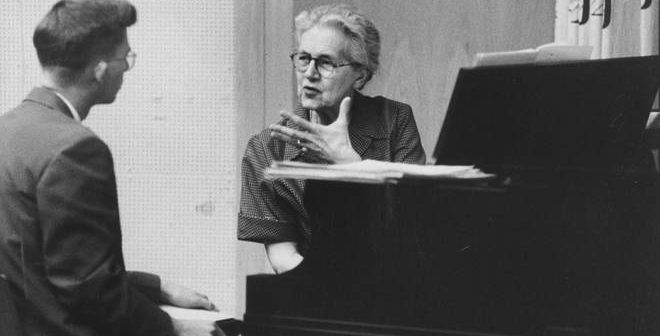
An unprepossessing Parisian teacher of piano and solfège received an unexpected career boost when the victorious General Pershing opened a French music school for Americans at Fontainebleau, near Paris, in 1921. Nadia Boulanger applied for an advertised vacancy and was appointed professor of harmony. Before long she was the go-to teacher for Americans in Paris, of whom there were a great many in the 1920s when the living was cheap and the romance abundant. The shy and unconfident Aaron Copland signed up for her first semester.  George Gershwin applied for private lessons. In 1924, Boulanger was sent on a US tour to…

Share:

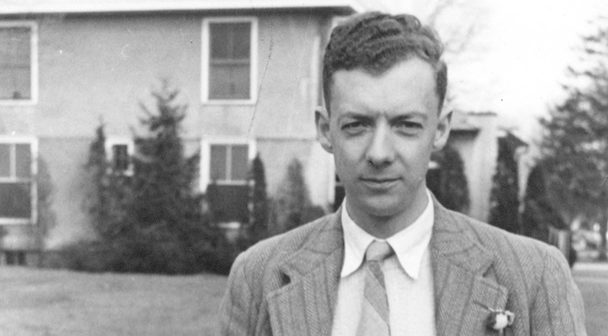
Like Beethoven’s Mass in C major which is overshadowed by the mighty Missa Solemnis, Benjamin Britten’s Sinfonia da Requiem is sometimes mistaken for the War Requiem although the two works have nothing in common. The Sinfonia, a work for orchestra alone, last just 20 minutes and is riddled with personal ambivalence. Britten was commissioned to write it in 1939, having recently settled in New York and been exposed to its cosmopolitan lifestyle, s much more colourful than London’s greys. The commission came from the Japanese Government, to mark the 2,600th anniversary of its ruling dynasty. Japan had brutally invaded China.…

Share:

You’ll often hear me telling people a couple of generations down the line that they should listen to new music of our time rather than Beethoven and Mahler, which they will enjoy better once they are in their 50s. Can’t say I’ve made many converts. All the usual excuses: get home from work, make supper, put the kids to bed, veg out on the sofa, no concentration left for the squeaks and squawks of contemporary composers. Yeah, been there, done that. But I’m not giving up trying to persuade younger people to listen to the new. Wrap your ears, for…

Share:

The most popular and prolific composer of his time, Malcolm Arnold was shunned by the British music establishment for being, mostly, too popular and prolific, and therefore a potent threat to the nonentities who were not. Arnold (1921-2006) had other crosses against his name. He was a former orchestral player (working class), an Oscar winner (disgraceful), a tonal symphonist (non-BBC-pc), an alcoholic and a philanderer who suffered repeated bouts of mental illness. In short, he was everything the suits hated. Proof of their power is attested by this one-act opera which, written in 1952, was rejected by a panel of…

Share:

The Berlin Philharmonic Orchestra has issued an oblong boxed set of its inaugural concerts with music director Kirill Petrenko. The new chief’s performances of Tchaikovsky’s fifth and sixth symphonies cannot be praised too highly; they set the benchmark for these works in the coming decade as Herbert von Karajan’s recordings did for the 1970s. I find Petrenko’s Beethoven 7th memorable and the 9th appropriately resplendent. But what grabbed my attention was his inclusion of works by Franz Schmidt (1874-1939) and Rudi Stephan (1878-1915), the former a marginal figure, the latter a frontline casualty of the First World War. Of the two,…

Share:
1 73 74 75 76 77 172