Browsing: Opera

Thanks to Toronto Summer Music, many great singers have given recitals in Toronto to the delight of voice fans. 2026 has turned out to be another banner year for great singing. The Festival’s Art of the Song kicked off with the dulcet tones of Sasha Cooke, and on July 16, we had the dynamic duo of soprano Erin Morley and tenor Lawrence Brownlee. This engagement also marked the Canadian debut of Morley. The program they brought was mostly drawn from their widely praised CD, Golden Age, that came out on the Pentatone label last year. It’s a scintillating selection of…

Share:

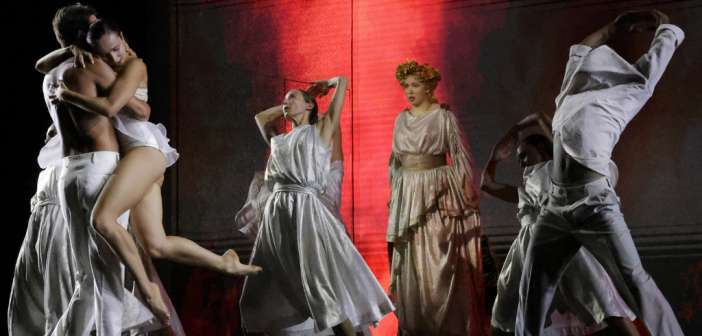
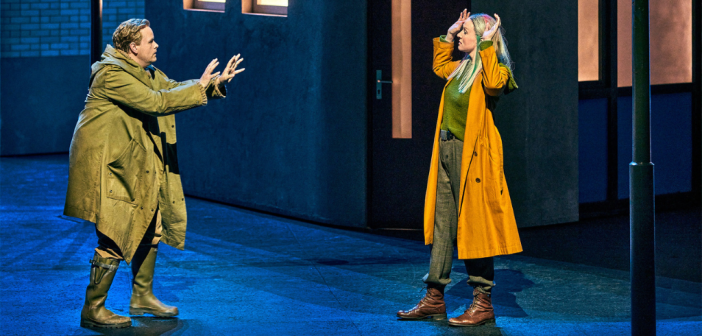
Few cities in the world can rival Berlin’s operatic riches. Three major opera houses—Staatsoper Unter den Linden, Deutsche Oper Berlin and Komische Oper—sustain an astonishingly varied repertoire, ranging from Monteverdi and Handel to contemporary works, often in productions of considerable intellectual ambition. Combined with the city’s world-class orchestras and seemingly inexhaustible musical life, Berlin remains one of Europe’s great operatic capitals, where, on any given evening, one may encounter both the triumphs and the excesses of modern Regietheater. This summer’s offerings provided a revealing cross-section of the city’s operatic landscape. At Deutsche Oper, David McVicar’s much-travelled Giulio Cesare in Egitto…

Share:

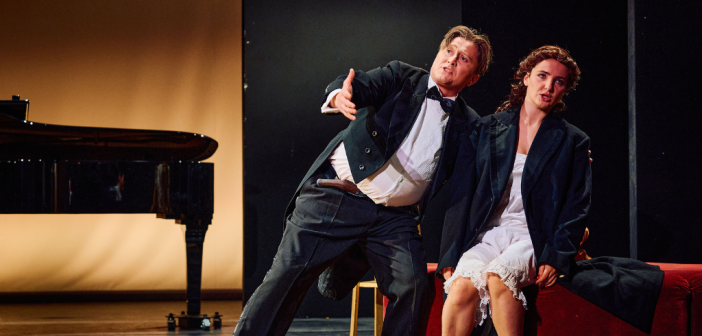
Munich’s Staatstheater am Gärtnerplatz occupies a singular position within Germany’s operatic landscape. Unlike its illustrious neighbour, the Bayerische Staatsoper, it neither attempts to compete in monumental spectacle nor to cultivate an international star system. Instead, it has quietly established itself as one of Europe’s most imaginative repertory theatres, demonstrating with remarkable consistency that artistic distinction depends far more upon intelligence than upon financial resources. The extraordinary breadth of its programming is perhaps its greatest achievement. Within a single season, audiences may encounter Viennese operetta, musical theatre, Romantic ballet, Brecht and Weill, and rarely performed twentieth-century opera. Such diversity is not…

Share:

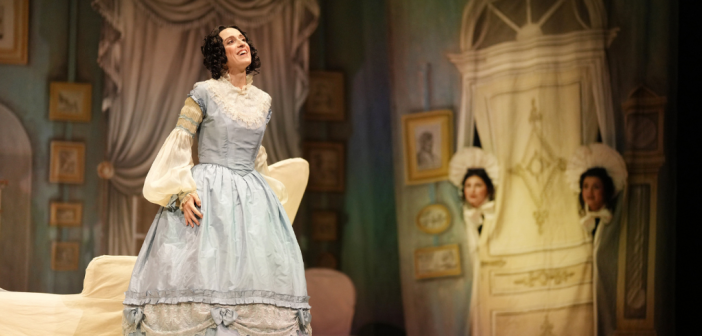
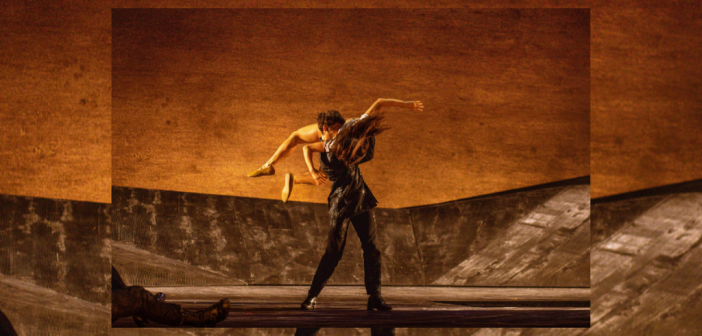
An early summer visit to Volksoper Wien reaffirmed why it remains one of Europe’s most imaginative lyric theatres. Few companies today show comparable confidence in programming, moving effortlessly from the great operetta tradition of Kálmán, Strauss and Lehár to a problematic Offenbach masterpiece and, most admirably, to Viktor Ullmann’s Der Kaiser von Atlantis. At a time when many houses reduce operetta to seasonal nostalgia or neglect twentieth-century rarities altogether, the Volksoper demonstrates both artistic courage and historical responsibility.  Equally striking was the cosmopolitan character of its Ensemble, bringing together artists from Austria, France, Poland, Canada, Turkey, Morocco, Italy, Germany and…

Share:

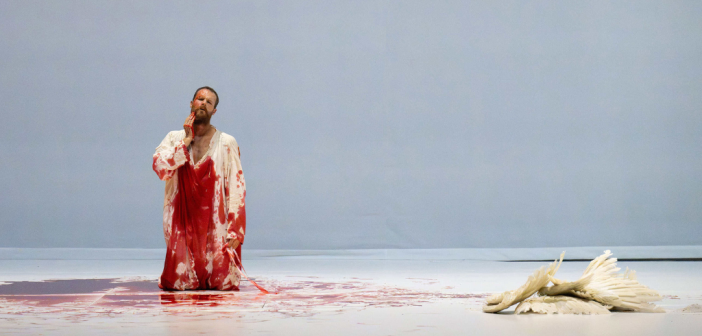
The burden of choice runs through this year’s Festival d’Aix-en-Provence. From the moral trials of Die Zauberflöte to Die Frau ohne Schatten, where happiness can only be secured at another’s expense, the festival repeatedly returns to moments when a single decision transforms a life. In Francesco Filidei’s Accabadora, premiered at the eighteenth-century jewel-box Théâtre du Jeu de Paume on July 4, that choice becomes the most agonising of all: whether compassion can justify helping another human being to die. Based on Michela Murgia’s celebrated novel, the opera centres on two ancient Sardinian traditions. The first is the custom of giving…

Share:

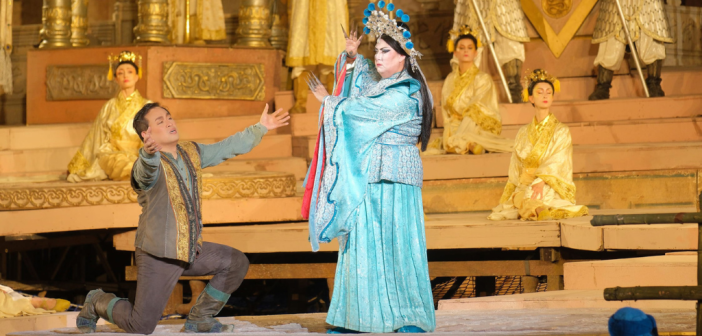
Few opera houses today can rival Bayerische Staatsoper for the consistency of its musical standards. Within the span of a single season, one can encounter radically different conceptions of music theatre. The company presents highlights from their season each year as a summer festival in June and July. This year I saw Carlus Padrissa’s futuristic visual extravaganza in Turandot (June 30), Tobias Kratzer’s psychologically penetrating Die Walküre (July 1), and Martin Cicvák’s provocatively nihilistic Macbeth (July 2). If these productions reveal anything about contemporary opera, it is that stage directors continue to search—sometimes brilliantly, sometimes desperately—for new ways of illuminating…

Share:

Festival d’Aix-en-Provence could hardly have chosen two more fascinating companion pieces than Mozart’s Die Zauberflöte and Richard Strauss’s Die Frau ohne Schatten. Fairy tales, philosophical allegories and initiation dramas, both have challenged generations of directors with librettos whose symbolism resists any straightforward interpretation. Yet they inspire strikingly different theatrical responses. Clément Cogitore looks outward, bringing his distinctive filmic language into Mozart’s world. With the Strauss (seen July 3), Barrie Kosky looks inward, trusting the expressive power of the work’s intrinsic theatricality. For Klaus Mäkelä, this is a welcome return to Aix. It was here, at the Stade de Vitrolles in…

Share:

Opening this year’s Festival d’Aix-en-Provence in the courtyard of the Théâtre de l’Archevêché on July 2, Clément Cogitore’s new production of Die Zauberflöte confronts one of opera’s most intractable challenges and confirms the filmmaker’s singular theatrical vision. His 2019 staging of Rameau’s Les Indes galantes, created in collaboration with the choreographer Bintou Dembélé and a collective of krump dancers, transformed the work into one of the defining operatic events of recent years at the Opéra Bastille, though regrettably it never toured. Mozart’s final masterpiece, however, poses an even more difficult problem and has long defeated even the most experienced opera…

Share:

Three recent productions at the Vienna State Opera (VSO) repeatedly demonstrated that first-rate conducting and singing could transcend even the most contentious directorial concepts. While the three evenings differed widely in their theatrical success, each ultimately affirmed that opera and ballet continue to derive their greatest power from the marriage of inspired performance and musical excellence. Kenneth MacMillan’s 1974 three-act ballet L’Histoire de Manon (seen June 20) proved the most complete artistic achievement of this VSO sampling. His masterful choreography and staging transformed Abbé Prévost’s novel into an engrossing neoclassical drama. Its score uses some of Massenet’s lesser-known pieces with…

Share:

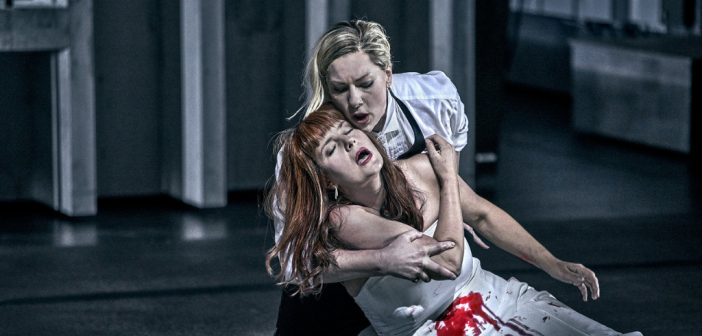
Three days in Hanover, Germany—a city of barely half a million inhabitants—yielded three entirely different opera experiences: Korngold’s Die tote Stadt, Verdi’s Il trovatore and Rossini’s Il barbiere di Siviglia. That such artistic variety can be experienced in so short a time is a powerful reminder of what makes the German opera system unique. The repertoire model, sustained by the permanent ensemble system that remains the pride of German opera houses, allows companies like Staatsoper Hannover to maintain an astonishing breadth of productions and a resident roster of singers capable of mastering an immense stylistic range. Few countries can offer…

Share:
1 2 3 113