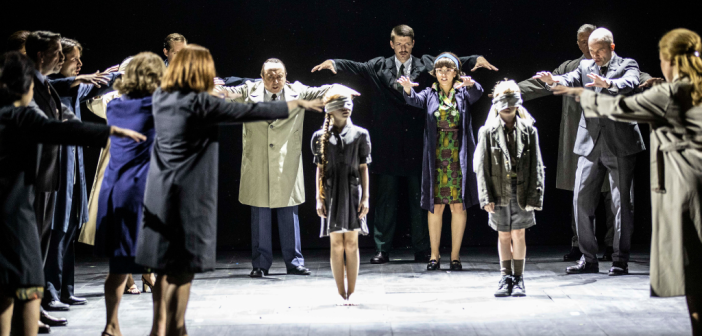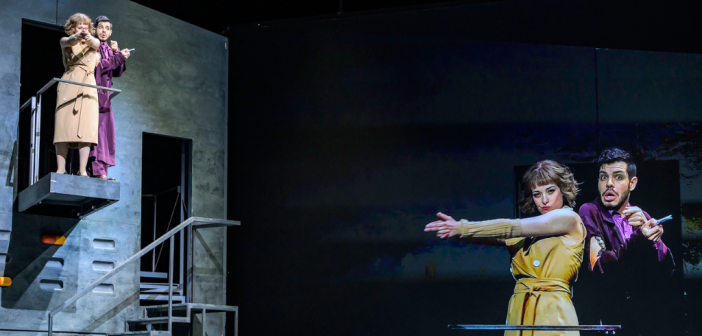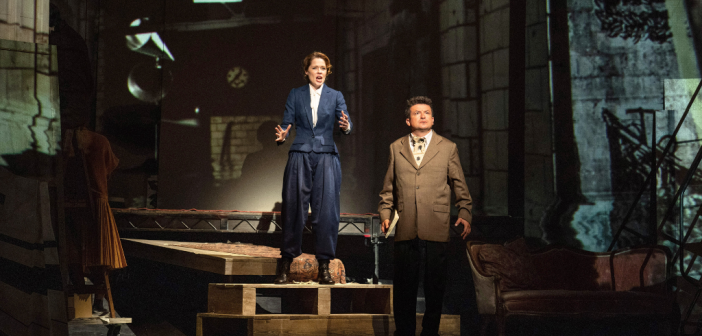
An early summer visit to Volksoper Wien reaffirmed why it remains one of Europe’s most imaginative lyric theatres. Few companies today show comparable confidence in programming, moving effortlessly from the great operetta tradition of Kálmán, Strauss and Lehár to a problematic Offenbach masterpiece and, most admirably, to Viktor Ullmann’s Der Kaiser von Atlantis. At a time when many houses reduce operetta to seasonal nostalgia or neglect twentieth-century rarities altogether, the Volksoper demonstrates both artistic courage and historical responsibility. Equally striking was the cosmopolitan character of its Ensemble, bringing together artists from Austria, France, Poland, Canada, Turkey, Morocco, Italy, Germany and…
Browsing: Vocal
The burden of choice runs through this year’s Festival d’Aix-en-Provence. From the moral trials of Die Zauberflöte to Die Frau ohne Schatten, where happiness can only be secured at another’s expense, the festival repeatedly returns to moments when a single decision transforms a life. In Francesco Filidei’s Accabadora, premiered at the eighteenth-century jewel-box Théâtre du Jeu de Paume on July 4, that choice becomes the most agonising of all: whether compassion can justify helping another human being to die. Based on Michela Murgia’s celebrated novel, the opera centres on two ancient Sardinian traditions. The first is the custom of giving…
Few opera houses today can rival Bayerische Staatsoper for the consistency of its musical standards. Within the span of a single season, one can encounter radically different conceptions of music theatre. The company presents highlights from their season each year as a summer festival in June and July. This year I saw Carlus Padrissa’s futuristic visual extravaganza in Turandot (June 30), Tobias Kratzer’s psychologically penetrating Die Walküre (July 1), and Martin Cicvák’s provocatively nihilistic Macbeth (July 2). If these productions reveal anything about contemporary opera, it is that stage directors continue to search—sometimes brilliantly, sometimes desperately—for new ways of illuminating…
Festival d’Aix-en-Provence could hardly have chosen two more fascinating companion pieces than Mozart’s Die Zauberflöte and Richard Strauss’s Die Frau ohne Schatten. Fairy tales, philosophical allegories and initiation dramas, both have challenged generations of directors with librettos whose symbolism resists any straightforward interpretation. Yet they inspire strikingly different theatrical responses. Clément Cogitore looks outward, bringing his distinctive filmic language into Mozart’s world. With the Strauss (seen July 3), Barrie Kosky looks inward, trusting the expressive power of the work’s intrinsic theatricality. For Klaus Mäkelä, this is a welcome return to Aix. It was here, at the Stade de Vitrolles in…
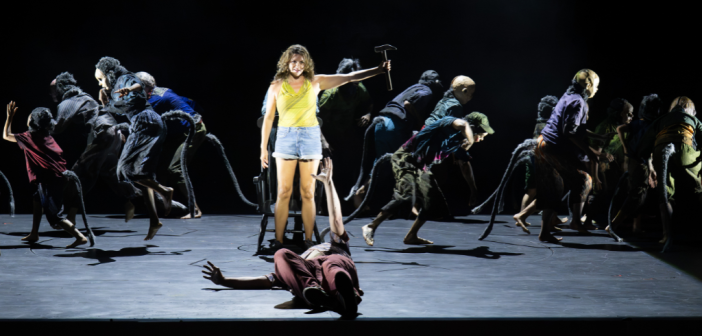
Opening this year’s Festival d’Aix-en-Provence in the courtyard of the Théâtre de l’Archevêché on July 2, Clément Cogitore’s new production of Die Zauberflöte confronts one of opera’s most intractable challenges and confirms the filmmaker’s singular theatrical vision. His 2019 staging of Rameau’s Les Indes galantes, created in collaboration with the choreographer Bintou Dembélé and a collective of krump dancers, transformed the work into one of the defining operatic events of recent years at the Opéra Bastille, though regrettably it never toured. Mozart’s final masterpiece, however, poses an even more difficult problem and has long defeated even the most experienced opera…
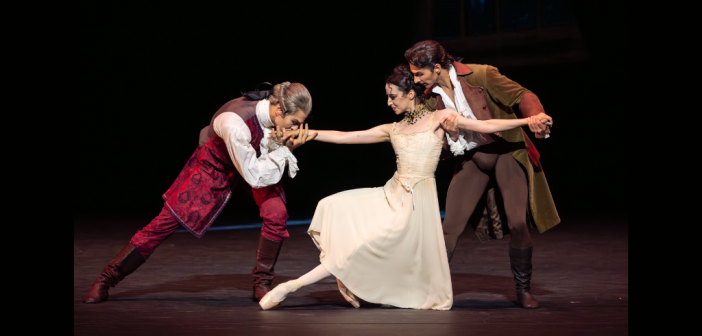
Three recent productions at the Vienna State Opera (VSO) repeatedly demonstrated that first-rate conducting and singing could transcend even the most contentious directorial concepts. While the three evenings differed widely in their theatrical success, each ultimately affirmed that opera and ballet continue to derive their greatest power from the marriage of inspired performance and musical excellence. Kenneth MacMillan’s 1974 three-act ballet L’Histoire de Manon (seen June 20) proved the most complete artistic achievement of this VSO sampling. His masterful choreography and staging transformed Abbé Prévost’s novel into an engrossing neoclassical drama. Its score uses some of Massenet’s lesser-known pieces with…
Three days in Hanover, Germany—a city of barely half a million inhabitants—yielded three entirely different opera experiences: Korngold’s Die tote Stadt, Verdi’s Il trovatore and Rossini’s Il barbiere di Siviglia. That such artistic variety can be experienced in so short a time is a powerful reminder of what makes the German opera system unique. The repertoire model, sustained by the permanent ensemble system that remains the pride of German opera houses, allows companies like Staatsoper Hannover to maintain an astonishing breadth of productions and a resident roster of singers capable of mastering an immense stylistic range. Few countries can offer…
Lizz Wright is a woman of class and pure, pure music. She sings, and she sings well, her voice carrying the weight of legends before her. As a self-proclaimed woman from the “swamps of Georgia,” she came a fair distance to perform for the first time at Festival International de Jazz de Montréal on June 29. Along with her longtime friend and accompanist Kenny Banks Sr., Wright performed a wonderful 10-piece set of both originals and jazz standards in the intimate space at Théâtre Jean-Duceppe within the Place des Arts complex. As a lifelong member of the church, her voice…
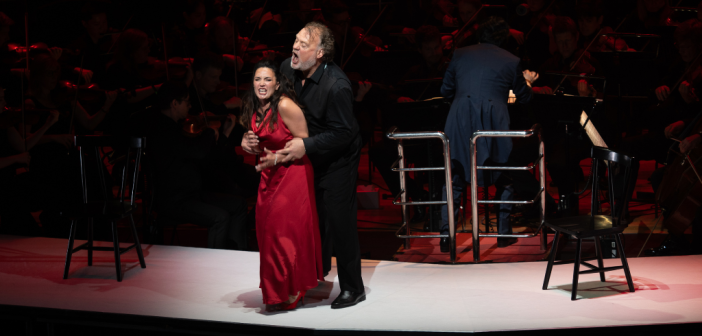
All opera-goers have experienced it, and perhaps more often than we’d like: an evening in the theatre where the producer’s “concept/vision”—that most elastic synonym for ego—overwhelms the very thing we came to see and hear. We leave muttering the now familiar consolation: “At least the singing was good.” A concert or semi-staged performance can therefore feel less like a compromise than a liberation. Stripped of scenic excess, the orchestra reclaims its place at the centre of the drama, while a score as rich as Puccini’s is finally liberated to do what it has always done best. Better still, when as…
Often regarded as the first great opera, this much-awaited production of Monteverdi’s L’Orfeo brings South African artist William Kentridge back to his own beginnings in the genre (seen June 14). It was with Il ritorno d’Ulisse that he made his name on the international opera stage in 1998. I was fortunate to see it in 2011, and the experience remains for me one of the most beautiful, poignant and essential evenings I have ever spent in a theatre. Now, nearly three decades later, Kentridge returns to Monteverdi. His new staging of L’Orfeo at Glyndebourne revisits questions that have accompanied him…