Festival d’Aix-en-Provence could hardly have chosen two more fascinating companion pieces than Mozart’s Die Zauberflöte and Richard Strauss’s Die Frau ohne Schatten. Fairy tales, philosophical allegories and initiation dramas, both have challenged generations of directors with librettos whose symbolism resists any straightforward interpretation. Yet they inspire strikingly different theatrical responses. Clément Cogitore looks outward, bringing his distinctive filmic language into Mozart’s world. With the Strauss (seen July 3), Barrie Kosky looks inward, trusting the expressive power of the work’s intrinsic theatricality.
For Klaus Mäkelä, this is a welcome return to Aix. It was here, at the Stade de Vitrolles in 2023, that he first electrified festival audiences conducting Stravinsky’s three great Ballets Russes scores—The Firebird, Petrushka and The Rite of Spring—with Orchestre de Paris. Here, for the first time, he exchanges the concert platform for the opera pit, taking on one of Strauss’s most formidable scores.
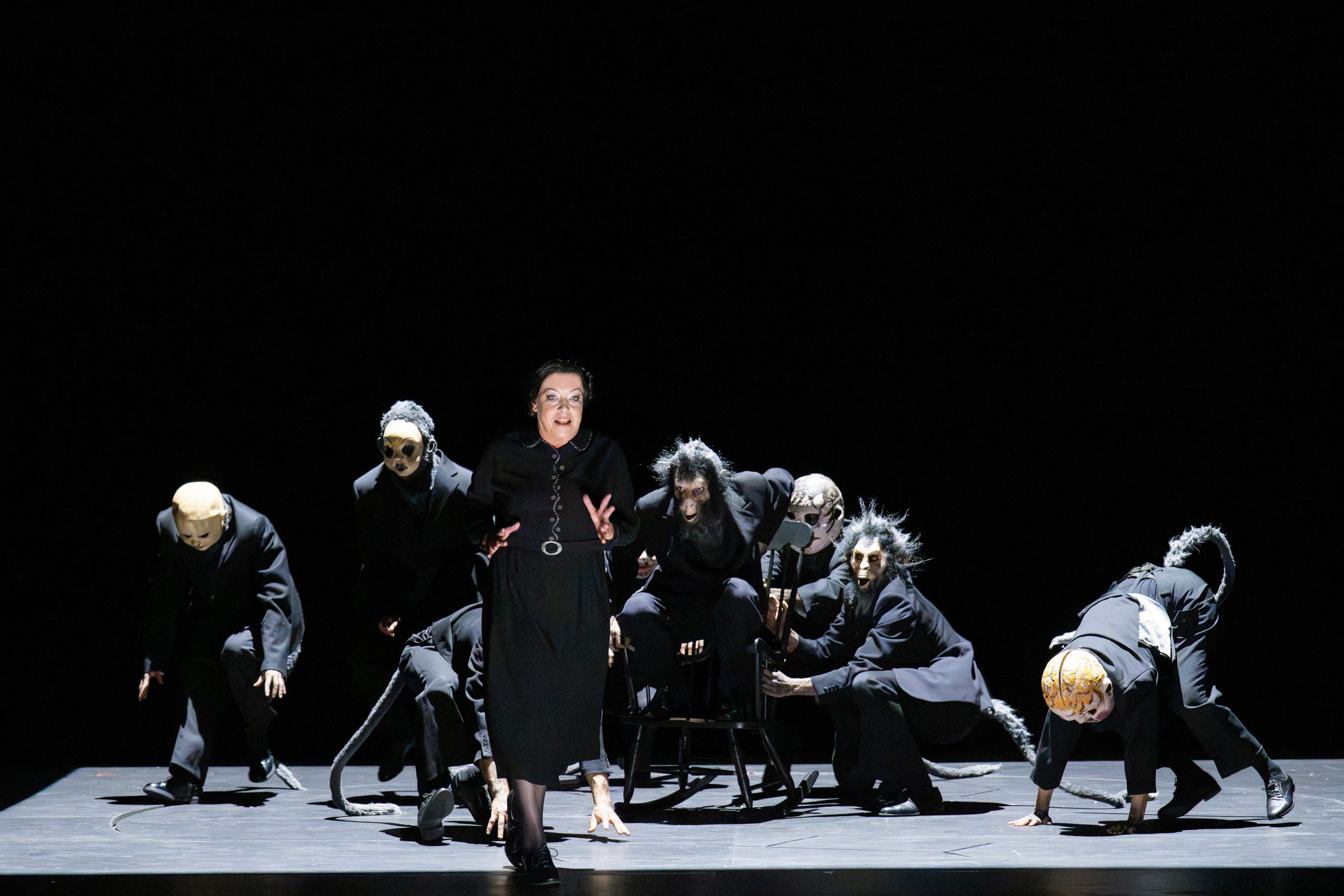
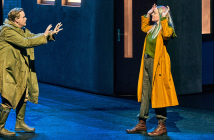
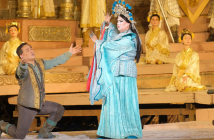
Nina Stemme (the Nurse) in Die Frau ohne Schatten at Festival d’Aix-en-Provence. Photo: Monika Rittershaus
After six years together, the rapport between Mäkelä and Orchestre de Paris is unmistakable. The playing is refined, luminous and remarkably transparent, allowing Strauss’s immense orchestral fabric to breathe with astonishing clarity. The concertmaster’s violin solo is played with exquisite poise, while the principal cello brings warmth and inward lyricism to one of the score’s most touching moments.
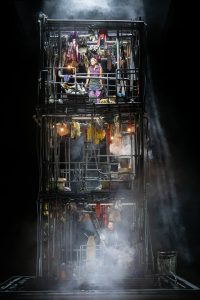
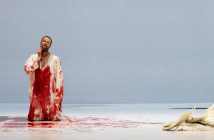
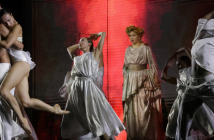
Scene from Die Frau ohne Schatten at Festival d’Aix-en-Provence. Photo: Monika Rittershaus
Opera, however, demands a keen sense of balance between pit and stage. In the final scenes one occasionally senses Mäkelä’s relative youth in the repertoire, as Strauss’s vast orchestral forces sometimes cover the singers. These are small reservations in an otherwise remarkable performance. It is difficult not to recall Kirill Petrenko’s incomparable conducting in Krzysztof Warlikowski’s Munich production, which I was fortunate enough to attend at its premiere in 2013, with Johan Botha, Adrianne Pieczonka and Wolfgang Koch leading an unforgettable cast. That remains, for me, one of the supreme interpretations of the score. Mäkelä’s reading belongs to a different generation, but it confirms him as one of the most gifted Strauss conductors to emerge in recent years.
Barrie Kosky directs with the assurance of a consummate man of the theatre. His storytelling is lucid, the pacing expertly judged and the symbolism never forced. Yet the production rarely seeks to radically reinterpret Hofmannsthal’s elusive drama. Rather than reinventing the work, Kosky lets it unfold with intelligence and theatrical confidence.
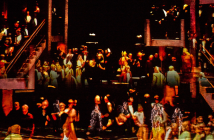
The true scenic genius of the evening, however, is Michael Levine. His monumental towers and shifting architectural landscape create a dreamscape of extraordinary beauty and profound unease. The images linger in the memory: towering sculptural forms, nightmarish inventions, a grinning head carried on multiple legs, and the stark white room of the final scene.
Michael Spyres is an outstanding Kaiser. Few tenors today combine his effortless command with such warmth of expression and natural stage presence. Whether in Berlioz, Wagner or Strauss, he brings an uncommon humanity to every role. His performance combines heroic brilliance with genuine emotional vulnerability.
Brian Mulligan is an ideal Barak, singing with generosity and authority. His deeply humane portrayal gives the opera its moral centre.
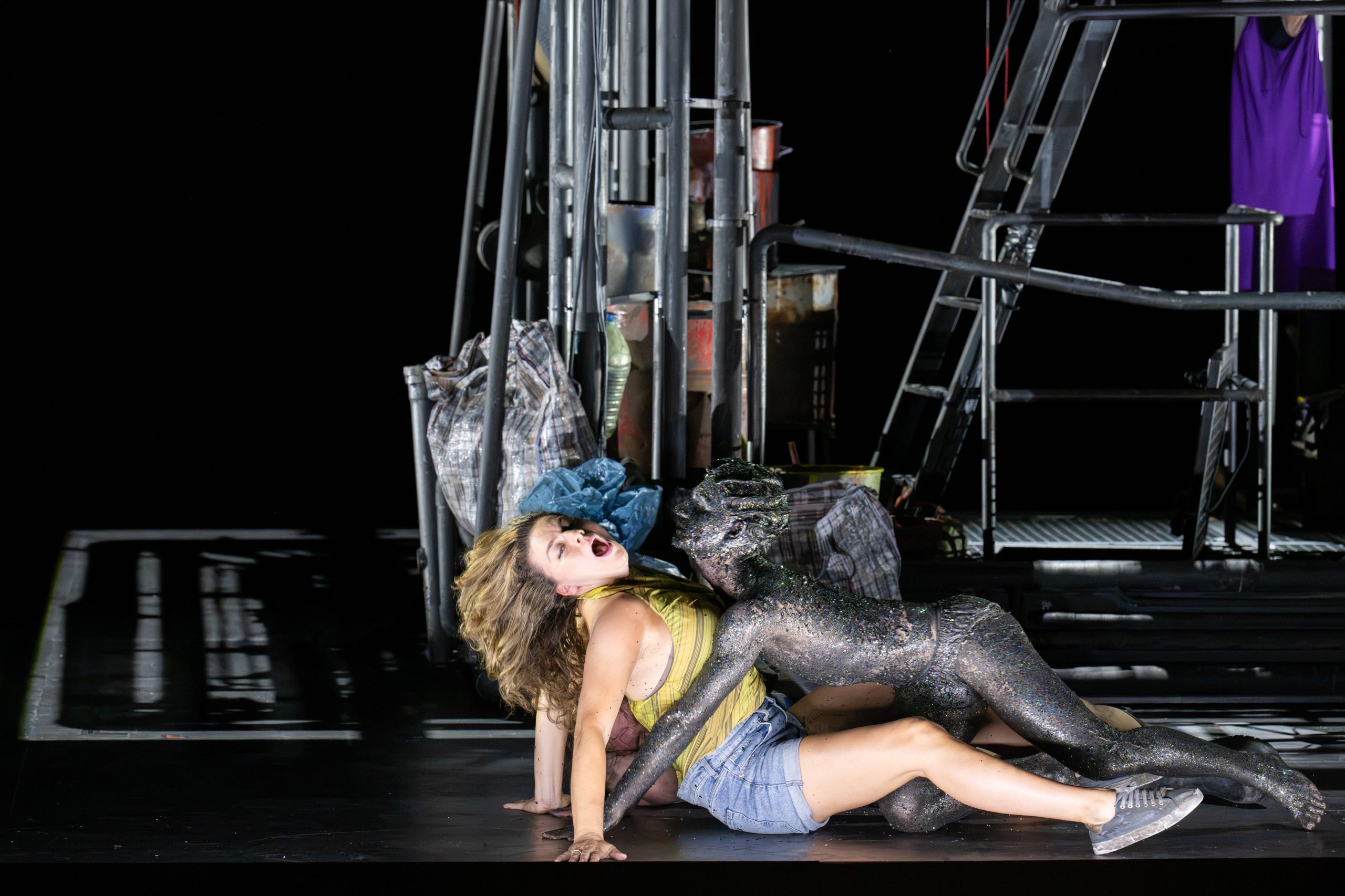
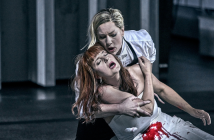
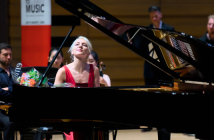
Ambur Braid (Färberin) in Die Frau ohne Schatten at Festival d’Aix-en-Provence. Photo: Monika Rittershaus
Ambur Braid is a youthful Färberin, bringing striking vocal beauty to one of Strauss’s most demanding roles. She throws herself into the character’s emotional volatility without ever losing sight of its humanity, making every stage of the character’s transformation feel entirely convincing.
Nina Stemme remains an imposing presence as the Nurse. Few artists command the stage with such authority, and although the voice now carries a broader vibrato than in earlier years, her dramatic intelligence and instinctive theatrical presence make the character utterly compelling.
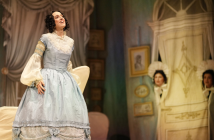
The Kaiserin presents perhaps the greatest vocal challenge of the evening. Vida Miknevičiūtė brings beautiful tone and complete commitment to the role, though I occasionally missed a richer vocal palette. In the most demanding passages, the voice can sound somewhat pressed, and the upper register does not always bloom with complete freedom.
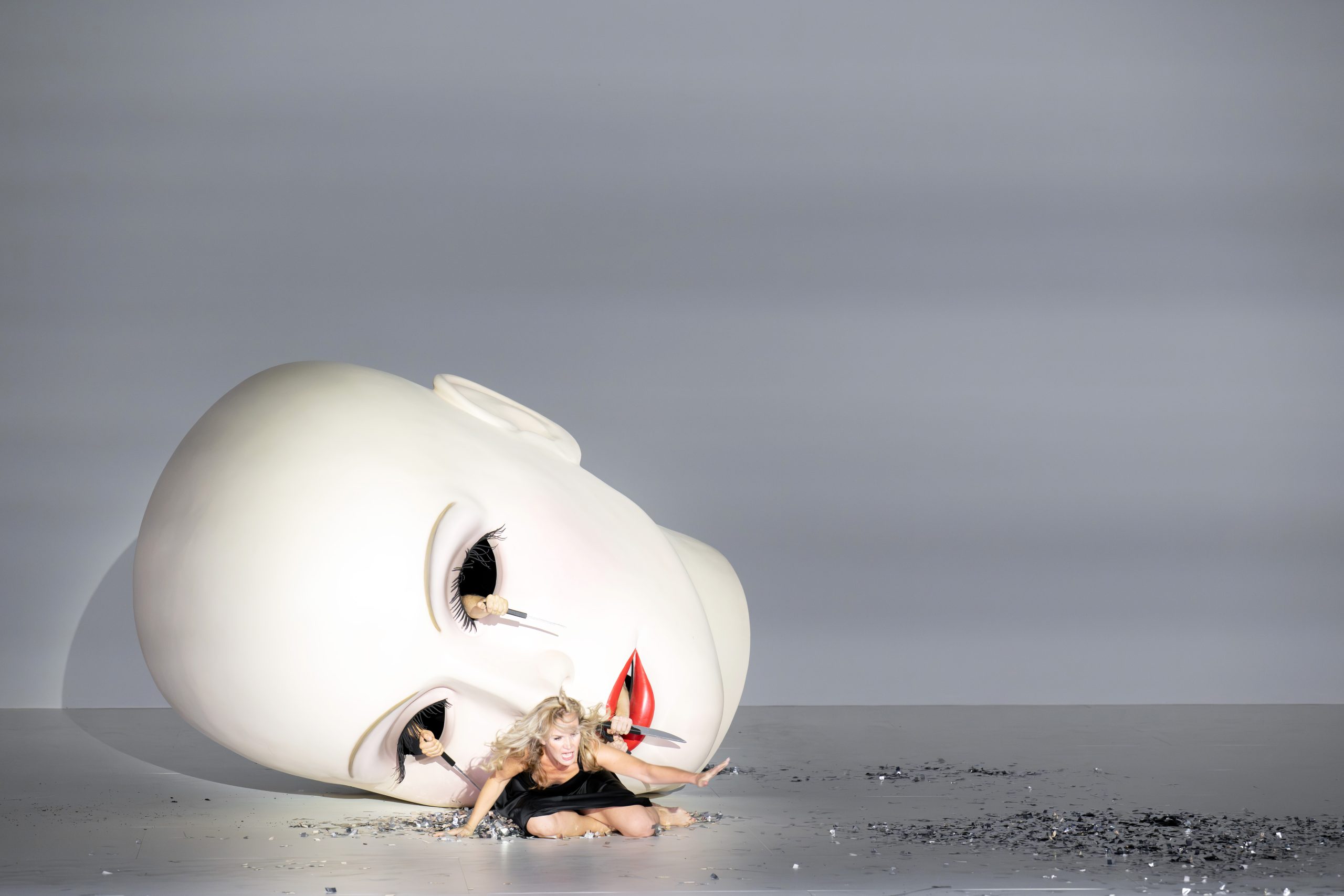
Vida Miknevičiūtė (the Kaiserin) in Die Frau ohne Schatten at Festival d’Aix-en-Provence.
Photo: Monika Rittershaus
Seen together, the festival’s opening productions suggest that there is no single way of approaching these great allegorical operas. Cogitore searched for new meanings beyond the work itself; Kosky trusted the work to speak through the resources of the theatre. Both approaches have their virtues. On this occasion, however, it is ultimately Strauss’s astonishing score, magnificently served by Klaus Mäkelä and the Orchestre de Paris, that leaves the deepest impression.
Festival d’Aix-en-Provence’s Die Frau ohne Schatten continues its run through July 15.