Few opera houses today can rival Bayerische Staatsoper for the consistency of its musical standards. Within the span of a single season, one can encounter radically different conceptions of music theatre. The company presents highlights from their season each year as a summer festival in June and July. This year I saw Carlus Padrissa’s futuristic visual extravaganza in Turandot (June 30), Tobias Kratzer’s psychologically penetrating Die Walküre (July 1), and Martin Cicvák’s provocatively nihilistic Macbeth (July 2). If these productions reveal anything about contemporary opera, it is that stage directors continue to search—sometimes brilliantly, sometimes desperately—for new ways of illuminating familiar masterpieces. Whether they succeed depends less upon novelty than upon their willingness to trust the dramatic intelligence already embedded in the scores.
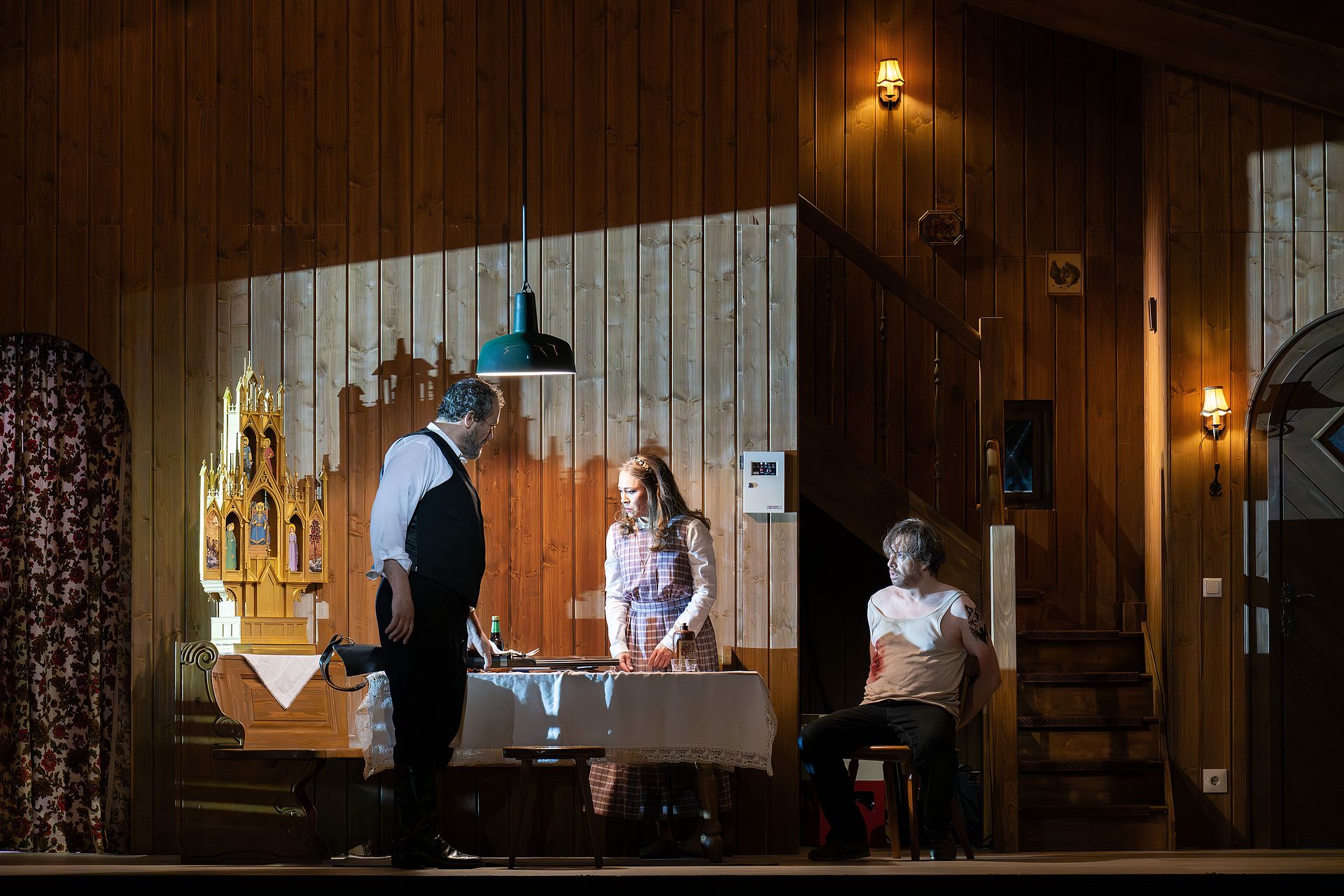
Ain Anger (Hunding), Irene Roberts (Sieglinde) & Joachim Bäckström (Siegmund) in Bayerische Staatsoper’s Die Walküre. Photo: Monika Rittershaus
Of the three, Kratzer’s Die Walküre was by far the evening of greatest artistic achievement. Munich occupies a unique place in Wagnerian history, having witnessed the premieres of both Das Rheingold and Die Walküre, and any new Ring Cycle must inevitably contend with that formidable legacy. Kratzer wisely eschewed empty provocation in favour of an exceptionally close reading of Wagner’s drama. His imagery grew organically from the psychological and moral conflicts of the libretto, so that every scenic decision appeared dramatically inevitable rather than merely symbolic.
The first act, set within Hunding’s oppressive bourgeois home, was devastating in its realism. Sieglinde’s habitual submission revealed years of domestic abuse without requiring a single gratuitous directorial gesture, while the gradual awakening of love between the twins unfolded with remarkable emotional truth.
The second act proved equally compelling, presenting Wotan not as an omnipotent ruler but as a sovereign crushed beneath the very legal order he had created. Even the production’s occasional theatrical indulgences—notably the Apocalypse Now-inspired helicopter sequence during the Ride of the Valkyries—could not diminish the overall coherence of Kratzer’s conception.
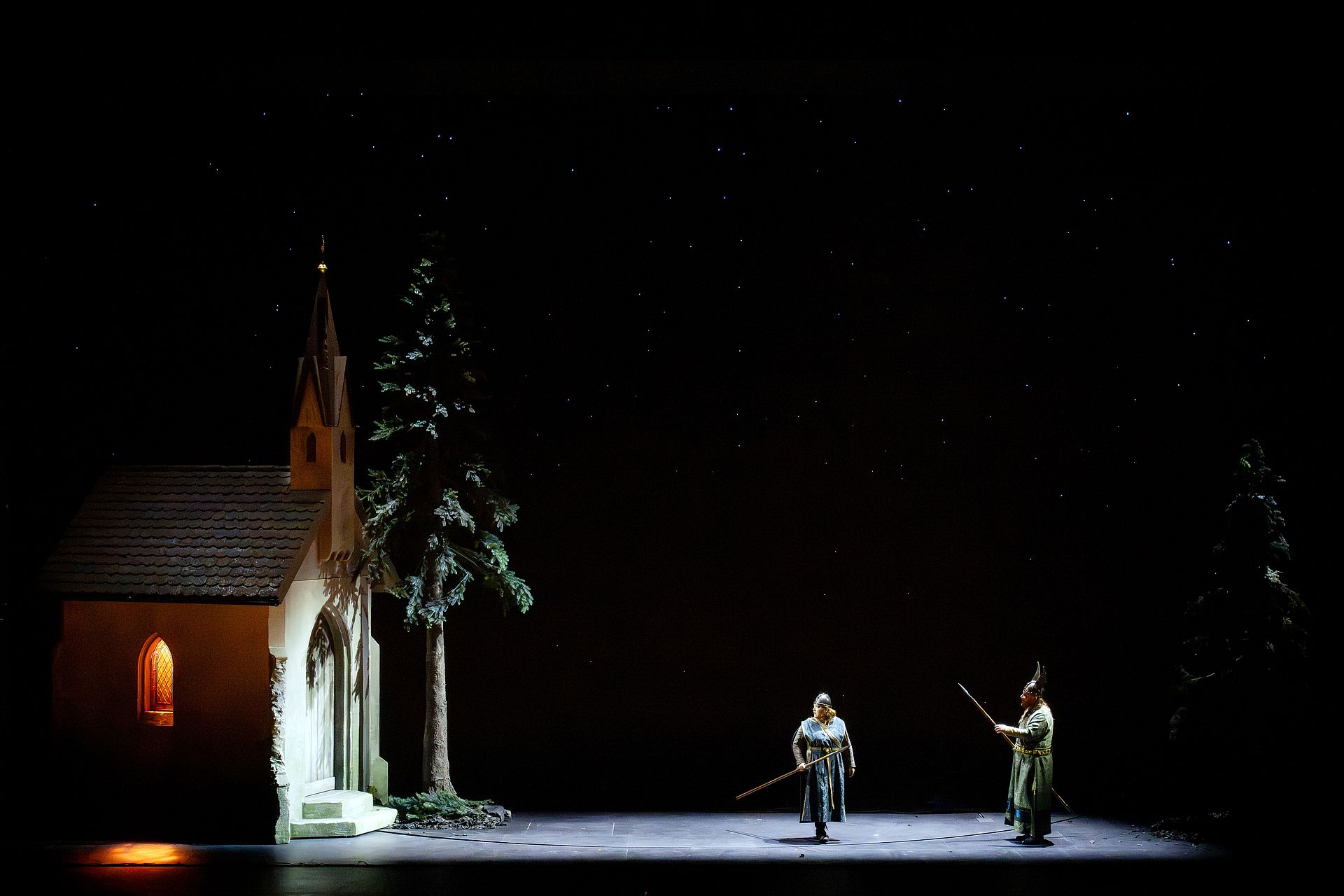
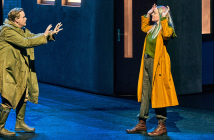
Miina-Liisa Värelä (Brünnhilde) & Nicholas Brownlee (Wotan) in Bayerische Staatsoper’s Die Walküre.
Photo: Monika Rittershaus
Vladimir Jurowski conducted a Walküre of extraordinary architectural command. Rejecting ponderous monumentality, he allowed Wagner’s endless melody to unfold with inexorable dramatic momentum, revealing the score’s astonishing transparency. The Bavarian State Orchestra responded magnificently, producing playing of remarkable refinement.
Nicholas Brownlee offered a deeply human Wotan whose authority gradually dissolved into tragic resignation. Irene Roberts’ heartbreaking Sieglinde, Miina-Liisa Värelä’s emotionally compelling Brünnhilde, Ain Anger’s implacable Hunding and Ekaterina Gubanova’s magnificent Fricka completed an ensemble in which dramatic truth and musical excellence proved inseparable.
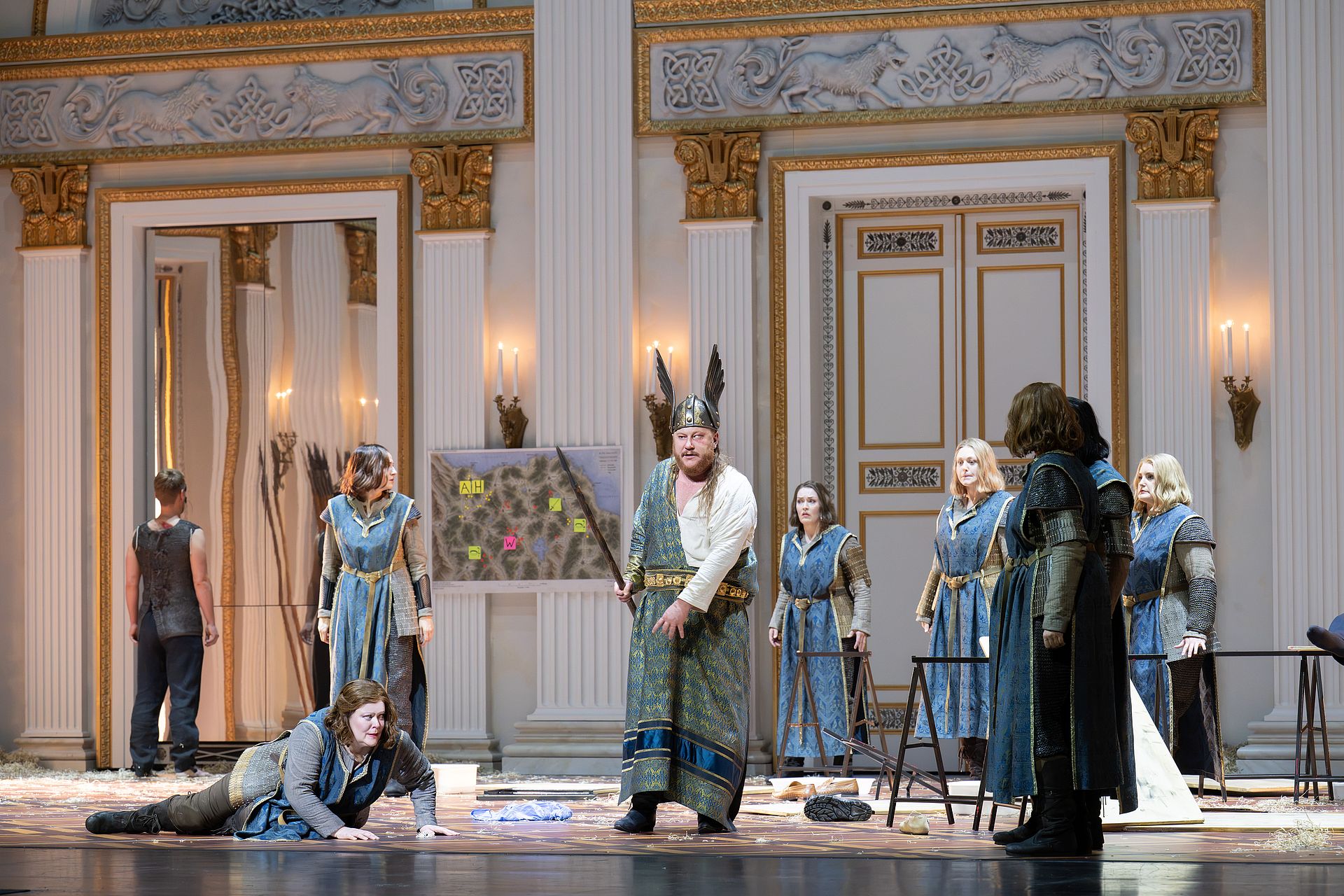
Miina-Liisa Värelä (Brünnhilde) & Nicholas Brownlee (Wotan) in Bayerische Staatsoper’s Die Walküre.
Photo: Monika Rittershaus
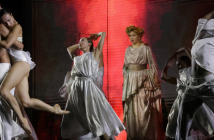
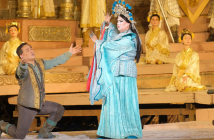
If Die Walküre demonstrated the virtues of interpretative restraint, Carlus Padrissa’s Turandot illustrated the dangers of excess. Puccini’s final opera undoubtedly demands spectacle. Its mythical Peking, inherited from Carlo Gozzi’s eighteenth-century fairy tale rather than historical China, invites theatrical fantasy. Yet Padrissa mistakes incessant visual stimulation for imagination. Set in the year 2046, his production inundates the audience with projections, acrobats, dancers, dystopian imagery and multimedia effects, requiring even the use of 3-D glasses. Every available inch of the stage competes for attention, often at the expense of Puccini’s carefully constructed dramatic architecture.
The irony is that the evening’s finest moments arrived whenever the visual machinery receded. During the riddle scene, the score alone generated all the theatrical tension required, reminding one how little assistance Puccini actually needs. Roland Olbeter’s monumental sets and Chu Uroz’s costumes frequently possessed undeniable visual beauty, but the accumulation of hockey players, futuristic symbolism and elaborate projections often obscured rather than enriched the fairy tale.
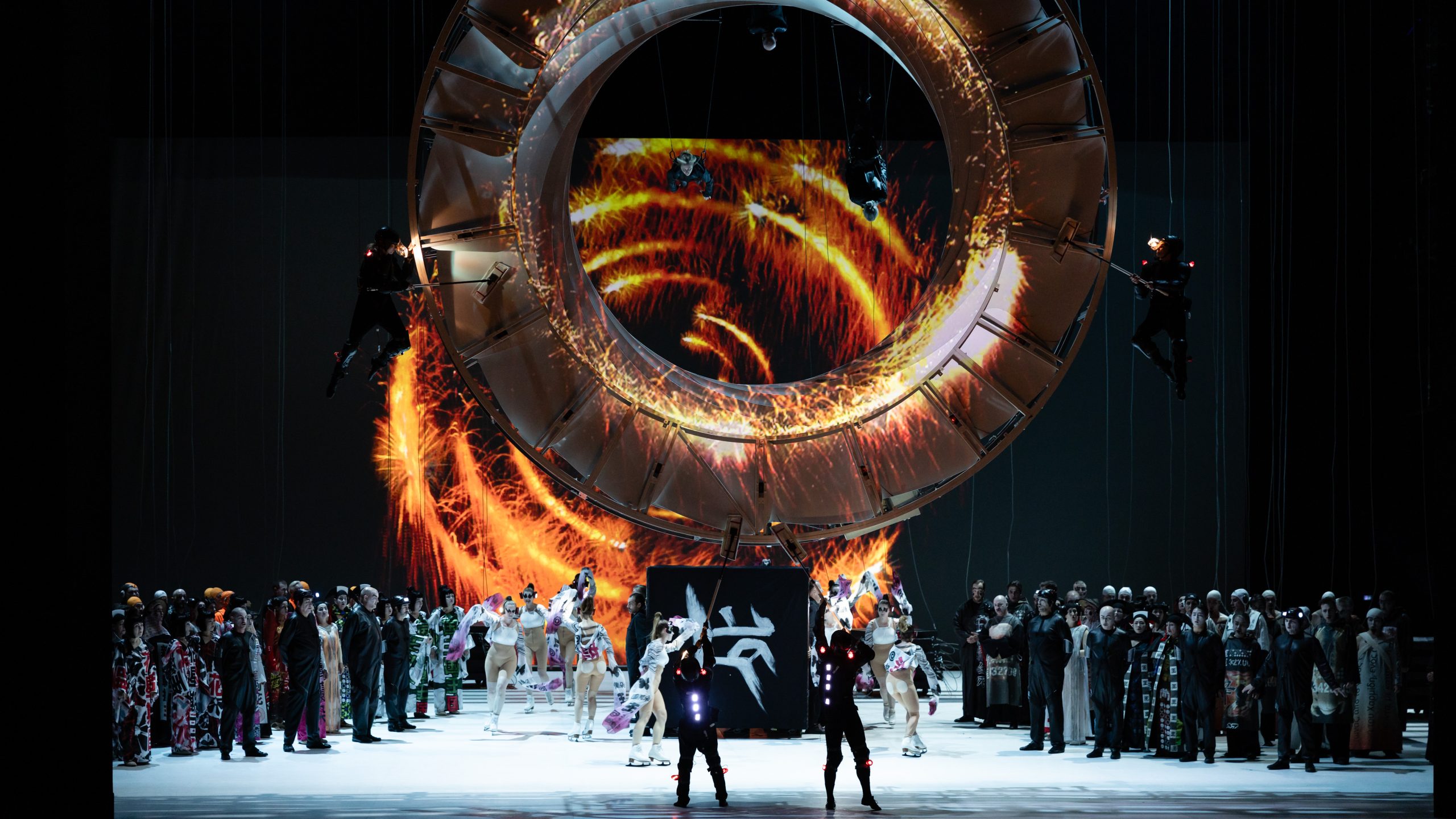
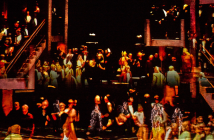
Scene from Bayerische Staatsoper’s Turandot. Photo: Geoffroy Schied
Fortunately, the musical performance proved considerably stronger. Sondra Radvanovsky brought overwhelming vocal authority to the title role, her formidable instrument negotiating “In questa reggia” with fearless command while gradually revealing the heroine’s emerging humanity during the final act. As Calaf, Yonghoon Lee confirmed himself as one of today’s leading heroic tenors, combining effortless vocal power with an increasingly sophisticated command of dynamics and phrasing. Golda Schultz offered an affecting Liù despite a voice perhaps too lacking in pianissimi for the role, while Christian Van Horn brought uncommon dignity to Timur.
Andrea Battistoni emerged as the evening’s true hero. Few conductors today display such instinctive sympathy for Puccini’s late orchestral language, where Impressionistic colour, Straussian opulence and Italian lyricism coexist in perfect equilibrium. He revelled in the luxuriant orchestral writing without ever overwhelming the singers, drawing magnificent playing from the Bavarian State Orchestra and allowing the score’s inexhaustible richness to speak eloquently for itself.
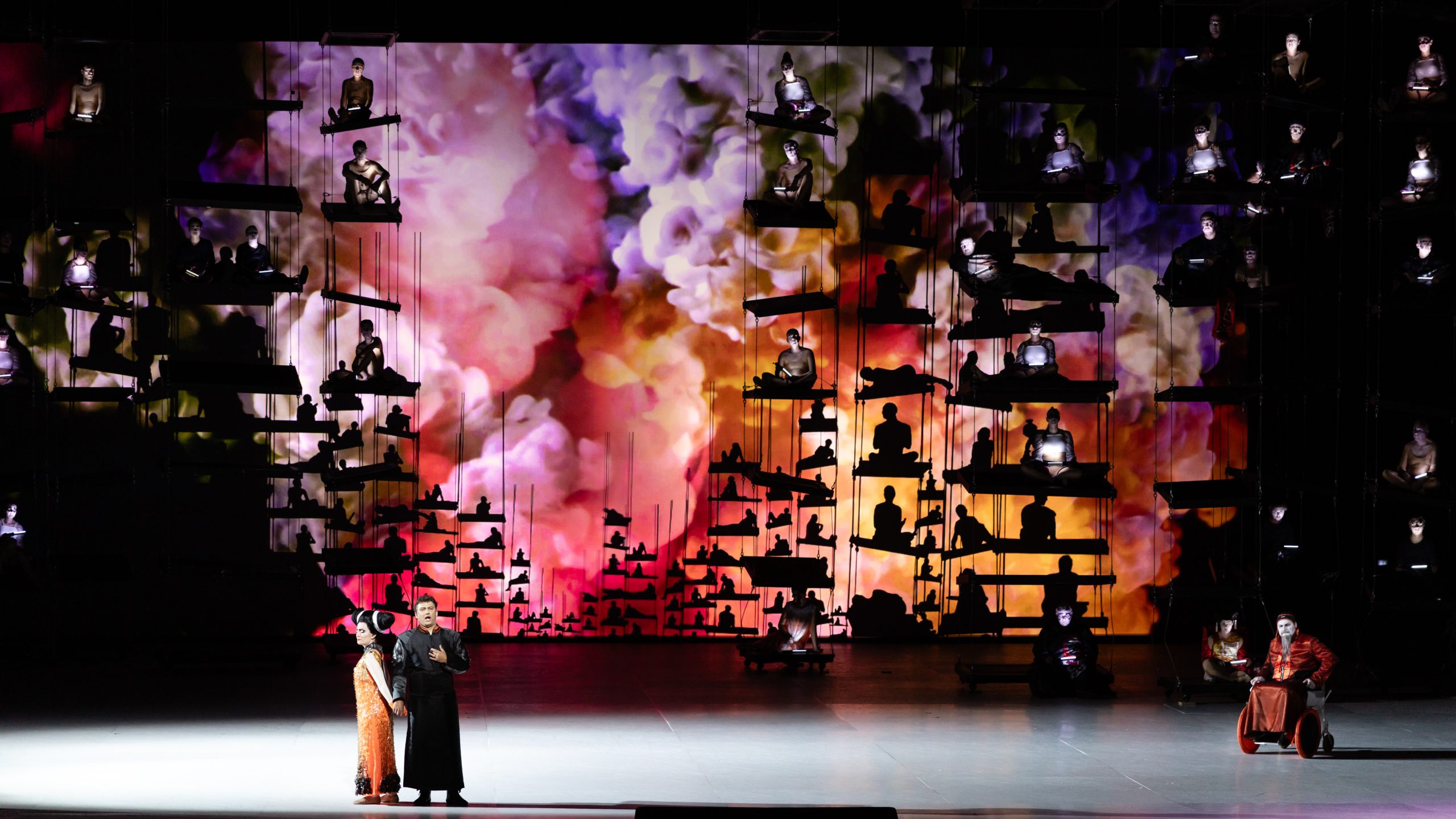
Scene from Bayerische Staatsoper’s Turandot. Photo: Geoffroy Schied
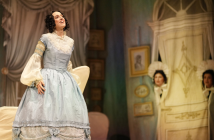
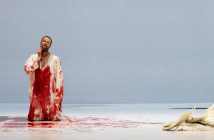
If Turandot overwhelmed through excess, Martin Cicvák’s Macbeth collapsed beneath its determination to shock. Premiered almost two decades ago, the production has aged poorly. What may once have seemed transgressive now appears merely juvenile, substituting obscenity for insight at almost every turn. The persistent cave ceiling, gradually descending as Macbeth’s paranoia intensifies, offered the staging’s single coherent metaphor. Beyond this, the audience was subjected to a succession of sensationalist images—defecation, gratuitous nudity, torture, concentration camp imagery and a grotesquely misconceived sleepwalking scene—that frequently contradicted both Shakespeare and Verdi.
Such directorial excess was especially regrettable because Verdi’s Macbeth, arguably the finest achievement of his early period, scarcely requires embellishment. Shakespeare’s tragedy already contains all the psychological complexity and theatrical power a director could wish for. Cicvák repeatedly mistook provocation for profundity, sacrificing dramatic coherence in pursuit of increasingly crude visual shocks.
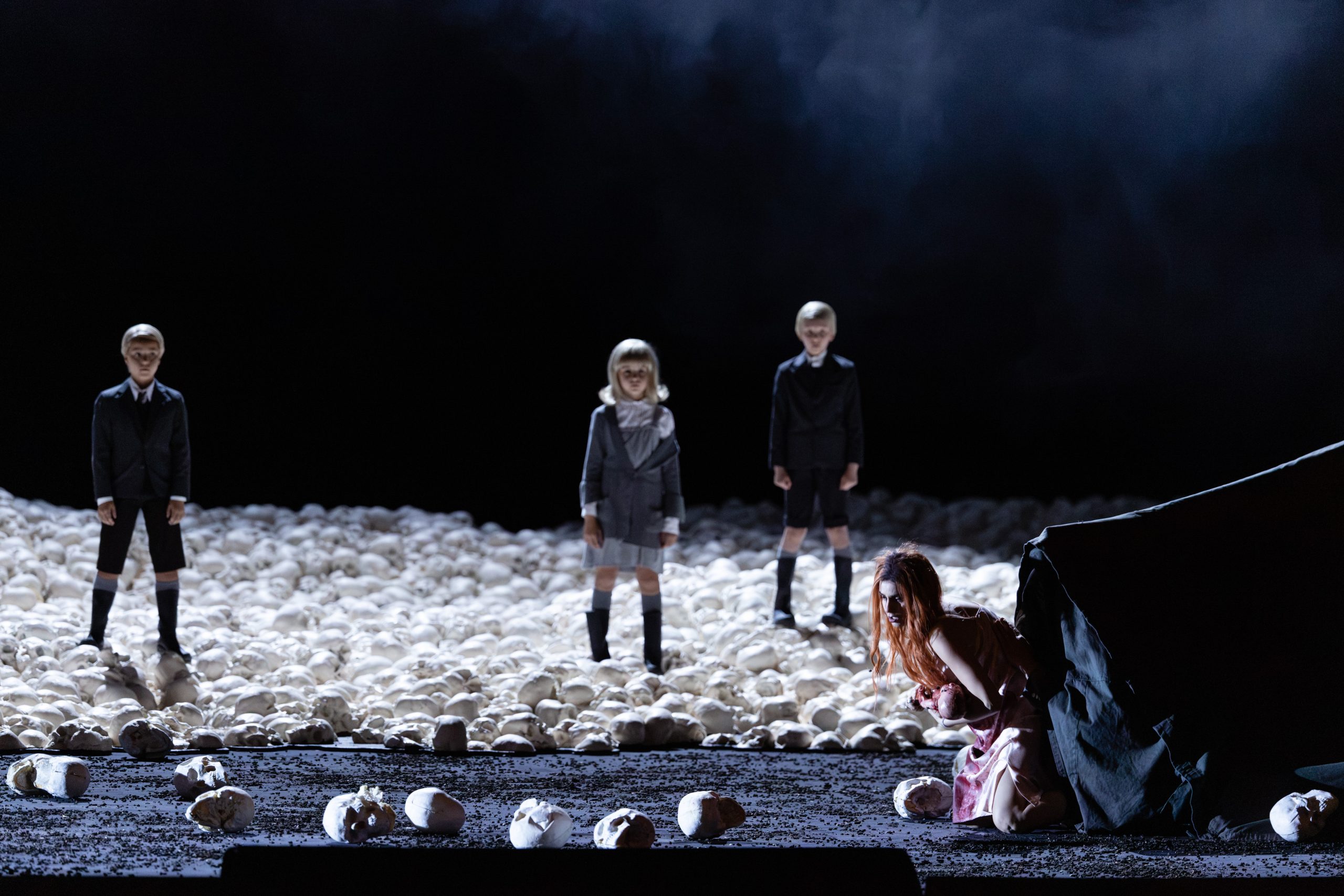
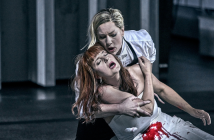
Asmik Grigorian (Lady Macbeth) in Bayerische Staatsoper’s Macbeth. Photo: Geoffroy Schied
Musically, however, the performance possessed one towering achievement in the person of Canada’s Gerald Finley. Macbeth has often been dominated by great Verdian baritones—from Leonard Warren and Piero Cappuccilli to Renato Bruson, Ludovic Tézier and Amartuvshin Enkhbat—whose sumptuous vocal opulence defined the role. Finley approaches the part from an altogether different tradition. Better known as one of today’s supreme Mozart interpreters and among the finest Lieder singers of his generation, he lacks the velvet resonance traditionally associated with Verdi’s great baritone roles. Yet Macbeth is perhaps unique among Verdi’s protagonists in placing psychological insight above sheer vocal splendour, and it is precisely here that Finley proved exceptional.
From his first entrance he portrayed not an inherently tyrannical ruler but an intelligent, fundamentally decent man whose moral collapse unfolded with inexorable tragic logic. Every phrase reflected careful textual thought, every gesture revealed another stage in Macbeth’s disintegration. His ambition remained reluctant rather than triumphant, his guilt palpable long before Banquo’s ghost appeared, and his final solitude achieved genuine pathos. “Pietà, rispetto, amore” became not merely a beautifully sung aria but the confession of a man who finally comprehends the futility of power purchased at the expense of his own humanity. Few contemporary singers unite intellectual seriousness, verbal acuity and dramatic imagination so completely. It was a profoundly Shakespearean interpretation, remarkable less for vocal display than for its psychological truth.
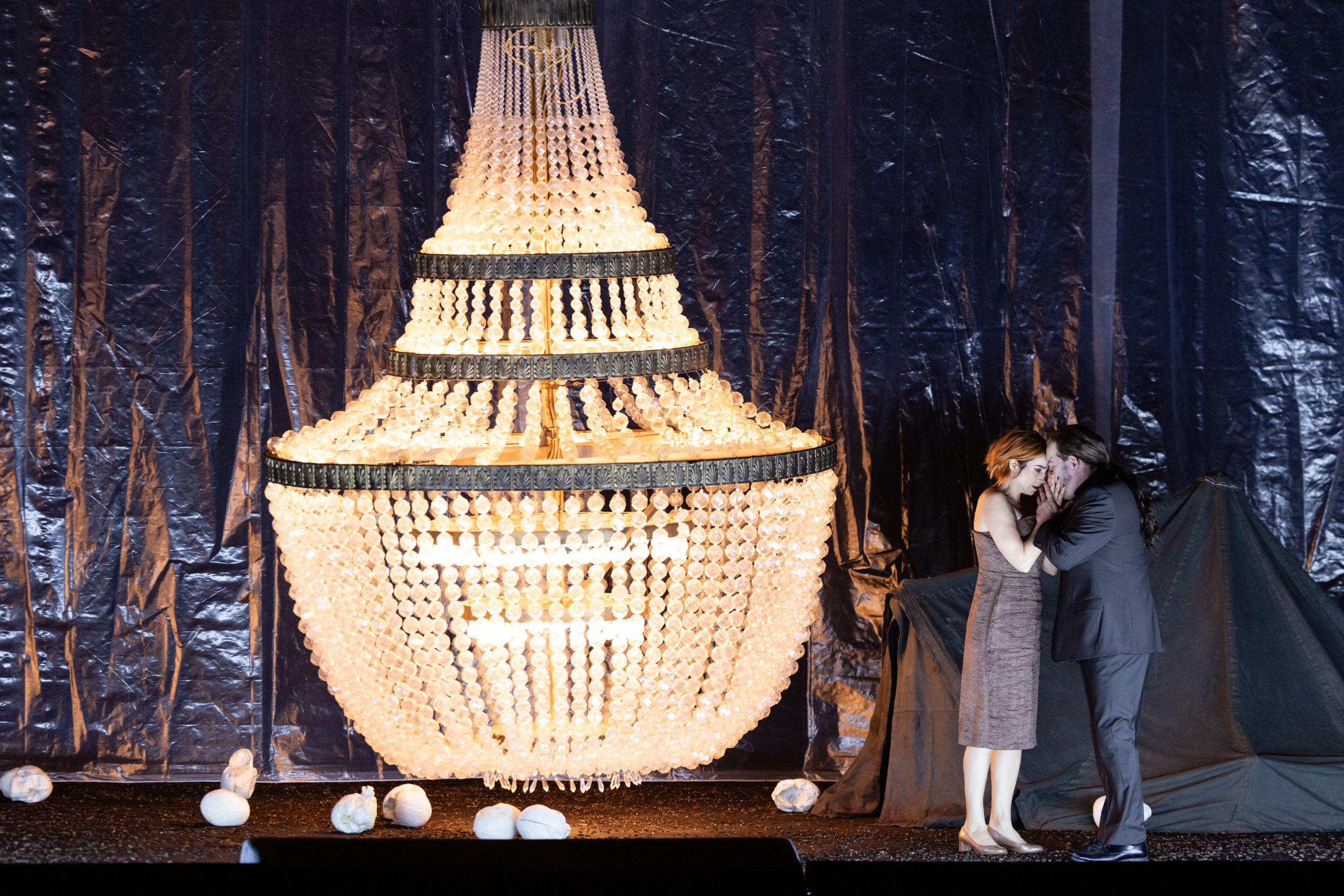
Asmik Grigorian (Lady Macbeth) & Gerald Finley (Macbeth) in Bayerische Staatsoper’s Macbeth.
Photo: Geoffroy Schied
Around him the cast proved uneven. Asmik Grigorian, despite her formidable artistry, remained fundamentally miscast as Lady Macbeth. Her luminous lyric soprano resisted Verdi’s desire for una voce brutta, never quite capturing the character’s terrifying ruthlessness despite an emotionally convincing sleepwalking scene. Roberto Tagliavini’s magnificently sung Banco almost stole the evening, his noble bass and impeccable diction lending uncommon distinction to the role, while Andrei Danilov’s lyrical Macduff and Nontobeko Bhengu’s memorable Lady-in-Waiting provided further musical rewards.
Battistoni again demonstrated his remarkable Verdian instincts, drawing dark, brooding orchestral sonorities while maintaining admirable flexibility towards his singers. Christoph Heil likewise prepared an outstanding chorus, whose contribution remains indispensable in this profoundly choral opera.
Taken together, these three productions offered an illuminating portrait of today’s Bayerische Staatsoper. Its musical standards remain among the highest in the world, supported by an orchestra of extraordinary versatility and conductors of genuine distinction. The staging, however, proved considerably less consistent. Kratzer demonstrated that intellectual seriousness and theatrical imagination need not be mutually exclusive; Padrissa showed how spectacle can overwhelm the very drama it seeks to enhance; Cicvák illustrated the artistic sterility of provocation pursued as an end in itself.
Bayerische Staatsoper’s Munich Opera Festival runs through July 31. For complete programming information visit www.staatsoper.de/en/