Often regarded as the first great opera, this much-awaited production of Monteverdi’s L’Orfeo brings South African artist William Kentridge back to his own beginnings in the genre (seen June 14). It was with Il ritorno d’Ulisse that he made his name on the international opera stage in 1998. I was fortunate to see it in 2011, and the experience remains for me one of the most beautiful, poignant and essential evenings I have ever spent in a theatre.
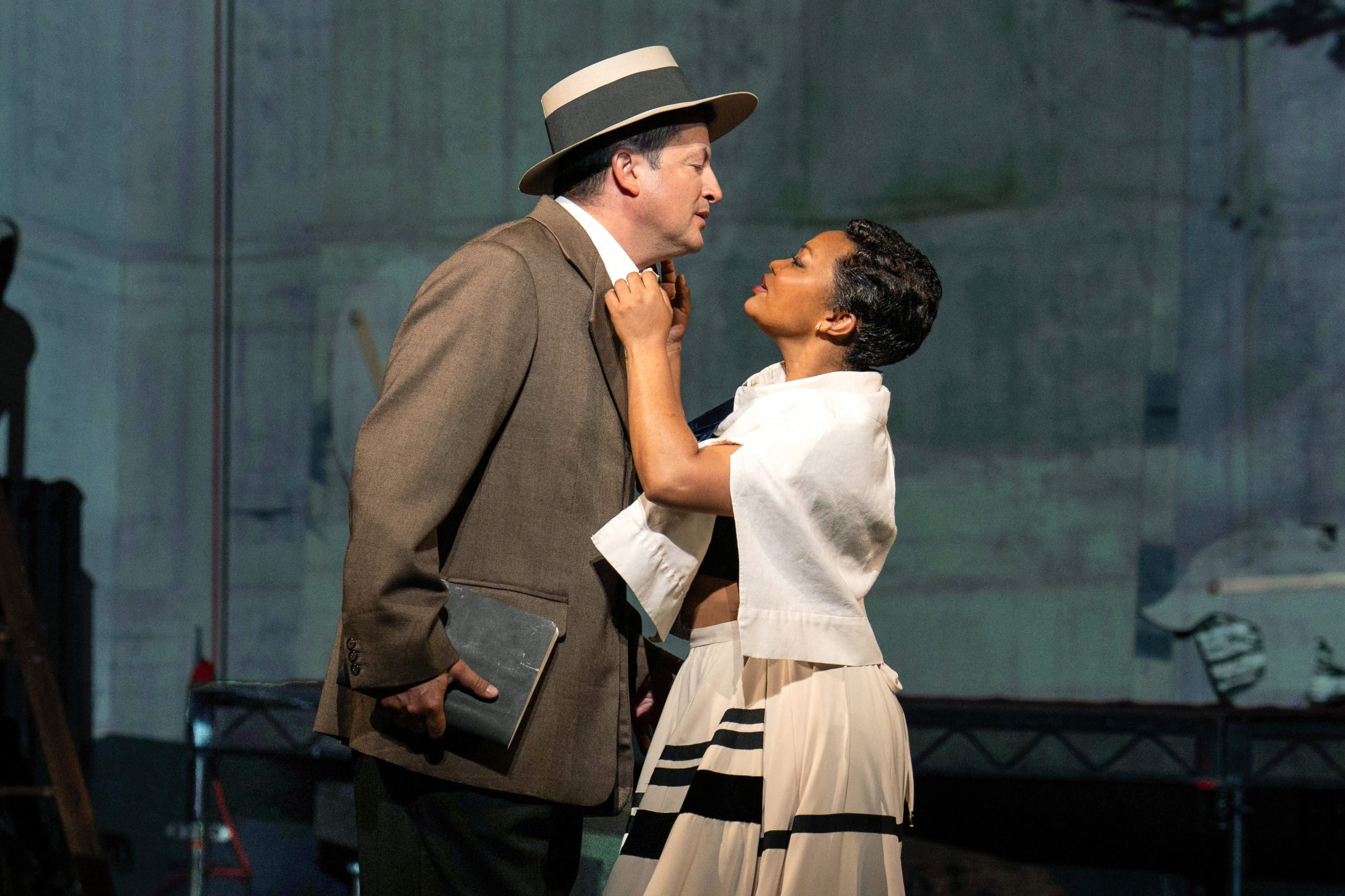
Orfeo (Krystian Adam) & Euridice (danced by Roseline Wilkens) in Glyndebourne Festival’s L’Orfeo, 2026.
Photo: Richard Hubert Smith
Now, nearly three decades later, Kentridge returns to Monteverdi. His new staging of L’Orfeo at Glyndebourne revisits questions that have accompanied him throughout his career. The artist’s studio, memory, doubling, disappearance and the persistence of images have long occupied his films, drawings and theatre works. They find a natural home in the story of Orpheus.
Kentridge’s Orfeo belongs to a small family of stagings that approach the work through memory and the figure of the artist. Among them are Luciano Berio’s Orfeo II and Jean Cocteau’s Orphée.
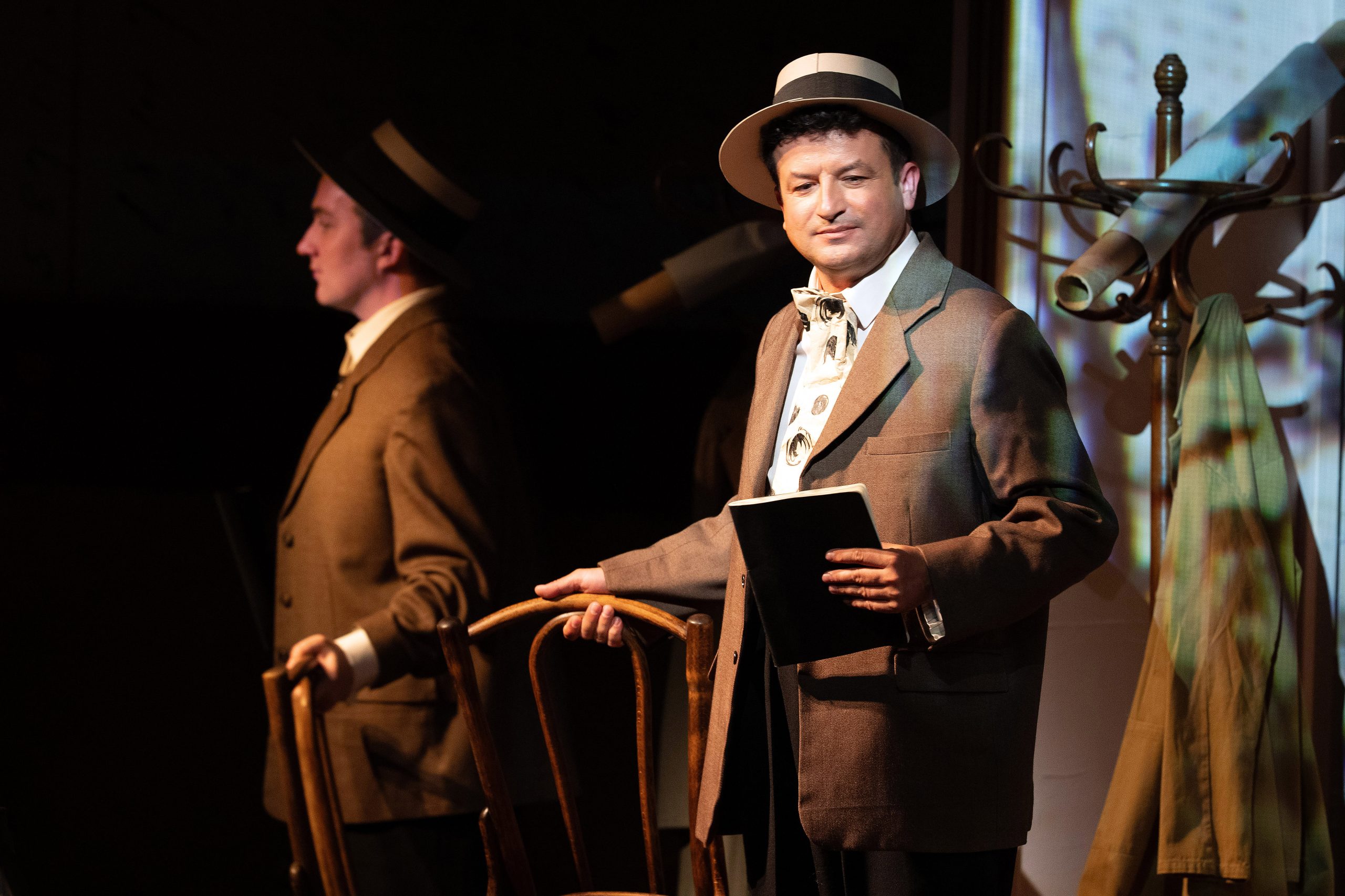
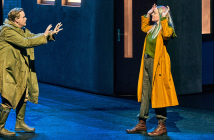
Actor (Nick Frentz) & Orfeo (Krystian Adam) in Glyndebourne Festival’s L’Orfeo, 2026.
Photo: Richard Hubert Smith
Created for the Maggio Musicale Fiorentino, Berio’s Orfeo II was one of the defining theatre works of the 1980s. Conceived for the Piazza Santo Spirito in Florence, it brought together Monteverdi, Cocteau and contemporary music in a form of collage that challenged conventional ideas of opera. Euridice crossed the square on a white horse. Electric guitars sounded from a specially constructed scaffold. Leather-clad motorcyclists, borrowed from Cocteau’s mythology, descended the church stairs into the piazza. Kentridge’s Orfeo belongs to that lineage. Like Berio, he works through collage. Like Cocteau, he turns myth into a self-portrait.
Kentridge’s extraordinary charcoal drawings, projections and moving fragments unfold throughout the evening. The studio stands at the centre. Present throughout his films and artworks—from Felix in Exile to Self-Portrait as a Coffee Pot—it becomes the setting and the subject.
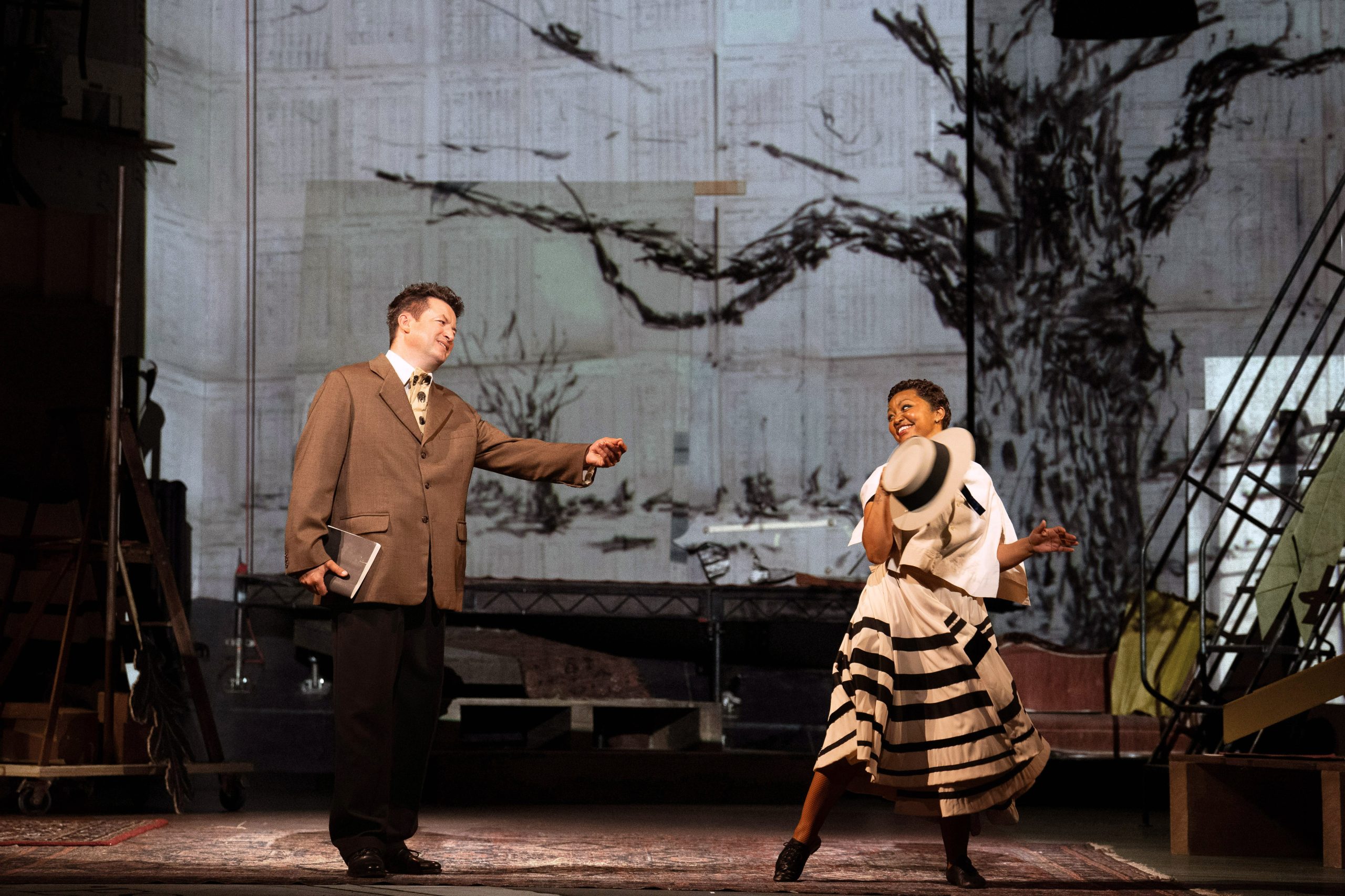
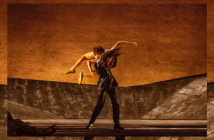
Orfeo (Krystian Adam) & Euridice (danced by Roseline Wilkens) in Glyndebourne Festival’s L’Orfeo, 2026.
Photo: Richard Hubert Smith
Orfeo, dressed in the white shirt, dark jacket and hat familiar from Kentridge’s self-portraits and photos of the artist, appears as his doppelgänger. Orphée and Le Testament d’Orphée come to mind. The poet revisits the figures and images that have accompanied him throughout his life. Kentridge’s earlier opera productions carried his visual language. Here the artist himself enters the work.
Francesca Aspromonte sings Euridice and La Musica. The South African dancer Roseline Wilkens gives Euridice another presence. Wilkens, a long-standing member of Gregory Maqoma’s Vuyani Dance Theatre and a choreographer in her own right, belongs to the tradition of contemporary dance that has flourished in South Africa over the past three decades. Gregory Maqoma (choreographer on this production), Robyn Orlin and the much-regretted Dada Masilo have developed a language in which memory and the body become repositories of history.
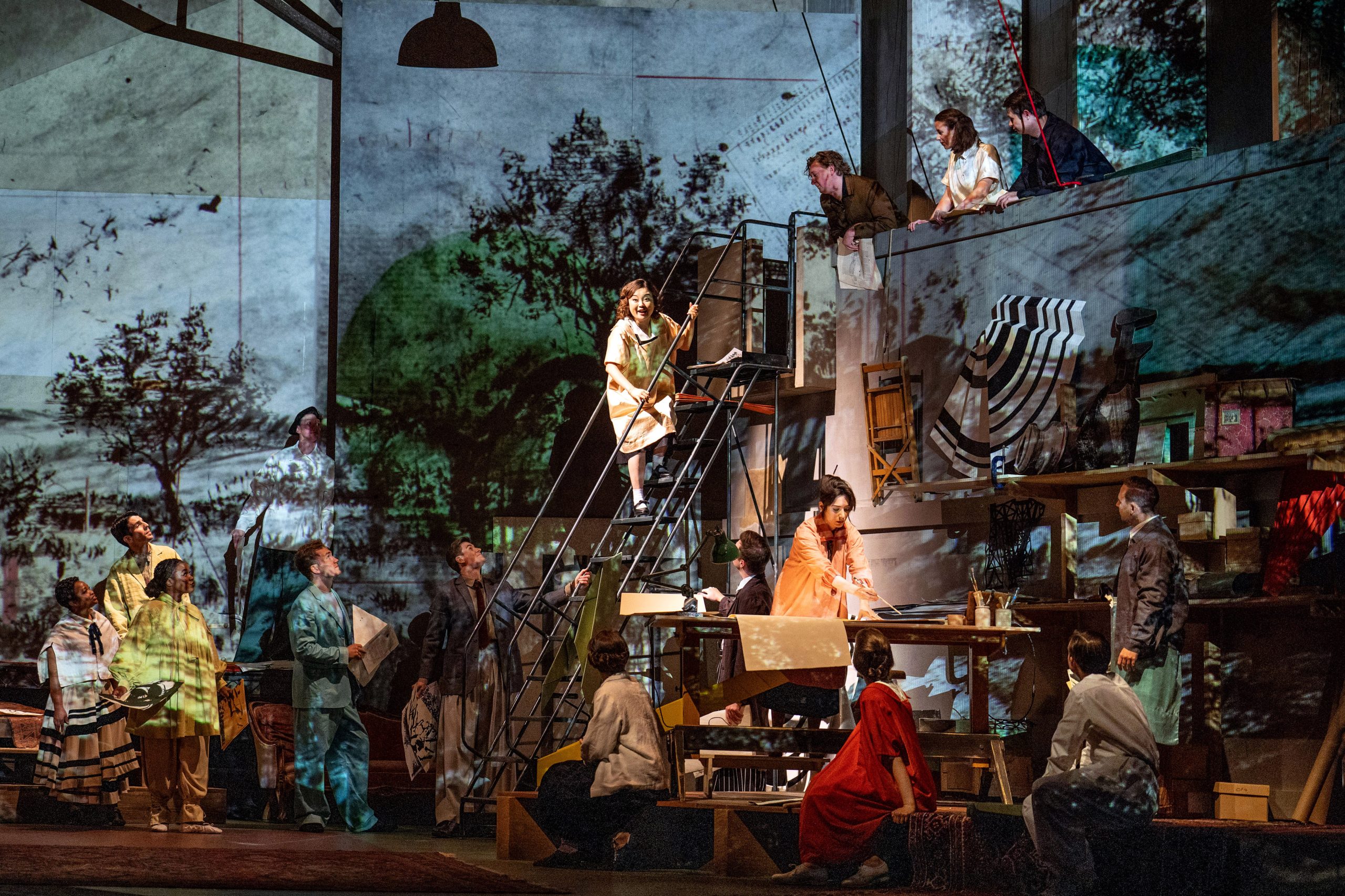
Scene from Glyndebourne Festival’s L’Orfeo, 2026. Photo: Richard Hubert Smith
Wilkens’s performance recalls Trisha Brown’s 1998 production with René Jacobs and Simon Keenlyside. Brown treated dance as part of the drama. Singers and dancers shared the stage, extending the expressive possibilities of one another. Wilkens brings something of that spirit to Kentridge’s Orfeo. She appears as a memory made visible. Her authority and grace remain in the mind long after the final notes.
Jonathan Cohen and the Orchestra of the Age of Enlightenment gave an account of the score that was alive to its colours and rhythms. Under Cohen’s finely judged direction, Monteverdi’s passage from the ideal world of Thrace to the Underworld is heard as much as it is seen. The bright, pastoral colours yield to the darker, more archaic sonorities of cornetti and sackbuts, whose piercing timbre gives the realm of Caronte and Plutone its unsettling, infernal character.
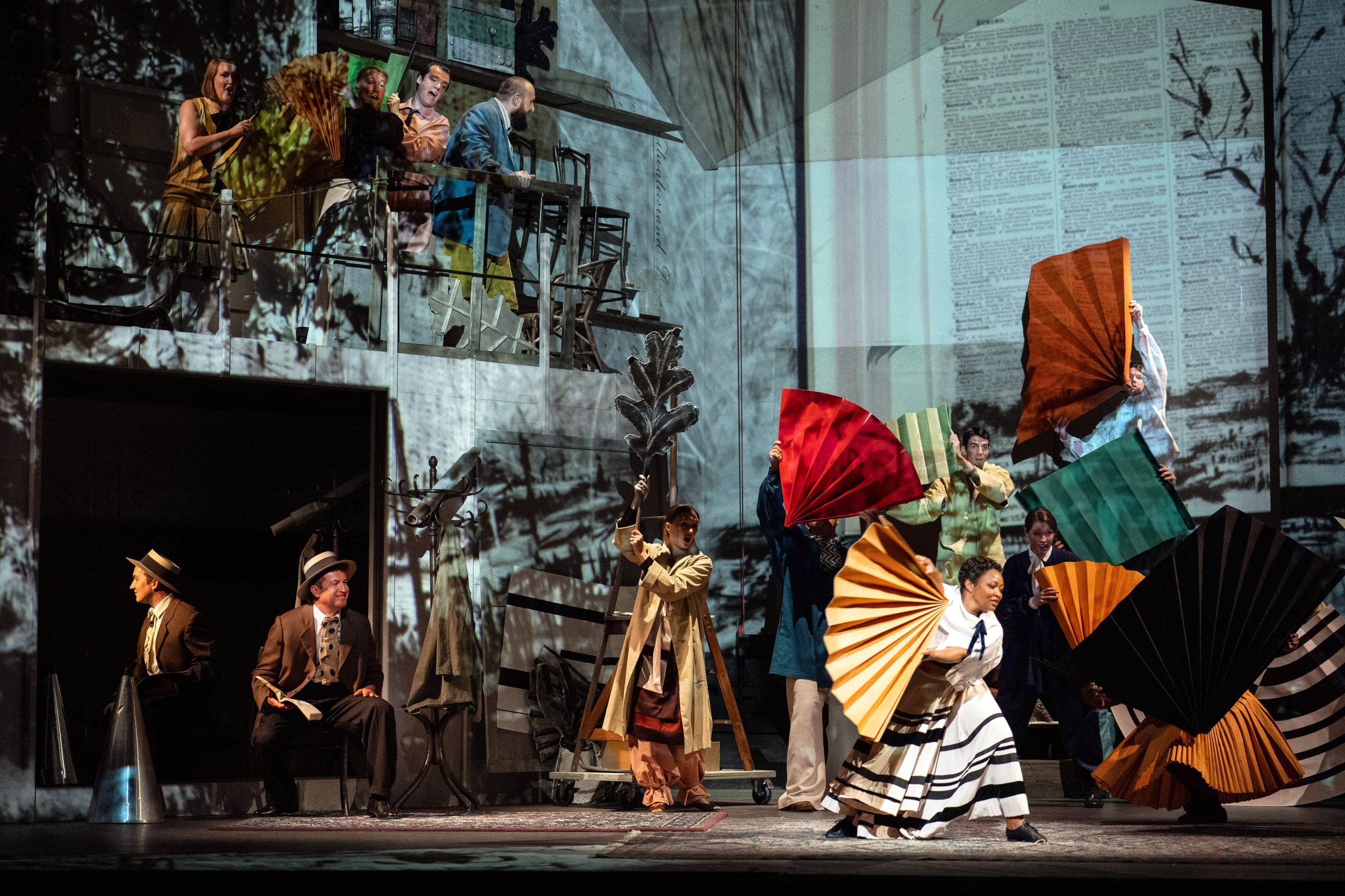
Actor (Nick Frentz), Orfeo (Krystian Adam), Euridice (danced by Roseline Wilkens) & members of the Glyndebourne Chorus in Glyndebourne Festival’s L’Orfeo, 2026. Photo: Richard Hubert Smith
The voices stayed in the shadow of the images. Francesca Aspromonte brought intelligence and grace to her dual role. Xenia Puskarz Thomas’s Messenger and La Speranza carried much of the emotional weight of the evening, but her often straight-toned sound occasionally sacrificed beauty of timbre. Leia Lensing’s Proserpina made a strong impression. Krystian Adam’s Orfeo sang with refinement and understanding. The voice itself lacked colour and amplitude.
Simon Keenlyside’s Orfeo for Trisha Brown and René Jacobs remains a reference for beauty of tone and dramatic presence. Marc Mauillon (Opéra Comique, Paris 2021) brings style, freedom and a natural command of Monteverdi’s language. Both suggest qualities that this performance achieved only intermittently.
Following Glyndebourne, the production will travel to Greece before arriving at the Metropolitan Opera in New York, where a new orchestration by the American composer Nico Muhly will add another layer to Kentridge’s vision. The journey suits a production that treats L’Orfeo as a work capable of endless transformation.
Glyndebourne’s production of Monteverdi’s L’Orfeo continues its run through July 25.