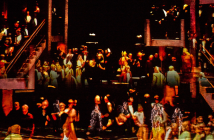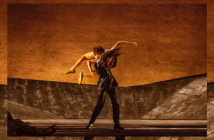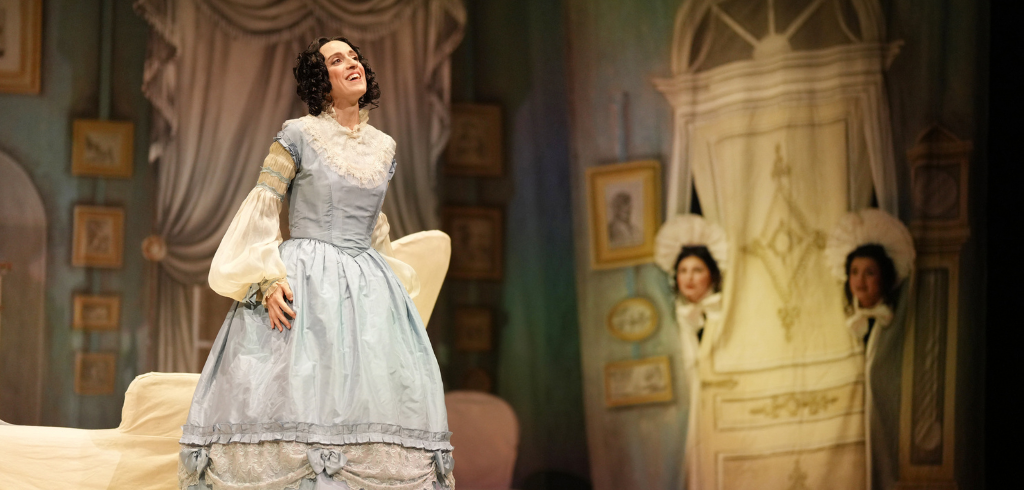
Among the many pleasures of returning to the Rossini Opera Festival is the opportunity to encounter productions that have acquired the status of living theatrical monuments. Few have proved as remarkably durable as Jean-Pierre Ponnelle’s L’occasione fa il ladro, first presented in Pesaro in 1987, revived in 1996 and 2013, and now returned once again for the 2026 festival.
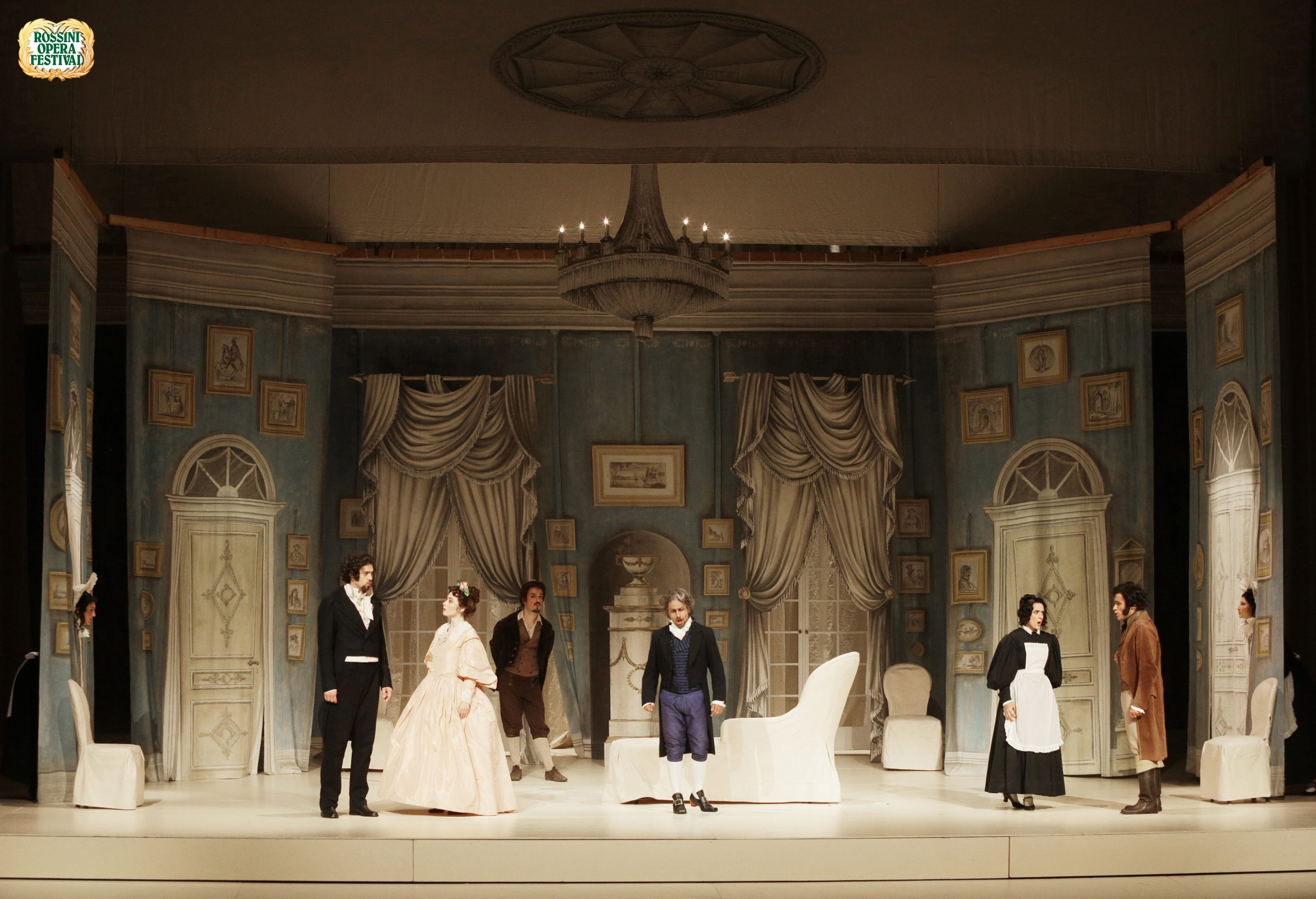
Scene from Rossini Opera Festival’s L’occasione fa il ladro. Photo: Amati Bacciardi
For me, this revival possessed a particular resonance: this was the very opera I saw in 1987, on my first visit to Pesaro, at the beginning of what would become many subsequent pilgrimages to the festival. To encounter Ponnelle’s production again, nearly four decades later, was therefore more than an exercise in operatic archaeology. It was a reminder of how genuinely great theatre can survive the passage of time without requiring cosmetic renovation or fashionable reinterpretation.
Rossini’s two-act farce (seen Aug. 12), first performed in Venice in 1812, is built around an absurdly simple premise. A traveller’s suitcase is accidentally exchanged, identities become confused, and romantic possibilities arise from the ensuing deception. Martino, the servant of Don Parmenione, becomes the unwitting catalyst for a chain of misunderstandings involving Count Alberto, Berenice, Ernestina and Don Parmenione himself. The plot is slight, but that is precisely the point: Rossini transforms an almost weightless comic premise into a miniature laboratory of theatrical timing, ensemble writing and vocal characterization, and Ponnelle understood this perfectly.
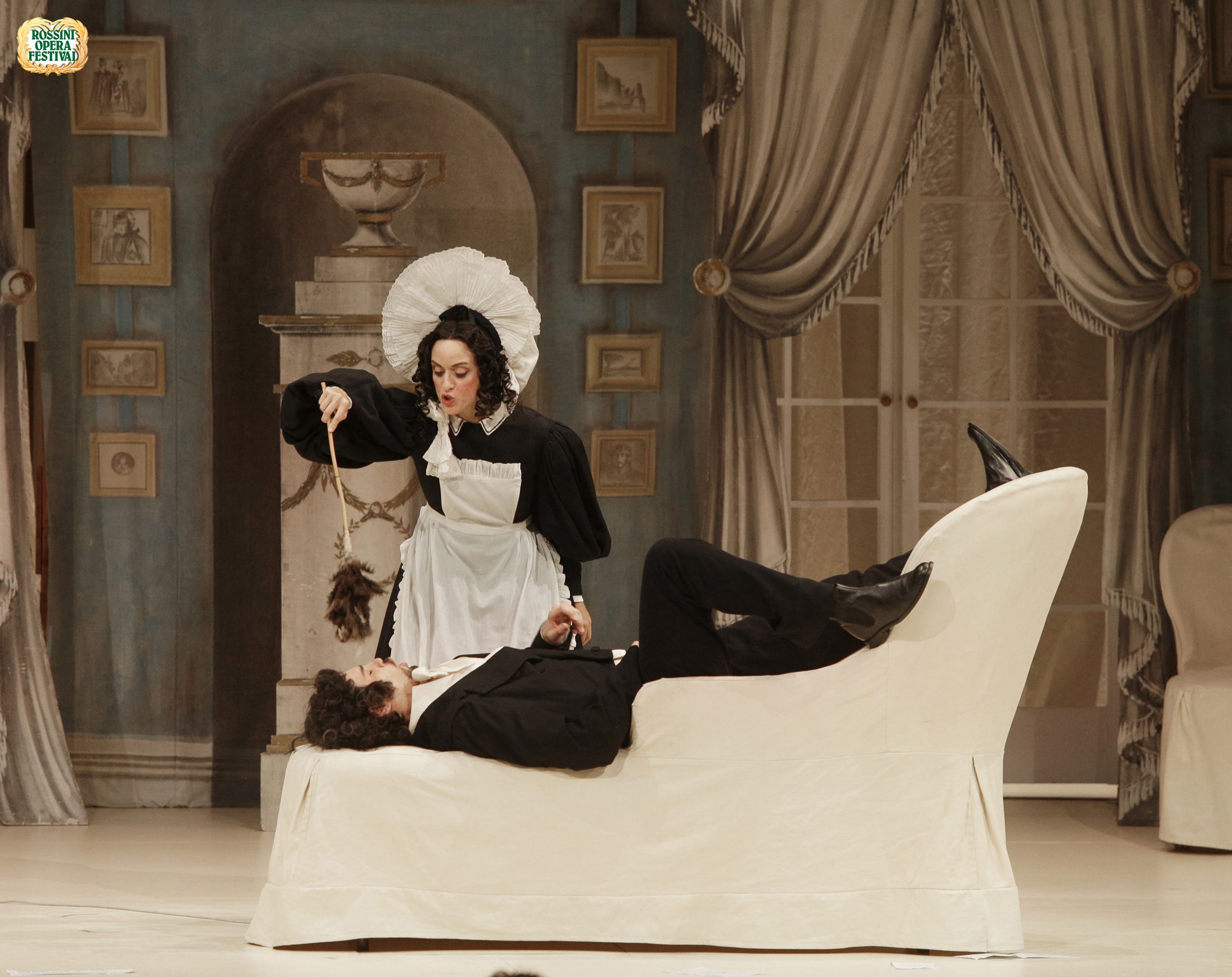
Damiana Mizzi (Berenice) & Matteo Mancini (Don Parmenione) in Rossini Opera Festival’s L’occasione fa il ladro. Photo: Amati Bacciardi
What was so striking on returning to the production was not merely that it had survived, but how little it seemed to have aged. Ponnelle’s achievement lay in understanding that theatrical imagination does not require theatrical gigantism. His stage machinery remains visibly artificial; his painted backdrops proclaim their own illusion; the mechanisms of the theatre are not concealed but lovingly exposed. Yet the result is paradoxically more convincing than so much supposedly “realistic” contemporary stagecraft.
One could not help reflecting on the contrast with much of today’s directorial theatre. At a time when directors are often tempted to inflate modest works with conceptual apparatus, political subtexts and visual contrivances that compete with the score, Ponnelle demonstrated the extraordinary power of clarity, proportion and imagination. His production did not attempt to make L’occasione fa il ladro into something it was not. It simply revealed what was already there. How many contemporary directors would trust a Rossinian farce enough to leave it alone?
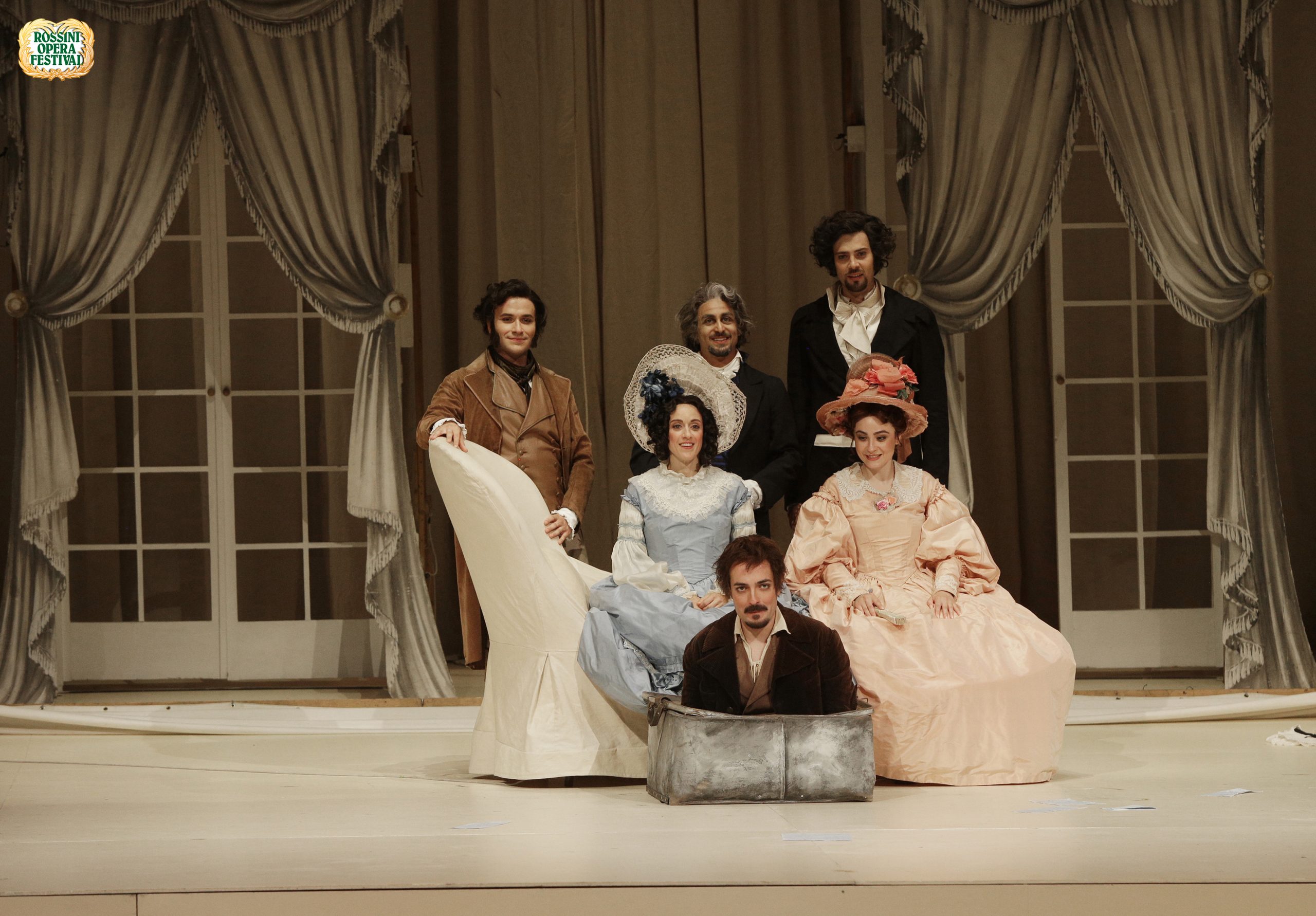
Scene from Rossini Opera Festival’s L’occasione fa il ladro. Photo: Amati Bacciardi
The answer was evident in the infectious theatricality of this revival, faithfully recreated by Sonja Frisell. Every gesture had a purpose, every entrance and exit contributed to the musical rhythm, and the singers were allowed to be actors rather than merely vocalists navigating an imposed concept. The visible machinery became part of the comedy rather than an obstacle to it.
The production also provided a salutary reminder that there is no such thing as a “minor” Rossini opera. The composer’s musical imagination remained as concentrated in this 90-minute comedy as in the more imposing scores that dominate the festival repertoire. The distinction lies not necessarily in the size of the work, but in the quality of its interpretation.
Dave Monaco in Rossini Opera Festival’s L’occasione fa il ladro. Photo: Amati Bacciardi
Alessandro Bonato, making his Pesaro opera debut, approached the score with precisely that understanding. His conducting combined discipline with flexibility, allowing Rossini’s rhythmic vitality to emerge without turning the music into a mere exercise in speed. The Rossini Symphony Orchestra responded with playing of considerable refinement, and Bonato paid particular attention to colour, articulation and the expressive function of the accompaniment. His Rossini was animated rather than frenetic. Tempi breathed, phrases acquired shape, and the apparently mechanical structures of the ensemble writing were given an unmistakable theatrical pulse.
The cast benefited enormously from this approach. Dave Monaco, whom I had admired two months earlier in Donizetti’s comic opera Enrico di Borgogna in Venice, confirmed his credentials as one of the more promising bel canto tenors of his generation as Count Alberto. His voice combined virility with lyric tenderness, while his coloratura was delivered with assurance and precision. His account of “D’ogni più sacro impegno” was particularly successful because it sounded personal rather than derivative.
As Berenice, Damiana Mizzi displayed the essential qualities of a Rossinian soprano leggiero: ease in the upper register, agility and a natural affinity for virtuosity. Under Bonato’s direction, however, she also brought greater warmth and softness to her lyrical writing.
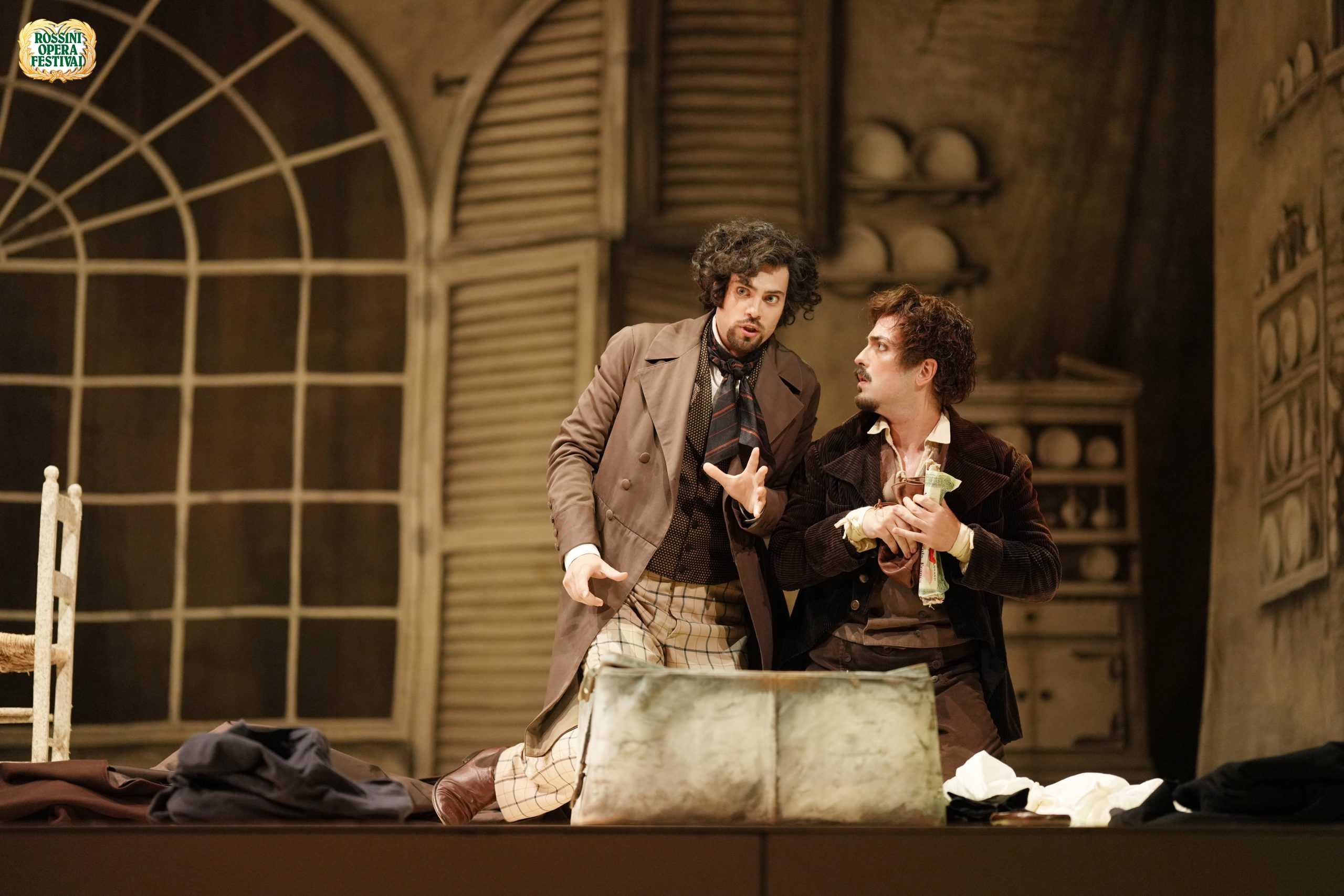
Matteo Mancini (Don Parmenione) & Giuseppe Toia (Martino) in Rossini Opera Festival’s L’occasione fa il ladro. Photo: Amati Bacciardi
Matteo Mancini made a strongly characterized Don Parmenione. His imposing physical presence was matched by a bright, clearly focused baritone and an increasingly assured command of Rossinian style. Martiniana Antonie proved a charming and well-matched Ernestina, while Manuel Amati brought a welcome touch of comic extravagance to the smaller role of Don Eusebio.
The real catalyst, however, was Giuseppe Toia’s Martino. As Parmenione’s servant, he occupied the position of a miniature Leporello to his master’s Don Giovanni, manipulating the action with the suitcase that effectively contains the entire theatrical universe. Toia combined vocal solidity with musicality, comic intelligence and an increasingly persuasive stage presence.
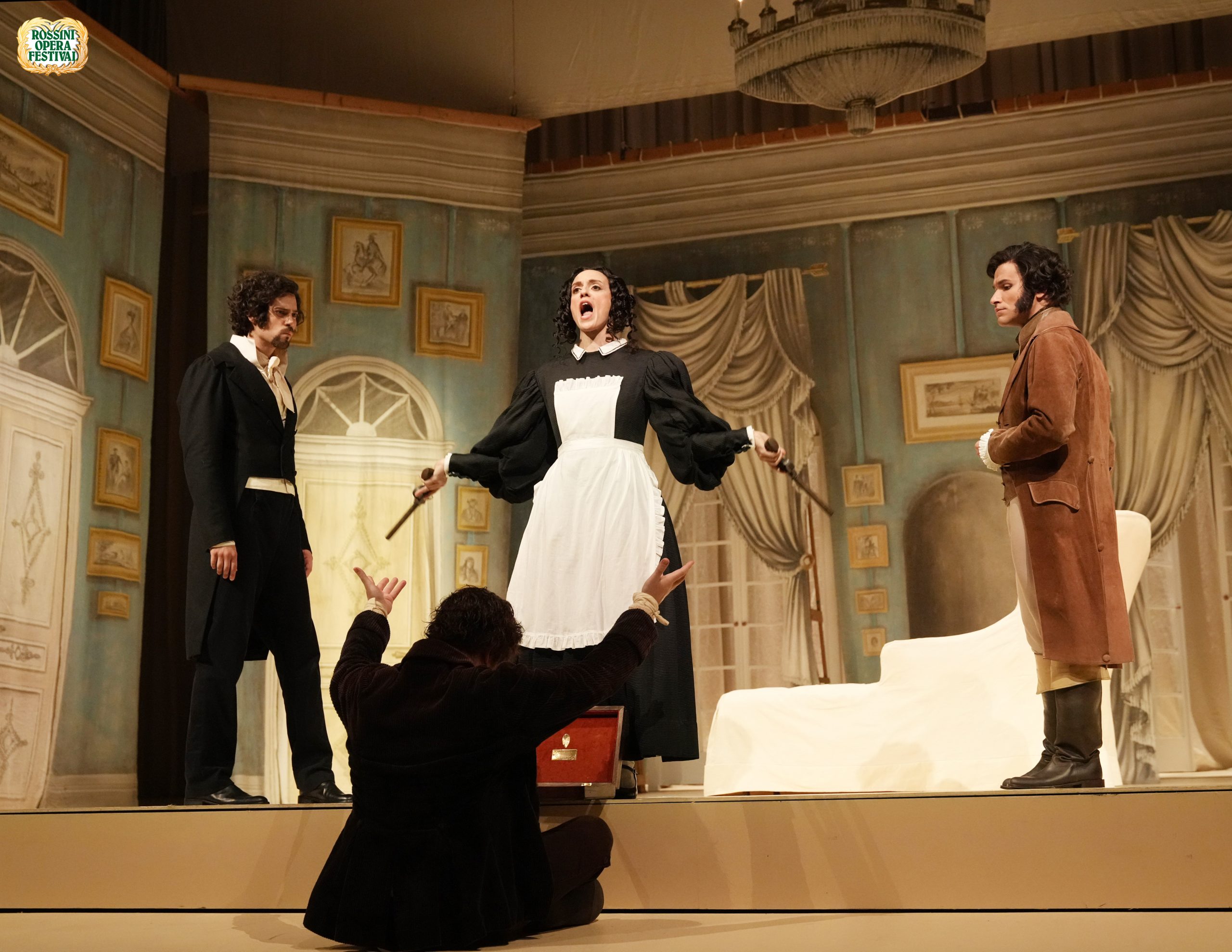
Scene from Rossini Opera Festival’s L’occasione fa il ladro. Photo: Amati Bacciardi
What ultimately made the evening so satisfying was its sense of ensemble. No performer appeared intent on making the opera a personal showcase. The singers listened to one another, responded to the stage action and allowed Rossini’s ensemble writing to generate the comedy organically.
That quality may sound deceptively simple. It is not. Ponnelle knew that simplicity is among the most difficult achievements in theatre. His L’occasione fa il ladro remains a lesson in theatrical economy: a little can indeed contain a great deal when it is handled by an artist of genius.
Returning to the production I first encountered in Pesaro in 1987 was therefore an unexpectedly moving experience. Nearly 40 years on, Ponnelle’s theatre remained fresh, funny and extraordinarily alive. More than a historical curiosity, his L’occasione fa il ladro stood as a rebuke to the notion that opera must constantly be reinvented to remain relevant. Sometimes the greatest act of directorial imagination is simply to understand the work.
Rossini Opera Festival’s L’occasione fa il ladro continues its run through Aug. 20.