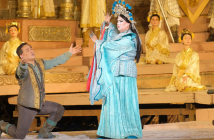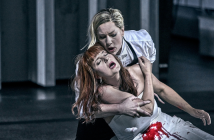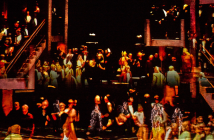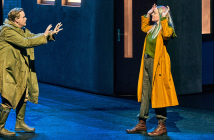
Three days in Hanover, Germany—a city of barely half a million inhabitants—yielded three entirely different opera experiences: Korngold’s Die tote Stadt, Verdi’s Il trovatore and Rossini’s Il barbiere di Siviglia. That such artistic variety can be experienced in so short a time is a powerful reminder of what makes the German opera system unique. The repertoire model, sustained by the permanent ensemble system that remains the pride of German opera houses, allows companies like Staatsoper Hannover to maintain an astonishing breadth of productions and a resident roster of singers capable of mastering an immense stylistic range. Few countries can offer such abundance, where late Romanticism, Verdian drama and Rossinian comedy can coexist within a single weekend at such a consistently high musical standard.
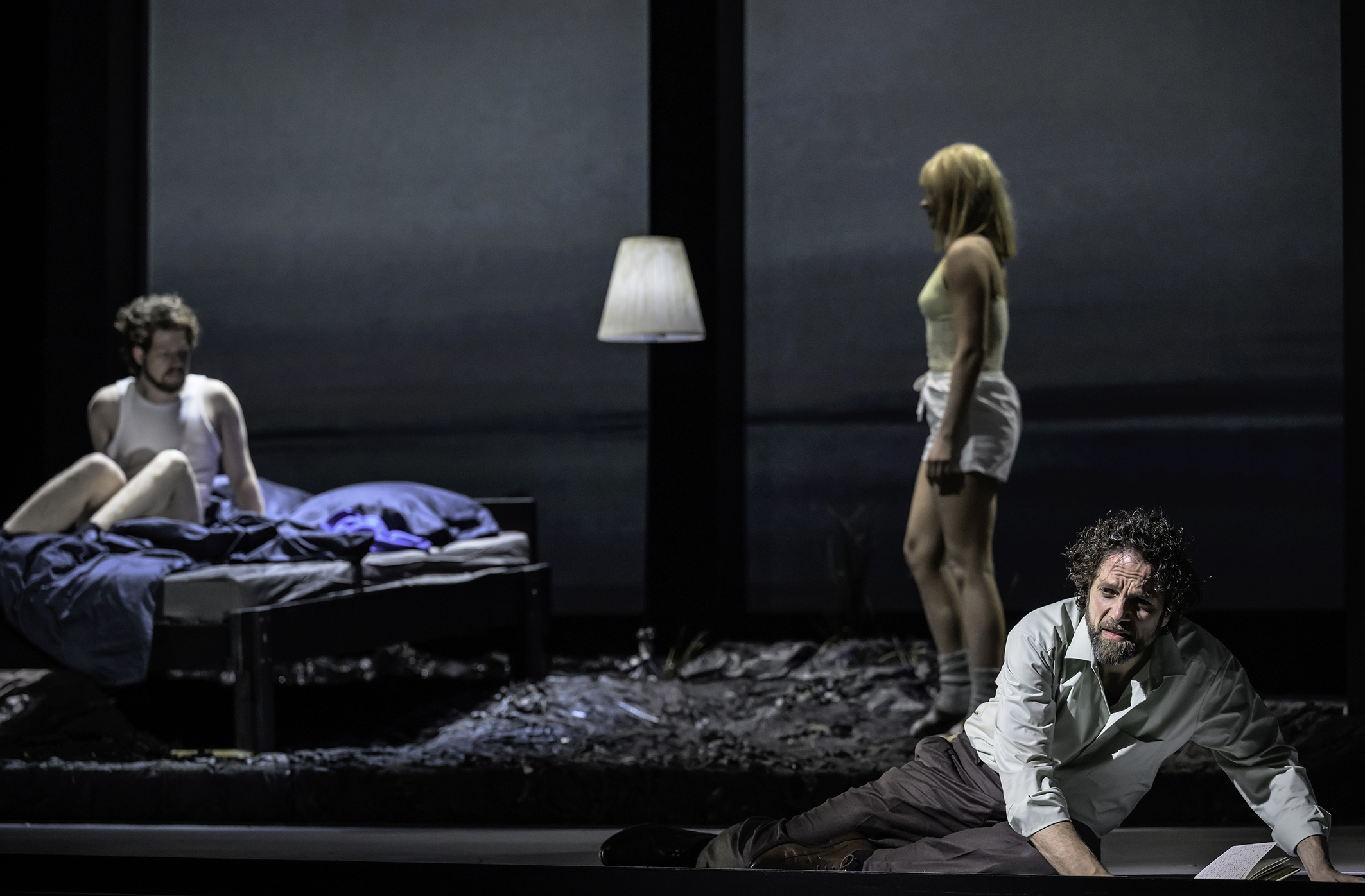
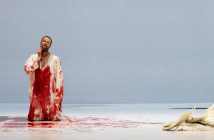
Mirko Roschkowski (Paul) in Staatsoper Hannover’s Die tote Stadt. Photo: Bettina Stöß
The three productions varied considerably in quality. Die tote Stadt suffered from an over-conceptualized staging that obscured the opera’s simple yet profoundly moving meditation on grief and memory, despite committed musical performances. Il trovatore fared considerably better: Wolfgang Nägele’s modern setting occasionally strained credibility but remained dramatically engaging, while Masaru Kumakura led a gripping performance distinguished by Cristiana Oliveira’s elegant Leonora and Silvia Beltrami’s deeply felt Azucena.

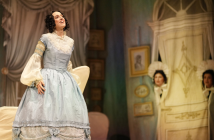
Matteo Guerzè (Figaro) in Staatsoper Hannover’s Il barbiere di Siviglia. Photo: Bettina Stöß
Rossini’s Il barbiere di Siviglia was likewise undermined by an unattractive production and intrusive video projections, but the evening was triumphantly redeemed by the vitality of the young ensemble. At its heart stood Matteo Guerzè, whose Figaro proved nothing short of a revelation. Possessing a warm, resonant baritone, effortless comic timing and boundless stage charisma, he dominated every scene without ever forcing the effect. His famous entrance aria radiated confidence, but it was throughout the evening that he impressed most, combining vocal polish with an instinctive understanding of Rossinian style and an infectious theatrical energy. Rarely does one encounter a Figaro who seems so completely at ease both vocally and dramatically. Alongside him, Beatriz Miranda’s delightful Rosina matched his freshness and sparkle, making their scenes together the undeniable highlight of the performance.
The greatest revelation of the visit, however, was shared between two exceptional young artists. Guerzè’s Figaro announced the arrival of a singing actor of remarkable natural gifts, one whose musical sophistication and magnetic stage presence suggest the potential for an important international career. Equally memorable was the young Lebanese tenor Joseph Dahdah.
Heard previously as Don José in the Italian city of Pavia’s production of Carmen in January, he confirmed in his role debut as Manrico that he is one of the most exciting lyric tenors of his generation. Endowed with a handsome, youthful timbre, effortless high notes, impeccable Italian diction and uncommon dramatic intelligence, he combined vocal security with an instinctive sense of style and an engaging stage presence. Rather than overwhelming colleagues, he sang with genuine ensemble awareness while still emerging as the emotional centre of the performance. If his development continues at this pace, the international stage surely awaits him.
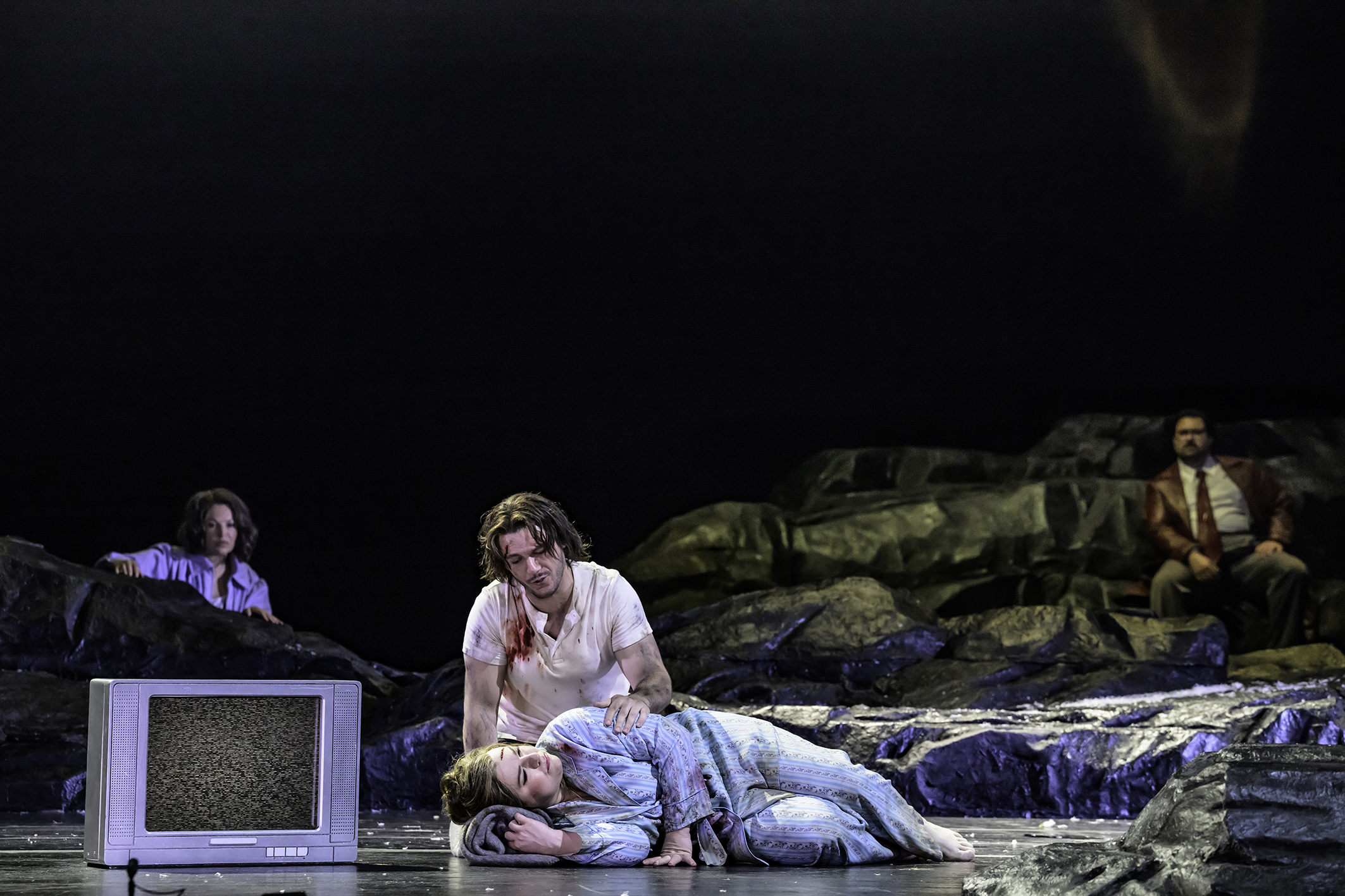
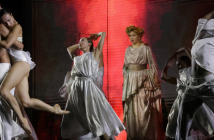
Scene from Staatsoper Hannover’s Il trovatore. Photo: Bettina Stöß
Guerzè and Dahdah represent very different artistic temperaments—one flourishing in comic brilliance, the other in lyrical heroism—but both displayed the rare combination of technical assurance, stylistic integrity and communicative immediacy that marks artists destined for wider recognition.
Ultimately, Hannover demonstrated why Germany remains one of the world’s great operatic nations. The repertoire system makes it possible to encounter three masterpieces in three consecutive evenings, while the ensemble system continually introduces audiences not only to established artists but also to tomorrow’s stars. During this short visit I witnessed both: the remarkable institutional strength of Staatsoper Hannover and the emergence of two outstanding young singers. Joseph Dahdah confirmed the exceptional promise he had already shown earlier this year, while Matteo Guerzè’s dazzling Figaro was perhaps the weekend’s single most joyful surprise—a performance of such confidence, charm and artistry that it lingered in the memory long after the curtain fell.
More on Staatsoper Hannover’s season can be found here.