Opening this year’s Festival d’Aix-en-Provence in the courtyard of the Théâtre de l’Archevêché on July 2, Clément Cogitore’s new production of Die Zauberflöte confronts one of opera’s most intractable challenges and confirms the filmmaker’s singular theatrical vision. His 2019 staging of Rameau’s Les Indes galantes, created in collaboration with the choreographer Bintou Dembélé and a collective of krump dancers, transformed the work into one of the defining operatic events of recent years at the Opéra Bastille, though regrettably it never toured.
Mozart’s final masterpiece, however, poses an even more difficult problem and has long defeated even the most experienced opera directors. The first obstacle is simply to make sense of a work whose plot meanders between fairy tale, Masonic ritual, popular theatre and philosophical meditation. Every director must decide which thread to follow.
Scene from Die Zauberflöte at Festival d’Aix-en-Provence. Photo: Jean-Louis Fernandez
Cogitore, one of the leading contemporary artists of his generation and recipient of the prestigious Prix Marcel Duchamp, thinks in images, and those images become the principal vehicle of his interpretation. If at times his vision lacks clarity, it never fails to move or enthral. From the opening moments, it is clear that this will be neither a comfortable evening nor a playful Zauberflöte. Instead, Cogitore reads the opera through the history of the twentieth century, asking what remains of the Enlightenment’s promises of reason, progress and humanism in a world that continues to repeat the failures of the past.
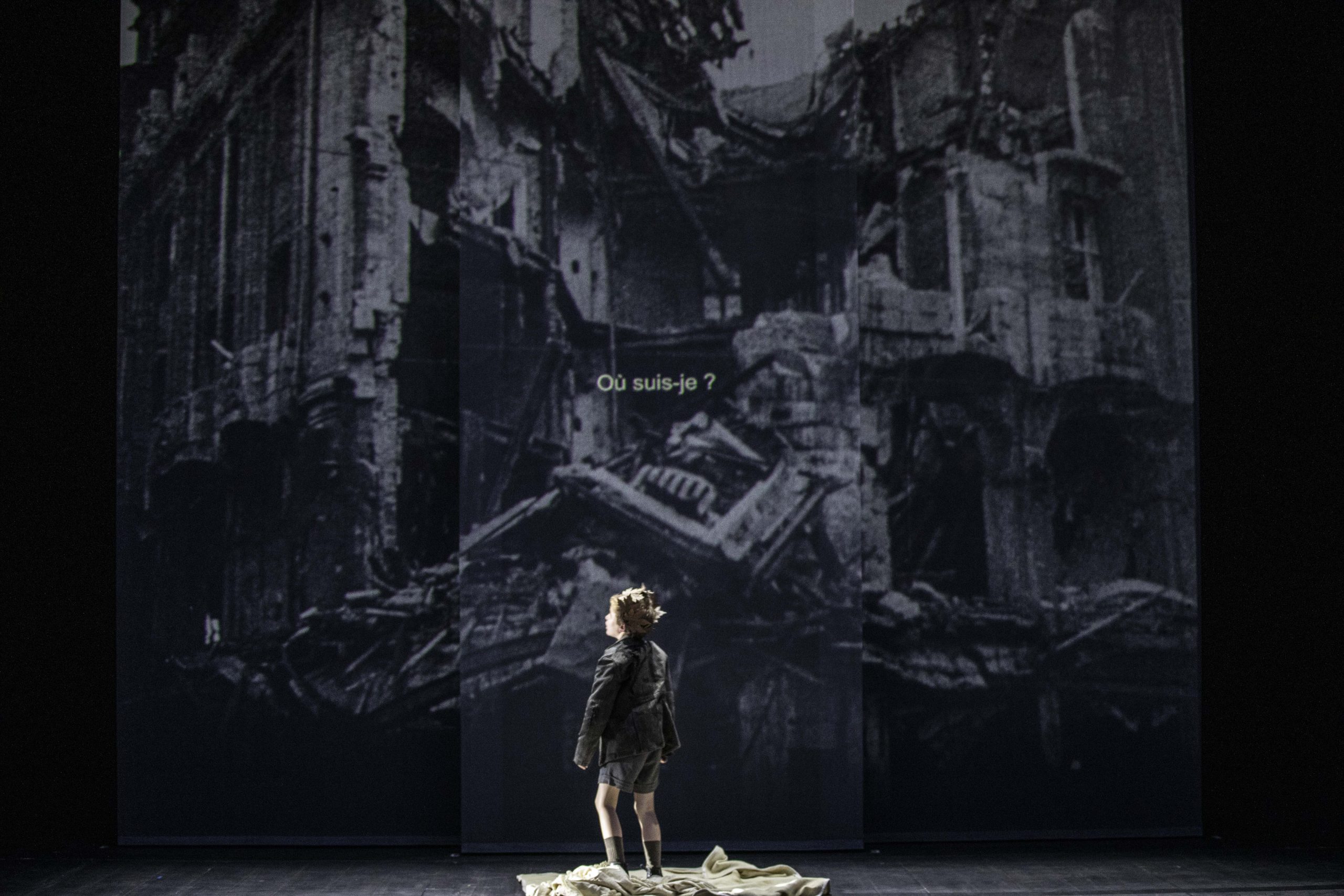
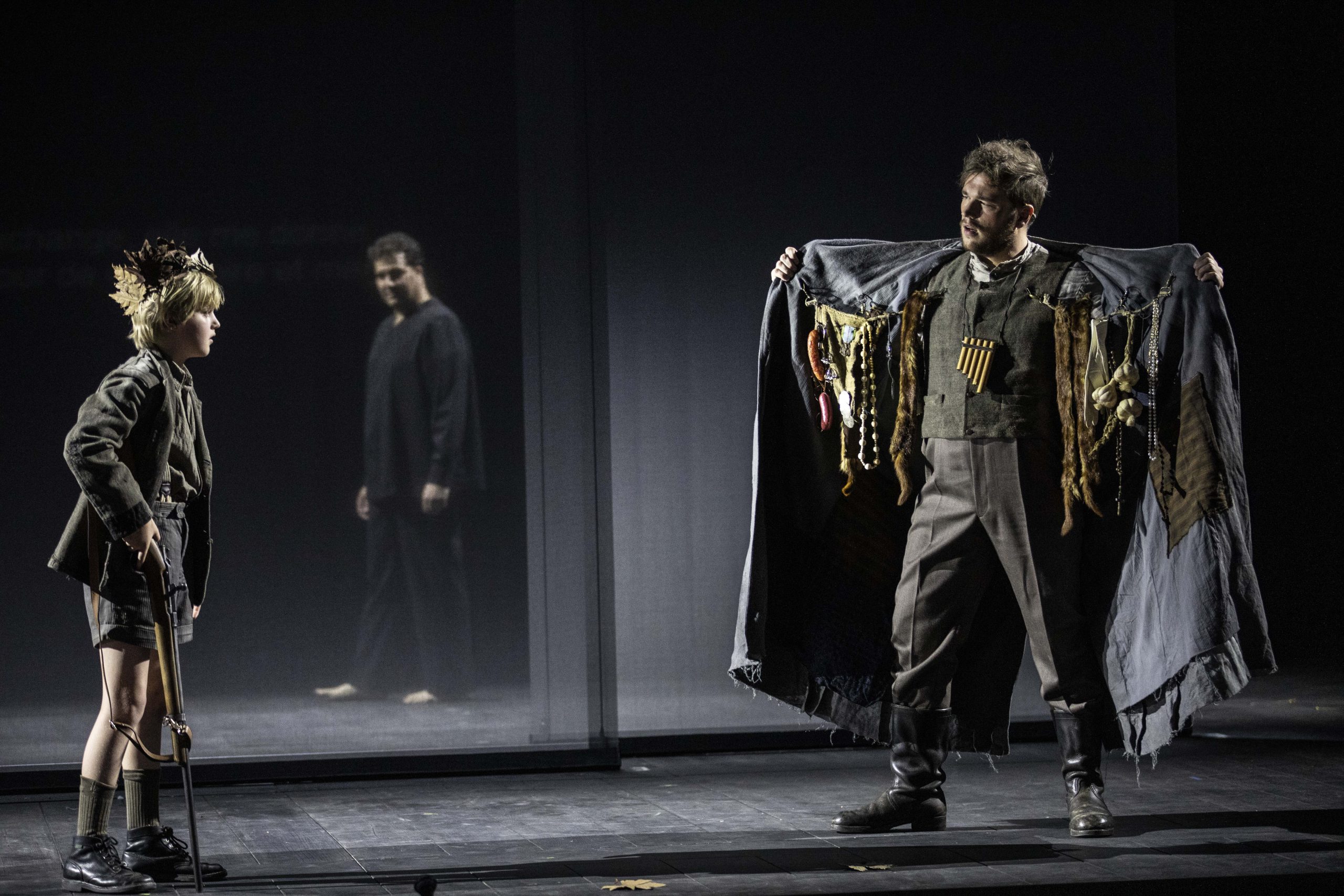
The opera opens in the aftermath of the Allied destruction of Germany’s cities at the end of the Second World War. Archival footage fills the large screen with images of devastation while, on stage, Tamino first appears not as Mozart’s young prince but as a small boy, soon joined by the child Pamina. These remarkable young performers carry the opening scenes with astonishing assurance. As the evening unfolds, they are replaced by older children, then adolescents, and finally by the adult singers, Mauro Peter and Ying Fang. Rather than presenting operatic archetypes, Cogitore allows us to watch two human beings grow up before our eyes, their identities shaped by history rather than myth.
Scene from Die Zauberflöte at Festival d’Aix-en-Provence. Photo: Jean-Louis Fernandez
Around them, the archival films advance through the decades. The ruins of Europe give way to reconstruction, the optimism of the 1950s, and the promise of suburban America with its detached houses, consumer prosperity and belief in perpetual progress. Gradually that optimism begins to fracture. The failure of modernity becomes the production’s central theme.
The effect is particularly unsettling today. The bombed streets of Dresden inevitably recall the shattered buildings of Gaza; the starving children of the Second World War become the starving children we continue to watch on our screens. Cogitore’s point is painfully clear: despite the promises of reason, progress and reconstruction, we have learned remarkably little. The catastrophes of the twentieth century have not disappeared. They continue to repeat themselves in new forms.

Scene from Die Zauberflöte at Festival d’Aix-en-Provence. Photo: Jean-Louis Fernandez
In Cogitore’s reading, Sarastro is no longer the serene embodiment of Enlightenment wisdom but an ageing patriarch whose authority rests on the very certainties that have led to war, injustice, ecological collapse and the triumph of greed over responsibility. Brindley Sherratt’s Sarastro becomes one of the production’s defining images. Frail, diminished and clinging to the fading authority of his office, he embodies an exhausted order whose convictions no longer command belief.
Cogitore also refuses the opera its traditional resolution. There is no reassuring reconciliation, no triumphant affirmation that wisdom has prevailed. Mozart’s music still aspires towards harmony, but the stage offers no such consolation. The audience leaves with questions rather than answers, and that refusal of closure is one of the production’s greatest strengths.
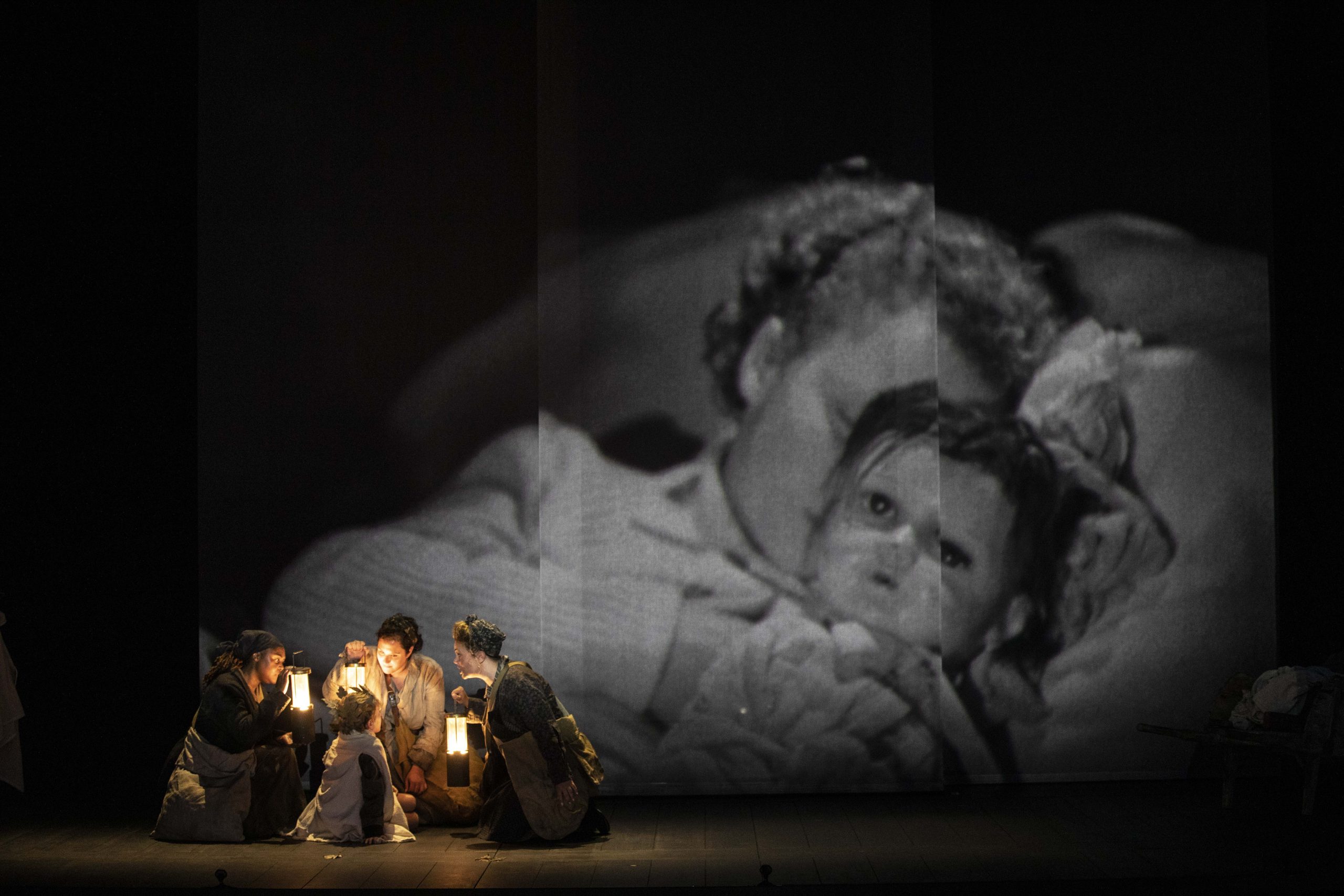
Scene from Die Zauberflöte at Festival d’Aix-en-Provence. Photo: Jean-Louis Fernandez
The cast is led by an outstanding Ying Fang, whose Pamina combines radiant vocal beauty with complete emotional honesty. Mauro Peter brings warmth and lyrical sincerity to Tamino, while Sean Michael Plumb is an engaging and deeply human Papageno, whose natural stage presence provides much of the evening’s warmth and humour.
Sabine Devieilhe no longer possesses the effortless top Fs that once made her the definitive Queen of the Night of her generation, yet her interpretation proves deeply moving. Gone is the dazzling coloratura fury. Instead, she becomes a Trümmerfrau—one of the women who rebuilt Germany’s shattered cities brick by brick after the war—a soul broken by history, whose grief is ultimately more compelling than her thirst for vengeance. It is a courageous reinterpretation by an exceptional singing actress.

Scene from Die Zauberflöte at Festival d’Aix-en-Provence. Photo: Jean-Louis Fernandez
The principal weakness lies in the ensembles. Mozart’s miraculous ability to weave individual voices into a single musical fabric never fully materialises. The Three Ladies, despite their individual qualities, never find the blend, precision or dramatic cohesion these scenes require.
Leonardo García Alarcón draws many beautiful colours from Cappella Mediterranea, revealing the transparency and humanity of Mozart’s score. At several points, however, the larger ensembles lose cohesion, and coordination between pit and stage becomes uncertain.
Cogitore never betrays Mozart; he asks him difficult questions. His Zauberflöte does not reject the Enlightenment but measures the distance between its ideals and the world we inhabit. What remains, in the end, is precisely what Barthes called the force of that-has-been (ça a été): images that endure as witnesses to history, refusing the consolation of distance or forgetting. It is a production of extraordinary visual intelligence, emotional force and moral seriousness that remains with you long after the final image has faded.
Festival d’Aix-en-Provence’s production of Die Zauberflöte continues its run through July 21.