Few cities in the world can rival Berlin’s operatic riches. Three major opera houses—Staatsoper Unter den Linden, Deutsche Oper Berlin and Komische Oper—sustain an astonishingly varied repertoire, ranging from Monteverdi and Handel to contemporary works, often in productions of considerable intellectual ambition. Combined with the city’s world-class orchestras and seemingly inexhaustible musical life, Berlin remains one of Europe’s great operatic capitals, where, on any given evening, one may encounter both the triumphs and the excesses of modern Regietheater.
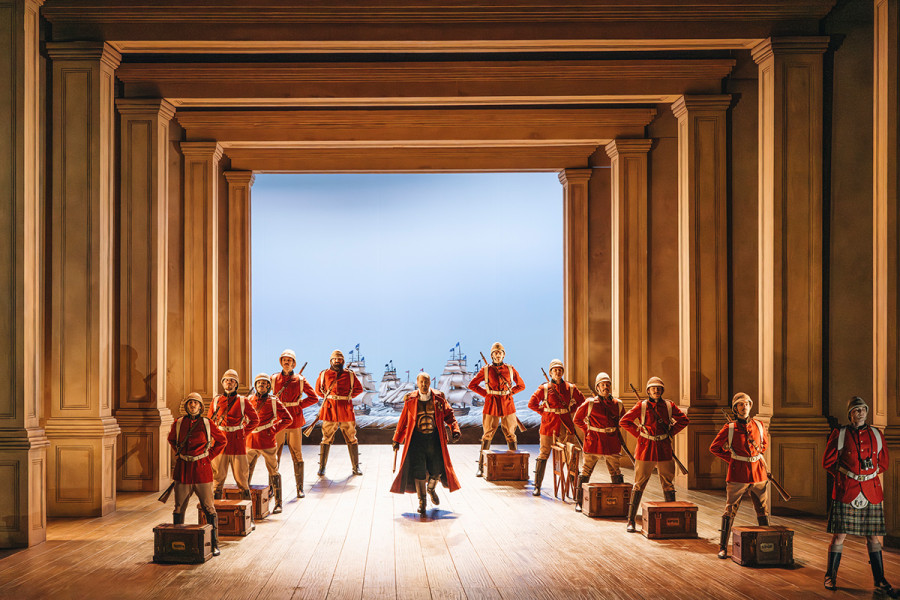
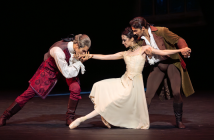
Scene from Deutsche Oper Berlin’s Giulio Cesare in Egitto. Photo: Nancy Jesse
This summer’s offerings provided a revealing cross-section of the city’s operatic landscape. At Deutsche Oper, David McVicar’s much-travelled Giulio Cesare in Egitto appeared, curiously embalmed. Once considered irreverent and imaginative, the production now seemed an artifact of another era, clinging to an Orientalist fantasy of Egypt assembled from colonial clichés, music-hall exoticism and indiscriminate borrowings from various Eastern cultures. Its lavish surfaces concealed a striking lack of psychological curiosity. Handel’s subtle drama of power, grief and erotic manipulation repeatedly gave way to decorative spectacle.
Musically, the evening proved equally disappointing. Alessandro Quarta’s expansive tempi and dutiful accompaniment drained much of the score’s dramatic vitality, turning Handel’s great da capo arias into exercises in endurance. Only Christophe Dumaux’s commanding Cesare and Cameron Shahbazi’s finely nuanced Tolomeo consistently transcended the surrounding inertia, while Elena Tsallagova’s technically accomplished Cleopatra remained emotionally elusive.
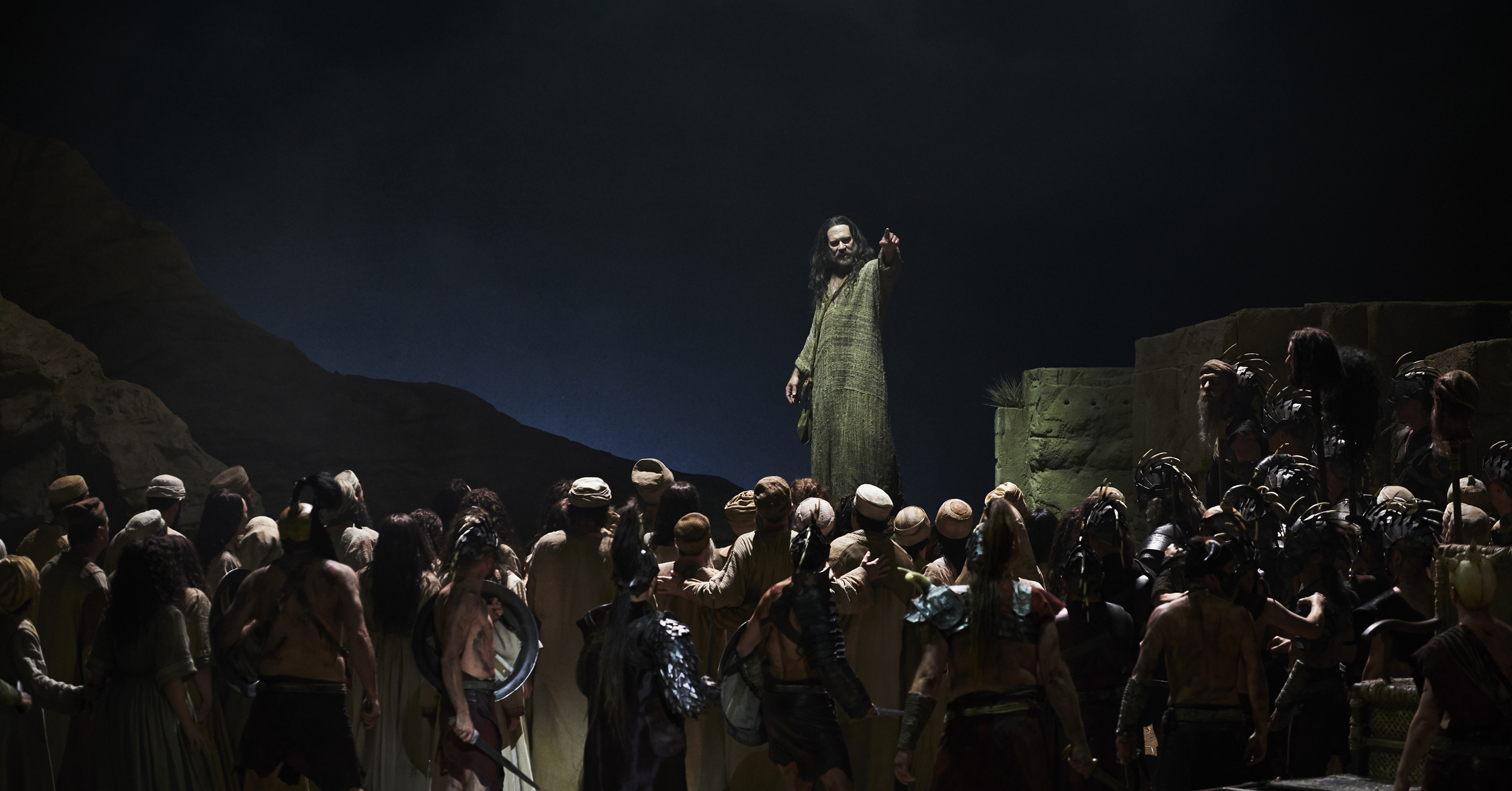
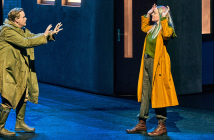
Scene from Staatsoper Unter den Linden’s Samson et Dalila. Photo: Matthias Baus
At the Staatsoper, Argentine filmmaker Damián Szifron’s first operatic venture, Samson et Dalila, demonstrated how easily directorial imagination can become untethered from historical and geographical reality. The Holy Land was transformed into a vaguely mythical landscape populated by figures dressed in an improbable mixture of Viking, Hun and science-fiction costumes. Certain directorial choices, particularly the use of authentic traditional Palestinian kaftans (women’s dresses) amid today’s tragic events in Gaza, felt regrettably tone-deaf. Nor did Dalila’s final act sudden change of heart, where here she liberates Samson and murders the High Priest, receive any convincing dramatic preparation.
Yet Saint-Saëns’s opera ultimately triumphed through its musical values. Alexander Soddy drew refined and often sensuous playing from Staatskapelle Berlin, especially in an intoxicating Bacchanale. Roberto Alagna offered an affecting Samson, sung with humanity rather than heroic bombast. The evening, however, belonged unequivocally to Aigul Akhmetshina. Her Dalila avoided every cliché of the seductive temptress, emerging instead as a woman of emotional opacity and psychological complexity. Her sumptuous mezzo, allied to exceptional textual intelligence, made “Mon cœur s’ouvre à ta voix” less an aria of seduction than an exquisitely calibrated act of persuasion.
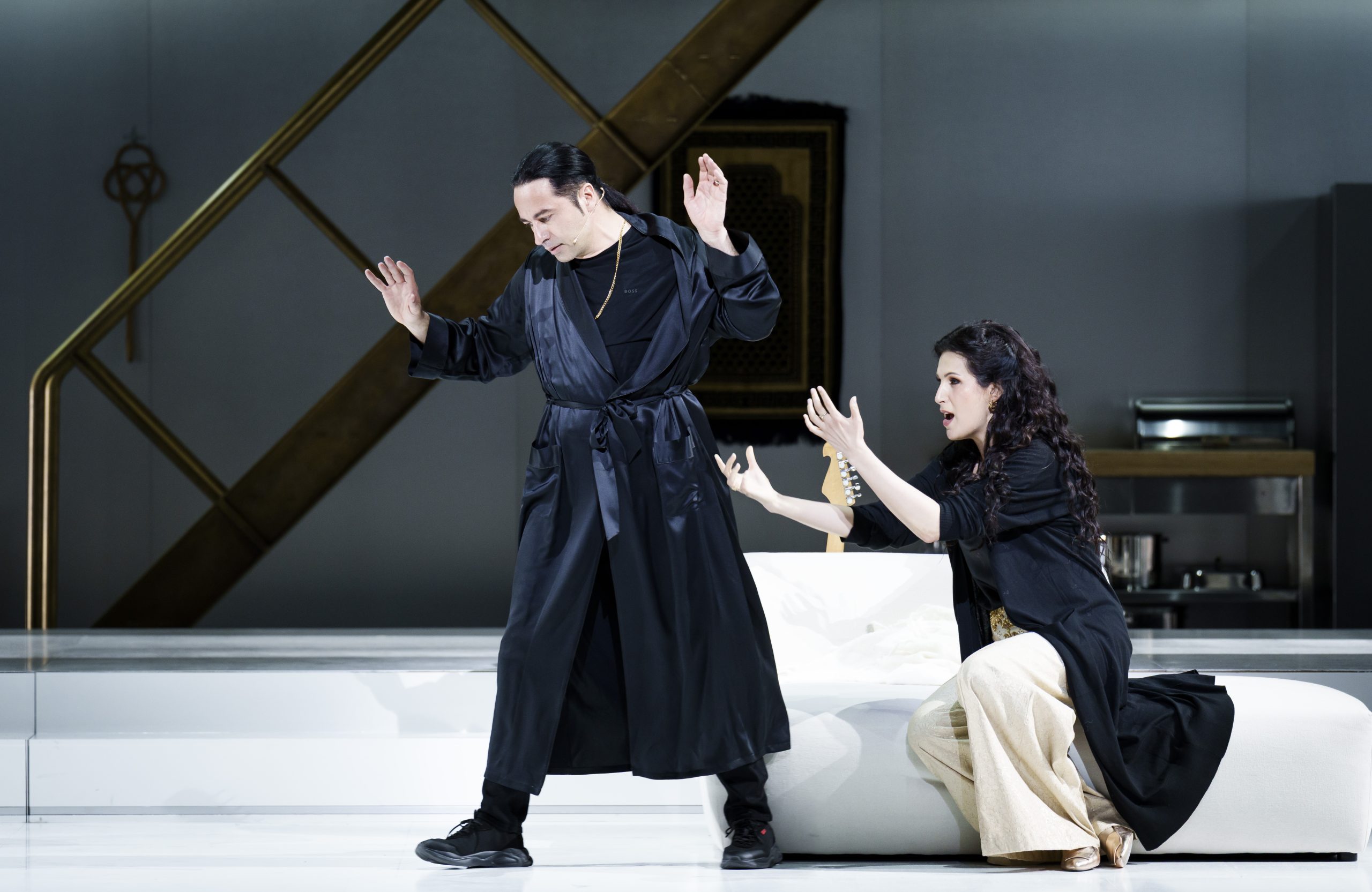
Bülent Ceylan (Bassa Selim) & Adela Zaharia (Konstanze) in Staatsoper Unter den Linden’s Die Entführung aus dem Serail. Photo: Stephan Rabold
A very different experiment unfolded in Andrea Moses’s new Die Entführung aus dem Serail. Relocated to a luxury yacht and interspersed with stand-up comedy by Bülent Ceylan, the production appeared uncertain whether Mozart’s Singspiel could entertain on its own terms. The insertion of lengthy comic monologues and autobiographical anecdotes frequently interrupted the drama and rendered substantial portions of the evening inaccessible to non-German speakers. More troubling still was the production’s patronising attempt to render the work politically palatable by infantilising the character of Bassa Selim.
Fortunately, the musical performance proved far more satisfying. Thomas Guggeis conducted with infectious vitality and stylistic finesse, revealing the emotional depths that already anticipate the mature Mozart. Adela Zaharia’s magnificent Konstanze stood at the centre of the evening, combining astonishing technical assurance with genuine nobility of expression. Magnus Dietrich sang an elegant Belmonte, Serafina Starke made a charming Blonde, and David Steffens provided an immensely enjoyable Osmin of resonant authority and comic flair.
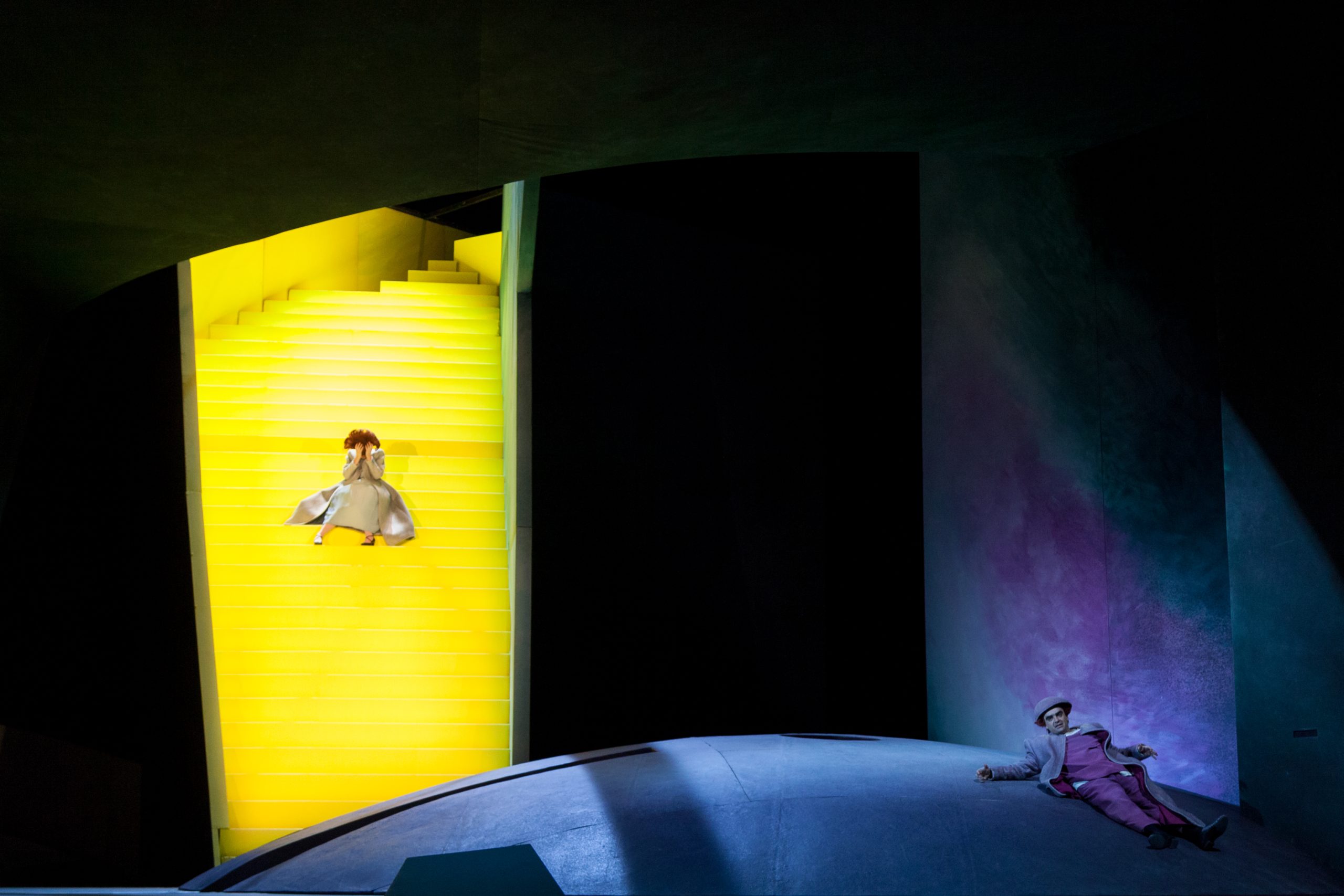
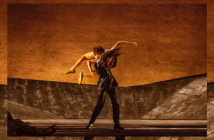
Scene from Staatsoper Unter den Linden’s Pelléas et Mélisande. Photo: Tatjana Dachsel
My most memorable Berlin experience, however, came with the return of Ruth Berghaus’s legendary Pelléas et Mélisande, which has remained in the Staatsoper’s repertoire since 1991. More than three decades after its premiere, the production retained its extraordinary power to provoke and enchant. Hartmut Meyer’s quasi-abstract sets and costumes—part Le Petit Prince, part 1960s Czech animation—created a fairytale universe of unsettling instability. The famous yellow staircase and the spherical stage floor became potent metaphors for the emotional and existential uncertainty at the heart of Debussy’s drama.
Berghaus’s genius lies in her ability to preserve mystery while illuminating the opera’s hidden tensions. Her production remains profoundly theatrical without ever succumbing to realism. François-Xavier Roth’s conducting took time to find its full measure, but by the third act Staatskapelle Berlin had achieved a colouristic richness and dramatic urgency of rare distinction.
The cast was uniformly exceptional. Magdalena Kožená’s Mélisande combined fragility and inscrutability, while Thomas Blondelle’s lyrically sung Pelléas blossomed magnificently in the love scene. Simon Keenlyside offered a deeply human Golaud, his jealousy rendered with painful psychological truth. Around them, Anne Sofie von Otter, Stephen Milling, Henrik Brandstetter and David Oštrek contributed performances of uncommon distinction.
Taken together, these four productions illustrated both the glories and contradictions of contemporary Berlin opera. The city continues to nurture performances of the highest musical calibre, served by magnificent orchestras and singers of international distinction. Yet these evenings also demonstrated that sophisticated music-making and intelligent theatre do not invariably coexist. Some productions seemed anxious to apologise for the works they staged; others trusted the operas sufficiently to reveal their enduring mysteries. It was in the latter category, above all in Berghaus’s Pelléas et Mélisande, that Berlin once again justified its reputation as one of the world’s indispensable operatic capitals.
For more on Deutsche Oper Berlin visit www.deutscheoperberlin.de/de_DE/home and for Staatsoper Unter den Linden, visit https://www.staatsoper-berlin.de/de/