Each summer the Salzburg Festival begins not with opera, but with contemplation. Before the official opening—with this year’s new production of Carmen still to come—the Festival’s Ouverture spirituelle offers a series of concerts devoted to works that explore questions of faith, mortality, and transcendence. It is a tradition that reminds audiences that Salzburg has always aspired to be more than an operatic showcase. At its best, it proposes music as a form of philosophical inquiry.
Few works could serve that purpose more naturally than Gustav Mahler’s Resurrection Symphony. Under Gustavo Dudamel, leading the Vienna Philharmonic and the Vienna Singverein, the performance became less an enactment of metaphysical struggle than a meditation on beauty itself (heard July 25).
There are performances of Mahler’s Resurrection that overwhelm by the sheer force of their architecture, and there are those that seduce through beauty. Dudamel’s interpretation belonged unmistakably to the latter category.
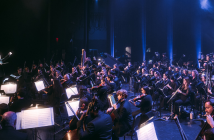
The evening’s greatest triumph was, without question, the orchestra itself. The Vienna Philharmonic remains an almost miraculous ensemble: every principal possesses the individuality and imagination of a soloist, yet when the music demands unanimity, the orchestra breathes and speaks as a single instrument. The string sound retained its incomparable warmth and flexibility, while the wind and percussion sections demonstrated why they are among the finest in the world. Mahler’s vast orchestral palette—from the most intimate chamber-like dialogues to the apocalyptic climaxes—was realized with extraordinary refinement.
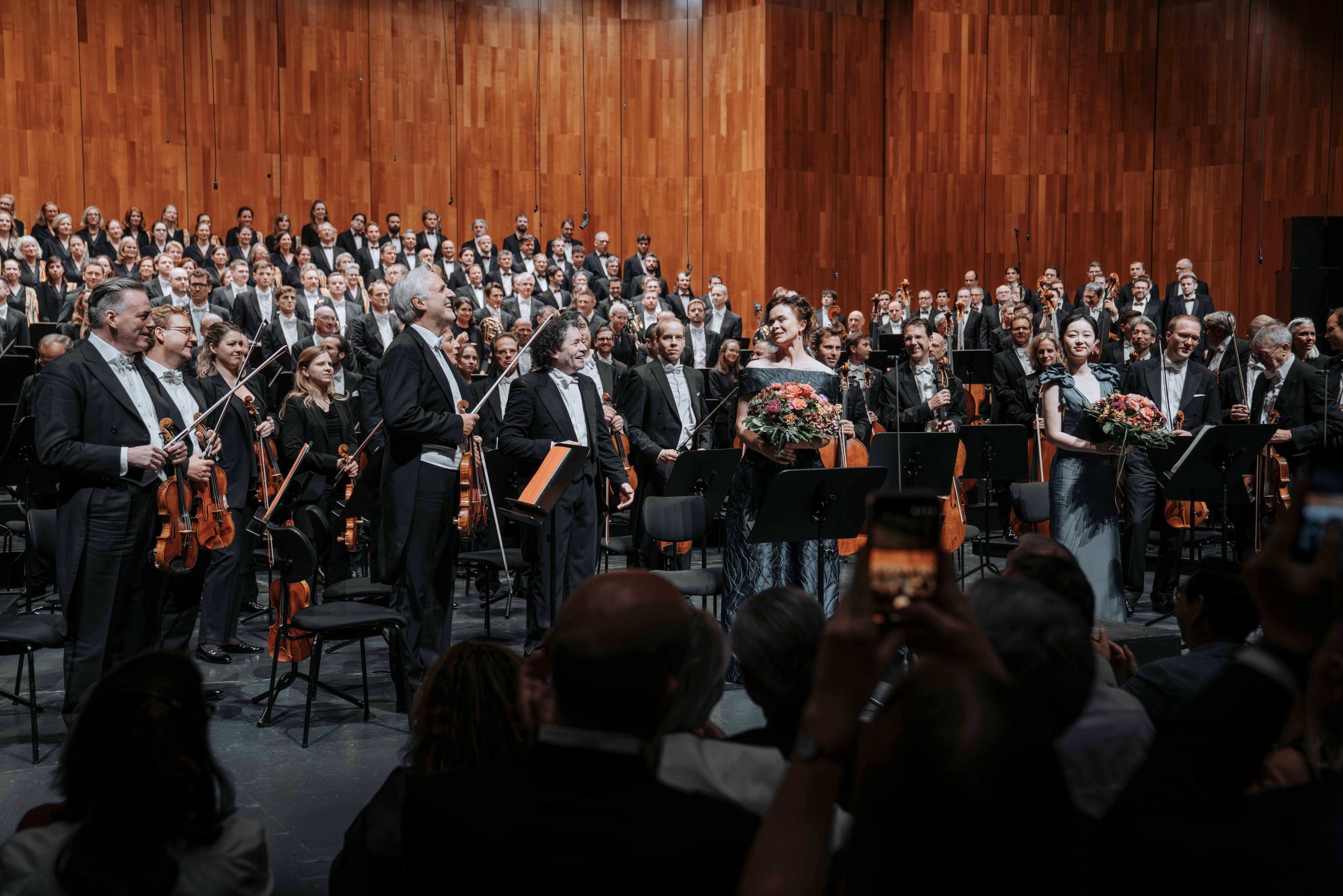
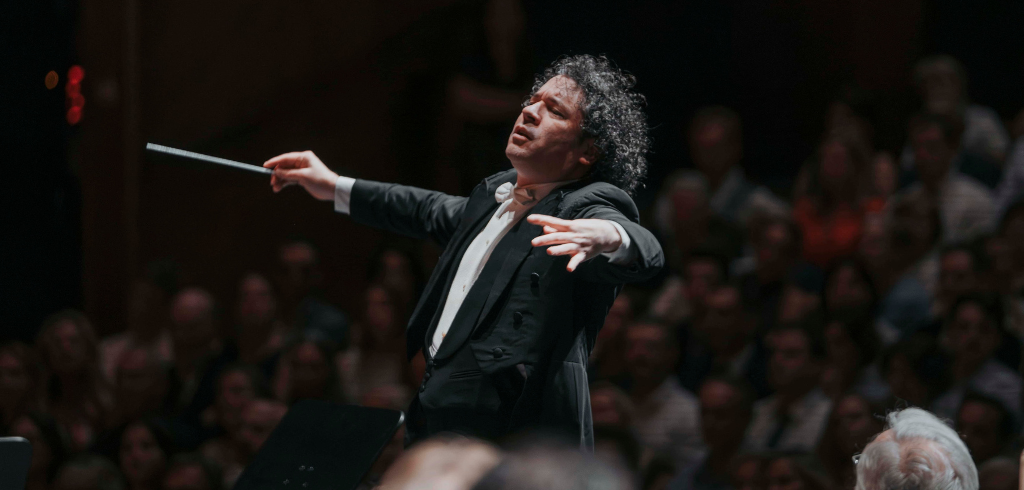
Gustavo Dudamel, the Vienna Philharmonic & the Vienna Singverein at the Salzburg Festival.
Photo: SF/Marco Borrelli
Dudamel’s point of departure is not the symphony’s monumental architecture but its vocal imagination. Again and again, he approaches Mahler from the perspective of the Lied, allowing melodies to breathe with extraordinary naturalness before they expand into the larger symphonic structure. His greatest strength lay in those passages where Mahler thinks most like a composer of songs. The third movement was perhaps the evening’s revelation. Mahler transforms his Wunderhorn setting Des Antonius von Padua Fischpredigt into a Scherzo without words, yet its vocal origins remain unmistakable. Dudamel conducted it almost as an invisible song, the orchestra breathing and phrasing with extraordinary suppleness.
Rather than emphasizing grotesquerie, he uncovered an unsettling elegance beneath the movement’s endless circular motion, allowing its irony to emerge through grace rather than exaggeration. Urlicht likewise emerged with unaffected simplicity and warmth, while even the lyrical episodes that permeate the finale seemed to inhale and exhale like a great singer. Here Dudamel’s instinct for line, transparency, and vocal phrasing proved entirely persuasive. Few conductors make Mahler’s vocal imagination sing with such ease.
Listeners who seek granite-like monumentality may occasionally wish for greater weight in the symphony’s darker pages, particularly in the Funeral Rite of the opening movement. Mahler conceived this movement as a vast confrontation with death, and Dudamel’s forward-moving tempos sometimes left little room for the music to dwell on its own existential questions. Yet this was less a deficiency than a matter of emphasis. Dudamel offered something equally illuminating: a reminder that the immense architecture of the Resurrection ultimately grows out of song.
The vocal soloists reflected this same conception of the work. Ying Fang brought her characteristic purity of tone and elegance to the brief soprano passages in the finale. Having heard her remarkable Pamina earlier this summer at Aix-en-Provence, one was reminded that Mozart remains the repertoire in which her singular gifts are most completely realized. In Mahler, that same crystalline lyricism brought light and grace to the finale.
Nadezhda Karyazina sang Urlicht with touching sincerity and unaffected simplicity but one could nevertheless imagine a darker, more burnished mezzo bringing an additional layer of earthly gravity to Mahler’s “Primal Light,” where suffering and transcendence coexist in fragile equilibrium.
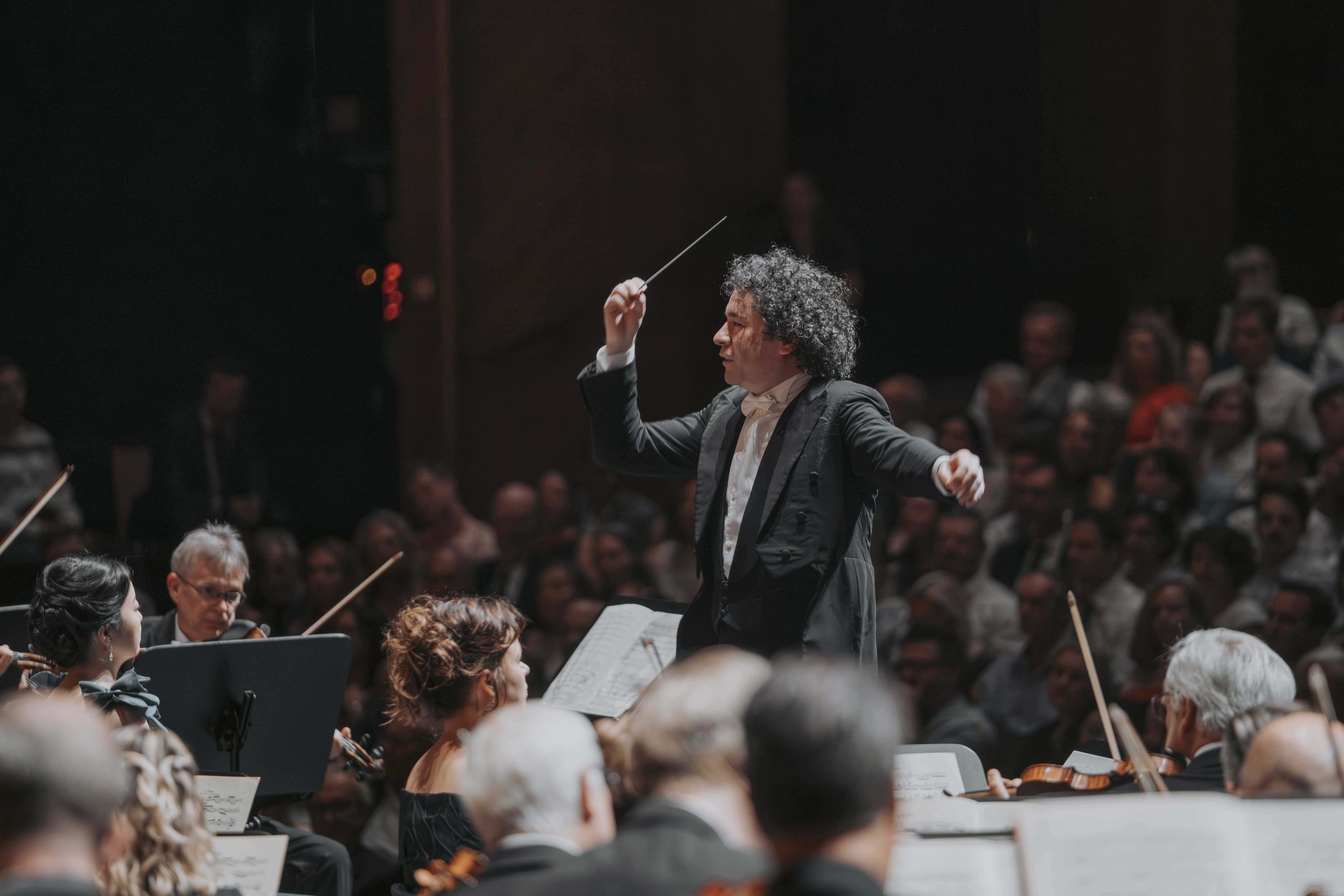
Gustavo Dudamel conducting the Vienna Philharmonic at the Salzburg Festival. Photo: SF/Marco Borrelli
The Vienna Singverein crowned the performance magnificently. Their extraordinary control of dynamics—from the whispered opening of the finale to the blazing affirmation of the closing pages—never compromised clarity of diction or purity of ensemble.
It is tempting to compare this performance with Romeo Castellucci’s staged Resurrection at the Festival d’Aix-en-Provence under Esa-Pekka Salonen, heard in summer 2022. The comparison is revealing not because one performance was necessarily superior to the other, but because the two conductors embody profoundly different conceptions of Mahler.
Salonen possesses a remarkable sense of long-range architecture. His performances build with an almost inexorable logic, each tempo and transition serving the whole. Dudamel, by contrast, reveals the Wunderhorn Mahler with exceptional insight, reminding us that Mahler’s symphonic imagination was born not only of philosophical ambition but also of the human voice.
What remained after the final chord, therefore, was admiration rather than devastation. One left overwhelmed by the beauty of the playing, grateful for the astonishing artistry of the Vienna Philharmonic and the Vienna Singverein, and moved by countless individual moments. Mahler’s Resurrection is one of music’s supreme architectural journeys, but architecture is only one way of understanding it. Dudamel’s reading suggested another. For much of the twentieth century, conductors approached the work as a monumental philosophical statement, emphasizing its vast symphonic design and metaphysical weight.
Dudamel reminds us of another Mahler: the composer nourished by the folk poetry of Des Knaben Wunderhorn, whose symphonies repeatedly return to the rhythms and inflections of the human voice. His Resurrection did not seek to overwhelm through sheer monumentality. Instead, it revealed the work from within, reminding us that before Mahler built cathedrals of sound, he wrote songs—and that those songs remain the beating heart of even his grandest symphony.
For more on this year’s Salzburg Festival visit www.salzburgerfestspiele.at/en