The first new production under Matthias Schulz, freshly installed as Intendant of the Opernhaus Zürich, was an emblematic choice: Strauss and Hofmannsthal’s Der Rosenkavalier (seen Sept. 21). Schulz, who comes to Zurich after steering the Staatsoper Unter den Linden in Berlin, has spoken of generational renewal and balancing tradition with invention. To launch his tenure, he entrusted this cornerstone of the repertoire to two outstanding women at the top of their game: German conductor Joana Mallwitz and American/Austrian director Lydia Steier. It was a signal of intent—musical excellence combined with a contemporary theatrical perspective—and a test of how his house will meet the challenges of blending continuity with change.
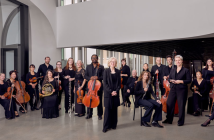
At the podium, Mallwitz drew a finely detailed performance from the Zürich Opera Orchestra, shaping Strauss’s dense textures with clarity and flexibility. Der Rosenkavalier is famously suffused with anachronistic Viennese waltz rhythms, a sound world overlaying 18th-century nostalgia with fin-de-siècle longing, and Mallwitz let these currents emerge naturally, balancing lyric sweep with dramatic precision. The comic bustle of the score never lost momentum, yet she always gave space for moments of reflection to resonate. At times, though, her energetic exuberance swelled too far for the intimate scale of the house, built in 1891 with barely 1,100 seats.
One of the leading house orchestras in the German-speaking world, the ensemble now under the direction of Gianandrea Noseda, has cultivated a reputation for both stylistic versatility and tonal refinement. In Strauss, this character shone through in the opulent string sonorities and, above all, in the superb wind playing. The woodwinds gave special distinction to the score’s conversational detail—clarinet and oboe lines emerging with a speech-like quality that perfectly matched Hofmannsthal’s language—while the horns and bassoons anchored the waltz episodes with warmth and bounce.
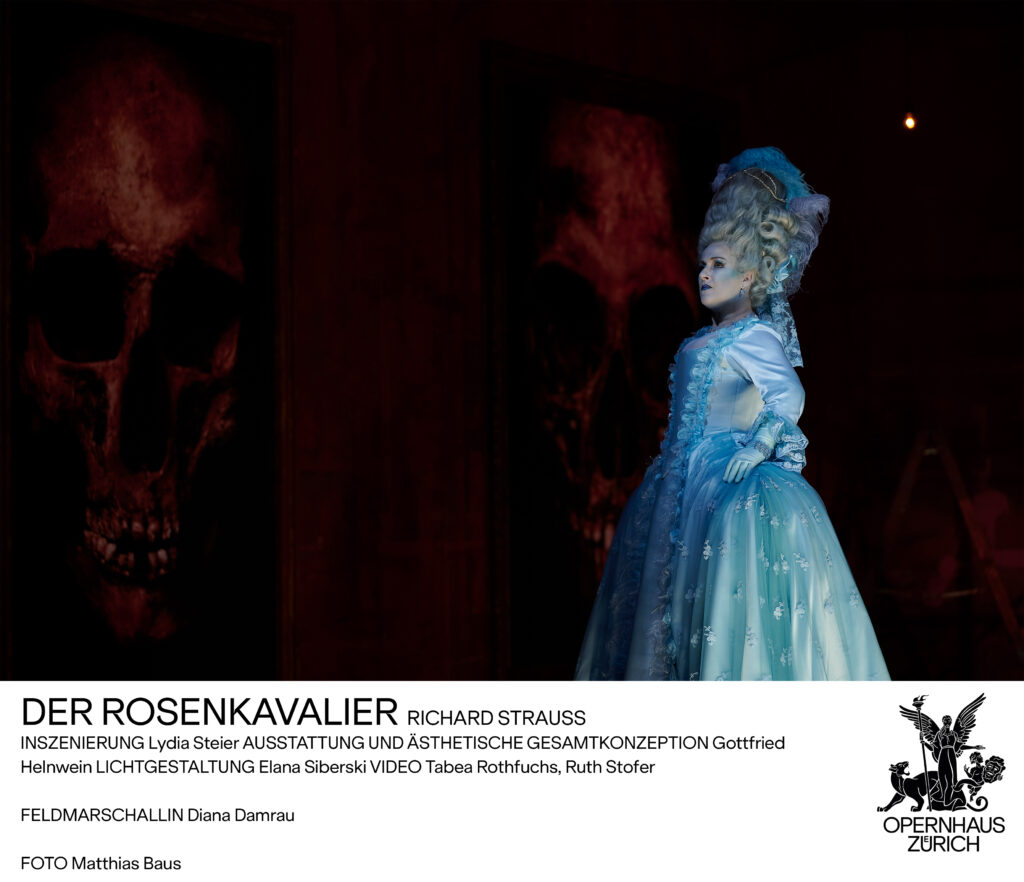
German soprano Diana Damrau was an exceptionally touching Marschallin, bringing her signature elegance of phrasing and mastery of nuance in Hofmannsthal’s language. Her Act I monologue on the transience of youth and beauty became one of the performance’s most poignant moments, sung with luminous fragility that conveyed both resignation and tenderness.
American mezzo-soprano Angela Brower was outstanding as Octavian, her voice consistently carrying with warmth and focus. Austrian bass Günther Groissböck delivered a Baron Ochs who was more than bluster: beneath the surface swagger he revealed a calculating brutality, reminding the audience that Ochs is not merely a buffoon but also a threat. His stage presence combined vocal authority with a sharply etched physicality, and his diction gave the character a vivid idiomatic bite. Groissböck avoided caricature by showing flashes of charm and menace in equal measure, making Ochs a figure both comic and unsettling.
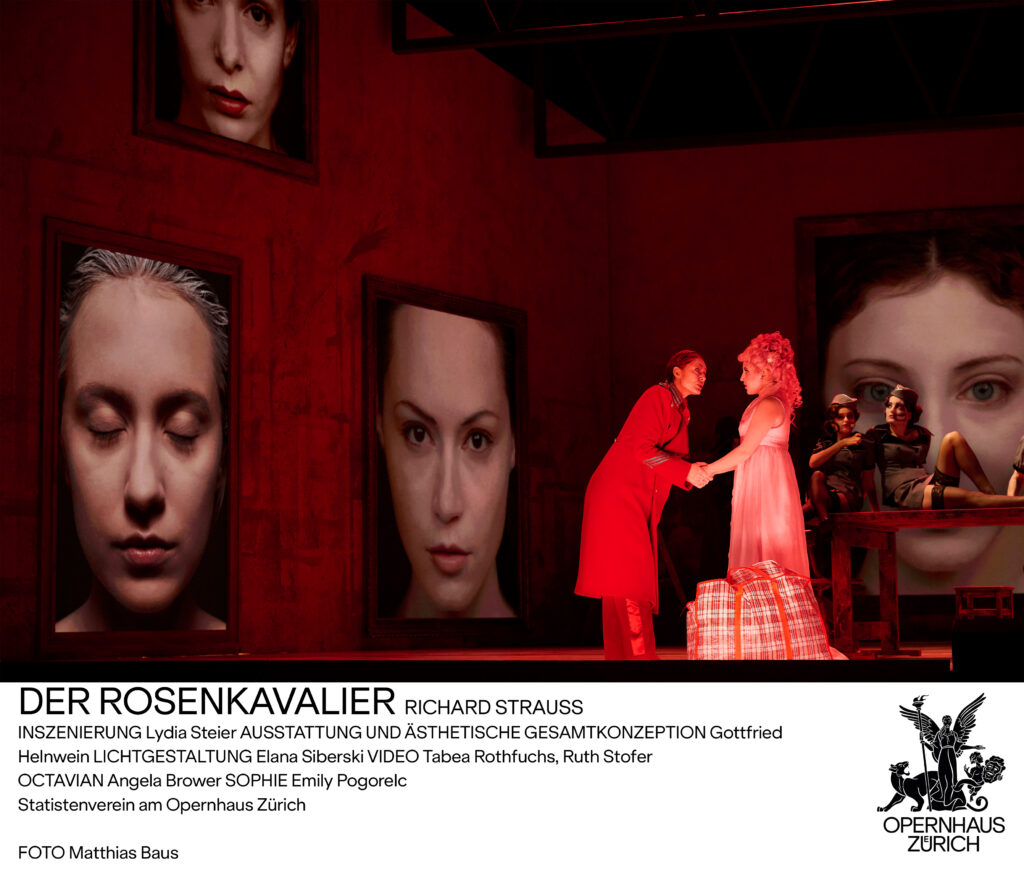
American soprano Emily Pogorelc offered a more down-to-earth Sophie, conceived as resistant and vital rather than fragile. Still at the beginning of a remarkable ascent, she has quickly drawn attention for the crystalline brightness of her voice and the natural poise she brings to the stage. That transparency of tone gave her portrayal a youthful radiance, while moments of tension revealed unexpected steel in the instrument. Some physical gestures occasionally felt rough, but the overall impression was of a singer whose artistry is deepening rapidly and whose presence already carries the assurance of a seasoned performer.
Danish baritone Bo Skovhus was a welcome presence as Faninal, though the stylized commedia dell’arte treatment of the role left him barely recognizable.
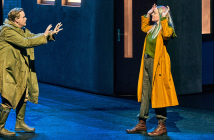
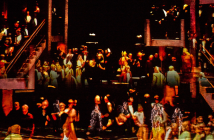
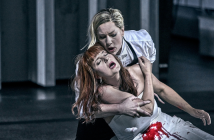
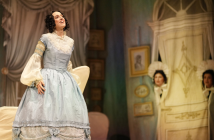
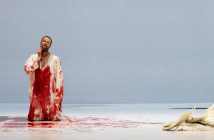
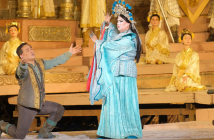
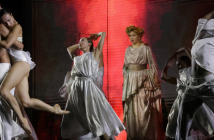
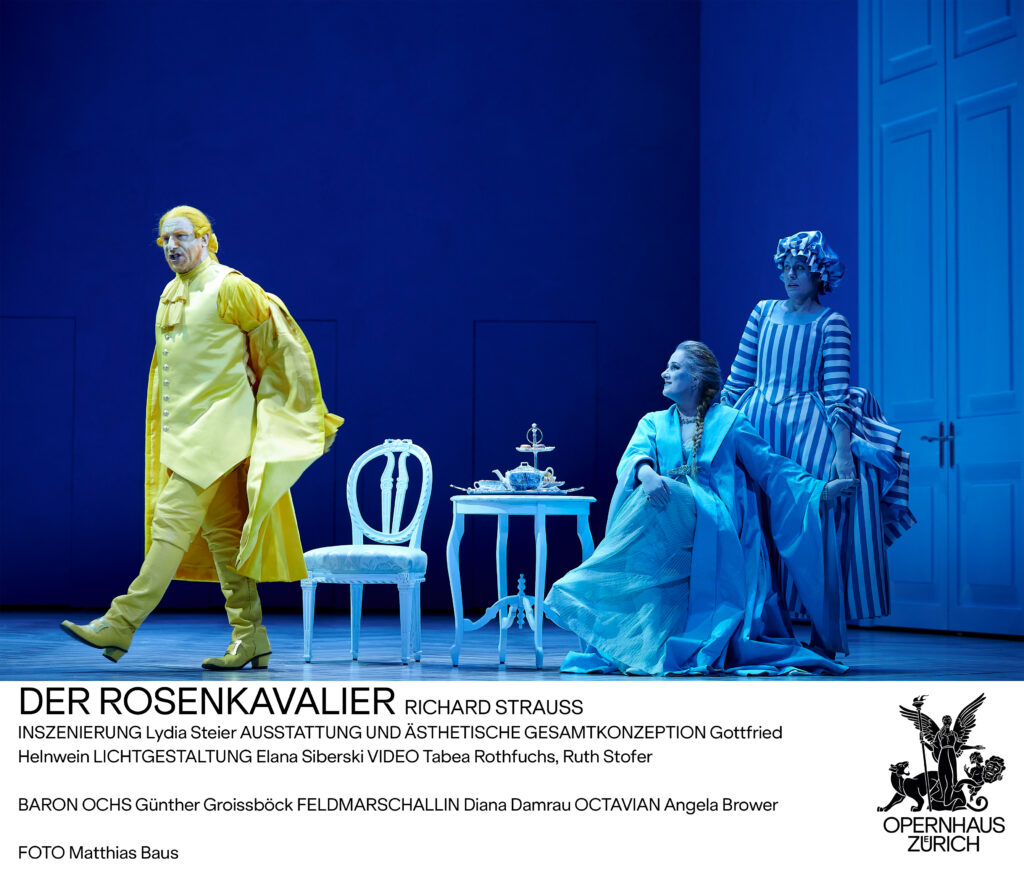
Visually, the staging bore the unmistakable imprint of Austrian artist Gottfried Helnwein, who first created these designs for LA Opera in 2005. His concept is rooted in bold monochrome palettes: Act 2 awash in blues, Act 2 drenched in gold, Act 3 in red. Each act places Baron Ochs in the complementary colour, a clever visual shock. Only in the final act do elements emerge that point directly to Helnwein’s own art—large portraits hovering between photography and painting—giving the staging its most personal signature. For much of the opera, the aesthetic is flamboyant and striking, but it does not evolve; spectacle dominates where a more poetic dimension might have deepened the drama.
Steier herself has become a prominent figure on major European stages, known for productions that are both visually striking and psychologically probing. I was especially impressed by her Salome at the Paris Opera, a work from Strauss’s earlier, symbolist period, where the composer’s violent orchestral palette and hallucinatory atmosphere demand a very different theatrical language than Der Rosenkavalier. Steier’s staging there caught the tension between decadence and control, creating a world both claustrophobic and unsettling, but never tipping into mere sensationalism.
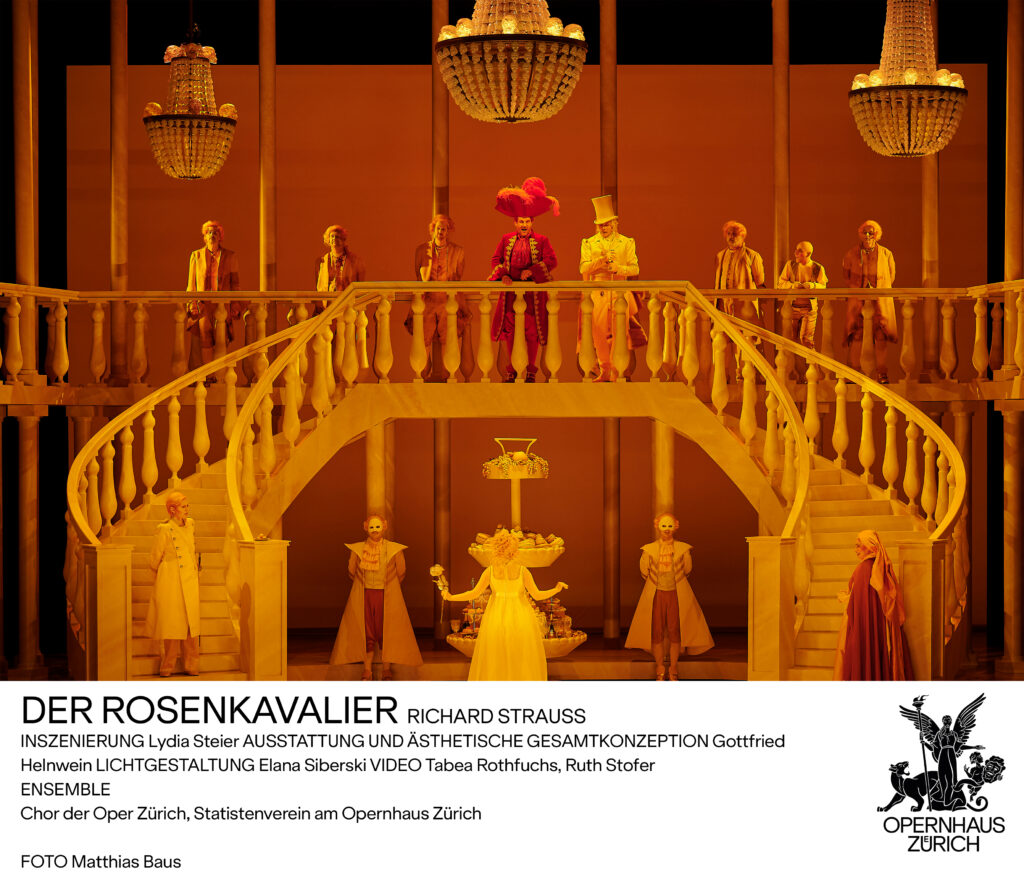
In Zurich, however, her approach remained more on the surface, the visual bravura not always matched by a deeper sense of the opera’s bittersweet poetry. But Steier knows her craft well, and the comedy plays in the right places. She leans into a feminist reading, emphasizing Sophie’s defiance and Ochs’s brutality, but Hofmannsthal already embedded those elements in the text.
This Rosenkavalier culminated in excellence with the radiant terzetto that crowns Act 3. Here voices and orchestra blended in musical perfection, creating a moment at once serene and deeply moving. Time seemed to stand still, and Strauss’s bittersweet meditation on love and renunciation resonated with unusual depth. While the staging often dazzled the eye more than it stirred the heart, it was in passages such as this, carried by the singers and Mallwitz’s orchestra, that the production touched true poetry.
Opernhaus Zürich’s Der Rosenkavalier continues its run through Oct. 26.