Browsing: La Scena Online

La Scena Online is the digital magazine of La Scene Musicale.Contents: News, Concert reviews, CD reviews, Interviews, Obituaries, etc; Editor: Wah Keung Chan; Assistant Editor: Andreanne Venne
ISSN: 1206-9973

Such a relief at this time of year to receive a choral record that is not about Christmas. The Purcell Singers have selected ‘English and American Choral Masterieces of the 20th Century’ and its hard to fault their choices, or to thrill at the unfamiliar. Ahead of the shopworn Samuel Barber Agnus Dei, transcribed from his second string quartet where it sits better, the choir warms up on the first part-song Edward Elgar ever got published, the utterly transcendent My Love Dwelt in a Northern Land. Skipping swifly over Shenandoah, we reach the seriously undersung Morten Lauridsen and Kenneth Leighton,…

Share:

NEW YORK – It is possible to lose a sense of perspective after a good night of Bruckner. The critic in me urges caution. Best live Fourth Symphony I have heard in months! My heart suggests something a little less guarded. Best in…well, quite a while. Certainly the performance ranks among the signal achievements in the history of the Orchestre Métropolitain, which on Friday made its third stop on a four-city U.S. tour and, not incidentally, its debut at Carnegie Hall. You can imagine a new punch line to the old gag about how you get there: by having Yannick…

Share:

Every composer suppressed by Stalin deserves to be remembered. Just how much musical attention they warrant is another matter. Veprik (1889-1958) was a teacher at the Moscow Conservatoire who wrote in Jewish and Kyrgyz ‘national’ idioms. His Dances and Songs from the Ghetto was performed by Toscanini at Carnegie Hall in 1933, and a Symphonic Song was taken up the following year by Hermann Scherchen and Dmitri Mitropoulos. This was the peak of Veprik’s career. Sacked by the Conservatoire in 1943, he was sentenced to eight years in the Gulag in 1950. Released in 1954, he spent his final years…

Share:

*/**/**** Something’s gone awry with Warner’s scheduling when they issue three violin-piano recitals at the same time (except one of them’s actually on cello). Something’s also skewed with the repertoire selection. Vilde Frang, the Norwegian violinist, returns after a hiatus with an album of Paganini and Schubert. Nobody should play Paganini’s opera transcriptions unless they can deliver shock and awe virtuosity. Frang is not that kind of artist. She chose wrong. Moving on, we try the Franck sonata, which was written for violin and piano, played by the cellist Gautier Capucon. The pianist is the irrepressible Yuja Wang, who’s good…

Share:

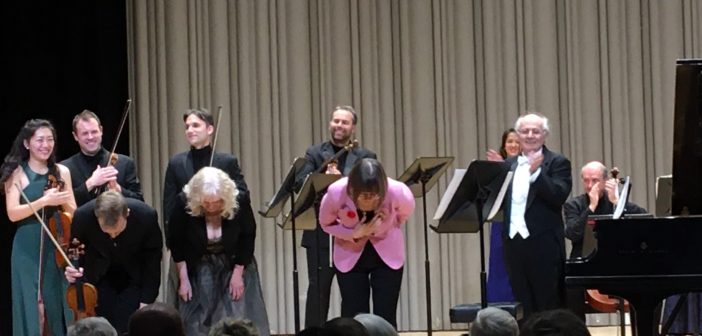
Mozart and Tchaikovsky were the advertised attractions at a concert on Nov. 8 by Sinfonia Toronto. Ichmouratov and Kuzmenko – of Montreal and Toronto, respectively – were the composers I went to the Glenn Gould Studio to hear. With pleasure, as it turned out. The world premiere was of Larysa Kuzmenko’s “Skartaris” Duo Concerto, a work for piano, violin and strings derived from a visit by the composer to a volcano in Iceland, the Jules Verne adventure novel A Journey to the Centre of the Earth, and the 1959 movie based on the book, which has a score by Bernard Herrmann,…

Share:

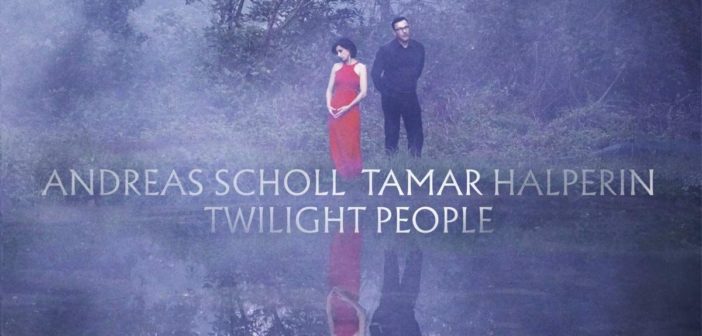
It can be good for an artist to take a break from a big label. The German counter-tenor Andreas Scholl has been recording faithfully for Decca for about a decade without ever giving an impression of calling the shots in his career. Yes, he left lovely tracks of Dowland, Purcell, Bach and Handel, but no more than you’d expect of someone as good as he is in the heart of his Fach and not really breaking new ground. In the past couple of years Scholl has been working with his Israeli wife, the pianist and harpsichordist Tamar Halperin, along with…

Share:

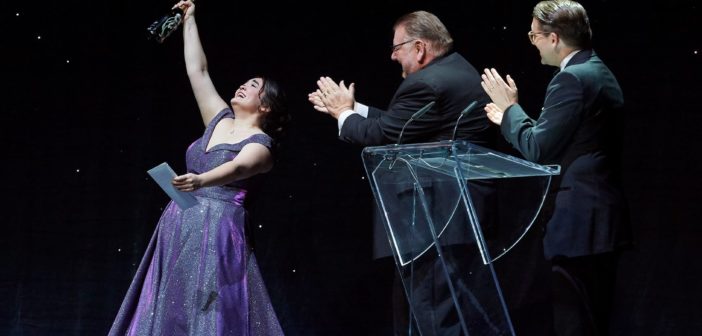
Oct 30, Toronto — Last night, seven incredibly talented young singers selected from a pool of 109 applicants from across the country competed in the Canadian Opera Company’s annual Ensemble Studio Competition. The event was hosted by Ben Heppner. In addition to cash prizes, the finalists were vying for a coveted invitation to join the 2020/21 Ensemble Studio, Canada’s premier training program for young opera professionals. They were accompanied by the COC Orchestra, led by COC Music Director Johannes Debus. Soprano Midori Marsh from Cleveland, Ohio, took home the $5000 First Prize and the Audience Choice Award worth $2000. She…

Share:

Jewish composers write violin concertos first, piano second. All other instruments are also-rans. Credit, then to Raphael Wallfisch for dusting off cello concertos by three Jews – the German-born Israeli Paul Ben-Haim, the Austrian-born film composer Erich Wolfgang Korngold and the Swiss-born American Ernest Bloch. Ben-Haim, in his 1962 cello concerto, performs his usual fusion act of west and east sonorities – though, on this occasion, not with Yemenite and Palestinian roots so much as Ladino-Balkan, and all the more mellifluous for it. The adagio is especially compelling. Bloch’s Symphony for cello and orchestra (1954 and his earlier Baal Shem…

Share:

It might seem odd to nominate a concert in the Maison symphonique as the operatic event of the year so far, but such was the evidence that reached the ear on Oct. 25 and even, to some extent, met the eye. Beethoven’s Fidelio as performed by the Orchestre Métropolitain with a near-dream cast assembled by the Opéra de Montréal (and doubtless ratified by Yannick Nézet-Séguin) offered opera enthusiasts nothing to deplore in an age of directorial monkey-business and a great deal of intuited action to applaud. Before discussing the many musical virtues of this outing, I should report on how long a…

Share:

Recordings of these concertos begin with the composer himself and continue with Vladimir Horowitz, whom Rachmaninov acknowledged as the superior interpreter. The benchmark in modern times was set by Vladimir Ashkenazy with Andre Previn on Decca, an act of concentration and mutual challenge that few others could sustain across the series. My feeling is that Daniil Trifonov and Yannick Nézet-Séguin have set the benchmark for the next quarter-century. Outstanding in their previous release of the 2nd and 4th concertos, they deliver a performance of the first concerto that makes light of its difficulties and hesitations, lightening also its endemic morbidity…

Share:
1 80 81 82 83 84 172