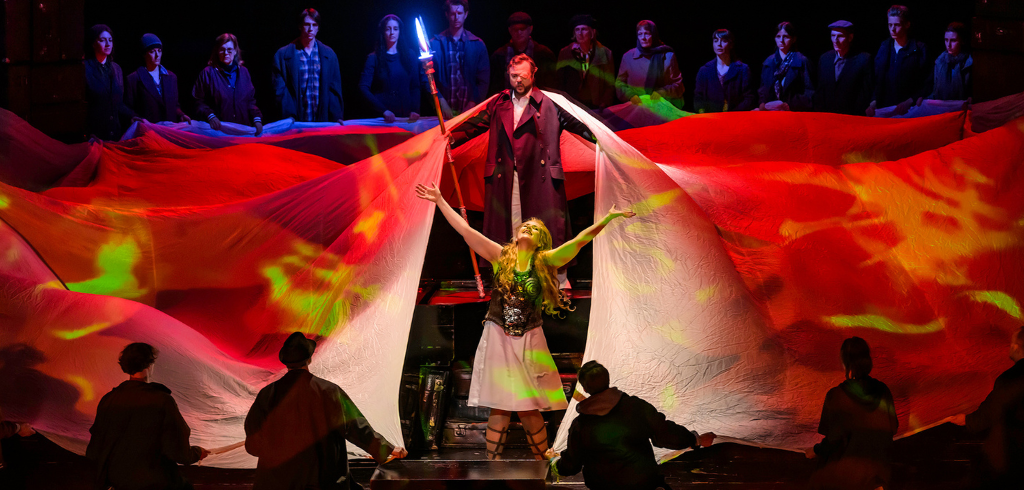
Few works in the operatic repertory present greater challenges to contemporary stage directors than Der Ring des Nibelungen. Wagner’s tetralogy exists simultaneously as myth, philosophy, political allegory, psychological drama, and monumental musical architecture. Modern productions frequently approach the cycle either with excessive reverence toward its canonical status or with aggressive deconstruction designed to dismantle inherited Wagnerian traditions.
The revival of Stefan Herheim’s new production (seen May 26–31) for Deutsche Oper Berlin attempted a more elusive path between these extremes. Neither conventionally faithful nor deliberately iconoclastic, Herheim’s staging sought to reinterpret the Ring through an intricate network of recurring visual symbols centered on displacement, theatrical memory, and the act of artistic creation itself.

Scene from Deutsche Oper Berlin’s Das Rheingold. Photo: Bernd Uhlig
Lack of Dramatic Clarity
The result proved intellectually ambitious, visually restless, intermittently brilliant, and ultimately inconsistent. Herheim generated striking theatrical images throughout the cycle, especially in Das Rheingold and Götterdämmerung, yet his conceptual vocabulary frequently failed to evolve with sufficient dramatic clarity across the four operas. Nevertheless, even when the staging faltered, the musical and vocal realization achieved a level of distinction that sustained the enterprise with remarkable consistency. Under the direction of Donald Runnicles, the orchestra and singers provided the cycle with a musical integrity often stronger than the production’s interpretative coherence.
From the opening moments of Das Rheingold, Herheim established the visual language that would dominate the entire tetralogy. Refugees carrying worn suitcases wandered through a space resembling a railway station or transitional shelter, while a battered grand piano occupied the centre of the stage like a relic from another civilization. This piano became the production’s central symbolic object: at various moments it functioned as instrument, stage machinery, architectural structure, dramatic barrier, and metaphysical portal. Alongside the piano appeared fragments of Wagner’s score itself, transforming musical notation into physical scenery and emphasizing the self-referential theatricality of the production.

Scene from Deutsche Oper Berlin’s Das Rheingold. Photo: Bernd Uhlig
Ring Linked to Migration
Such imagery clearly aimed to connect the Ring to modern histories of exile, migration, and cultural dislocation. Yet Herheim resisted simplistic political allegory. The refugees remained deliberately ambiguous figures—simultaneously witnesses, participants, victims, and embodiments of collective memory. This ambiguity initially proved productive. In Das Rheingold, the production generated genuine curiosity because the audience sensed that these recurring motifs might gradually reveal deeper interpretative significance across the cycle.
Crucially, Herheim’s visual imagination in Das Rheingold often emerged organically from Wagner’s dramaturgy rather than being imposed externally upon it. The staging displayed an unusual capacity for playful theatrical association without descending immediately into arbitrary provocation. Thomas Blondelle’s Loge appeared as a sardonic trickster whose Mephistophelean presence dominated much of the evening. Herheim’s characterization drew freely upon popular cultural archetypes without becoming reductive: Alberich carried echoes of the Joker, while Mime appeared costumed as Wagner himself, creating a self-conscious reflection upon artistic creation and corruption.
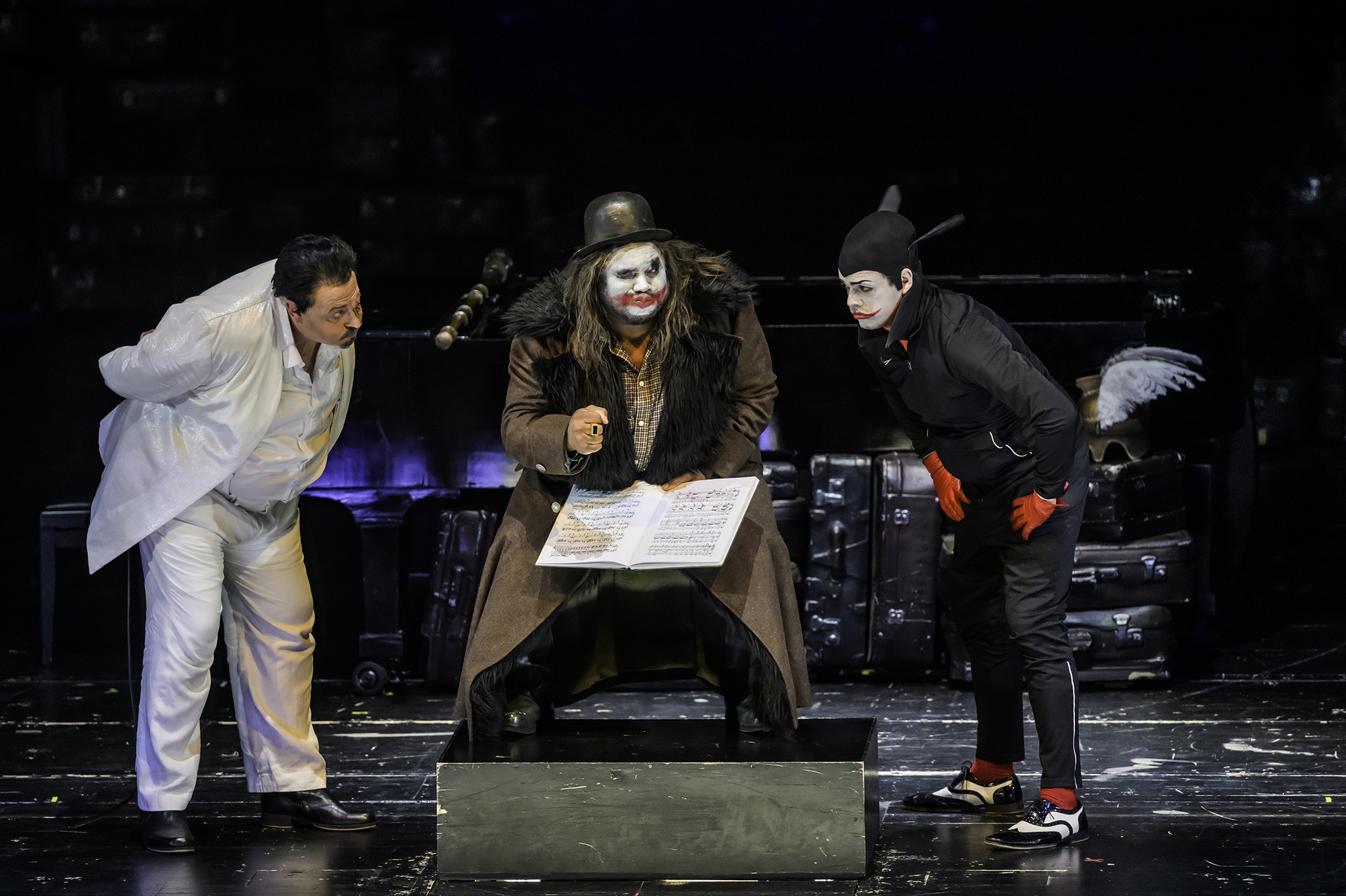
Scene from Deutsche Oper Berlin’s Das Rheingold. Photo: Bernd Uhlig
Runnicles Leads a Transparent Ring
Musically, Das Rheingold immediately established the exceptional standards that would characterize the cycle as a whole. Runnicles approached the score not as an exercise in monumental heaviness but as a living dramatic organism shaped through transparency, flexibility, and orchestral colour. The famous E-flat prelude emerged with extraordinary patience and textural clarity, allowing the gradual accumulation of orchestral sonority to unfold organically rather than through sheer volume. Throughout the evening, Runnicles maintained a rare balance between symphonic breadth and theatrical responsiveness.
The orchestra of Deutsche Oper Berlin responded magnificently to this approach. Brass playing possessed impressive solidity without coarseness, while the strings maintained warmth and precision even in the densest orchestral passages. Particularly notable was the conductor’s sensitivity toward vocal balance. Wagnerian orchestration often risks overwhelming singers, especially in modern theatres, yet Runnicles consistently created space within the orchestral texture that allowed textual clarity and vocal characterization to emerge naturally.
Among the cast, Iain Paterson offered a thoughtful and vocally secure Wotan. Rather than portraying the god solely through authoritarian grandeur, Paterson emphasized introspection and intellectual calculation. His baritone possessed a dark, firmly centered timbre capable of projecting authority without sacrificing verbal nuance. Particularly impressive was his ability to sustain long conversational passages with clear textual inflection, avoiding the declamatory monotony that can afflict the role.

Scene from Deutsche Oper Berlin’s Das Rheingold. Photo: Bernd Uhlig
Thomas Blondelle’s Intelligent Loge
The evening’s most compelling vocal characterization, however, came from Blondelle as Loge. The tenor combined vocal elegance with remarkable theatrical agility, creating a figure of perpetual instability and ironic detachment. His vocalism retained lyrical flexibility even in sharply articulated passages, while his diction remained exceptionally precise throughout. Rather than exaggerating Loge’s cynicism, Blondelle suggested an unsettling intelligence that made the character simultaneously entertaining and dangerous. Vocally, his performance stood out for its rhythmic alertness and capacity to integrate speech-like inflection within a firmly musical line.
Michael Sumuel’s Alberich similarly impressed through psychological specificity rather than caricature. His vocal production combined muscular authority with sufficient flexibility to capture the character’s volatility and desperation. Particularly striking was the transformation following the theft of the Rhinegold: Sumuel darkened the vocal colour noticeably, allowing Alberich’s psychological corruption to emerge organically through sound itself rather than through exaggerated stage business.
The production also benefited enormously from the contributions of Annika Schlicht and Lauren Decker, two singers who would become increasingly important across the cycle. Schlicht’s Fricka avoided the common tendency to portray the goddess merely as shrill moral opposition. Instead, her richly focused mezzo-soprano conveyed intelligence, emotional frustration, and genuine dignity. Decker’s Erda, though brief in appearance, achieved a haunting vocal presence through the dark resonance and steadiness of her contralto. Her warning to Wotan emerged not as abstract prophecy but as a voice of ancient inevitability.
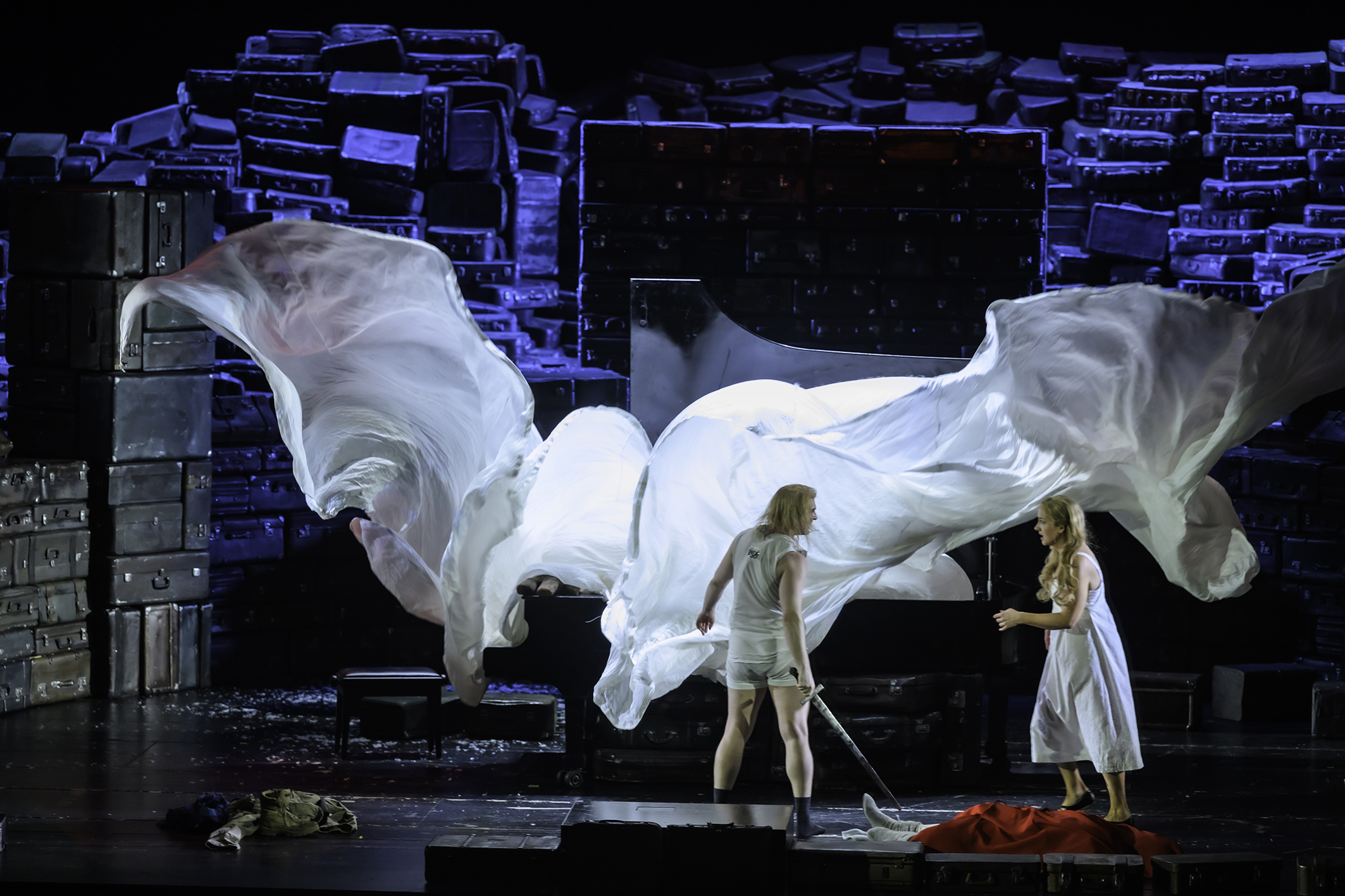
Scene from Deutsche Oper Berlin’s Die Walküre. Photo: Bernd Uhlig
Die Walküre Reveals Concept’s Limits
If Das Rheingold represented the cycle at its most promising, Die Walküre revealed the first major limitations of Herheim’s conceptual framework. Wagner’s second drama depends far more heavily upon psychological development and emotional continuity than the comparatively episodic structure of Rheingold. Herheim’s recurring visual symbols—the refugees, suitcases, piano, and fragments of score—began to feel increasingly overdetermined. What had initially generated interpretative openness now risked becoming repetitive theatrical vocabulary.
This problem became especially evident in the introduction of the invented figure “Hundingling,” portrayed by Eric Naumann. Conceived as the deformed child of Sieglinde and Hunding, the character appeared intended to externalize generational trauma and inherited violence. Yet the addition complicated an already psychologically dense drama without offering corresponding interpretative insight. More damaging was Herheim’s tendency to undermine moments of genuine tragedy through excessive theatrical activity and misplaced irony. The Valkyrie scenes, in particular, frequently descended into distracting visual chaos that dissipated dramatic tension rather than intensifying it.
Yet once again, the musical performance elevated the evening considerably above the limitations of the staging. Here the cycle’s vocal achievements became increasingly remarkable. Matthew Newlin delivered one of the finest performances of the entire tetralogy as Siegmund. His tenor combined lyrical warmth with sufficient heroic expansion to meet Wagner’s orchestral demands without forcing the sound. Particularly striking was the naturalness of his phrasing. Rather than treating the role as a sequence of vocal climaxes, Newlin shaped Wagner’s long musical lines with continuous expressive purpose. His diction remained exceptionally clear, allowing the poetry to retain dramatic immediacy even within the densest orchestral textures.
Most impressive of all was Newlin’s ability to communicate vulnerability without sacrificing vocal security. His “Winterstürme” avoided sentimental excess through restrained lyricism and tonal focus, while the cries of “Wälse!” achieved thrilling intensity without degenerating into brute force. In an era when many heldentenors approach Wagner through sheer stamina alone, Newlin demonstrated the continuing importance of vocal beauty and textual intelligence.
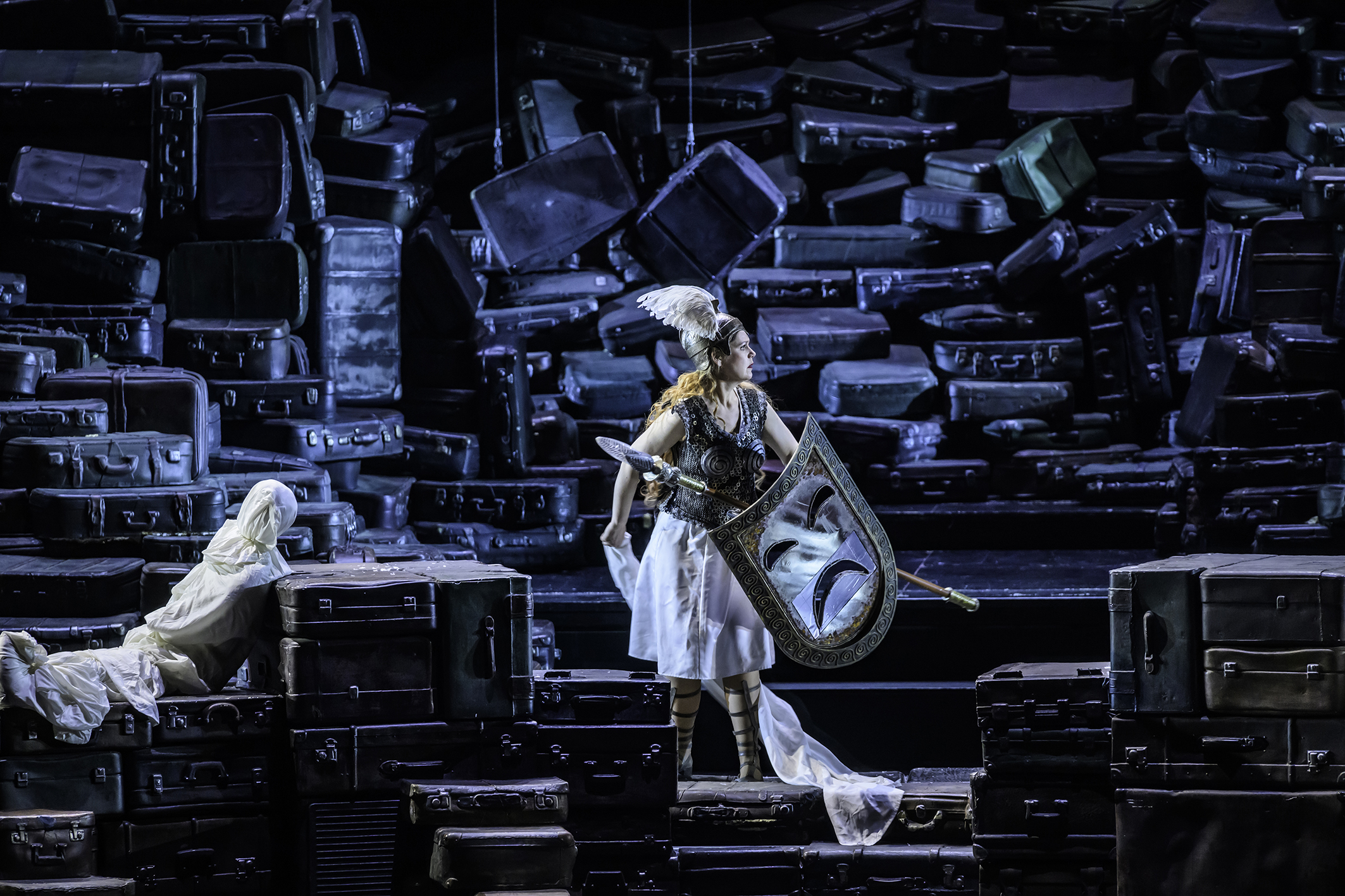
Scene from Deutsche Oper Berlin’s Die Walküre. Photo: Bernd Uhlig
A Gleaming Sieglinde
Elisabeth Teige matched him magnificently as Sieglinde. Her soprano possessed both gleaming power and an unusually warm middle register, enabling her to shape the character’s emotional transformation with exceptional nuance. Teige’s performance proved especially compelling in the first act, where she captured Sieglinde’s gradual emergence from repression into ecstatic emotional awakening. Vocally, she navigated Wagner’s demanding tessitura with remarkable consistency, maintaining tonal richness even at moments of extreme dramatic intensity.
The chemistry between Newlin and Teige formed the emotional centre that Herheim’s staging often failed to provide. Their performances restored human urgency to scenes occasionally overwhelmed by conceptual excess. Here, Wagner’s musical dramaturgy triumphed over directorial distraction through the sheer communicative power of the singing itself.
Equally noteworthy was Jordan Shanahan’s Wotan, whose interpretation diverged meaningfully from Iain Paterson’s more introspective portrayal in Das Rheingold. Shanahan emphasized emotional volatility and psychological exhaustion, presenting a god increasingly trapped within the contradictions of his own authority. Vocally, the performance occasionally sacrificed tonal refinement for dramatic immediacy, yet this proved largely effective within the context of Die Walküre, a drama fundamentally concerned with the collapse of certainty.
His confrontation with Fricka gained particular force through the emotional realism of the vocal exchange, aided immeasurably by Schlicht’s superbly sung Fricka. Schlicht once again resisted caricature, transforming what is often treated as a merely obstructive role into one of moral and emotional complexity. Her richly focused mezzo-soprano, combined with sharply attentive diction, allowed Fricka’s argument to emerge not as bureaucratic moralism but as a painful insistence upon ethical consistency.
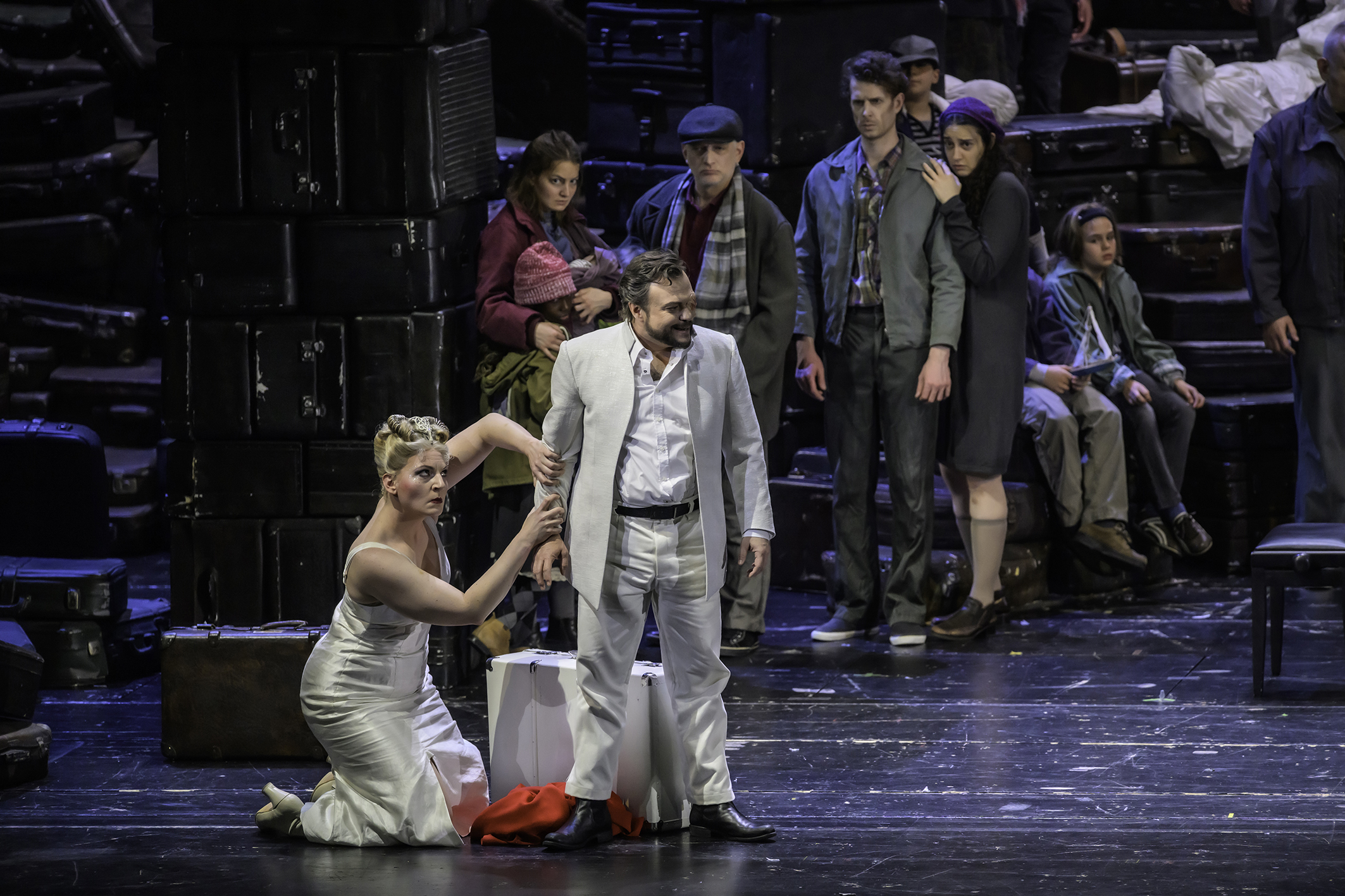
Scene from Deutsche Oper Berlin’s Die Walküre. Photo: Bernd Uhlig
Trine Møller Offers Moving Brünnhilde
As Brünnhilde, Trine Møller delivered a dramatically committed and vocally secure performance, though one that occasionally struggled to attain the effortless amplitude demanded by Wagner’s vast orchestral textures. Her portrayal proved strongest in the character’s emotional transformation from divine warrior to compassionate daughter. Particularly moving was the final scene, where Møller’s vocal sincerity and emotional concentration transcended some of the staging’s excesses, allowing the farewell between father and daughter to recover much of its devastating humanity.
Unfortunately, Siegfried marked the cycle’s artistic nadir. By the third evening, Herheim’s recurring motifs had largely exhausted their interpretative potential. The omnipresent refugees, suitcases, theatrical references, and choreographed interruptions increasingly threatened to overwhelm the opera itself. What initially felt imaginative in Das Rheingold had hardened into repetitive symbolism whose relationship to Wagner’s central philosophical concerns remained frustratingly opaque. Rather than deepening the cycle’s themes of power, fear, memory, and human awakening, the production frequently distracted from them.
The staging of Fafner represented one of the clearest missed opportunities. Wagner’s dragon scene invites theatrical invention capable of balancing mythic imagination with psychological resonance. Herheim’s solution, however, appeared surprisingly uninspired and dramatically underwhelming.
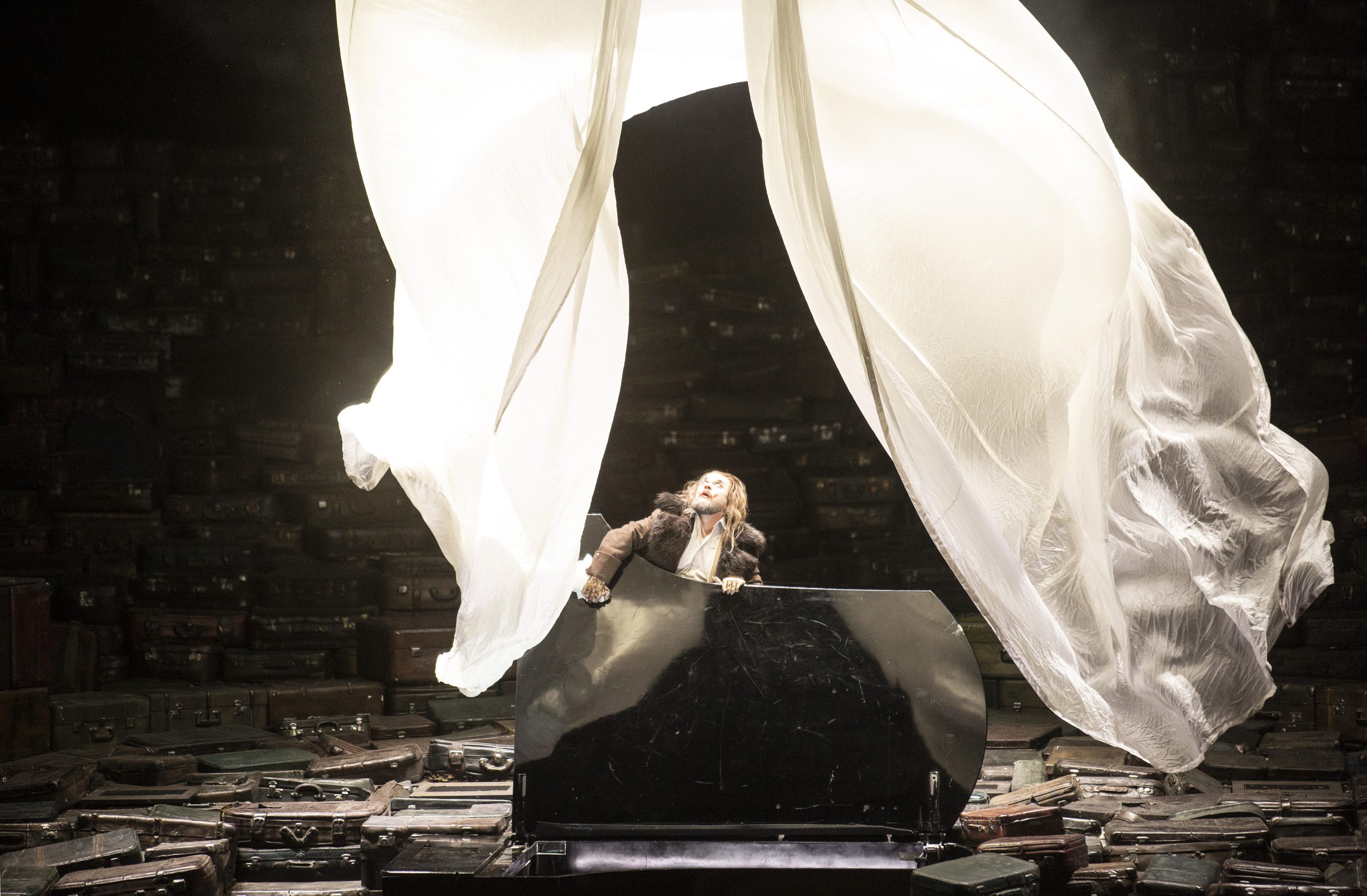
Scene from Deutsche Oper Berlin’s Siegfried, 2024. Photo: Bernd Uhlig
This Ring’s Distracting Theatrics
More troubling was the treatment of the final awakening of Brünnhilde, among the most transcendent passages in the entire tetralogy. Instead of allowing Wagner’s extraordinary musical architecture to generate emotional transformation, the scene became submerged beneath layers of distracting theatrical activity and excessive erotic imagery involving the recurring refugee figures. The result was not provocation so much as emotional displacement: one found attention repeatedly diverted from the central dramatic encounter.
Yet even in the cycle’s weakest theatrical installment, the musical standards remained remarkably high. Clay Hilley offered an outstanding Siegfried, distinguished not merely by stamina but by unusual intelligence and vocal flexibility. Too often, the role is approached as an endurance test demanding sheer vocal mass. Hilley instead revealed the lyric potential embedded within Wagner’s writing. His tenor projected securely across the orchestra while retaining warmth, flexibility, and surprising tenderness. Particularly admirable was his refusal to portray Siegfried merely as an impulsive brute. Vocally and dramatically, he captured the character’s naïveté, curiosity, and emerging self-awareness with unusual subtlety.
The forging scene demonstrated impressive technical command, while his exchanges with Mime revealed finely judged shifts between youthful impatience and genuine emotional bewilderment. Most striking, however, was Hilley’s achievement in the final duet, where he sustained vocal freshness despite the enormous physical and musical demands of the role. His performance suggested not only stamina but genuine interpretative thought.
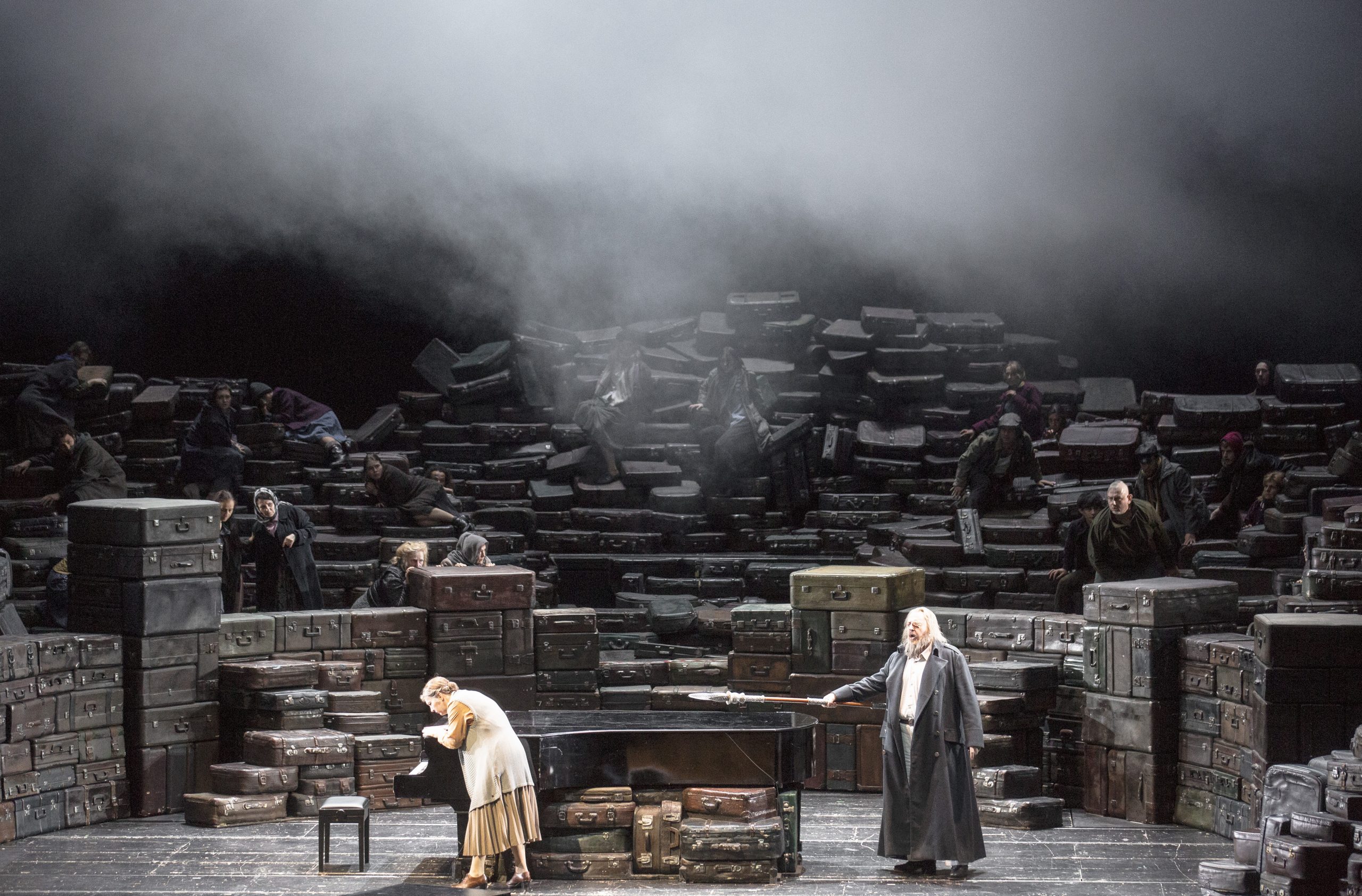
Scene from Deutsche Oper Berlin’s Siegfried, 2024. Photo: Bernd Uhlig
Opposite him, Elisabeth Teige returned—this time as Brünnhilde—with considerable success. The transition from Sieglinde in Die Walküre to Brünnhilde in Siegfried demonstrated both her versatility and vocal intelligence. Teige’s soprano possessed the necessary brilliance for the role while avoiding the metallic hardness that sometimes afflicts dramatic sopranos in Wagner. Her awakening scene communicated genuine emotional vulnerability beneath heroic authority, and vocally she sustained admirable steadiness through Wagner’s punishing climaxes. Particularly noteworthy was the warmth of her lower register, which lent unusual humanity to a character often portrayed through sheer vocal grandeur alone.
Iain Paterson’s return as the Wanderer provided one of the opera’s strongest interpretative threads. His portrayal emphasized weariness, irony, and increasing existential resignation. Vocally, Paterson maintained admirable consistency, shaping long philosophical exchanges with textual precision and understated authority. His confrontation with Erda, sung once again by the excellent Lauren Decker, achieved rare dramatic concentration, largely because both singers trusted Wagner’s musical structure rather than compensating through theatrical exaggeration.
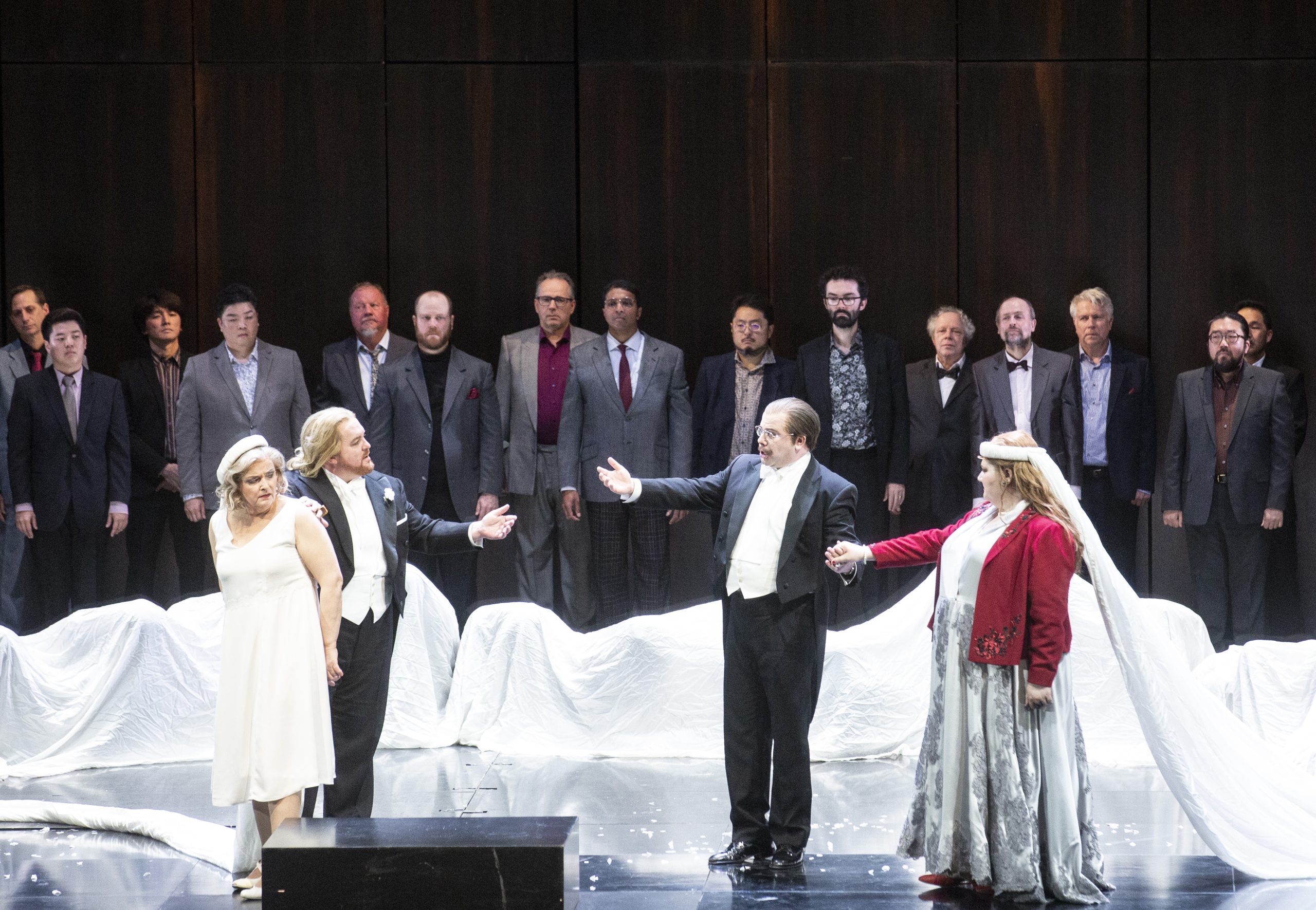
Scene from Deutsche Oper Berlin’s Götterdämmerung, 2024. Photo: Bernd Uhlig
Götterdämmerung Offers a Dramatic Recovery
If Siegfried represented the cycle’s lowest point theatrically, Götterdämmerung unexpectedly delivered a considerable recovery. Herheim did not abandon his conceptual language; the refugees, piano, suitcases, and theatrical self-references remained omnipresent. Yet unlike the preceding two evenings, these elements were handled with noticeably greater discipline and coherence. The imagery no longer seemed compulsively imposed upon every dramatic moment. Instead, the production began to trust Wagner’s dramaturgy more fully.
The opening tableau, situated within a replica of the foyer of the Deutsche Oper itself, immediately established a richer visual and symbolic environment than anything seen in Die Walküre or Siegfried. Here Herheim’s self-reflexive theatricality regained purpose, inviting the audience to contemplate not only Wagner’s mythology but the institution of opera itself as a site of cultural memory and historical continuity.
Several scenes achieved genuine dramatic power. The abduction of Brünnhilde, though departing from literal fidelity to the libretto, generated authentic terror and emotional violence. Equally memorable was the appearance of Alberich to Hagen, staged with chilling restraint. One of the production’s strongest visual images emerged through the silent observation of events by the gods themselves, suspended above the action like fading witnesses to their own obsolescence. Herheim remained susceptible to moments of excess—particularly gratuitous violence—but the opera displayed a coherence and confidence absent from the middle installments.
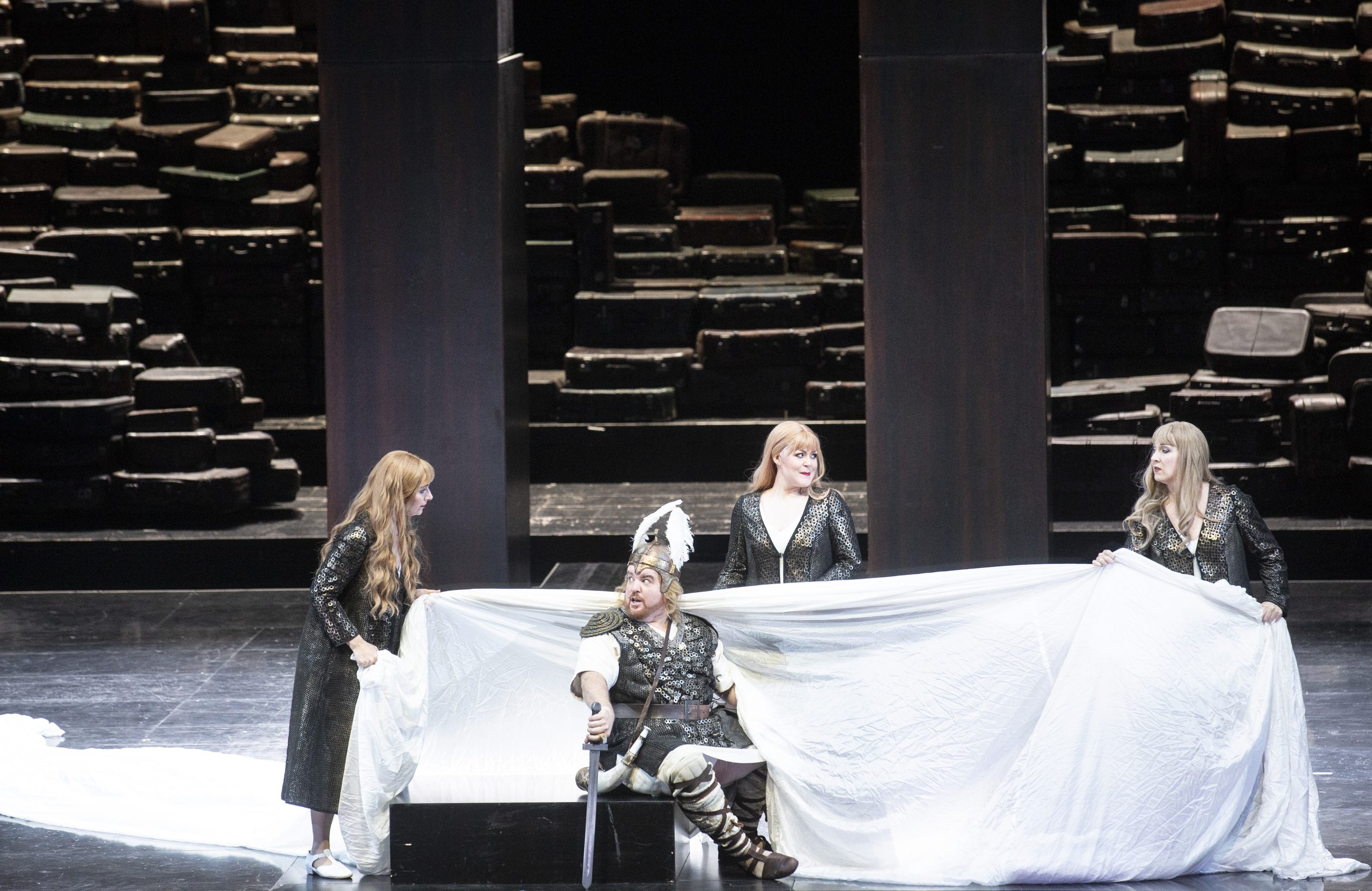
Scene from Deutsche Oper Berlin’s Götterdämmerung, 2024. Photo: Bernd Uhlig
Catherine Foster Dramatic Brünnhilde
Vocally, Götterdämmerung crowned the cycle with some of its finest achievements. Catherine Foster’s Brünnhilde represented a commanding culmination of the drama. Foster brought formidable vocal authority to the role, yet what distinguished her performance was not merely power but control. Her phrasing consistently demonstrated architectural awareness, shaping immense Wagnerian paragraphs without sacrificing emotional immediacy. Particularly impressive was her ability to sustain tonal focus in moments of extreme dramatic intensity. Rather than relying exclusively upon volume, Foster projected dramatic conviction through careful textual emphasis and tonal variety.
Her Immolation Scene provided one of the cycle’s undeniable musical high points. Here, Foster balanced transcendence and grief with impressive interpretative intelligence, allowing Wagner’s final vision of destruction and renewal to emerge through vocal clarity rather than theatrical overstatement.
Hilley maintained remarkable consistency as Siegfried, preserving vocal freshness despite the punishing demands of consecutive performances. His death scene proved especially moving precisely because it resisted exaggeration, allowing lyrical sincerity to replace heroic bombast.
Among the supporting performances, Albert Pesendorfer delivered an exceptional Hagen. Too often portrayed as merely monstrous, Pesendorfer’s interpretation emphasized psychological complexity and chilling restraint. Vocally, his dark bass possessed enormous authority while maintaining textual clarity often absent in the role. His stillness on stage became dramatically terrifying, particularly in the nocturnal scene with Alberich, where menace emerged through vocal control rather than overt theatricality.
Similarly impressive was Schlicht’s Waltraute, arguably one of the cycle’s finest individual contributions. Her scene with Brünnhilde became a masterclass in vocal storytelling. Schlicht combined emotional urgency with technical discipline, shaping Wagner’s immense monologue with exceptional dramatic focus. Her richly colored mezzo-soprano conveyed both desperation and dignity, rendering Waltraute not merely a messenger of doom but one of the tetralogy’s most tragic witnesses.
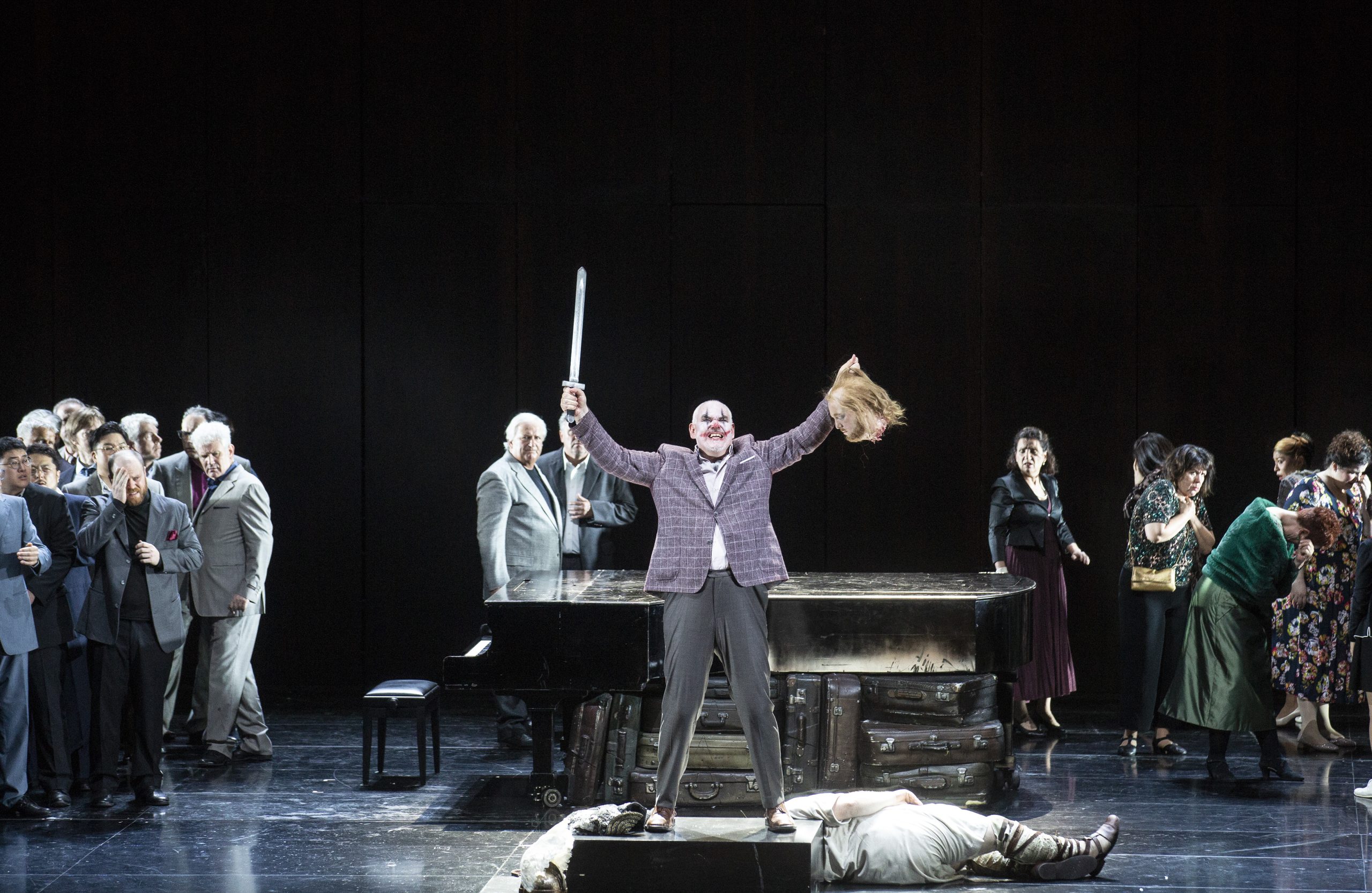
Scene from Deutsche Oper Berlin’s Götterdämmerung, 2024. Photo: Bernd Uhlig
Donald Runnicles at the Helm
Throughout the cycle, however, the production’s greatest artistic constant remained Runnicles. His achievement cannot be overstated. Rather than treating the Ring as a monument demanding relentless sonic weight, Runnicles emphasized transparency, flexibility, and long-range structural coherence. Tempi felt carefully judged, allowing dramatic momentum without sacrificing orchestral detail. More importantly, he demonstrated profound sensitivity toward singers, consistently shaping the orchestra around vocal needs rather than overwhelming them.
The orchestra of Deutsche Oper Berlin responded magnificently, sustaining an extraordinary level of discipline across four demanding evenings. The brass displayed grandeur without harshness, woodwinds frequently revealed chamber-like delicacy, and the strings maintained warmth even at moments of apocalyptic intensity. One repeatedly sensed an interpretation grounded not in Wagnerian excess but in musical intelligence.
What ultimately prevents Herheim’s Ring from achieving unqualified greatness is not a lack of imagination but an absence of interpretative clarity. The recurring symbols—refugees, suitcases, piano, fragments of score—generate fascination without ever fully resolving their relationship to Wagner’s central concerns: power, greed, love, sacrifice, and redemption. The audience is continually invited to search for meaning, yet too often denied sufficient dramaturgical coherence.
Music-Making Sustains This Ring
And yet, despite its frustrations, this remained a significant artistic undertaking. At its best—particularly in Das Rheingold and Götterdämmerung—Herheim’s production revealed genuine originality and theatrical intelligence. At its weakest, it demonstrated the dangers of allowing directorial invention to obscure dramatic necessity. What sustained the cycle throughout, however, was the extraordinary quality of its musical realization. By the conclusion of Götterdämmerung, many of Herheim’s mysteries remained unresolved: the refugees continued their journey, the suitcases retained their secrets, and the piano stood as silent witness to the collapse of gods and ideals alike. One departed the theatre admiring the ambition, questioning the execution, but profoundly grateful for the musical and vocal excellence that transformed an uneven theatrical experiment into a compelling Wagnerian experience.
More on Deutsche Oper Berlin’s Ring Cycle can be found here.