Since 1981, the city of Bergamo, one hour northeast of Milan, and the birthplace of Gaetano Donizetti, has hosted Donizetti Opera, a festival of the great Italian bel canto composer’s operas and other works. Its most appealing aspect for opera aficionados is to enjoy rarely-performed works by this charming city‘s favourite son.
This year’s offerings were four decidedly obscure operas: Caterina Cornaro (1844); Il furioso dell’isola di San Domingo (1833); Il campanello (1836); and Deux hommes et une femme (composed in 1841 but first performed in 1860). The latter two are one-act operas, and were presented on a double bill.
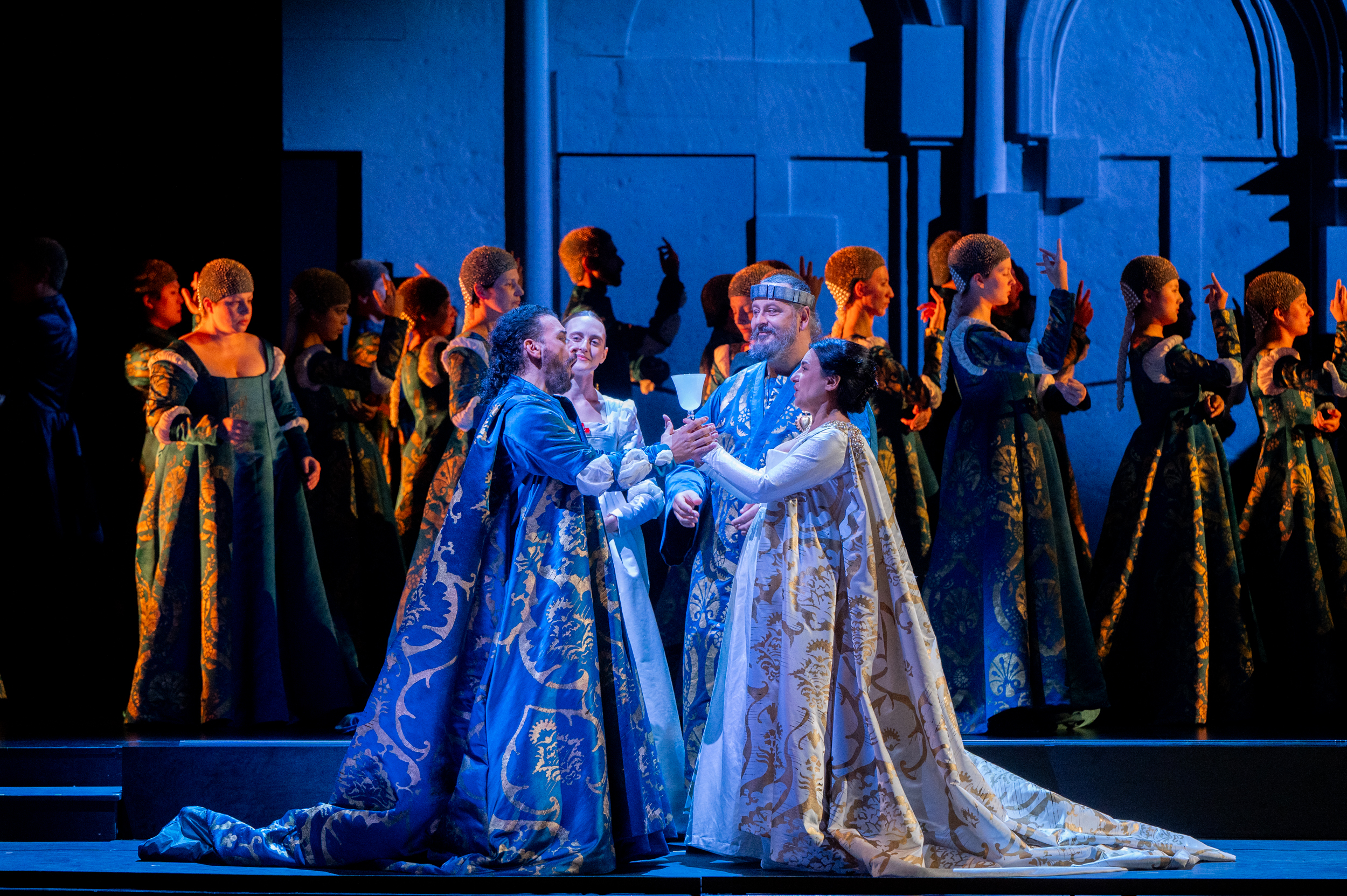
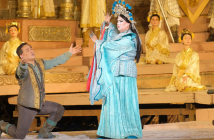
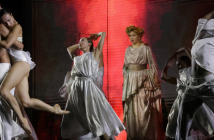
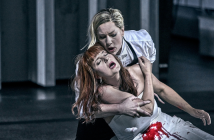
A scene from Donizetti Opera’s Caterina Cornaro
Photo: Studio U.V.
Many, myself included, flocked to Bergamo for Caterina Cornaro (seen Nov. 30), known to many through live 1970s recordings by two legendary singers: Spain’s Monserrat Caballé and Turkey’s Leyla Gencer. Unfortunately, despite generally good singers and capable musical direction, Francesco Micheli’s staging was so unfetching that one of Donizetti’s last and best operas became the festival’s least appealing event.
Soprano Carmen Remigio is an excellent singer, particularly effective in roles requiring expressivity as well as vocalità, such as Donna Elvira in Don Giovanni and Donizetti’s Lucrezia Borgia. However, no vocal virtuosity or charisma could save this sinking ship.
Micheli chose to see the heroine en trois temps, a once original but now tired theatrical device. The triptych presented Caterina the opera character; Caterina the historical figure; and finally a woman in contemporary Venice.

Carmen Remigio in the title role of Donizetti Opera’s Caterina Cornaro
Photo: Studio U.V.
Caterina was a Venetian noblewoman who, under Venice’s Council of Ten, engineered the disruption of her own wedding to French knight Gerardo so she could marry another Frenchman, Lusignano, the king of Cyprus. The diabolical Venetian plan was to slowly poison Lusignano so that Caterina, and hence Venice, would take over. However, fate had it that Gerardo arrived in Cyprus and eventually fought on behalf of his compatriot against the perfidious Venetians.
Tenor Enea Scala in the role of Gerardo. A rising bel canto tenor, recently admired in Rossini’s Zelmira at Pesaro’s Rossini Opera Festival, Scala has the unfortunate and very Italian affliction of singing ever heavier roles, hence damaging his voice. Despite strained high notes, he was a charismatic Gerardo, thanks to his stage presence and good looks.
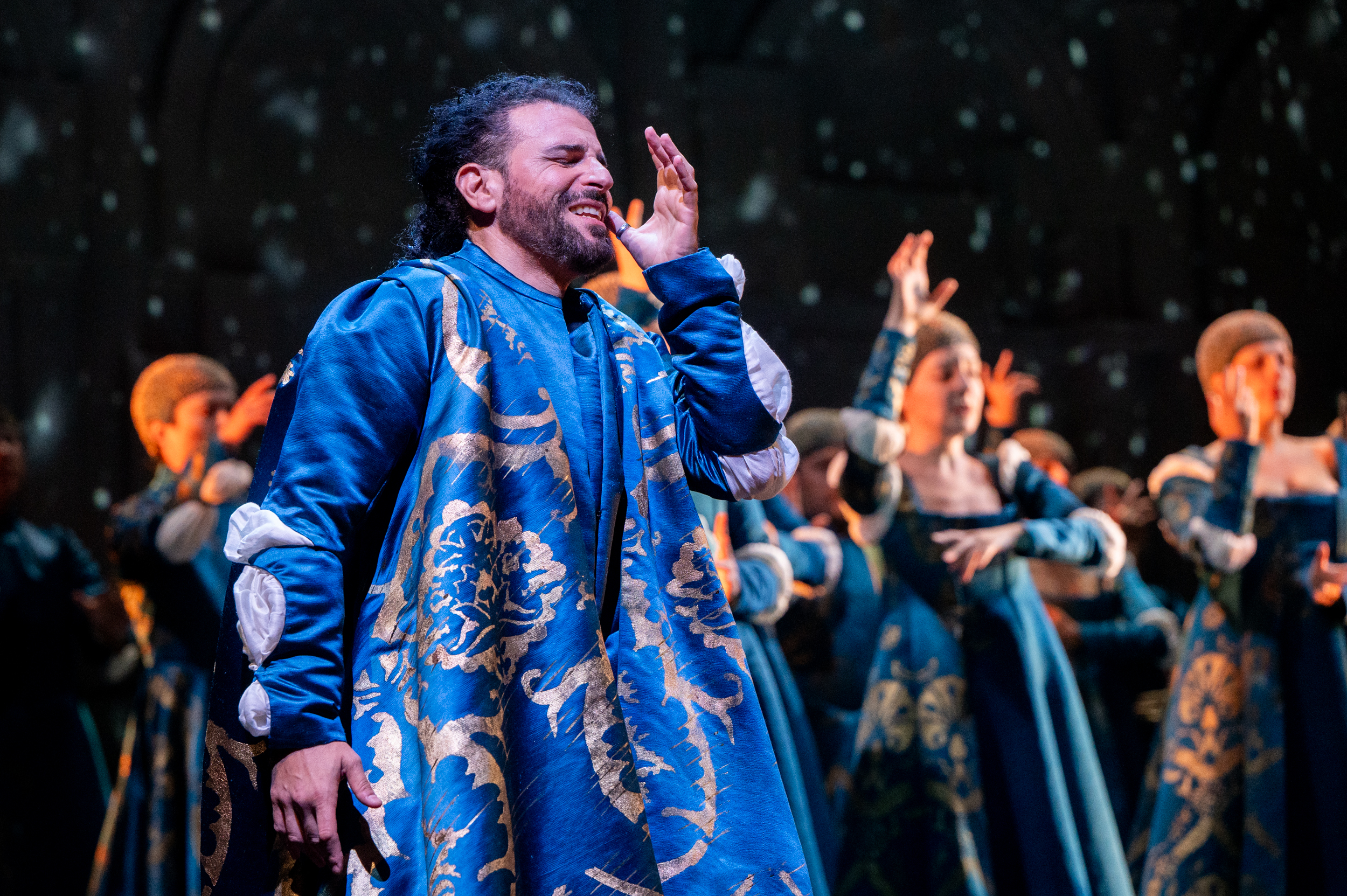
Enea Scala (Gerardo) in Donizetti Opera’s Caterina Cornaro
Photo: Studio U.V.
The finest singer was baritone Vito Priante, as Lusignano. Unfortunately, his voice faltered midway, after which he mimed while South Korean tenor Wonjun Jo sang from offstage. Jo has a powerful voice but rather muffled diction. Given his diminutive stature, he failed to convey Lusignano’s regal station once he fully assumed the role on stage.
In Micheli’s contemporary concept, Gerardo was a surgeon, rather than a knight, who treats Lusignano’s cancer, presumably caused by the Venetians’ poison (or is it Polonium now?). At the end of the opera, a chorus of Cypriots celebrated, yet one was perplexed, as the king died during the surgery and the (surgeon) Gerardo disappeared.
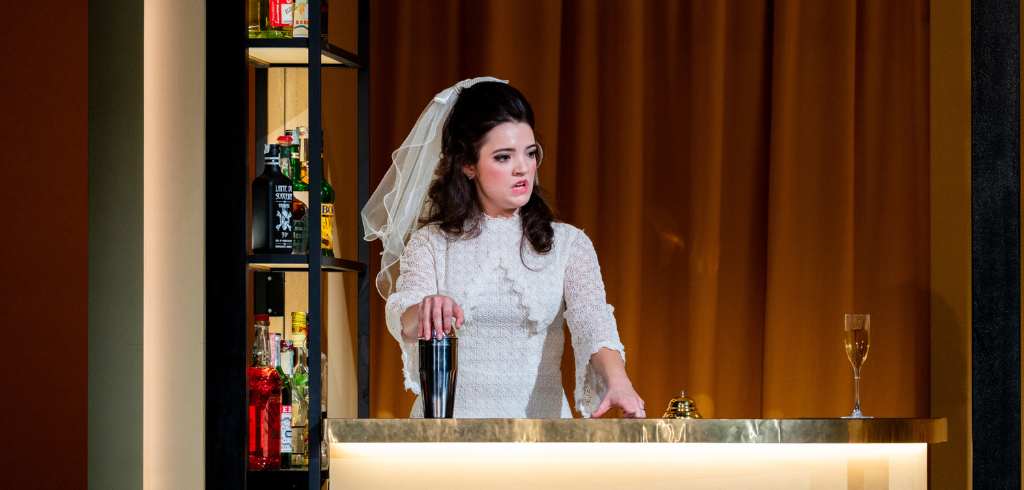
The double bill (seen Nov. 28) had the common theme of troubled marriages. The first, shorter opera, Il campanello, concerns an apothecary’s wedding night to Serafina who, contrary to her name, is anything but angelic. Still attached to Enrico, her womanizing cousin and lover, Serafina marries Annibale Pistacchio (the apothecary) to spite her lover.
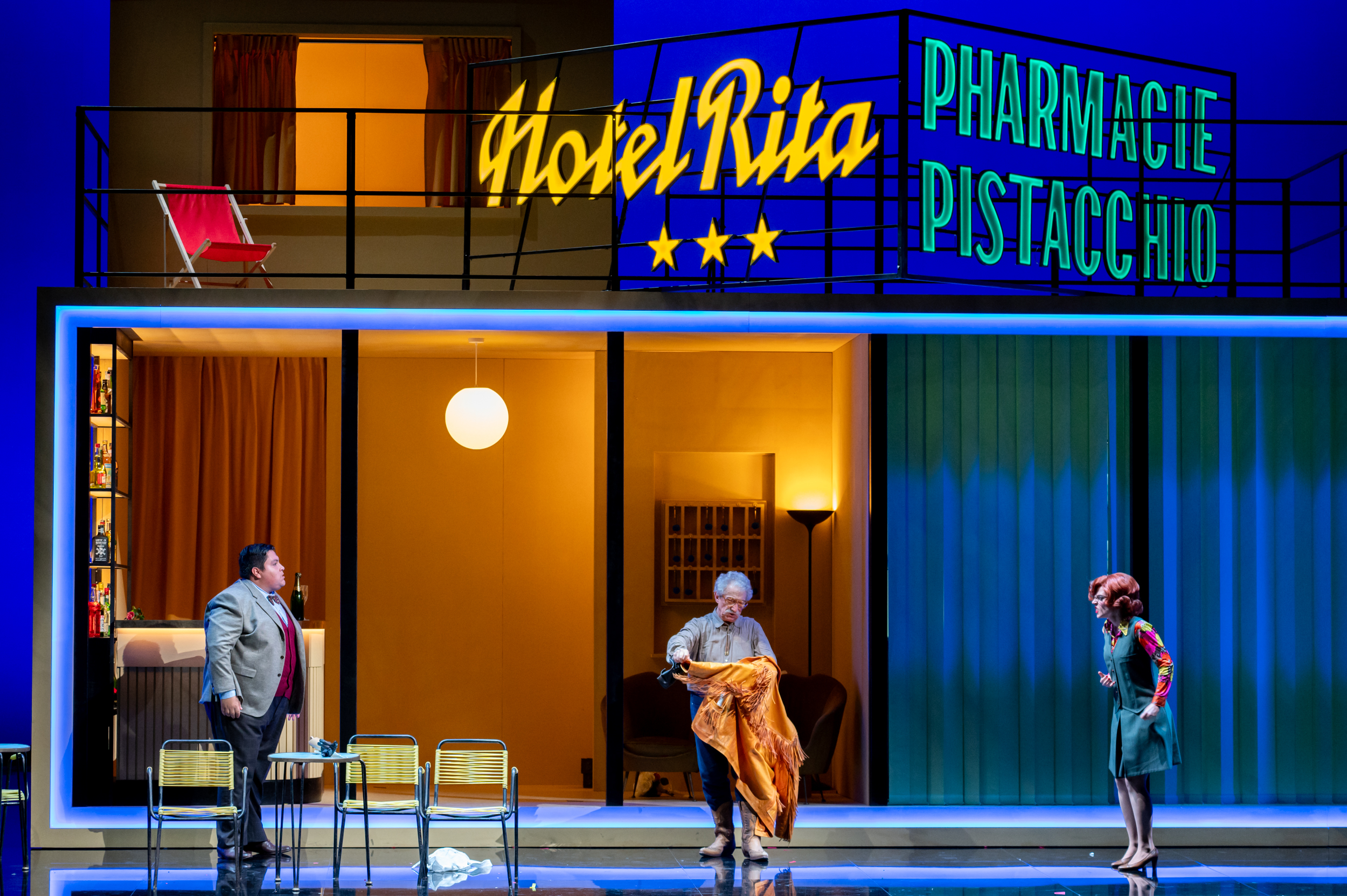
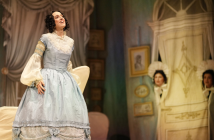
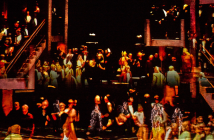
A scene from Donizetti Opera’s Il campanello & Deux hommes et une femme. Photo Studio U.V.
Enrico sports various disguises to harass the poor apothecary on his wedding night. By dawn, the sleepless man must leave for a business trip—without consummating his marriage! The short opera was amusing, despite its unusual dearth of memorable melodies. The principal and secondary singers were members of the Bottega Donizetti, a training program for young singers in Bergamo.
Likewise, two of the three singers in Deux hommes et une femme were from the Bottega. As this is a far superior work, with great melodies and memorable arias, the two young singers, Italian soprano Cristina De Carolis and tenor Cristóbal Campos Marín, had the chance to impress, and in this, they were highly successful. The promising young Chilean tenor seems to be on his way to becoming a leading bel canto tenor. As the first husband, veteran bass Alessandro Corbelli injected professionalism and comic verve into the proceedings.
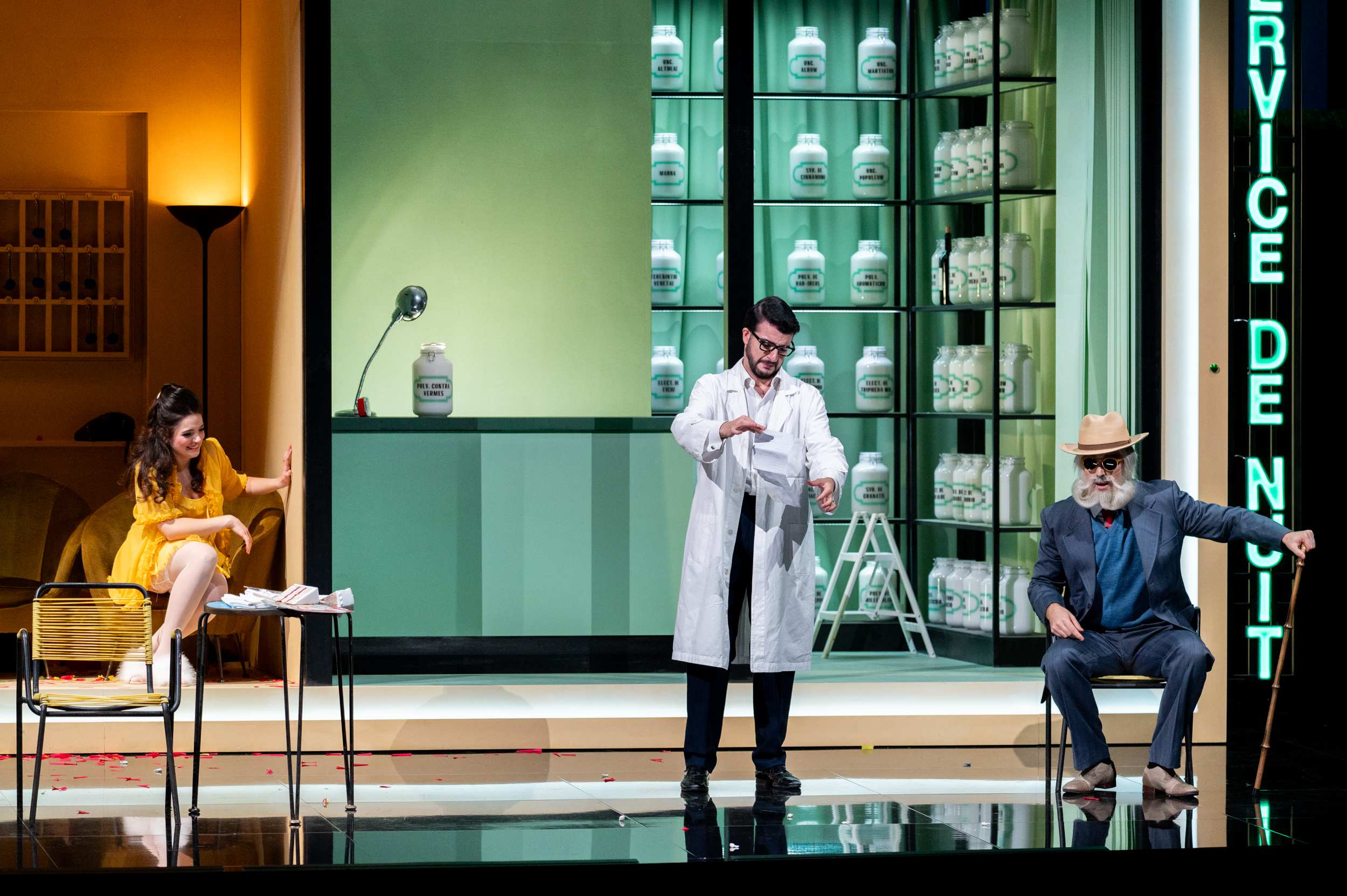
Scene from Donizetti Opera’s Il campanello & Deux hommes et une femme
Photo: Studio U.V.
The amusing plot of Deux hommes et une femme concerns Rita, a widowed innkeeper who remarries a weak man who she physically abuses. Indeed, for years this short opera was called Rita, ou le mari battu. Her (presumed) dead husband Gaspard checks into the hotel with his Canadian bride-to-be. Rita and Gaspard recognize each other, but pretend not to, preferring their present lives.
You see, Gaspard used to beat Rita, and she wants none of that. He in turns needs to obtain his marriage certificate (to destroy it) in order to marry the Canadian. Exquisitely funny developments lead to Gaspard playing a ruse to seize the certificate. More importantly, he teaches the two a lesson that leads to the cessation of spousal abuse.
Of course, it’s in poor taste to make fun of a serious matter like spousal abuse. Director Stefania Bonfadelli, a retired lyric soprano, managed to tone down the humour so that it remained in good taste. She also brilliantly linked the two works by making the apothecary’s shop adjacent to Rita’s hotel, and by having the characters of each opera participate as extras or chorus members in the other. That the two stories each deal with marital troubles made combining them a good idea.
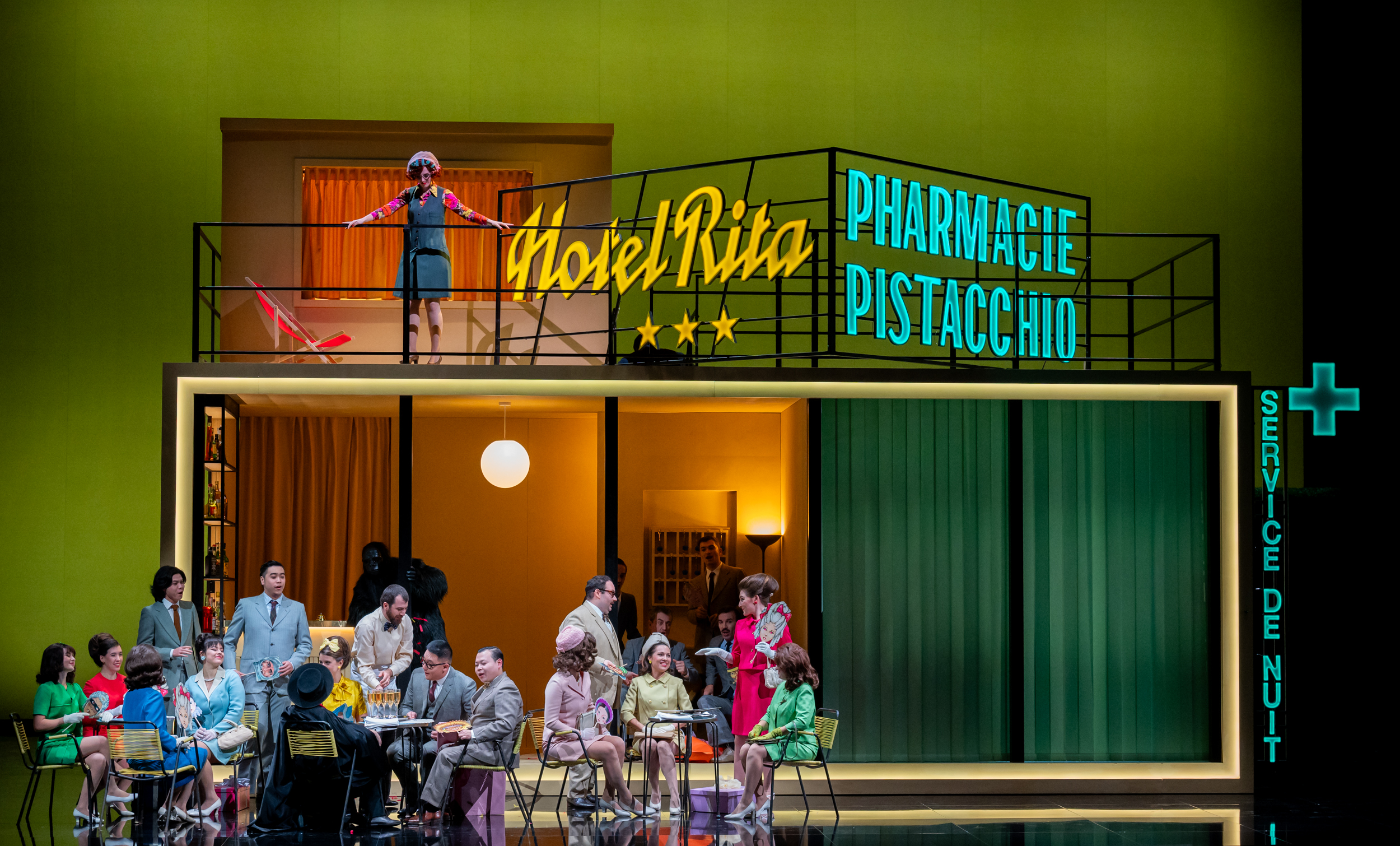
Scene from Donizetti Opera’s Il campanello & Deux hommes et une femme
Photo: Studio U.V.
The quasi-absence of great melodies in Il campanello contrasted with the abundance of great ones in Deux hommes et une femme, accentuating the weakness of the former. The French opera was composed in Paris around the same period of La fille du régiment (1840) and is somewhat reminiscent of the more famous opera. The excellent diction of the young singers, not to mention Corbelli’s flawless French, was both unusual and welcome.
In the context of a colossal recording project by the British label Opera Rara, singers from the Bottega Donizetti gave a morning concert of songs by Donizetti on the festival’s last day (Nov. 30). Already several volumes of the project have either been recorded or announced. They feature such major singers as Michael Spyres, Lawrence Brownlee, Nicola Alsimo, Ermonela Jaho and Marie-Nicole Lemieux.
In this more intimate setting, all six young singers from the Bottega Donizetti managed to shine. One remarkable singer, young Italian mezzo Eleonora de Prez, who sang the minor role of Serafina’s mother in Il campanello, was remarkable. She shows promise to be a magnificent bel canto mezzo.
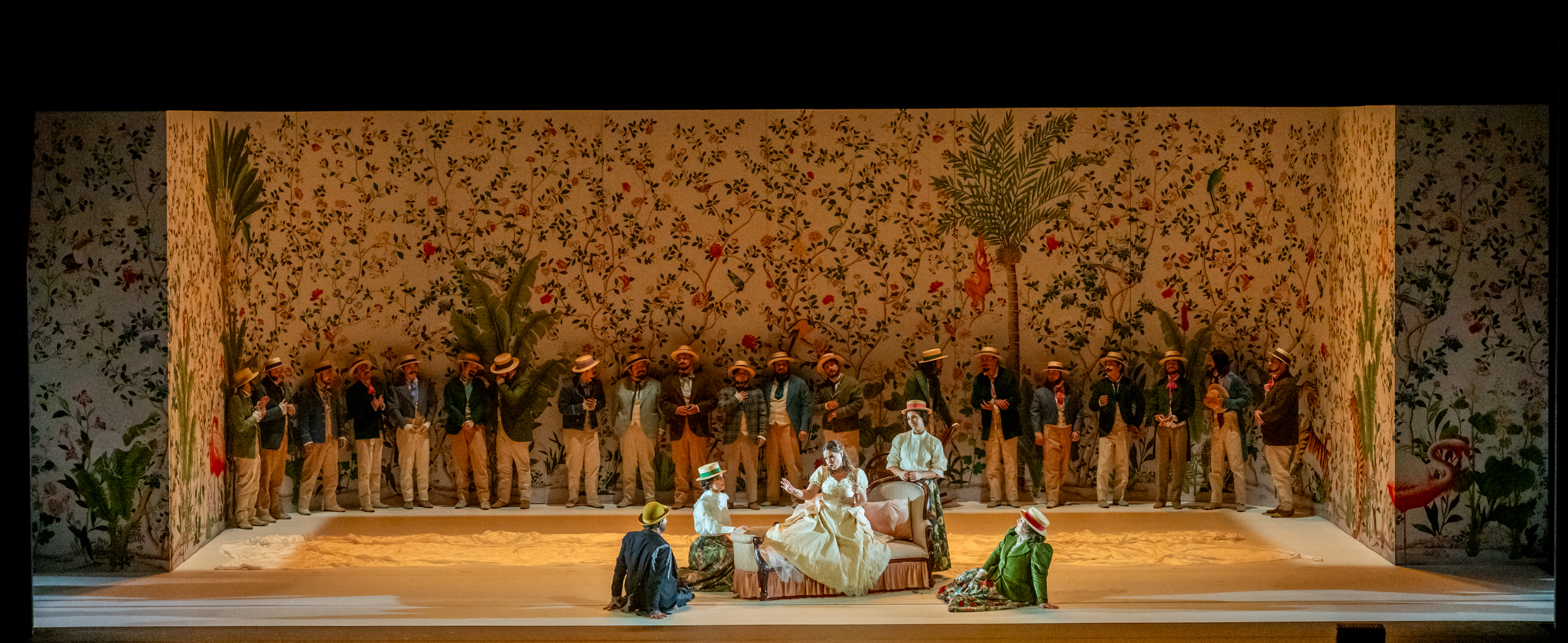
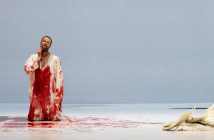
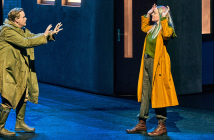
A scene from Donizetti Opera’s Il furioso dell’isola di San Domingo
Photo: Studio U.V.
While Caterina Cornaro was a resounding disappointment, the other offerings were pleasant surprises, especially Il furioso dell’isola di San Domingo (seen Nov. 29). Once a popular Donizetti opera, in its first year when it opened in Naples, it did so in three theatres simultaneously. Its popularity persisted until the end of the nineteenth century, when it disappeared from the repertoire.
Il furioso is a peculiar opera in the semiseria genre, a mix of tragic and comic, a style that was incompatible with the grave political events at the end of the nineteenth century, such as Austria’s defeat by Prussia in 1867; France’s defeat in 1870; the Franco-Prussian War; and the violent independence movements within the Austro-Hungarian and Ottoman Empires.
The main peculiarity of Il furioso is that it’s the only opera wherein the baritone protagonist (rather than the soprano) has a mad scene, a favourite bel canto device that normally shows women as fragile creatures unable to cope with loss or abandonment. Here, Cardenio, a Spanish nobleman, breaks down when he discovers his wife is unfaithful. He seeks refuge in the Caribbean island of Santo Domingo where the now mad man dwells in the forest.
His brother and remorseful wife arrive to rescue him, and after an attempted suicide, his sanity is restored and he reconciles with his wife. To pull off this obscure opera with its weak plot, it takes an exceptional singing actor in the role of Cardenio, and Paolo Bordogna was just the man for the job.
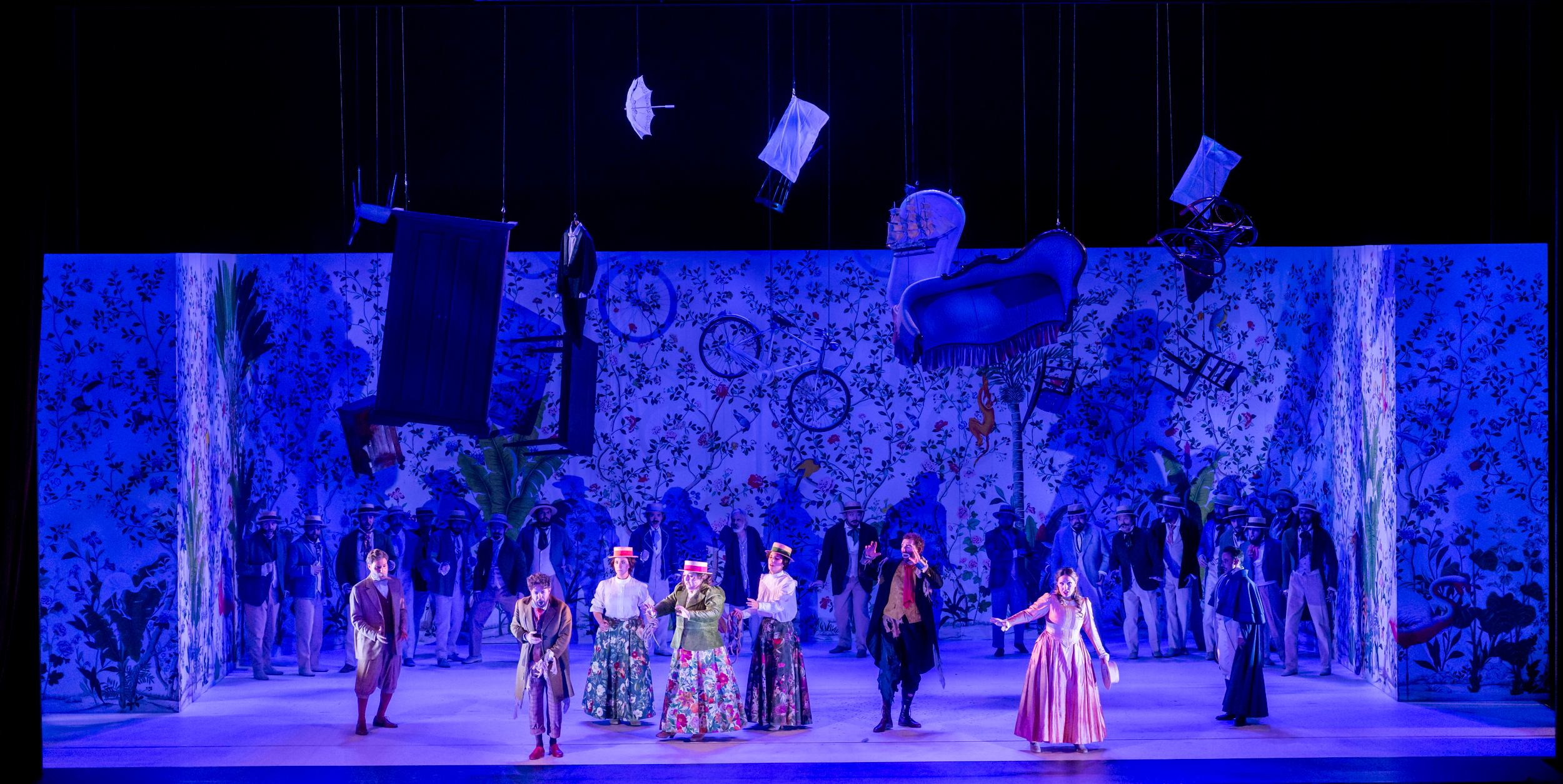
A scene from Donizetti Opera’s Il furioso dell’isola di San Domingo
Photo: Studio U.V.
Bordogna, famous for his Mozartian roles, was recently Leporello in Toronto’s production of Don Giovanni. He’s blessed with immense stage presence, a natural comic verve and crystal clear enunciation, major assets for this role. He managed to galvanize the public and gain its sympathy.
Cardenio’s brother was sung by Argentinian tenor Santiago Ballerini, recently Ernesto in Don Pasquale in Toronto. He’s a promising bel canto tenor who will soon be a household name. He impressed with his easy high notes and convincing deportment as a nobleman.
The unfaithful wife was Georgian soprano Nino Machaidze, once a brilliant coloratura, noted for her Juliette, Elvira (I puritani) and Adina (L’Elisir d’amore). Now more of a lyric soprano, her top notes are rather strained. Nonetheless, she managed to convince as the remorseful, penitent wife, thanks to her excellent acting.

Nino Machaidze (Eleonora) in Donizetti Opera’s Il furioso dell’isola di San Domingo
Photo: Studio U.V.
Other than the brilliant Bordogna in the title role, the stage direction was a major reason for this production’s success. Manuel Renga and his set designer Aurelio Colombo opted for stylised rather than realistic tropics, achieved by using elegant wallpaper with sylvan and animal patterns. A straw hat, a bike and a model ship were mementos of the tropics that were intermittently and tastefully suspended from the ceiling.
The locals were more European settlers than Amerindian natives, clad in casual white suits and straw hats reminiscent of late nineteenth and early twentieth century Cuba or even New Orleans. One character, the African slave Kaidamà, sung by an excellent Bruno Taddia, is problematic in today’s politically correct and officially non-racist world. By substituting whiteface for blackface and empowering Kaidamà, any feeling of discomfort was averted. Moreover, this rendered the dramatic action more compatible with today’s values.
It was refreshing that the opera which inspired the least interest ended up being the best the festival had to offer. Indeed, such surprises are the payoff when seeing hitherto unknown works; one never knows what treasures may await us. Next year’s edition has just been announced: Alahor in Granata (1826), L’esule di Roma (1826) and Le convenienze e inconvenienze teatrali (1827). At Bergamo, the excitement continues!
For more on Donizetti Opera in Bergamo visit www.donizettiopera.org/en/