
This page is also available in / Cette page est également disponible en:
 Français (French)
Out of 250 violinists who auditioned from all over the world, the preliminary jury selected 24, including three Canadians (Justin Saulnier, Paloma So and Belle Ting), to compete at this year’s edition of Concours musical international de Montréal. “We could have easily selected twice that amount,” says Artistic Director Shira Gilbert. “The level [of the competitors]is really exceptional.”
Founded in 2001 by legendary Canadian bass Joseph Rouleau, together with politician and philanthropist André Bourbeau, the Concours is North America’s only international multidisciplinary classical music competition. Rotating annually between violin, voice, and piano, it is based on the model of Belgium’s Queen Elisabeth Competition (QEC).

Shira Gilbert
Photo: Tam Photography
Rouleau, Gilbert explains, “had gone to the Queen Elisabeth Competition in Belgium in 2000 to hear Marie-Nicole Lemieux, the Quebec contralto, who won that year. He thought, ‘Why don’t we have a competition like this in Montreal?’ That was the impetus—to start working on a similar model.”
Like the QEC, the Concours is an important event not only for performing musicians, but also for the host city. Gilbert notes Montreal’s keen audience of artists and the general public. With performances taking place in Bourgie Hall and the Maison symphonique, the Concours constitutes a major cultural event.
“You can follow your favourites all the way through,” she says, which encourages audiences to attend performances from the first round. “Just for sheer excitement, discovery, and suspense, for someone who loves classical music, you can’t really beat the experience of the Concours.”
For the musicians, the Concours is not only an opportunity to share in over $150,000 dollars in prizes and grants, but also provides critical visibility for those “already performing at a professional level, but on the cusp of breaking out … At this stage, the goal is to help launch their careers. Many are already giving concerts—some even have agents—but they enter competitions like ours for the exposure. Everything is livestreamed globally, and we partner with The Violin Channel, which has an exceptional international reach,” says Gilbert.
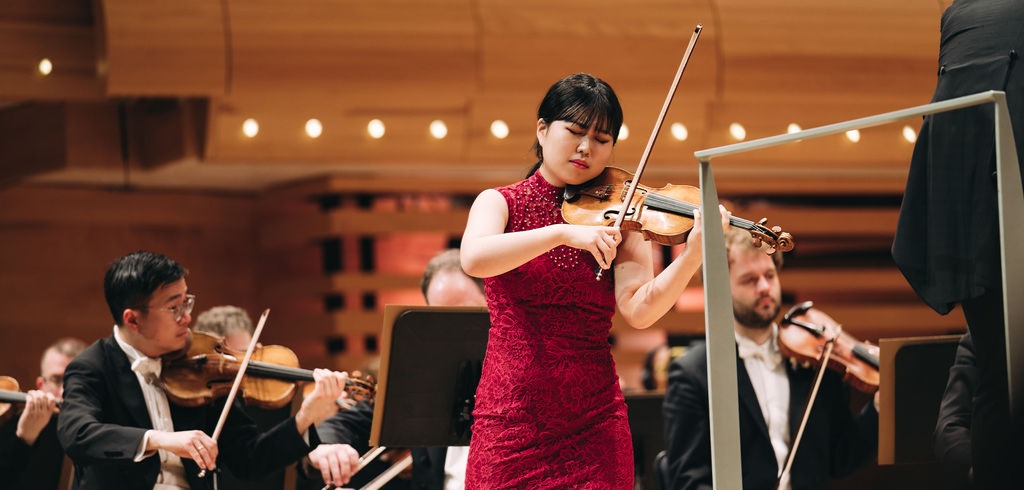
Dmytro Udovychenko in the final round of CMIM Violin 2023. Photo: Tam Photography
The Concours consists of four rounds designed to showcase performers across a wide range of styles. In the first two, the first round and semifinals held from May 27-31 at Bourgie Hall, artists must include in their semifinal program a baroque work, a complete sonata, and a piece by a Canadian composer. “Instead of requiring an imposed work—which is common at the Concours and other competitions—we give participants a free choice of Canadian repertoire,” says Gilbert. A suggested list of works is provided “as many competitors coming to Montreal may be unfamiliar with [Canadian] repertoire or unsure where to begin.”
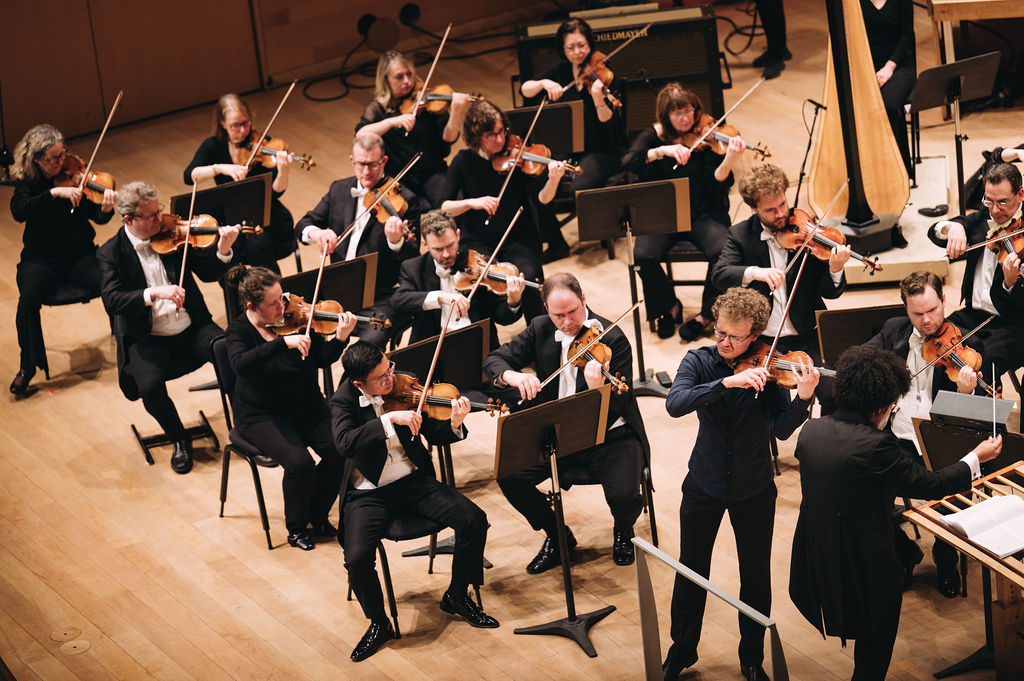
By the first stage of the final round on June 3, the roster will be narrowed to five violinists, each of whom will perform a Mozart concerto accompanied by the Orchestre symphonique de Montréal at the Maison symphonique. The decision to feature a Mozart violin concerto is new this year and was introduced by Jury President Lucie Robert. A renowned performer and pedagogue, Robert understands the distinct musical demands of Mozart’s style.
“It’s very different to play Mozart than a big romantic concerto,” says Gilbert. “Sometimes it seems like intense virtuosity is what ends up winning, but the kind of musicianship required to perform Mozart offers a more rounded view of the artist and their ability to perform in different styles.”
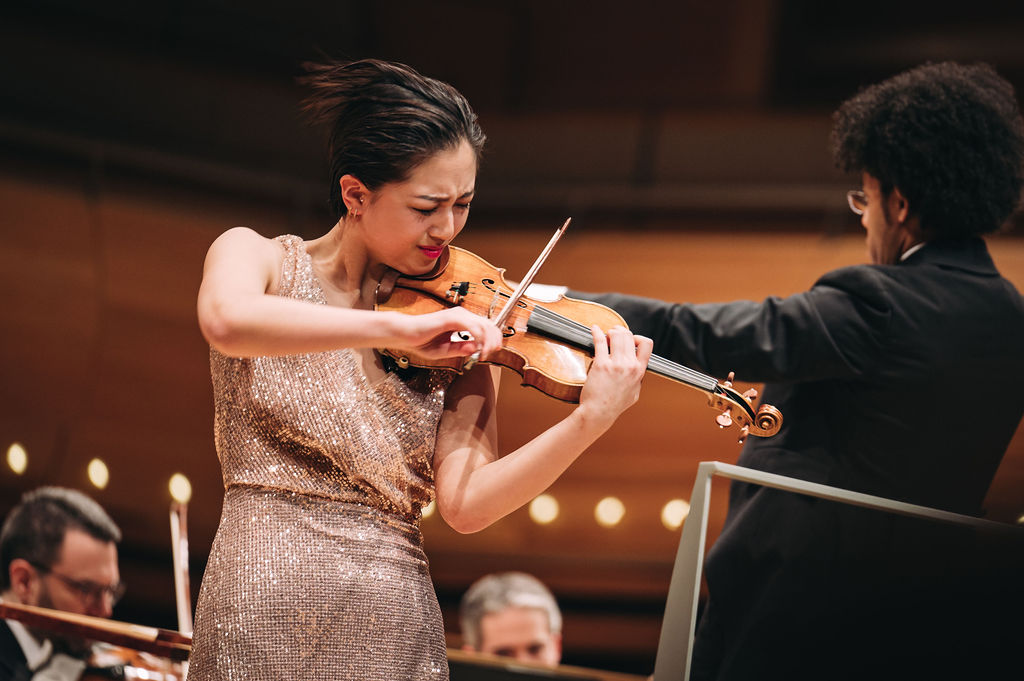
SongHa Choi in the final round of CMIM Violin 2023. Photo: Tam Photography
For listeners less immersed in classical music, a long violin recital—especially one with possible repeats of the same work—might seem intimidating. But Gilbert encourages people to attend for the unique opportunity to immerse themselves in the expressive depths of the violin, and to form their own opinions about performers—even if those might differ from the jury’s. One of the special prizes, she adds, consists of an Audience Choice Award presented in partnership with ICI Musique and attributed by the public following an online vote.
As for the members of the jury themselves, they exemplify what a multi-dimensional field the world of the violin truly is. Concertmasters, chamber musicians, soloists, pedagogues—each members’ distinct perspective allows for the performers to be evaluated from multiple angles. Throughout the Concours, they cast silent votes—without deliberating with one another—to determine who will advance to the next round.
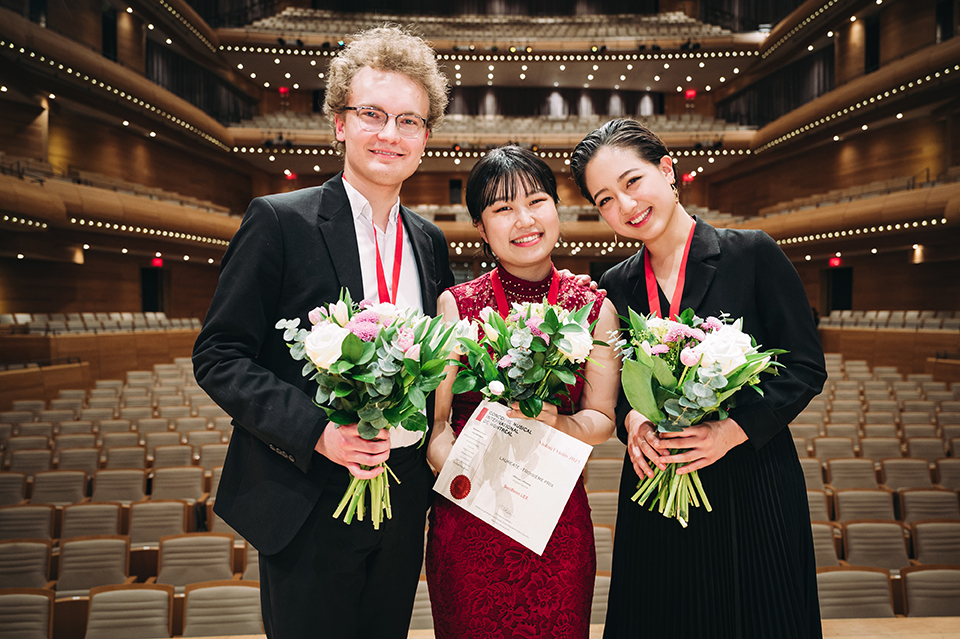
Dmytro Udovychenko, SooBeen Lee and SongHa Choi at the CMIM Violin 2023 Grand Final.
Photo: Tam Photography
For the last stage, three performers are selected to perform a concerto of their choosing at the Grand Final on June 4. Each of the three finalists will receive significant cash prizes and grants, and various special prizes will be awarded as well.
“And for each of the 24 violinists who have been invited, you can truly say they’ve already won,” says Gilbert. “We’re really rooting for all of them. And sometimes it can be pretty difficult during the competition when you see people go home disappointed, but they know that’s part of the career and part of the game. It’s an emotional ride for sure, but it’s a very exciting one.”
The Concours musical international de Montréal runs from May 27-June 4 at Montreal’s Bourgie Hall and Maison symphonique. This year’s Mini Violini concert on May 30 showcases four talented young violinists between the ages of 10 and 14 playing Vivaldi’s Four Seasons. www.concoursmontreal.ca
This page is also available in / Cette page est également disponible en:
Français (French)