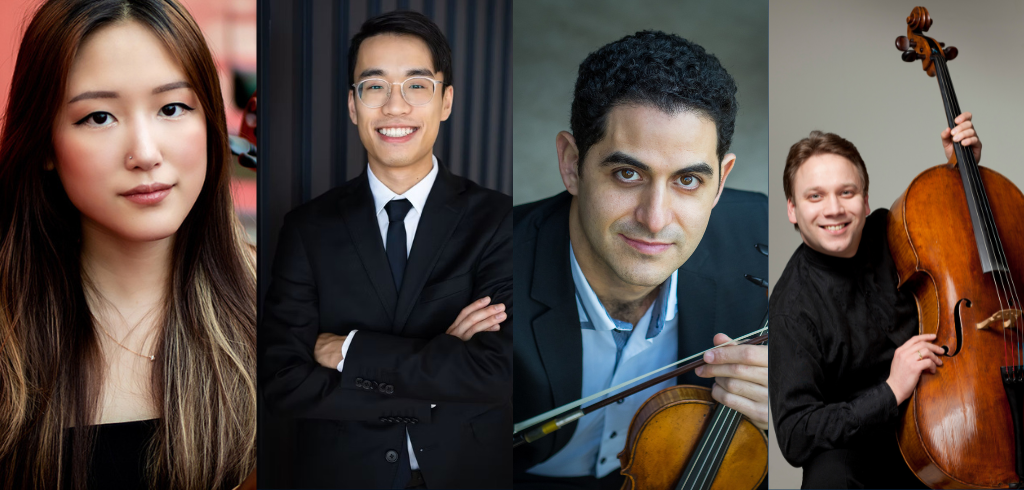

Sitting in the shade in front of the round, hut-like Martin Family Hall where July 17’s Encounter I took place, I spoke with two Canadian participants of the International Program (IP) about their experience at Music@Menlo. “[Menlo] is very intense, because they train us for the professional world”, says cellist Amanda Chi. “Other festivals I’ve been to were longer and more laid back. [Here] they tell us what their lives are like, traveling around, flying to a place and immediately performing”.
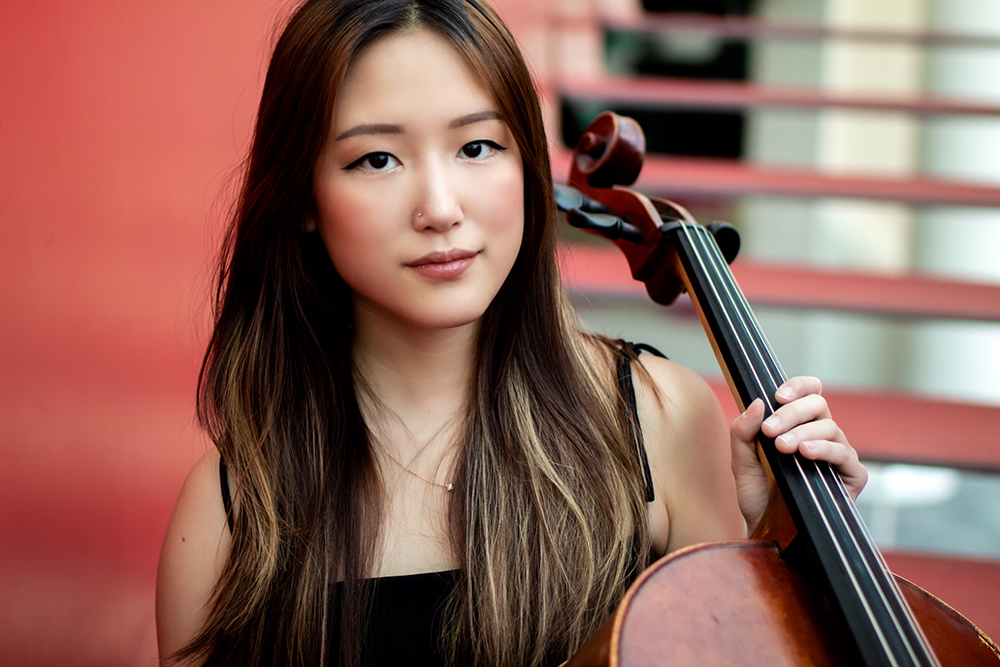
Amanda Chi
Typically, IPs start their day with 7:30 or 8 AM rehearsals followed by chamber music coaching at 9 AM. After lunch break, they have two more coaching sessions, another rehearsal and then a Prelude concert around 5 PM. Their day ends with a faculty concert or lecture, and dinner by 9:30 PM. “We see each other probably 17 hours every day,” says pianist Jonathan Mak. “Despite the rigorous schedule, the encouragement from other musicians and faculty is infectious. Although everyone’s rehearsing for many hours, they find the energy to go to each other’s concerts and master classes. The faculty try to attend everything: it’s great to see that kind of support for us even though they are recording, rehearsing and preparing their own concerts. They’re setting a high bar with their attitude and their practice [ethics],” he adds.
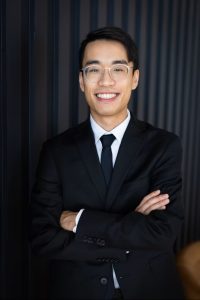
Jonathan Mak
Each IP ensemble plays a Prelude concert once every two or three days, usually at a different venue. Because of the rapid pace, they rotate their program in a way that allows them to repeat the same work in different spaces, while breaking in new repertoire at the same time. “Some days, we have three to four coaching [sessions]with different faculty,” says Chi. “We get their perspectives on the same piece and then work with our chamber groups, having to prove that we sound better the next day when we play for them, and again at the concert.” Over the opening weekend, July 17-19, Chi performed Beethoven’s Piano Trio in G major op.9 n.1 at two different halls, first in Martin then in Stent Family Hall. “It’s a really enriching experience that I haven’t gotten anywhere else,” she says.
Meanwhile, Mak played Dvořák’s Piano Quintet in A major op.81, B155 on Friday, July 17, at the Spieker Centre, then again on Saturday, July 18, at Martin Family Hall. “Looking back, we put this performance together in just three or four days—everybody’s so committed at such a high level. I think we can all be proud of our commitment to strive for the best final product” he says.
Born in Taiwan, Chi moved to Toronto at age 12 with her family in pursuit of better education and more opportunities to study music. As a teen, she studied cello with David Hetherington at the Phil and Eli Taylor Performance Academy for Young Artists, a pre-college program at the Royal Conservatory of Music (RCM). “When college started, I moved to the United States where I spent eight years, first at the New England Conservatory, then at Juilliard and Yale. I wanted to be in a competitive environment, surrounded by the best musicians from around the world, to push myself and to see where music can take me.”
After nearly a decade abroad, Chi missed Canada and decided to return home to Toronto. This year, she completed her Artist Diploma at the Glenn Gould School of the RCM where she studied with Hans Jørgen Jensen—coming full circle since her days as a pre-college student at the same institution.
Mak followed a similar path. Born and raised in Toronto, he wanted to experience some independence when it came time to choose a college program. “I did my undergrad at the Cleveland Institute of Music. It’s drivable within a few hours from Toronto, but still far enough that I felt like I was on my own,” he says. After completing two master’s degrees at Yale, he decided to pursue his doctorate at Rice University, in Houston, Texas. “The big draw for me was [the opportunity]to study with my current teacher, John Kimura Parker, one of the great Canadian pianists.”
Much like Amanda, Jonathan missed being home. He is now back in Toronto as a Rebanks Fellow at the Glenn Gould School of the RCM. “I wanted to spend the year back in Toronto to reestablish myself, get to know the people, the audience, the donors and start performing at home again” he says. “I see part of my career in Canada: my hope is that I will have a teaching position at an institution and establish my own studio while performing solo and chamber [music].”
During a coaching session on Schumann’s Piano Quartet in E-flat major op.47, with Mak at the piano and Chi on the cello, I noticed the nuanced comments by cello faculty Keith Robinson. “Be on the flat side of the pitch at this moment, then go up—it will give you that sassy sound” he says in the coda of the 3rd movement. Performers are well-prepared and comments remain on a cosmic level.
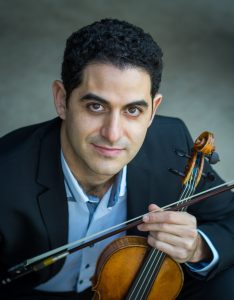
Arnaud Sussmann. Photo: Matt Dine
“The soul of Menlo is the Chamber Music Institute,” says violinist Arnaud Sussmann, who co-directs the IP program together with pianist Gilbert Kalish and violinist Kristin Lee. “David Finckel and Wu Han have built a community of people who are passionate about chamber music. It’s almost like a pilgrimage; we all come here to recharge and pass on our art to the next generation,” he says.
Echoing his colleague’s sentiment, cello faculty and director of the Smith Family Young Performers Program (YP), Dmitri Atapine chimes in, “It’s intense in all the best ways you can imagine. It’s a whirlwind of experiences, and of professional level demands and expectations from students.” Both IP and YP participants are treated equally to all other festival artists without distinction based on seniority or age; in addition to coaching and concerts, they attend public speaking seminars and a poetry reading established by the late critic Michael Steinberg.
As can be expected, the selection process is stringent. This year, only 11 candidates were chosen out of the 89 who applied for the IP program (12%); the YP program is just as selective: 22 young artists out of 185 were chosen for the 2026 edition (12%). While the number of YP varies slightly every year, Wu Han and Finckel’s experience has nailed the number of IP candidates down to a surefire formula which allows for a consistent number of trios, quartets and quintets every summer. “We usually have a set number of IPs: two pianists, four violinists, two violists, and three cellists,” says piano faculty Hyeyeon Park, co-director of the YP program with Atapine.
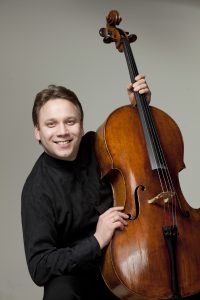
Dmitri Atapine
However, the biggest difference lies not in numbers, but in philosophy. “Because this program is so magical and selective, we want to bring as many people as possible,” says Atapine. Given the small number of candidates selected every year, the IPs don’t get to come back. “This was a philosophical determination made by David and Wu Han. It’s very different from other festivals that have similar programs; because of the intense schedule and the sheer amount of activities, the number of people accepted into the program is 11 and no more” says Atapine. On the other hand, YPs are encouraged to re-apply. While many return, readmission is not guaranteed: “We need to make sure that they took our comments seriously and that they have improved [since the previous summer]. They have to audition again and there have been a few cases when we didn’t take returning applicants” says Park.
Perhaps due to rigorous training and to the strong bonds that participants create between each other, Menlo builds a long-lasting community. Every year, the IPs gather for an alumni party and many of them stay in touch with faculty members. Furthermore, Music@Menlo produces an impressive list of current arts leaders who have gone through the festival’s “baptism by water and fire” as Atapine calls it. Among others, Menlo alumni count the Artistic Directors of Chamber Music Sedona, Chamber Music Northwest, and the Green Room Ensemble; the CEO of Chamber Music America; the executive director of Lowell House Opera; faculty members at the Amsterdam Conservatory, Curtis Institute of Music, Harvard University, Kyung Hee University in South Korea and Manhattan School of Music; the concertmaster of Jakarta Symphony, assistant principal viola of New York Philharmonic and ensemble members of the Terra String Quartet, Takács Quartet and Gaspard Trio.
Running the Show @Menlo
At Menlo, community building starts from the greenest buds. Many YPs return as IPs, a few are invited back as YP faculty, eventually becoming senior artist faculty coaching the IPs. And, in the case of cellist Dmitri Atapine and pianist Hyeyeon Park, some end up taking the reins of the festival itself. Starting from 2027, the couple will be the new Artistic Directors of Music@Menlo. While it is no requirement that Menlo be spearheaded by a cellist and pianist couple, it couldn’t hurt that the two incoming directors knew the organization inside out by the time the selection process started.
Atapine first attended Menlo as an IP in 2008. By his own account, he was completely mesmerized not just by the act of chamber music, but by everything that goes on behind the scenes in the production of a festival. From programming and thematic choices to production work, bookkeeping and accounting, Atapine was absorbing it all like “a little kid walking in wonderland.” The next year, he was invited back for the winter residency, a series of classes and presentations aimed at the community and Menlo School students. The following summer, he was asked to start teaching the younger students at the festival. His wife, Hyeyeon Park, had a similar path, “ We were both IP students, then became YP faculty, and have been spending the last 15 or 16 summers here every year. It’s really a musical paradise for us” she adds.
Park and Atapine had amassed plenty of organizational experience prior to being selected as the new Co-Artistic Directors. Since 2010, the duo have led Apex Concerts, a concert series in Reno, Nevada, and have been appointed Artistic Co-Directors of the Friends of Chamber Music series in Kansas City, Missouri, in 2022. “Our first year’s budget in Reno was $3,000 for the entire season. Somehow we got people’s attention and are entering our 16th season with a very healthy audience: we are selling out our concert hall”, says Atapine. Those experiences gave them the chops of taking over an organization. “Music@Menlo is a dream come true. We were talking a lot about starting a festival, because we want a festival life – we love it”, he adds.
They are not alone in running the show at Menlo. General Manager Daphne Wong manages a team of six permanent staff members, 14 arts administration interns and several seasonal staff who ensure that everything runs smoothly. “They’re getting real hands-on experience in different aspects of what it takes to run a festival,” says Wong.
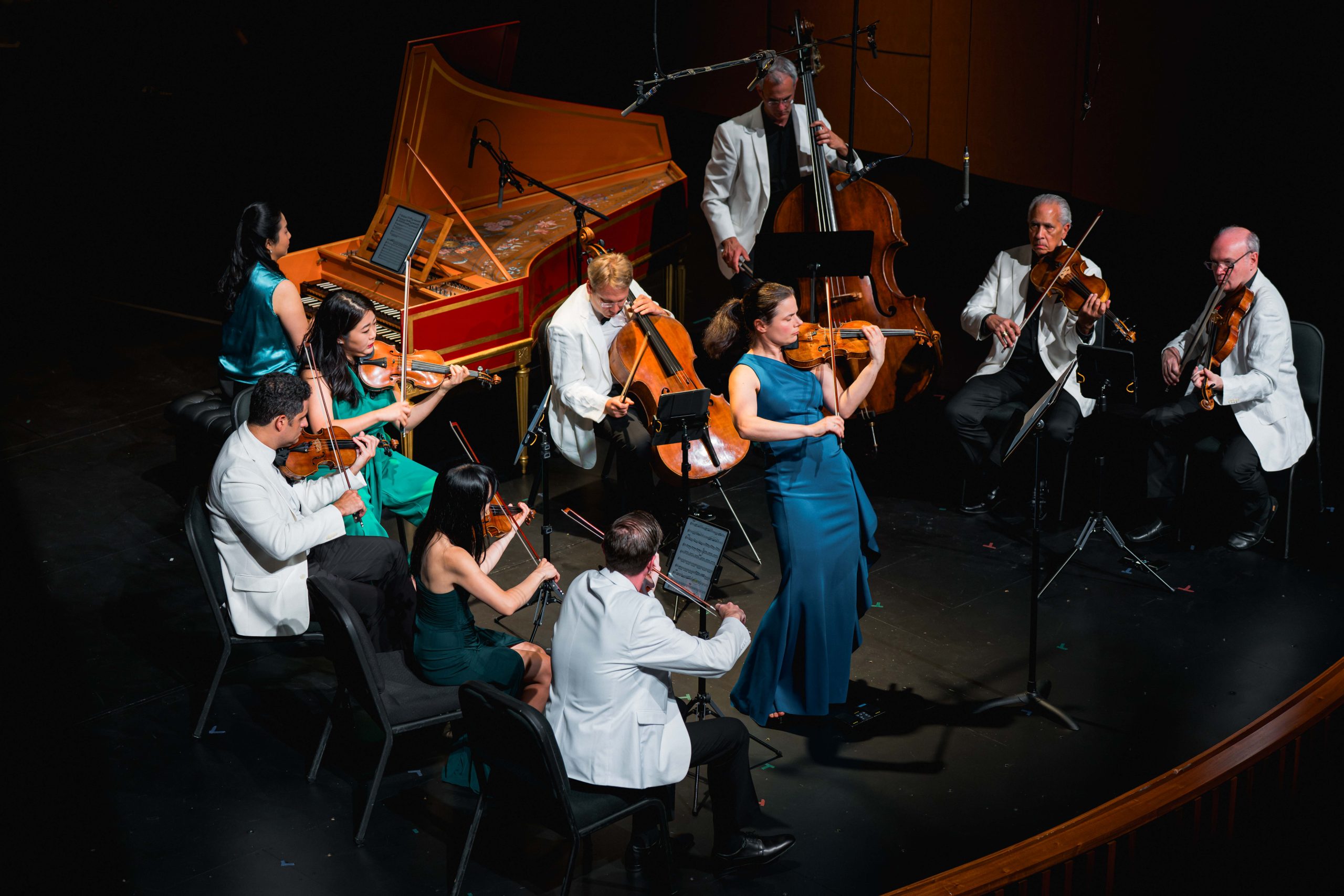
L-R: Chad Hoopes, Jessica Lee, Arnaud Sussmann and Kristin Lee (violins); Hyeyeon Park (piano); Dmitri Atapine (cello); Scott Pingel (bass); Guillermo Figueroa and Paul Neubauer (violas); and Bella Hristova (solo violin). Photo: Harrison Truong
Menlo’s administrative interns work in four different areas: artistic administration operations, stage management, marketing design and audio visual. The marketing design intern works alongside Menlo’s marketing director in designing ads, flyers, banners, and all marketing related material. The stage management interns are behind the scenes making the stage changes or running the lights. Finally, administrative interns are “jacks of all trades” according to Wong, who assist the administrative staff on a variety of tasks including merchandise sales, website maintenance, customer relations, keeping track of inventory, and festival operations.
In addition to their paid work, these interns benefit from seminars on arts administration organized for them at Menlo. Guest speakers have covered areas such as development in the arts and fundraising; branding and design; working as a year-round presenter versus a seasonal festival; or being on the board of a not-for-profit organization.
The internship program was established by Francesca Eastman and Ed Goodstein back in 2003 when Wu Han and David Finckel started Music@Menlo. Applicants come from various backgrounds: music, design, visual arts, administration, musical theatre, dance and other fields. Over the years, many interns have moved on to positions of leadership in the arts such as vice-president of artistic planning at the Utah Symphony, assistant vice-president of philanthropy at the Colburn School, and executive director at the Bowdoin Music Festival.
“Sometimes, our colleague organizations will reach out to us and say, ‘We want to start an internship program, what do you suggest?’” says Wong. “We share our job description, which helps them build their own internship program themselves. If we can lead the way by example, it’s great for the industry”, she concludes.
For more on Music@Menlo visit www.musicatmenlo.org