Browsing: La Scena Online

La Scena Online is the digital magazine of La Scene Musicale.Contents: News, Concert reviews, CD reviews, Interviews, Obituaries, etc; Editor: Wah Keung Chan; Assistant Editor: Andreanne Venne
ISSN: 1206-9973

On Apr. 23, Pacific Opera Victoria (POV) premiered a new staging of Giuseppe Verdi’s Rigoletto set in Victorian England. The universality of Rigoletto, a tale of tragic revenge, lends itself to this change in time and place from its original Renaissance setting. In 1850, Verdi was commissioned by La Fenice, Venice, to compose a new opera. He was entranced by Victor Hugo’s play Le roi s’amuse (“The king amuses himself”), which was controversial in France for its negative portrayal of Francis I and banned after its premiere. Verdi said of the play, “The subject is grand, immense, and there is…

Share:
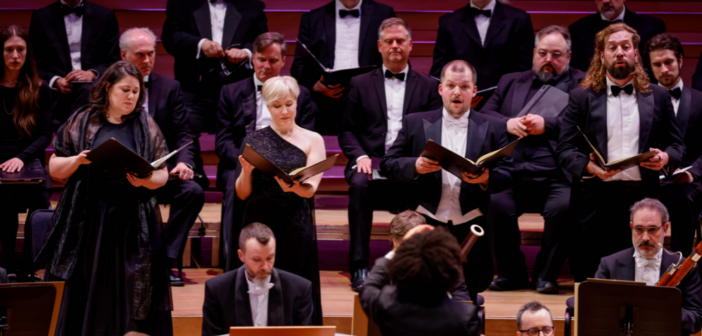
Even before stepping into Maison symphonique on Apr. 17th, the atmosphere felt charged. A full house had gathered, and there was no mistaking the quiet excitement in the air. As the lights dimmed, a hush settled across the room. From the top of the hall, a single spotlight lit up the Grand Orgue Pierre-Béique, where Jean-Willy Kunz, Orchestre symphonique de Montréal’s organist-in-residence, appeared with a welcoming smile. The audience greeted him with an enthusiastic ovation before he began Bach’s Prelude and Fugue in B minor, BWV 544. The deep, resonant sounds of the organ immediately set a reflective mood, creating…

Share:

Like every reviewer I love surprises, and nothing has surprised me more in a month of Easter Sundays than this delicate and brilliant pairing of Japanese and Viennese classical songs. The album notes are skimpy and mostly in Japanese so I’m guessing here, but I’ll credit the selection of songs as well as the performance to Misaki Kobayashi, apparently a soprano in the Berlin radio choir. The pairings are so smart they are practically symbiotic. Kobayashi opens with a springtime song by Rentaro Taki (1879-1903) and matches it with Beethoven’s little-sung Ich liebe dich. Who’d have thought? It works brilliantly.…

Share:

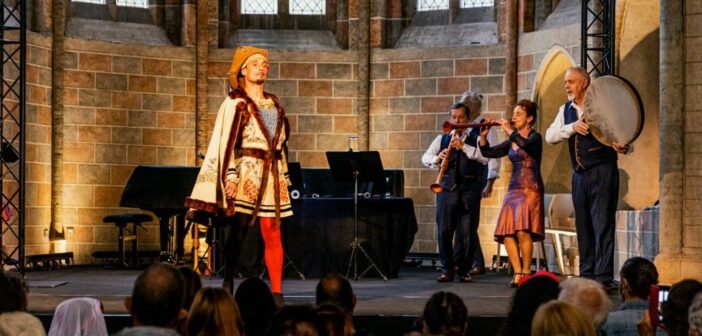
Doulce Mémoire is an old French phrase that can be translated as “sweet memory,” a poetic connection to the past. This is what Ensemble Doulce Mémoire and Renaissance and baroque dance specialist Hubert Hazebroucq brought to the Vancouver Playhouse for Early Music Vancouver’s presentation of Now Let Us Dance on April 12th. A tribute to song and dance of the 15th and 16th centuries, the performance was unlike anything I had ever seen or heard before.  The narrative aspect of the show kept the audience holding onto every detail with the show divided into four separate story segments. The first was…

Share:

The VSO School of Music fosters the future of jazz, and this talent was on full display at the Vancouver Playhouse on April 10th. The Rising Stars of Jazz was an incredible blend of jazz combos and big band performances, with a common thread: these young musicians demonstrated incredible skill and passion that transcended all expectations of a youth ensemble. Featuring artists as young as eighth grade, the sound created by each ensemble was rich, dynamic, and full of personality.  One of many things that these young musicians had to offer was a sense of fun, from their funky group…

Share:

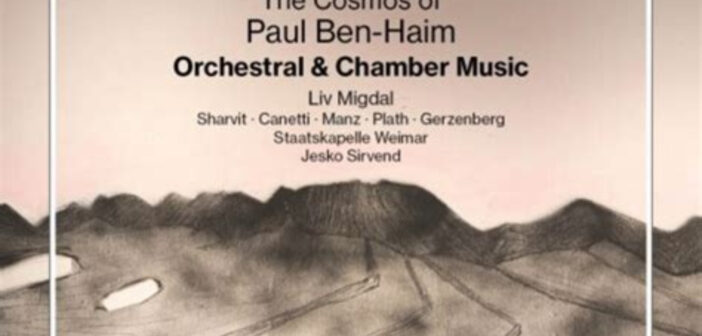
If you are looking for neglected stocks in these shaky times, you could do worse than sink a pair of ears into the music of Paul Ben-Haim. It seems to be heading for revival. Lahav Shani is recording the symphonies for DG and other works are popping up all over the place. This 145-minute compilation under review mingles orchestral and chamber music to positive effect, prompting this listener at least to reconsider some aspects of a much-misunderstood composer. A conducting assistant to Bruno Walter in Munich, Paul Frankenburger fled to Palestine when the Nazis seized power and changed his name…

Share:

Opera Atelier celebrates its 40th anniversary season with a work that surely must be considered at the core of its four-decade mission. Marc-Antoine Charpentier’s David and Jonathan (1688) exemplifies the 17th-century French tragédie en musique, an opera based on a tragic subject from mythology, or in this case, the bible. Told in five acts plus prologue, David and Jonathan includes divertissements for a ballet troupe interspersed with all manner of singing, not only for a large number of named soloists, but also, an eight-member onstage ensemble, as well as a full off-stage chorus. In other words, the type of spectacle…

Share:

Montreal, April 10, 2025 —Today, the Orchestre symphonique de Montréal proudly unveils its 2025–2026 season. With sumptuous and varied programming for all tastes and budgets, Rafael Payare embarks on his 4th season as Music Director, the OSM’s 92nd season, where music, emotion, and passion are key. The OSM will be joined by an array of renowned artists from near and far, including many anticipated return performances and a great diversity of repertoires. This will be a season of symphonic masterworks, symphonic happy hours, music and film concerts, over-the-top éclaté concerts, POP concerts, and concerts for young audiences. Our public will…

Share:

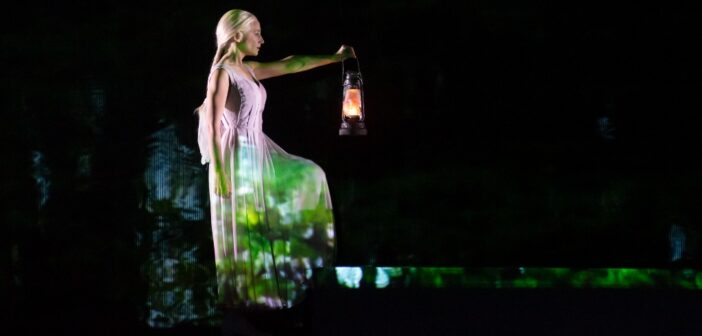
Belgian playwright’s Maurice Maeterlinck’s play Pelléas et Mélisande (1892) fascinated musicians of the epoch. Both Fauré (in 1898) and Sibelius (in 1905) wrote incidental music for it. Even Schoenberg wrote a tone poem (1905) on the theme. Fascinated by the symbolist play, Debussy adapted it into an opera, his only complete work for the stage. Lebanese-Canadian Wajdi Mouawad’s take on one of the most significant operas of the twentieth century was remarkable (seen Mar. 12). The Parisian public’s reaction to this production was overwhelmingly positive, but a large contingent of critics retain an inexplicably inane adulation for Robert Wilson’s staging…

Share:

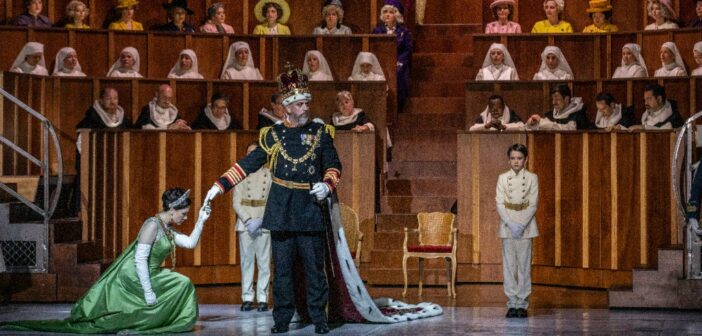
Deservedly, Don Carlos (1867) enjoys a reputation as one of Verdi’s finest operas, rivaled only by his two final works, Otello (1887) and Falstaff (1893). It’s a colossal piece, Verdi’s longest, and among the most demanding of his operas in terms of casting. Initially premiered in Paris in French, the five-act opera was soon condensed to four acts in Italian. That edition became the standard, until the French version started to reappear in the 1990s. Though the Italian Don Carlo is still much more commonly performed than the original French, the original Don Carlos has gained popularity. It can be…

Share:
1 18 19 20 21 22 172