Doulce Mémoire is an old French phrase that can be translated as “sweet memory,” a poetic connection to the past. This is what Ensemble Doulce Mémoire and Renaissance and baroque dance specialist Hubert Hazebroucq brought to the Vancouver Playhouse for Early Music Vancouver’s presentation of Now Let Us Dance on April 12th. A tribute to song and dance of the 15th and 16th centuries, the performance was unlike anything I had ever seen or heard before.
The narrative aspect of the show kept the audience holding onto every detail with the show divided into four separate story segments. The first was entitled “Elegance and Splendour in Italian Courts.” The moment Hazebroucq bounced onto centre stage to the regal sounds of Doulce Memoire, it became clear that the audience was in for a performance like no other. Each piece established its place among the larger narrative.
The second act, “Defiance and Defeat of the Duke of Burgundy,” was a deeply dramatic and theatrical tale. This was followed by the “Festivities in the Royal Castles of the Loire Valley,” a joyous segue into the 16th century. The final act, “A Mascarade of Deities” told a story of many faces.
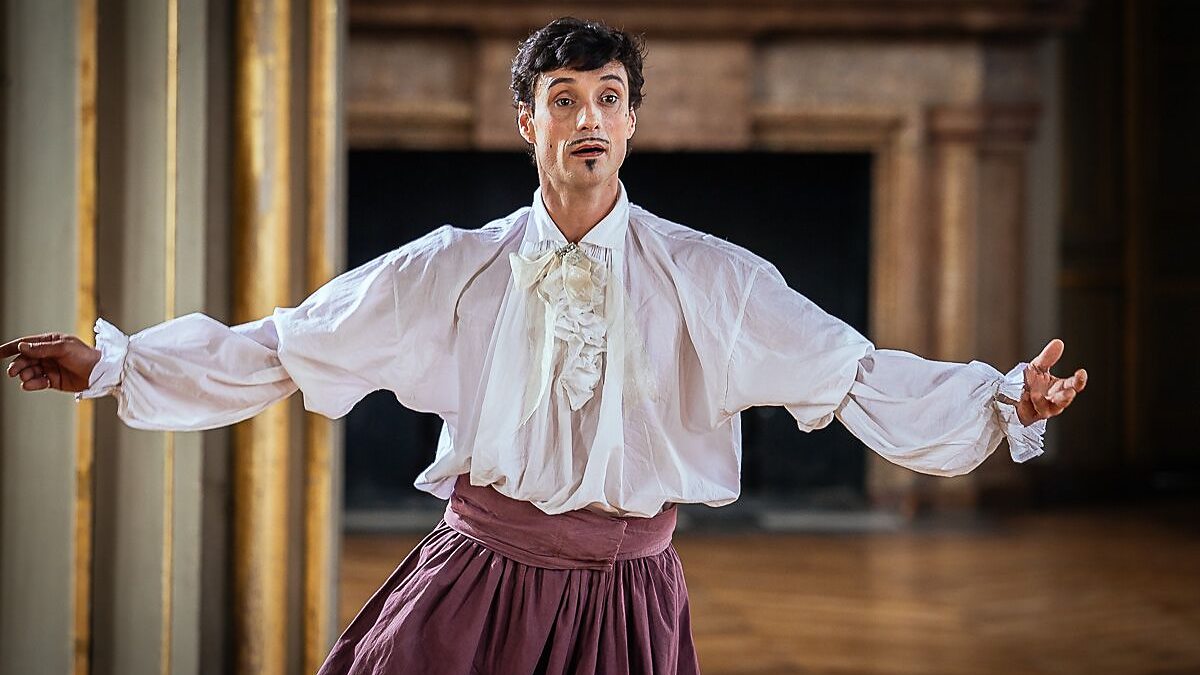
Hubert Hazebroucq. Photo: BBC
There was a very tangible difference in tone between the 15th and 16th century styles of dance with the first half holding a very elegant and regal tone and the second half shifting into a light and joyous celebration. When watching the first two acts of the performance, I found myself mindful of my posture and etiquette, almost feeling as though I was in the presence of royalty.
Conversely, the second half was a reminder of the true essence of song and dance: joy, entertainment and a creative and expressive outlet for both performers and viewers. Not only that, but Doulce Memoire’s musical approach changed with the centuries as well. The first half of the show was very oboe-oriented, whereas the group used bassoons as the primary instrument during the 16th-century dances.
Not once did I question the historical authenticity of the technical details of Hazebroucq’s performance. It felt as though he grabbed the shoulders of each audience member and pulled them back in time, straight into the royal courts of 15th-century Italy. Beyond the incredible performance and entertainment that Hazebroucq provided, his technical ability was beyond comprehension. It is evident that he is both classically trained and devoted to delivering an authentic performance to audiences worldwide.
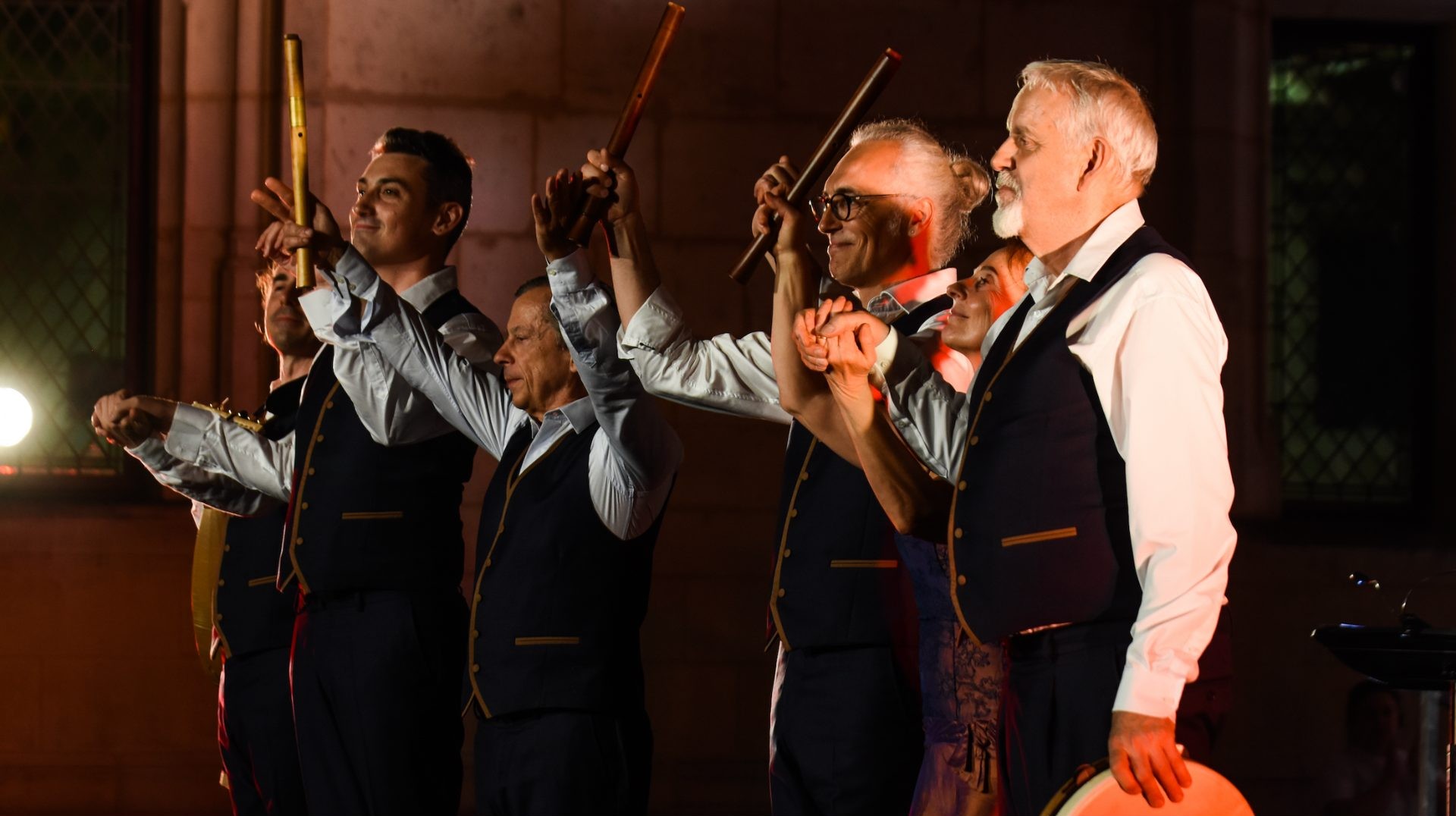
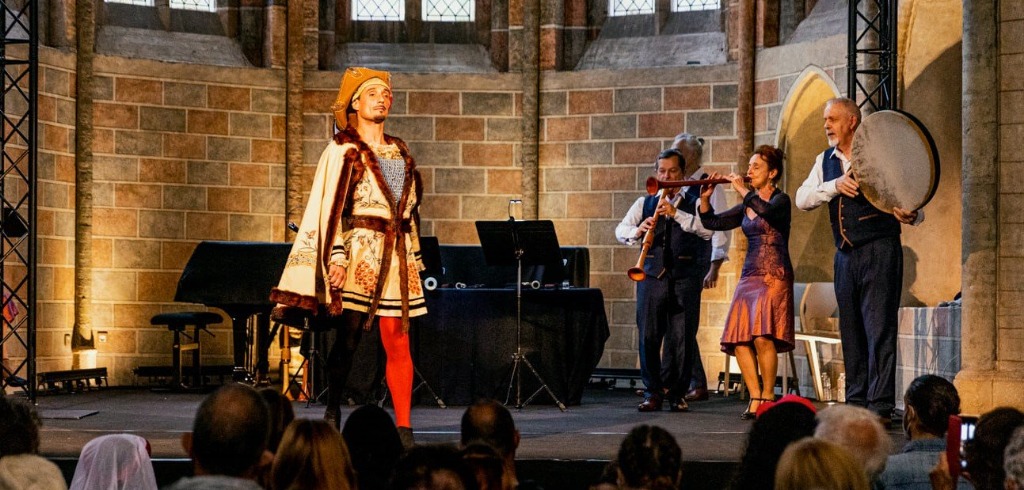
Ensemble Doulce Mémoire
Much of the music was provided by wind instruments: oboe, bassoon, and recorder; with the drum keeping time. Percussionist Bruno Caillat’s most memorable contribution was a solo during the final quarter of the show. Somehow, using only a frame drum he was capable of producing incredibly varying sounds, telling a story using one simple instrument.
Every element of the performance was elaborate, from the costumes to the music to Hazebroucq’s unconfined yet precise movements. A complete costume change (split-coloured tights aside) accompanied each dance. Hazebroucq was a man of many faces, wearing different masks throughout the segments. From an outfit that was reminiscent of Cupid, red from head to toe, shooting heart shaped arrows into the audience; to a fair maiden; to the classic jester and finally, a knight. And each costume came with a new tale to tell.
What really resonated was how the performance conveyed the intricacy of the Renaissance period. Modernity is synonymous with sterility; everything is stripped down. It is important, however, to remember there is value in the complex. Particularly within the world of art, less is not always more.
For more on Early Music Vancouver’s season visit www.earlymusic.bc.ca