Browsing: La Scena Online

La Scena Online is the digital magazine of La Scene Musicale.Contents: News, Concert reviews, CD reviews, Interviews, Obituaries, etc; Editor: Wah Keung Chan; Assistant Editor: Andreanne Venne
ISSN: 1206-9973

For avid Rossini fans, a logical destination is the Rossini Opera Festival held annually in Pesaro, the composer’s birthplace on Italy’s Adriatic coast. There, the usual fare is a mix of popular and rare operas, sacred works and vocal recitals. But anyone who found themselves in Paris early this summer could enjoy an impromptu Rossini fest at two of the city’s most prominent opera venues. Three operas, two of the composer’s most popular comic works, Il barbiere di Siviglia and L’italiana in Algeri, and an infrequently performed opera seria, Semiramide, were presented on three consecutive nights. The first was fully-staged…

Share:
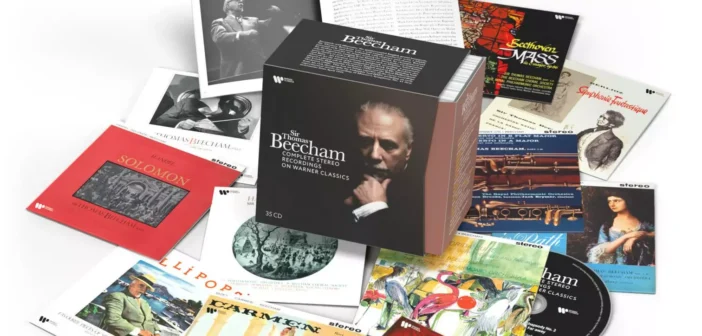
Some maestros take themselves too seriously. Sir Thomas never did. A fount of wit and self-mockery he made rehearsals fun and performance an inspiration. Adored in Britain, he was received warily abroad although Wilhelm Furtwängler accorded him deep respect and even Toscanini had nice things to say. As for general reputation, Sir Thomas was a master manipulator of media. One night in Liverpool, he invited leading journalists to a champagne reception at the Adelphi, where he proceeded to unscrew light-bulbs and drop them one by one into the hotel lobby from the top floor. The headlines wrote themselves. This box of…

Share:

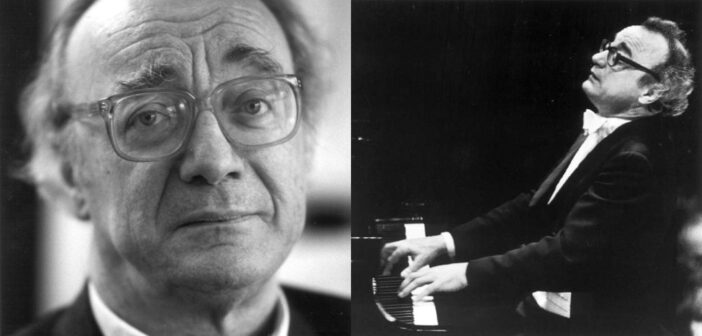
The highly accomplished pianist, writer, and composer Alfred Brendel has passed away at age 94. His representatives confirmed he died peacefully in his London home on Tuesday. Brendel, renowned as one of the greatest interpreters of Beethoven’s piano music, featured on the cover of La Scena’s March 2001 issue.  As a tribute to him, we republish our interview and article about his legacy below. Alfred Brendel: A Musical Paradox by Lucie Renaud, March 1, 2001 Considering  the  phenomenal  number  of  articles  written  about Alfred Brendel, it might seem futile — or at least not particularly useful — to take yet…

Share:

Elegies: A Song Cycle, by William Finn, is a series of songs in a musical theatre idiom dealing with bereavement and mourning. It’s a 2003 piece and firmly rooted in the trauma of the AIDS epidemic and 9/11. It’s very New York. Opera 5’s production (seen June 15) at Factory Theatre is fully staged (by Jessica Derventzis) and performed by artists from Opera 5’s Portfolio Artist Internship Program who mostly hail from McGill University. The extensive musical theatre training they have received is very evident in both their command of the required vocal style and their easy and energetic movement…

Share:

There are four world premiere recordings on this utterly original disc, so if you have even a smidgeon of curiosity about the legend known as Alkan you will probably be buying this album before reading the next sentence. I’ll pause for a second to allow you to complete the purchase. Ready? Charles-Valentin Morhange, called Alkan for short, was the most prodigious French pianist that ever lived. Liszt was in awe of his powers and Chopin nominated him as the only musician capable of completing his unfinished etude. A sensitive Alsatian Jew, Alkan became a hermit after the Paris Conservatoire rejected…

Share:

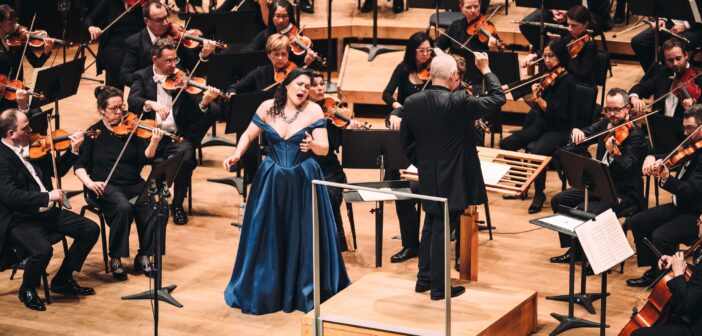
When the “unranked” candidates for the CMIM Aria Finals were announced yesterday, Friday, June 6th, at Maison symphonique, Julia Muzychenko-Greenhalgh’s face was a mixture of dismay and disbelief. Just like her direct competitor, South Korean soprano Yewon Han, who opened the evening and performed just before her, the Russian soprano was indeed not going to win any prizes. First surprise, then. The jury chose not to decide between the sopranos in this climactic battle, offering instead a draw that nobody really expected. And yet, the battle lived up to all its promise! In terms of technical execution and demonstration of…

Share:

La Scena Musicale’s team has been following CMIM Voice 2025. Here are our predictions for the Finals. The Finals takes place Friday, June 6 at 7:30 p.m. at the Maison symphonique. Predictions Adrian Rodriguez: Junho Hwang (South Korea, tenor): A clear frontrunner. Though his repertoire feels misaligned, Lensky and Alfredo don’t quite suit his bel canto-forward voice, his vocal command is undeniable. The placement, projection, and sheer consistency put him at least a half-step above the rest. He sings with such confidence and technical security that he can sell almost anything, even when the fit isn’t ideal. Fleuranne Brockway (Australia,…

Share:

There is a line of beauty that runs through French vocal music, from Debussy to Messiaen to Boulez, which exists to the exclusion of all else. When you listen, it sounds as if no other French songs exist – no Ravel, no Poulenc, no Jacques Brel – nothing but this ethereal space in which each consonant is placed with aesthetic precision, like raspberries in a patisserie, or boules in a town square. Singing in this genre can sound precious and showy. Not on this album, however. Magdalena Kožená speaks Czech as mother tongue, English and German at home. While her…

Share:

We now know the names of the finalists of the Montreal International Music Competition (MIMC) in the Aria category: Fleuranne Brockway, Yewon Han, Junho Hwang, Julia Muzychenko-Greenhalgh, and Thedore Platt. Four of these five candidates were part of the second semifinal, yesterday, June 4, at the Maison symphonique, showing that the level of performance was indeed higher on this evening. We were treated to a battle between the two coloratura sopranos that will continue into the final, to the delight of the audience. Russian soprano Julia Muzychenko-Greenhalgh confirmed once again that she is one of the favourites of this year’s…

Share:

As the audience arrived at the Chan Centre for Echo: Memories of the World (May 31), they were immediately directed to the choral loft behind, and above the stage. “This is an intimate concert,” the ushers said as they asked us to fill the first two rows of seats. This intimacy fostered a closeness to one’s neighbour and undivided attention on the carefully curated program we were about to see. On the stage, four or five additional rows of seats allowed some audience members to be even closer, only a few feet away from the performers. Above them was a…

Share:
1 14 15 16 17 18 172