Browsing: La Scena Online

La Scena Online is the digital magazine of La Scene Musicale.Contents: News, Concert reviews, CD reviews, Interviews, Obituaries, etc; Editor: Wah Keung Chan; Assistant Editor: Andreanne Venne
ISSN: 1206-9973
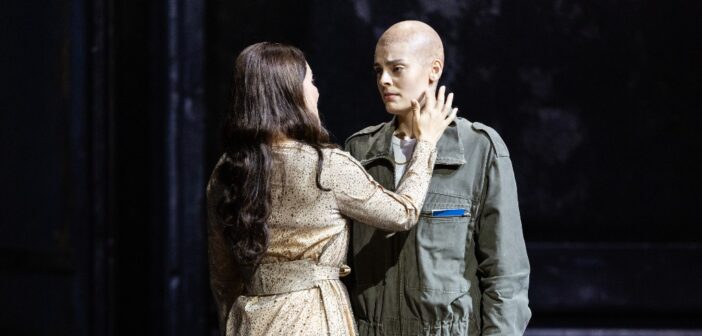
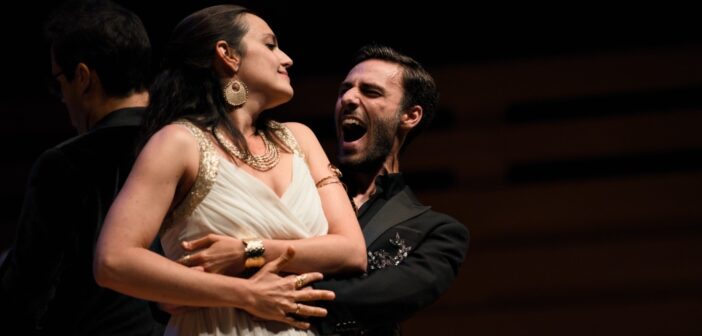
For its 150th anniversary, Bavarian State Opera’s Munich Opera Festival had the novel idea of producing all three Da Ponte/Mozart operas as a trilogy, using three different stage directors. Each interpretation was unconventional, but only one was truly brilliant, Don Giovanni. The other two varied from the grotesque to the vulgar.  Several Canadian singers appear at this year’s festival: Philippe Sly in the title role and Emily D’Angelo as Cherubino in Le nozze di Figaro. Baritone Joshua Hopkins jumped in at the last minute as Guglielmo in Così fan tutte, seen the following day. Tunisian-Canadian mezzo-soprano Rihab Chaieb was a…

Share:
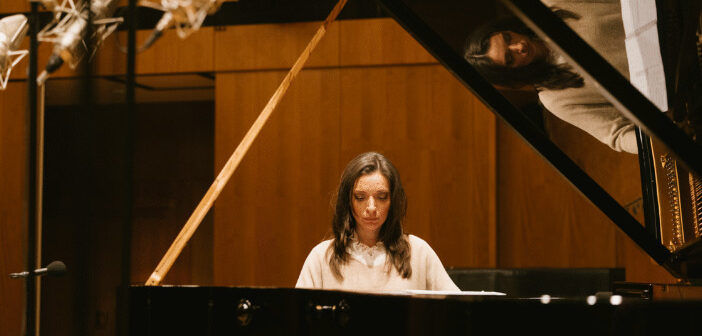
For the bicentenary of Johann Sebastian Bach’s death, the Soviets sent their top composer to Leipzig to judge a competition in Bach’s name. Having endured Stalinist attacks for two years, Dmitri Shostakovich was caught between a rock and a hard place. A system that denounced him for ‘formalism’ and threatened his freedom was now sending him as a cultural ambassador to a country under occupation where he would be viewed with hostility masked in sycophancy. Not knowing what to say, where to turn, he focussed on Tatiana Nikolaeva, a Russian pianist in the Bach competition who was declared the winner…

Share:

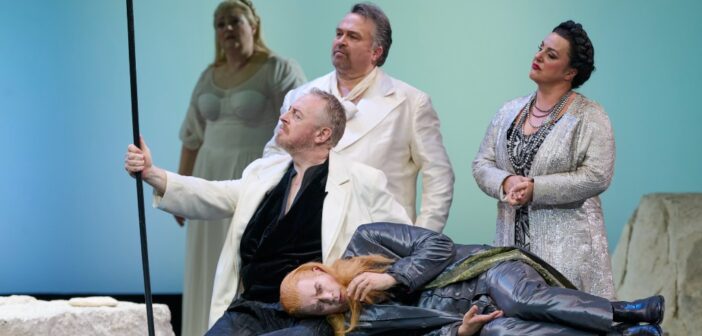
Monteverdi’s L’incoronazione di Poppea, which premiered in Venice in 1643, is truly revolutionary. Opera was new. It had only just evolved from being a court entertainment for the North Italian elite to being something that anyone with enough cash to buy a ticket could see in the new public theatres of Venice. And, of course, those theatres competed for “bums on seats.” This would lead to Monteverdi abandoning the convention that opera was about gods and heroes where wickedness was punished and virtue rewarded. Instead, he created a work in which a totally amoral, but dead sexy, couple triumph over…

Share:

This June, Vienna State Opera revived its production of Wagner’s Ring (first seen in its entirety in 2009), offering two cycles at the end of this season. Wagnerians the world over flocked to Vienna. More foreign languages than one could count, chattering everywhere. Though commentary over time has generally been lacklustre around director Sven-Eric Bechtolf‘s concept and Rolf Glittenberg’s sets, Ring fans returned nonetheless for the glorious cast. In Das Rheingold (June 20th), Nibelheim was more like a factory, with huge metallic shelves into which the enslaved Nibelungen amassed gold in the shape of human body parts. These parts were…

Share:

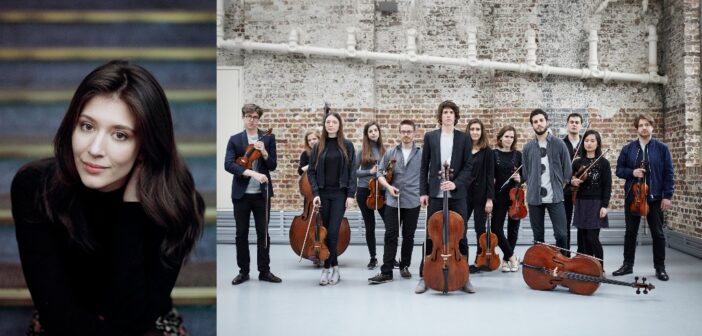
After their collaborative season at Wigmore Hall, string orchestra 12 Ensemble are going from strength to strength. What this string ensemble might lack in a telling name, they make up for with energy and attentive drive. Melankolia from Finnish composer Einojuhani Rautavaara’s Cantus Arcticus (Concerto for Birds and Orchestra) was a bold opener for its July 8th livestreamed concert. The warble of the shorelark is heard on tape (and slightly lowered in tone) and is mirrored with the sensual playing of the ensemble with a harp in the auditorium, as brass and woodwind on the balcony gradually meld into the…

Share:

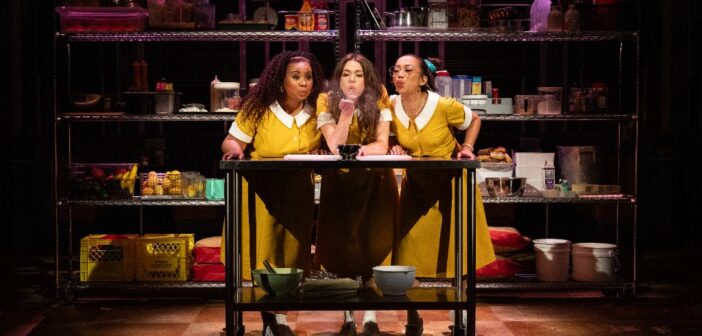
Based on the motion picture by Adrienne Shelly, Sara Bareilles’s Waitress is one of the most popular musicals composed in recent years. It premiered on Broadway in April 2016—making history as the first Broadway show with an all-female production team—and garnered such success that international and regional productions are still frequently staged. Since June 12, Vancouver’s Stanley Industrial Alliance Stage has been transformed into Joe’s Diner as the Arts Club Theatre Company presents this beloved musical. Having seen outstanding performances by the Arts Club before, I attended their production of Waitress with high expectations (seen July 5). I was not…

Share:

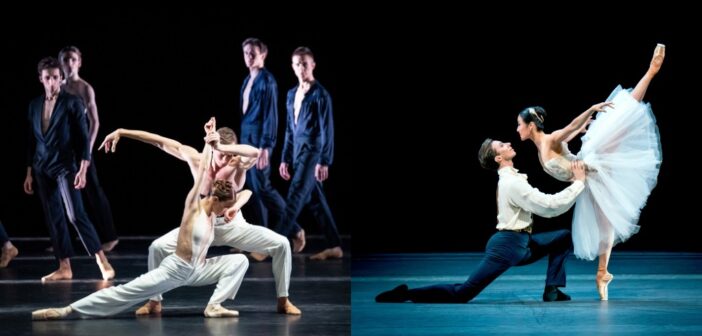
A revolution has erupted: the Swiss dancer and choreographer Martin Schläpfer, formerly director of Düsseldorf’s Ballet am Rhein (known for its innovative choreography), became director and chief choreographer of the venerable Wiener Staatsballett in the 2020/21 season. The Covid pandemic happened during his first year in that new position and hampered his creative projects.  His first choreography, 4, was premiered during the pandemic to an almost empty theatre. Seen on June 22, 4, is set to the Fourth Symphony by Gustav Mahler, whose music is not the first thing that comes to mind when one thinks of ballet. Like his…

Share:

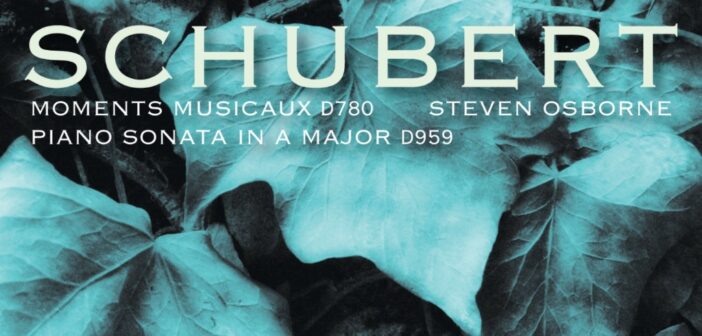
So commanding was Alfred Brendel in Schubert’s piano music that other pianists complain they can’t get him out of their fingers. It’s two decades or more since Brendel last recorded late Schubert, and half a century since he made those epochal recordings in Philips, yet his shadow stretches long and no clear contender has since emerged as the Schubert pianist of our time. Steven Osborne can credibly claim to lead the field. A Scot with a strong record in Beethoven, he disdains Brendel’s emotional neutrality at the opening of Schubert’s penultimate sonata and imposes a convincing interpretation of assertive clarity.…

Share:

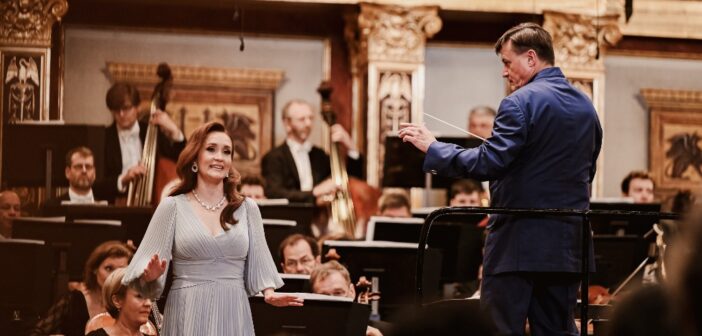
Christian Thielemann’s June 26th concert with Staatskspelle Berlin at Vienna’s venerable Musikverein almost felt like too much of a good thing. Works by two favourite composers, one possibly the twentieth century’s best vocal composer, and the other one of the finest late Romantic symphonic composers. The event took place in an exquisite, historic concert hall and was performed by a widely-acclaimed orchestra, helmed by one of the finest conductors. There was great beauty to the evening, but also some dissonance. As much as Richard Strauss’s songs are glorious, especially those set for orchestra, the songs chosen and the soprano featured,…

Share:

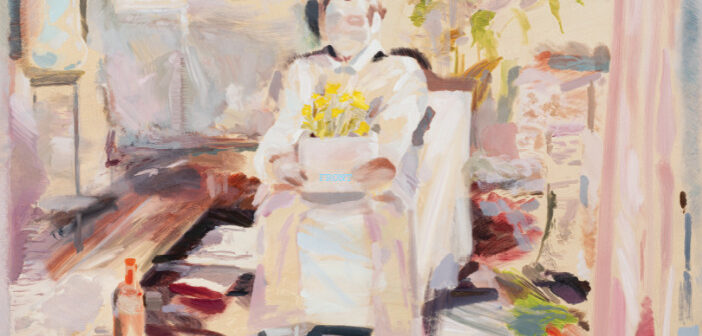
When a major artist performs third-rate music, it’s either going to be a trifling act of self-indulgence or a stunning revelation. It took me three listenings to work out which this was. Tchaikovsky wrote 12 piano pieces for each month of the year for publication in serial issues of a St Petersburg magazine. The editor appended a poem to each piece without the composer’s involvement. That much is verified fact. Now Yunchan Lim, in a sleeve-note, comes up with a fable relating how the suite describes the last year of a man’s life, a gradual letting-go. Tchaikovsky, who was in…

Share:
1 13 14 15 16 17 172