Most classical music lovers derive pleasure by attending performances of their favourite works. Some dream of making music instead of just sitting in the audience soaking it all in. They might learn to play an instrument as a sideline in their spare time. Those with the talent and the dedication, especially when starting early in life, may well go on to become professional musicians.
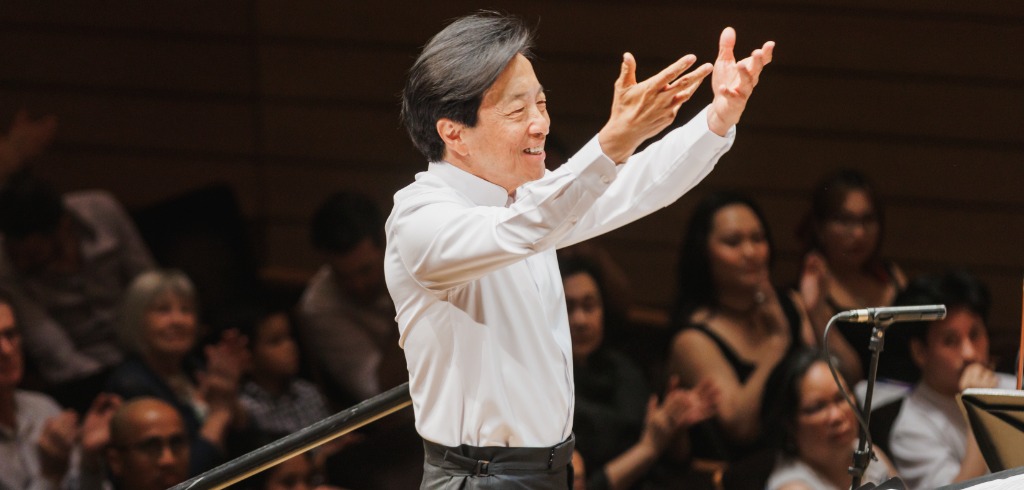
Then there’s the rare bird, someone like Mandle Cheung, a Hong Kong-born naturalized Canadian, who made a fortune as a tech entrepreneur. He’s also a lifelong music lover, having fallen for classical music after hearing the Saint-Saëns Violin Concerto at the age of 13. He joined his high school’s harmonica band and even performed as soloist in Arthur Benjamin’s harmonica concerto with the Winnipeg Symphony Orchestra back in 1971. His ultimate goal? He set his sights on conducting a symphony orchestra.
An impossible dream for someone without formal training? Well, Cheung has managed to make it come true, as a self-taught conductor: “I knew one violinist and one pianist, they got together 25 musicians. They played Mahler First, and I learned how to read the orchestra score. I had the violinist playing and the pianist turned the pages for me…”
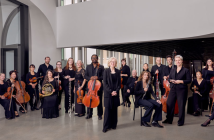
He formed his own orchestra, the Mandle Philharmonic, made up of professional musicians who play for other orchestras such as those of National Ballet of Canada and Canadian Opera Company. The Mandle Philharmonic gave its inaugural concert back in 2018. His troupe has since given 18 concerts, with more on the horizon. The businessman’s wealth allows him to finance the orchestra.
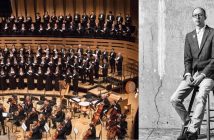
Even more daring is Cheung approaching established, well-known orchestras like the Toronto Symphony Orchestra, proposing to them a fee for service type of arrangement. The TSO accepted his proposal, and it’s no secret that the fee for that single performance in June 2025 came to something like $400,000. Mandle Philharmonic’s 2026 schedule is filled with Mahler concerts—three in the GTA, and one in London, UK with the Royal Philharmonic Orchestra, for an undisclosed fee.
I was in the audience at Roy Thomson Hall for the performance on June 25, 2025. I attended out of my love for Mahler, but also out of curiosity, having read about Cheung’s self-taught conducting background. Below is what I wrote about that performance at the time on social media:
****************************
Curtain calls from last evening’s Mahler Second performed by the Toronto Symphony Orchestra under the direction of conductor Mandle Cheung. There were some raised eyebrows in the days before from some quarters over the way this concert was organized, with a conductor largely unknown to the TSO audience. People compare Cheung with the American Gilbert Kaplan, another conductor without formal training, who conducted the NY Phil, in Mahler Second! In fact, Kaplan seems to conduct only Mahler Second.
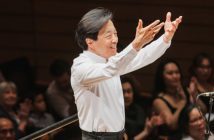
Comments about Cheung, mostly negative, proved to be unfounded, based on his showing last evening. I feel it was a truly wonderful performance, well judged conducting, eliciting gorgeous, even awe-inspiring sounds from the TSO, flooding the RTH. To my eyes, Cheung knew what he was doing. I did notice that he did not cue the musicians, not once. The audience was extremely enthusiastic at the end. Mandle Cheung was very self effacing in the curtain calls, no solo bow for himself, and giving the spotlight to the orchestra and the two soloists (mezzo Mireille Lebel sang a beautiful “Urlicht,” replacing the originally announced Krisztina Szabó; soprano Kirsten LeBlanc sang beautifully as well).
The Amadeus Choir was fabulous as usual. A wonderful early summer musical treat
******************************
Thinking back to that evening, I can recall how impressed I was by the sound coming from the orchestra, the way I remembered it on recordings. I was also struck by the audience reception: a 4-minute standing ovation. In retrospect, the excellent playing should have been a given, as the TSO is made up of experienced world class players, and they are the ones making the sound.
More difficult to evaluate and more intangible was the quality of the conducting. The conductor must know the score inside out, has the technical skills and the insight to navigate through a complex work like the Mahler 2nd, not to mention the requisite leadership and people skills, the empathy that allows him to communicate with the players, win over their trust, and to hold everything together.
I admit that at the time I was swept up by the wonderful sounds from the stage, and the incredible audience reception. I did find Cheung’s persona to be quite understated, without any overt communications with the players that I could see from my vantage point. He didn’t cue the players as is typical by most maestros. Will his conducting on May 22, leading his own, more familiar troupe, the Mandle Philharmonic, make a difference? I am very much looking forward to this concert.
In anticipation of the concert, I arranged to have a chat with Cheung. I sat in on a rehearsal with his orchestra beforehand. I did notice that, while working with his own orchestra, he appeared to be more relaxed, but overall, his conducting manner remains rather understated. When we met afterwards for our chat, I found him friendly, cordial and down to earth.
An obvious question to ask was what drew him into conducting, a very daunting proposition for an amateur. His reply was: “It’s all in the genes!” He attributes his musical journey to a sort of genetic predetermination—frankly a real surprise of an answer. He comes from a very large family, and none are involved in music. He certainly didn’t get his inspiration growing up in Hong Kong. As someone with a similar background, I can honestly say that in the vast majority of Chinese families in capitalist Hong Kong where money is king, music as a profession would be considered far from desirable.
Given that Cheung is untrained, there were a lot of negative comments mostly in the press, along the lines of “he has a lot of nerve” and “talk about chutzpah!” How does he deal with the mean-spirited comments from people? “People always have opinions, can’t do anything about that…” For someone without formal training, it’s all the more remarkable that he chooses some of the most complex works to tackle, such as the Mahler symphonies. He calls the Mahler Second “volcanic” and the Mahler Eighth the “Himalayas of Symphonies.” His fearlessness made me wonder from where did he get his inspiration?
What about role models? Musicians who might have inspired him? The only name he gave me is the great Austrian conductor, Herbert von Karajan, whom he never met and didn’t manage to hear conducting live. Anyone he knows personally who has inspired him? “No, I know very few people…” I have to say I was quite surprised by his answers. Mandle Cheung is indeed a self-made success—perhaps he’s right, it’s all in his genes! Is he a work in progress? The real deal? You can judge for yourself. Cheung and the Mandle Philharmonic will be giving three concerts in the GTA, plus one engagement in London, with the Royal Philharmonic Orchestra.
Mandle Philharmonic — Upcoming Concerts
May 22 — North York, ON | Meridian Arts Centre
July 24 — Toronto, ON | RBC Amphitheatre
August 21 — London, UK | Alexandra Palace (with the Royal Philharmonic Orchestra)
November 27 — Toronto, ON | Roy Thomson Hall