
This page is also available in / Cette page est également disponible en:
 Français (French)
Following the post-pandemic trend, the renewal of leadership at Canada’s cultural institutions continues apace. Here, we meet the newest of these leaders to get their take on the current state of the classical-music industry.

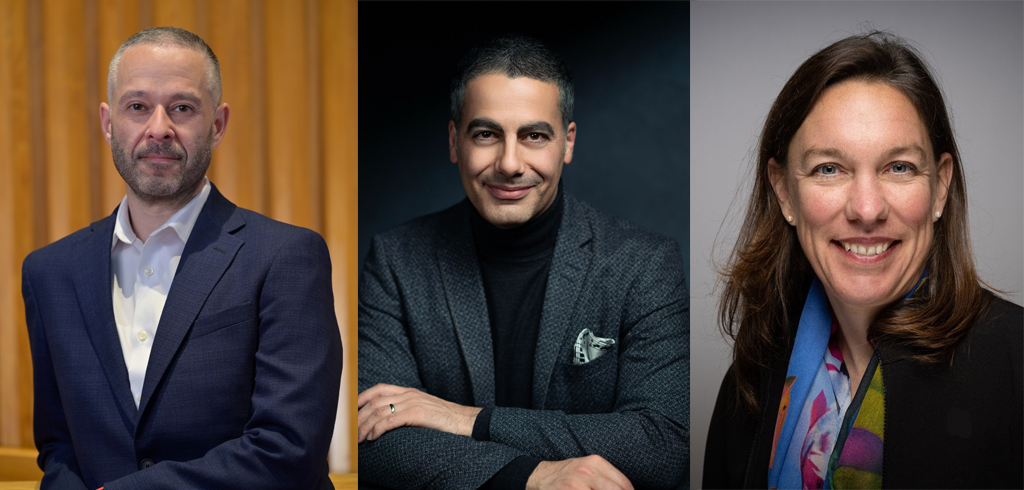
Photo: R. Tinker
Michael Blais became Manitoba Opera’s new executive director on Aug. 1. He was most recently the company’s director of Operations and has been part of its administrative team since 2010. He succeeds Larry Desrochers, who has been the Winnipeg company’s general director and CEO since 2000. Prior to his role as director of Operations, Blais was box office co-ordinator. Before transitioning into arts management, Blais worked as a professional contemporary dancer. “It feels like a lifetime ago, but that work remains close to my heart,” he says.
 Mélanie La Couture was named Orchestre symphonique de Montréal’s new chief executive officer in May 2024. She succeeded Madeleine Careau, who had led the orchestra’s administration for almost 25 years. Previously with the OSM, La Couture was chief operating officer (2007-13), deputy general manager (2004-07) and director of the OSM Foundation (2002-04). She was CEO of the Montreal Heart Institute (2017-24) and executive director of the MHI Foundation (2013-17).

Photo: Tam Lan Truong Photography
Jean-Pierre Primiani will become Opéra de Montréal’s new general director as of Nov. 1 following the retirement of current General Director Patrick Corrigan. Previously, he was the assistant to OdeM’s then general manager, Pierre Dufour (2011-14). From 2014 to 2017, Primiani was head of Philanthropic Development at Orchestre symphonique de Montréal and then returned to OdeM in 2017 as director of Development, and subsequently as chief philanthropy officer.
The LSM Questionnaire
LSM: What led to your professional interest in arts management/business and music?
MB: Even during my time as a dancer, I knew I would eventually find my way into administration. I was fascinated by the complexity and co-ordination required to manage an arts organization. Once I began working in administration, I discovered how rewarding it is to support artists from behind the scenes. Each season brings new challenges, and I thrive on the variety of roles and responsibilities I have within the company.
MLC: I really discovered the OSM while I was doing my MBA. I had the opportunity to collaborate with the OSM at that time, and it was love at first sight. I didn’t grow up in an environment where classical music played a special role, but when I discovered the orchestra through my studies, I was hooked on this stimulating and vibrant world.
JPP: I am a trained opera singer, and music has always played a very significant role in my life, even if I pursued other interests. At the same time, I was drawn to leadership and management roles from a young age and had a natural predisposition for bringing people together and putting on shows (as a stage director and producer). I knew that arts management would be the happy intersection of these two passions.
LSM: Do you play an instrument, or have an artistic interest of your own?
MB: I studied piano and voice as a child and young adult, and I returned to piano in my 30s. It’s been an on-and-off relationship over the years, but when I retired from dancing I made a conscious decision to draw a fairly hard line under my artistic practice. Arts management has proven to be creatively fulfilling enough for me.
MLC: Due to my role, I have a sensitivity for the arts and a keen interest in music, but I am not a specialist or a musician myself.
JPP: I don’t sing anymore, but I do sit down at the piano every so often and enjoy accompanying my three young cellist boys for their recitals. Occasionally, I will take out my accordion to liven up a party. My colleagues will also tell you that I am constantly whistling or humming in the office.
LSM: As someone relatively new to your organization, what do you perceive as its biggest challenges?
MB: Right now, post-pandemic recovery remains a central focus, with rebuilding and expanding our audience base as a top priority. Adding to the complexity is a funding environment that continues to place pressure on the sector. Public support has remained relatively stable but hasn’t kept pace with inflation or the growing needs of arts organizations. Attracting and retaining skilled administrative staff is becoming increasingly difficult.
MLC: I know the OSM very well, so the adjustment period did not present any particular challenges. That said, like many cultural institutions, attracting audiences to the concert hall and maintaining a balanced budget comes with its own set of challenges.
JPP: We face the same issues as our industry peers—especially on the cost side—but Opéra de Montréal is in an enviable position with strong revenue streams, both earned and contributed. Managing sustained growth and broadening the impact of our work come top of mind.
LSM: What do you feel are your organization’s greatest strengths?
MB: I would say our strongest asset is our relationships with our artists, our patrons and donors, and with all our peer and partner organizations. Another asset is the organization’s commitment to excellence. It runs through every level of the organization, and despite the challenges we face, I think we regularly exceed expectations.
MLC: The OSM is recognized as one of the world’s leading orchestras. Another of the OSM’s strengths is its involvement in the community, whether through school concerts that reach more than 20,000 young people each year, the La musique aux enfants initiative in Montréal-Nord, or its collaboration with the Conservatoire network.
JPP: Our organization’s greatest strengths are rooted in artistic excellence, creative innovation, and a strong commitment to community. We champion bold operatic storytelling and support artists in creating work that challenges, inspires, and connects. By fostering collaboration and inclusion, we help build a resilient and vibrant operatic ecosystem.
LSM: What, if any, are the most significant changes you have already made?
MB: The most significant change ahead was initiated by the organization. With Larry Desrochers, our longtime general director and CEO stepping down in May 2026, the company has made the decision to move to a dual leadership model, separating the artistic director and executive director roles into two positions. I believe the coming years will bring more opportunities for the creation of new work and more community-focused programming.
MLC: The first impact I wanted to have was on accessibility. For me, the OSM should be open to all audiences and, to achieve this, I overhauled the pricing structure. Also, it was important for me to promote a more horizontal and open working environment. It was, therefore, essential for me to facilitate collaboration between teams and encourage everyone to contribute to the overall success of the orchestra. In my view, the OSM’s success depends on an innovative and ambitious approach to philanthropy, which is why I created several positions within our philanthropy team.
JPP: Over the past few years, one of the most significant changes we have made is reimagining how we reach and retain new audiences by breaking down preconceptions about opera. This includes transforming the way we design our campaigns and advertisements—embracing bolder, more playful visuals and messaging that speak directly to today’s diverse audiences. We have also begun presenting contemporary works alongside classics while ensuring our longtime audience still feels seen and valued.
LSM: So much has changed in the classical music world in the past few years. What are you hoping to see happen at your organization over the next five years? What do you hope will change? Stay the same?
MB: I’d love to see more investment in new work and in telling stories that really reflect the diversity of our community. On the administrative side of things, I hope that we can fully capitalize our endowment fund—we’re just under $5 million right now, and the goal of a $10-million endowment will provide the organization with a revenue stream to address the structural deficit that exists in too many arts organizations.
MLC: In five years, my goal would be for every person graduating from high school, CEGEP or university in the Greater Montreal area to have had contact with the OSM. I want the OSM to play a role in the development of every professional (orchestral) musician in Quebec. I want to connect with Quebecers, whether in concert halls, parks, or simply through the pride we inspire, just as Quebecers are proud of other great institutions, such as the Montreal Canadiens or Cirque du Soleil.
JPP: Over the next five years, we hope to firmly position opera as a leading, relevant art form for people of all ages—bold, inclusive, and deeply connected to contemporary life. We aspire to be a driving force in Montreal’s cultural sector, leading with creativity, innovative thinking and artistic excellence.
LSM: Maintaining and building a loyal audience is challenging. What is your philosophy with regard to audience growth in the current climate?
MB: Audience demographics are shifting, and consumer behaviours are changing. While challenging, they also bring new opportunities. Our Opera Access program provides complimentary tickets to a variety of social-service agencies, reducing socio-economic barriers to attendance. The goal isn’t to convert recipients into buyers; it’s about broadening our reach and deepening public value.
MLC: The current economic situation is not straightforward. We are all in the same boat in that regard. My philosophy is to make the OSM more accessible in terms of flexible concert schedules and concert ticket prices.
JPP: We believe that audience growth is not about chasing trends but about building long-term trust. Audiences will continue to evolve, and our philosophy is to meet that evolution with productions that are consistently of the highest artistic quality—engaging, thought-provoking and entertaining.
LSM: What are you most looking forward to this season at your organization?
MB: Our season-opening production of Tosca. It was the first opera that really resonated with me, and I still love it to this day. It also happens to be the first fully-staged production I worked on when I joined the company in 2010.
MLC: I can’t wait to see what the orchestra, chorus and Rafael [Payare] have in store for us with La damnation de Faust to open the 2025-26 season. We have focused heavily on offering a diverse program with our Apéro and Éclatés concerts, which were a great success last year.
JPP: This season, we are most excited to present a program that strikes the perfect balance between beloved operatic classics and bold contemporary works. We are also expanding our community events.
Responses have been edited and condensed for clarity and conciseness.
This page is also available in / Cette page est également disponible en:
Français (French)