Browsing: Romantic

For American Independence Day, it seems apt to feature an American themed post. In 1831, the 55th Independence Day, Samuel Francis Smith’s “My Country (‘Tis of Thee),” the defacto anthem for the 19th century, was first sung in Boston by a children’s choir. Earlier that year, a friend had asked Smith to translate German songs that were the basis for “God Save the Queen.” Instead, Smith would pen what he called “America,” later known as “My Country (‘Tis of Thee).” Smith’s original lyrics invoke the muse of America as a “Sweet land of liberty” protected and entreated by God to…

Share:
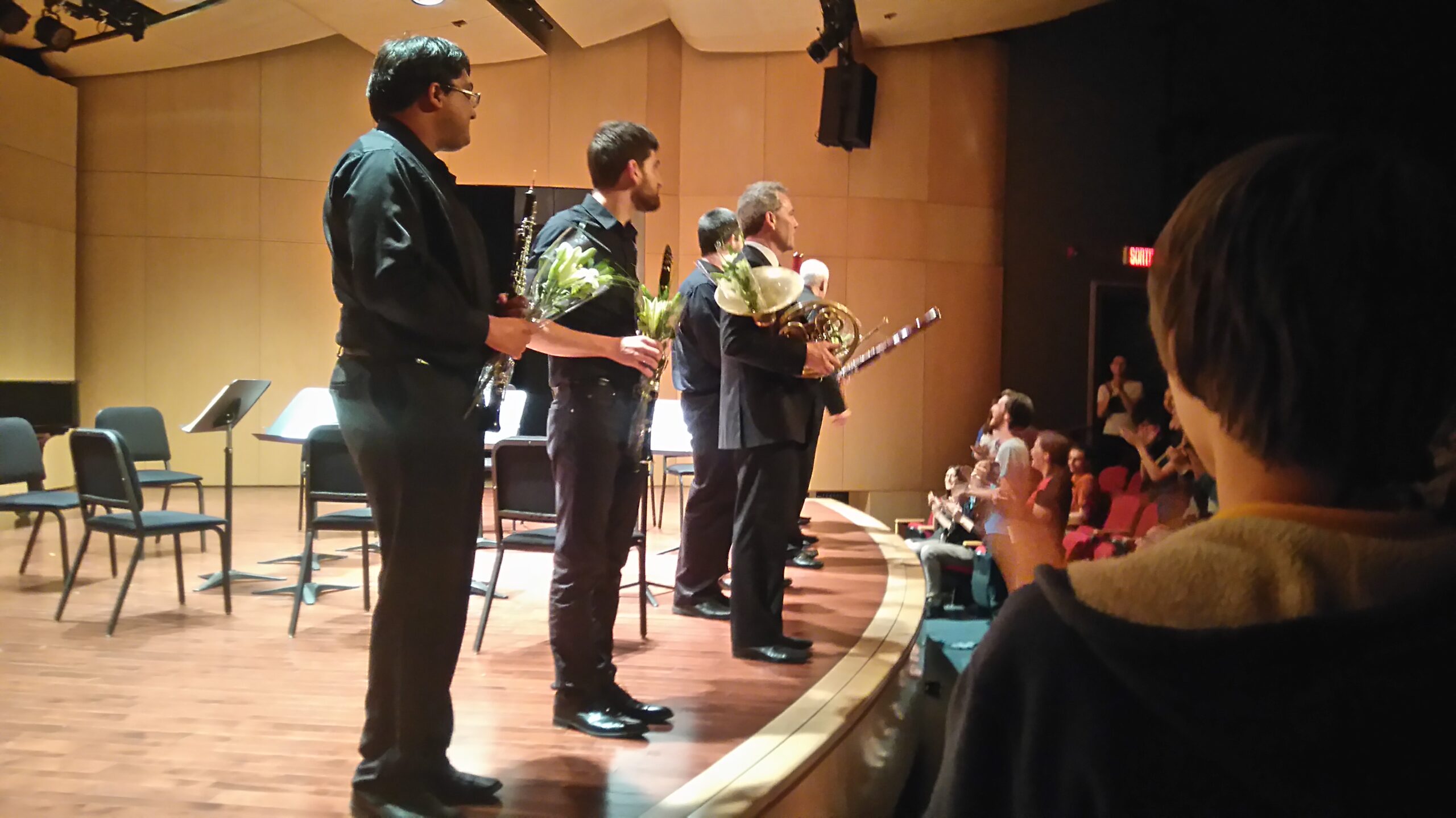
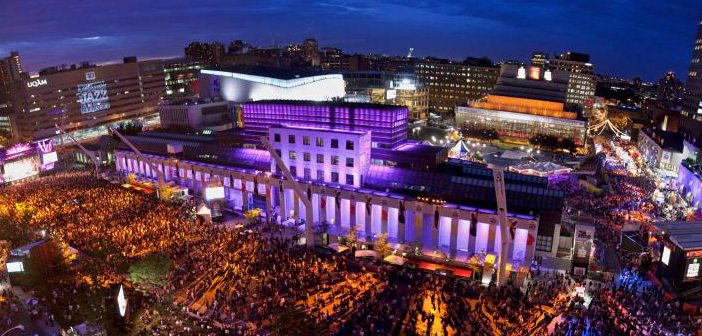
ORFORD – Orford Musique, as the festival in the Eastern Townships now calls itself, got under way Friday night, almost a month after it started. The educational camp fires up well before the concert calendar. Thus the first non-student program, paradoxically, represented a farewell for at least a few of the teachers who had spent most of June in residence. It also represented the kind of event that I would gladly cross several county borders to hear. Louis Spohr’s Duo for Two Violins in A minor Op. 67 No. 1? Just try to hum that one. Or more to the point, just…

Share:

+ The marriage between text and music in contemporary opera is more important than ever, says William Littler, citing Fellow Travelers (Cincinnati Opera) and Les Feluettes (Opéra de Montréal) as recent examples. “Perhaps today, more than at any other time in the recent past, librettists are coming into their own as something approaching full partners with composers in the creation of successful opera. And tied to this development is the heightened importance in an age of film and television of casting singers who can give visual credibility to their roles. Tenor Aaron Blake and baritone Joseph Lattanzi both looked and…

Share:

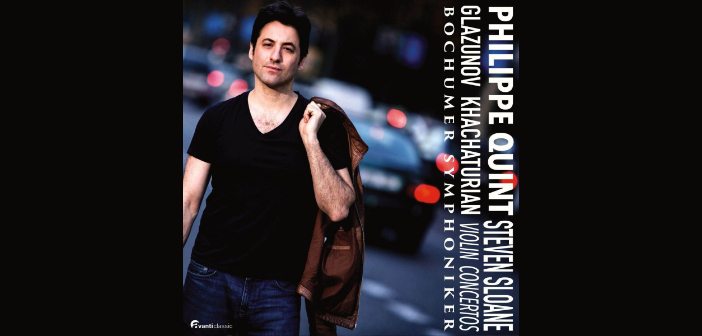
The archetype Russian violin concerto – Tchaikovsky’s – looms so large over the musical landscape that all others seem no more than sidebars. Two concertos (each) by Prokofiev and Shostakovich are rooted in political circumstances, inseparable from their history. Miaskovsky’s concerto never took off, despite the advocacy of David Oistrakh, Weinberg’s is emerging too slowly to be counted and the rest barely make up a respectable quorum. Apart from the present pair. Alexander Glazunov wrote his concerto in 1905 for the violin professor Leopold Auer, a formidable authority who once refused to premiere Tchaikosky’s concerto unless he made extensive changes.…

Share:

+ A CD review of English composer Granville Bantock’s epic late-Romantic oratorio Omar Khayyam, re-released from the 1979 Lyrita version with the BBC orchestra and chorus under Norman Del Mar. + The results of the Seventh Cliburn International Amateur Piano Competition, held in Fort Worth TX, are in. + David Lang talks with The Guardian’s Kate Molleson about writing music for memorials. A classic daunting Lang commission: construct exactly the right music for collective remembrance. “Right,” he nods, but he doesn’t look daunted. “How to write something that seems ancient, like a kind of music whose origins we don’t question.…

Share:

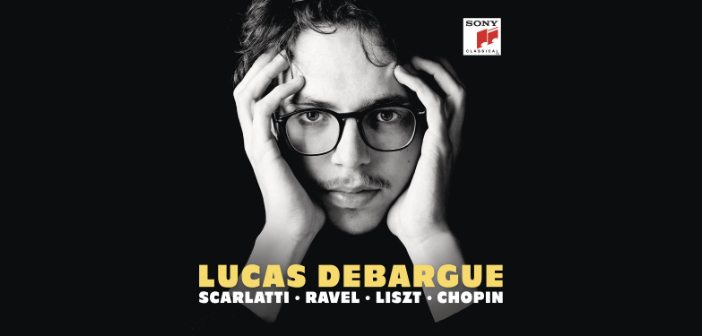
This is a great time for piano lovers, a terrible one for young pianists. The past four years have flung up the most phenomenal range of new talent, more than listeners can take in. Daniil Trifonov, the 2011 Tchaikovsky winner, set a new benchmark. Since then, the 2015 Chopin competition has yielded Seong-jin Cho and Charles-Richard Hamelin, the Van Cliburn has brought forth the prodigious Beatrice Rana, the BBC Young Musician winner Benjamin Grosvenor has quickly made a name for himself and there are more coming through all the time. And then there’s Lucas Debargue. Placed fourth in the 2015…

Share:

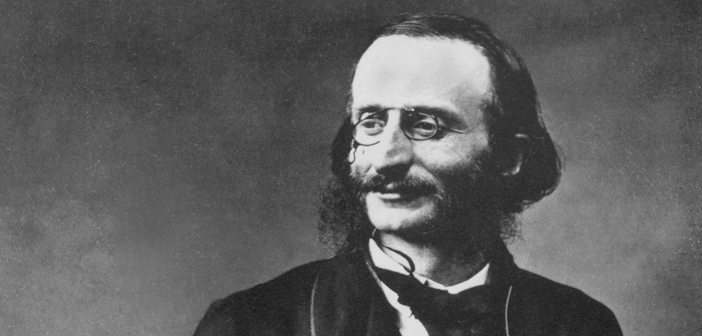
Born on June 20 1819, German-born French composer Jacques Offenbach is particularly known for his operettas. Orpheus in the Underworld and The Tales of Hoffman are still part of today’s repertoire. During Offenbach’s lifetime, Paris’s Opera-Comique was not interested in staging his works and the composer had to rent his own venue and the Champs-Élysées. Watch an excerpt of La Périchole where the title character sings after a few evening drinks.

Share:

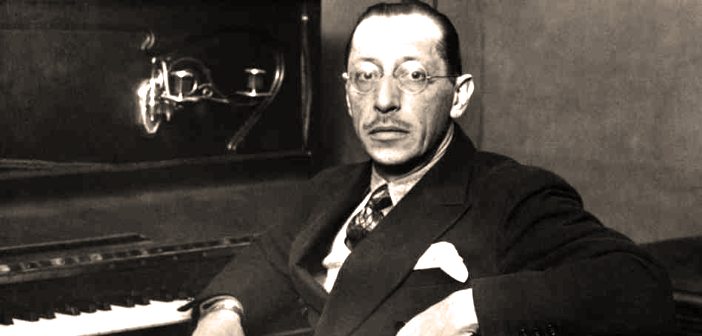
Today marks the anniversary of Gounod’s (1818) and Stravinsky’s (1882) births. Winner of the 1839 Prix de Rome, Gounod studied at the Paris Conservatory. His musical legacy comprises a dozen of operas, oratorios, and several motets and songs. His 1872 piano piece The Funeral March of a Marionette, orchestrated in 1879, achieved fame in the 20th-century as the theme music for Alfred Hitchcock Presents. One of the defining figures of 20th-century music, Russian-born composer Igor Stravinsky defied convention and achieved worldwide fame with his compositions for Diaghilev’s Ballets Russes in Paris. The uproar caused by the premiere of The Rite…

Share:

June 15, 1843 is the birthday of Norwegian composer Edvard Grieg. Born in Bergen, he is widely considered as one of the leading romantic composers. His music celebrates both the Norwegian Folk heritage and the width of European culture. Listen to a 1906 recording of Grieg playing Butterfly, one of his 66 Lyric Pieces for piano. Today also marks the death anniversary of the First Lady of Song Ella Fitzgerald, who passed away on June 15 1996. She led a brilliant solo career—as her 14 Grammy awards indicate—and also recorded and performed with other great jazz musicians such as Duke…

Share:

James Ehnes and Andrew Armstrong Violin Sonatas: Debussy, Elgar, Respighi, Sibelius Onyx 2016. ONYX4159. 68 min 56 s. James Ehnes and Andrew Armstrong deliver a rich, luminous CD with an original choice of works. In symbiosis from start to finish, they transport us to the different atmospheres of the pieces with refinement and poise. It was a judicious choice to combine these four composers and in particular these three sonatas, which are relatively unknown but no less interesting for that. The sonata by Debussy, one of his last works, displays his multiple colours and shadings as well as his delicate sensibility.…

Share:
1 14 15 16 17 18 21