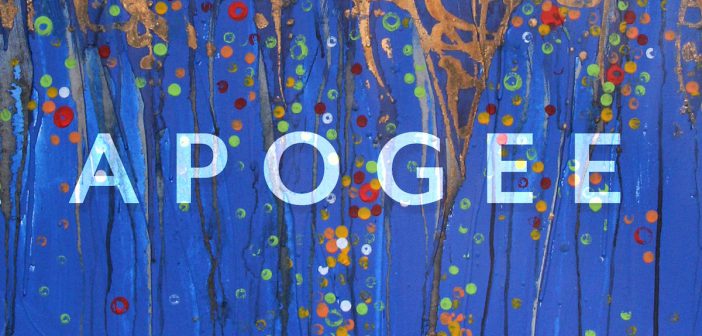
Apogee is a five-piece album by Iranian-Canadian composer Farshid Samandari. From Bashō haikus to Rumi’s mystical poetry, from Japanese Noh theater to particle physics, the composer draws on a wide variety of disciplines to take us on a colourful journey. Witness the magnificent cover, a painting by the Iranian calligrapher Mehrdad Shoghi. Based in Vancouver, Samandari is composer-in-residence of the Vancouver Inter-Cultural Orchestra. A mix of cultures marks his work, which he defines as “unity in diversity.” Apogee for solo flute creates a contrast by borrowing from classic Persian scales and modes and a resolutely contemporary discourse in which Mark…
Browsing: CD and Book Reviews
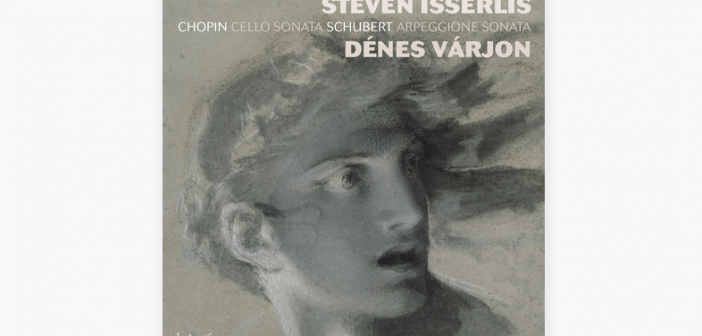
A critic’s dilemma. The cellist Steven Isserlis is a pal. He lives around the corner and we bump into each other at local amenities. He knows I have received his latest release for review. He will be disappointed if I ignore it and grumpy if I find fault. To review or not to review? If I ruled out reviewing friends I’d have to turn down half the record output. By the same token, if I mentioned a friendship every time I reviewed, readers would switch off. So what to do? I made a rule a while back that I would…
Amid the excitement over a rediscovered rehearsal tape of the composer playing Symphonic Dances, there arrives a new account of two concertos with Rachmaninov’s favourite orchestra and the living pianist who most resembles him. Deutsche Grammophon has titled the album Destination Rachmaninov. Departure and furnished the cover with a portrait of the soloist, Daniil Trifonov, sitting in the kind of railway compartment that went out with shellac records. Do not be distracted by these marketing tricks. Trifonov opens with C minor concerto with quiet authority, each chord darker than the one before, Rachmaninov at his most morose. If this concerto had a…
The one thing that keeps me from awarding this album the full five stars is that it is upside down. It opens with a perfectly decent performance of Bela Bartok’s first violin concerto by the Norwegian virtuoso Vilde Frang, with the Radio France philharmonic orchestra conducted by Mikko Franck. Frang, who is 32, has been performing since she was ten years old. Everything she does is perfectly lovely and agreeable. The first Bartok concerto, a youthful effusion of innocent love, is not going to change our lives. The octet, on the other hand, might. George Enescu was one of the great…
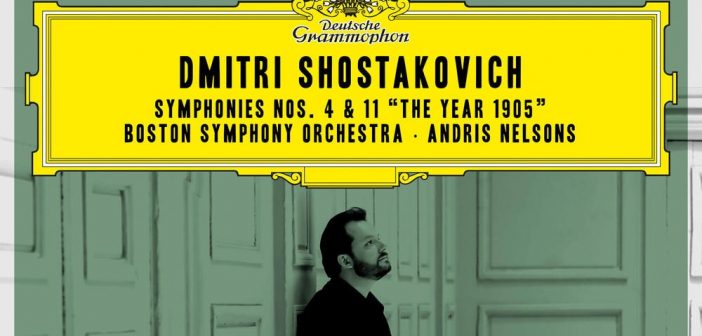
Two problematic symphonies by a tortured composer are despatched by the Boston Symphony and its Latvian conductor with near-nonchalance. The 4th, withheld by the composer for quarter of a century after Stalin’s attack on Lady Macbeth of Mtsensk, is ultra-Mahlerian in its orchestration and ironies and utterly daring in its refusal to toe the party line of relentless positivism. The key to the composer’s intentions eludes many conductors. Andris Nelsons adopts a kind of Baltic neutrality in downplaying the score’s emotional extremes in the hope he won’t get mauled by the Russian bear. It’s a fine performance, lacking only the…
The late Michael Kennedy, lifelong Telegraph critic, once told me he lost interest in new music in his late sixties. Michael had known Ralph Vaughan Williams and Benjamin Britten and reckoned their successors were not up to the mark. We argued about the merits of Birtwistle and Turnage but his ears were not for the turning and I respected the candour of his admission. Myself, around the same age, I am still bi-curious: eager to see what the old hands are doing and keen to hear new sounds coming through. Nothing thrills me more than finding a composer I can…
If I had to choose Elgar or VW for a desert island, I know which it would be. Elgar these days seems over-familiar, where Vaughan Williams loses none of his capacity to surprise. You would not automatically guess that from the opening item on this Toronto Symphony recording, the 1938 Serenade to Music, a flossy piece which is made up of bits of Shakespeare and broderie anglaise. Moving swiftly on, the 1944 oboe concerto is an exquisite wartime consolation, a promise of green fields and scones for tea when all the unpleasantness is over. Sarah Jeffrey’s reading is ideally serene,…
Quatuor Bozzini Gyula Csapó : Déjà ? Kojâ ? Label : Collection QB Catalogue number : CQB 1821 ★★★✩✩ In recent years the Bozzini Quartet has added to its discography recordings dedicated to a single composer, sometimes even devoted to a single work. That is also the case with their most recent album, Déjà ? Kojâ ?, which is a mix of French and Persian languages meaning “Already? to where?” The title of the same name for string quartet is by Gyula Csapo, composer of Hungarian descent. Commissioned by the Bozzini Quartet, the work underwent various transformations before its completion in 2016. It is structured in three…
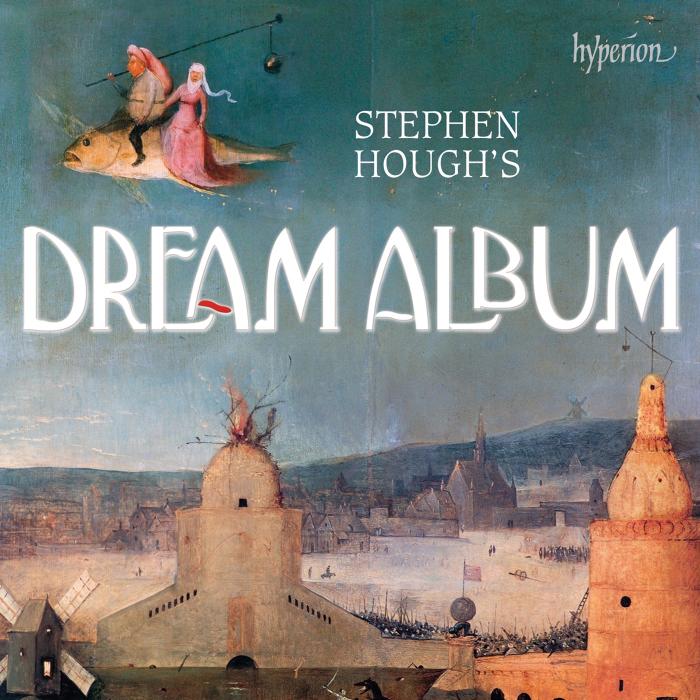
In the hands of anyone other than Stephen Hough, this album would be either a horrible indulgence or a public act of psychoanalysis. Hough is far too fastidious a pianist to be suspected of such temptations. What we have here are morsels by composers great and (mostly) small, work the evoke a trance-like state between sleep and wakefulness. I’m not sure about Hough’s opening setting of Strauss’s overworked Radetsky March, but thereafter he hardly puts a finger wrong. Das alte Lied by Henry Love will blow you away; Love was the pseudonym of Hilde Loewe, a Viennese refugee in London.…
The Mirror with Three Faces Shostakovich: Piano Trio No. 2. Lera Auerbach: Piano Trios No. 1 and No. 2. Delta Piano Trio. Odradek Records ODRCD350. Total Time: 63:40. The Delta Piano Trio call their new disc The Mirror with Three Faces. Their account of Shostakovich’s second piano trio, dated 1944, leaves no doubt as to the composer’s state of mind in the closing stages of World War II. Ostensibly a tribute to a late friend, Ivan Sollertinsky, the work ripples with anger and frustration at pointless deaths and ruined lives – the appalling legacy of the Stalin-Hitler era. The last…