
This page is also available in / Cette page est également disponible en:
 Français (French)
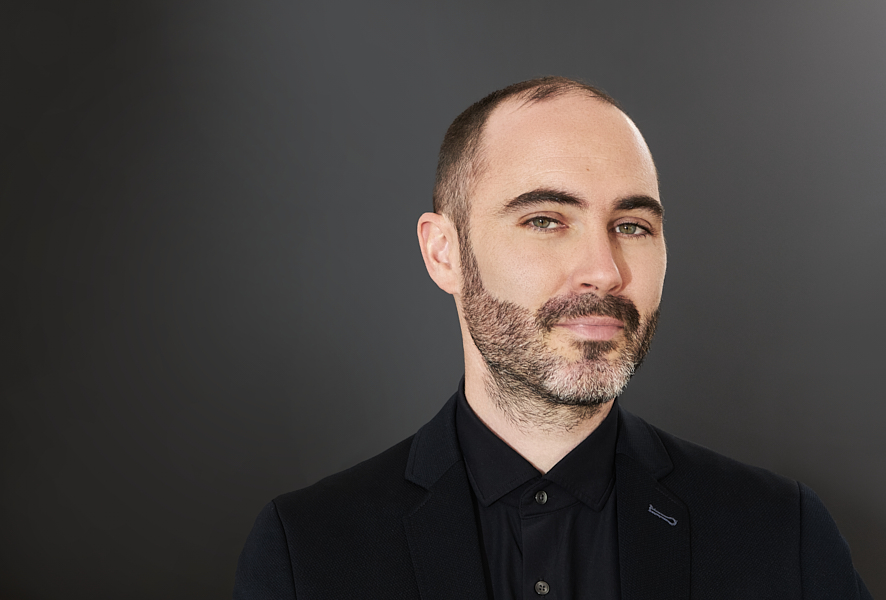
Programming Richard Wagner in the 21st century is never going to be simple. But Renaud Loranger, the Joliette-born artistic director of Festival de Lanaudière since 2018, sees opportunity in programming Wagner’s works.
“It’s important to look at Wagner’s works holistically,” he says. “The underlying ideas are crystal clear because he wrote extensively about them. All of this becomes part of the mosaic of culture, and one must not look away.”
Loranger, who has been based in Berlin for the past 15 years, is referring to Wagner’s infamous antisemitism in anticipation of the festival’s performance of Tristan und Isolde. The Aug. 3 performance will feature a star-studded cast of soloists, Orchestre Métropolitain and Maestro Yannick Nézet-Séguin on the podium.
Festival de Lanaudière’s 2025 season programming centres on altérité, loosely translated as “otherness,” in this case referring more to dialogue and duality, as explained by Loranger. “Otherness, identity and plurality: all three weave their way through the summer like crimson threads,” he says on the festival’s website. Works converse with one another in the same way the ill-fated lovers of Tristan und Isolde converge in love, music and death.
“One can unite opposites through artistic experience,” says Loranger. “Mendelssohn and Wagner; Carmina Burana and Bruckner’s Eighth Symphony. The ultimate expression of this is Tristan and Isolde, who dissolve their own individuality in their experience of love.”
Also related is the festival’s programming of Elijah and St. Paul by Felix Mendelssohn—a composer from a Jewish background—alongside Wagner’s Tristan as a way to confront Wagner’s troubled legacy. Likewise, Carl Orff’s profane Carmina Burana alongside Anton Bruckner’s devoutly Catholic Eighth Symphony.
The festival will also present Monteverdi’s L’incoronazione di Poppea, works by Beethoven, and an Italian opera concert with the acclaimed countertenor Franco Fagioli. Loranger sees programming Tristan und Isolde as a way to sum up all of these different styles of music in one opus.
“Wagner was indebted to the Italians before him, including Rossini and Bellini,” says Loranger. To those composers, he would add Meyerbeer and Mendelssohn, although he speculates the antisemitic Wagner wouldn’t have approved. Other, more obvious, influences include Webern, Berlioz and Beethoven.
Loranger admits that season programming is not entirely planned with themes in mind. Major productions like Tristan und Isolde are set years in advance in discussion with conductors and performers.
“At the onset of my time with the festival, I had the idea to work with Yannick to program works that align with the new productions he is doing in New York,” says Loranger, alluding to 2024’s Aida, which preceded the Metropolitan Opera music director’s new production in New York this past season.
“It will be interesting finding out Yannick’s interpretation (of Tristan und Isolde),” Loranger continues, noting that Lanaudière’s audiences will have the chance to hear the acclaimed Canadian conductor lead the work for the first time. “This is new terrain.”
Many of the singers featured at Lanaudière will reprise their roles at the Met. But Loranger says the singers come to the festival not just because of the maestro, but because of its ideal acoustics. He also points to Canada’s long history of producing world-class singers, singling out Canadian tenor Matthew Cairns and Canadian-American baritone Geoffrey Schellenberg among the Tristan cast.
“The level of Canadian vocal talent, decade after decade, is so incredibly high,” he says. “We have so many important people. Casting Canadians comes naturally.”
Thinking about Lanaudière’s audiences, which once included a young Renaud Loranger, the artistic director deeply considers the underlying messages in the works he presents each year, but doesn’t believe in explaining or overly signalling to his audiences.
“It’s important to try to use the channels that we have to frame some bits of our history,” he explains, referring back to Wagner’s troubled legacy and his programming’s focus on altérité, “all of which is part of who we are and where we come from and should inform how we deal with each other today.”
One could hardly find a more beautiful channel than Wagner’s Tristan to explore such complexities.
This page is also available in / Cette page est également disponible en:
Français (French)