Brussels – Applications for the third cello edition of the Queen Elisabeth Competition closed on Wednesday 26 November 2025. A total of 185 cellists, aged between 18 and 30, applied to take part in the 2026 session (nearly 20% more than the previous edition in 2022).
Canadian Participants
The following Canadian candidates are taking part in the Cello edition:
Andrew Ilhoon Byun, Michael Song, Romain-Olivier Gray and Leland Ko.
-
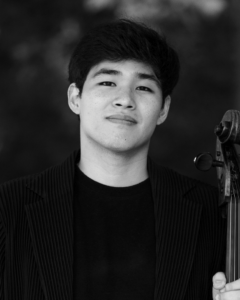
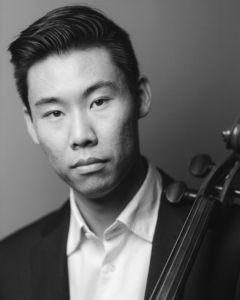
- CELLO 2026 Candidate: Andrew Ilhoon Byun Photo: Queen Elisabeth competition
-
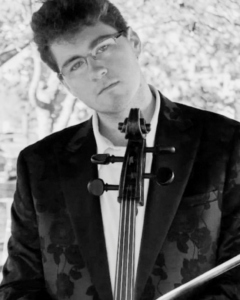
- CELLO 2026 Candidate: Michael Song, Photo: Queen Elisabeth competition
-
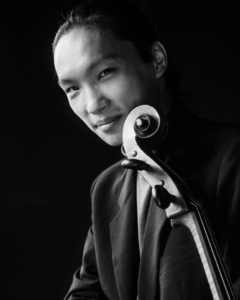
- CELLO 2026 Candidate: Romain-Olivier Gray, Photo: Queen Elisabeth competition
-
- CELLO 2026 Candidate: Leland Ko, Photo: Queen Elisabeth competition
For the preselection stage, candidates were required to submit video recordings of a demanding programme including one of the Six Études for cello and piano, opus postumus by François Servais, Variations concertantes op. 17 by Felix Mendelssohn, the Sonata for solo cello by Eugène Ysaÿe, as well as a work of their own choice for solo cello or with piano accompaniment, composed after 1950.
In January, the candidates’ videos were viewed behind closed doors by an international jury chaired by Gilles Ledure and composed of Natalie Clein, Roel Dieltiens, Valentin Erben, Benjamin Glorieux, Marie Hallynck, Anssi Karttunen and Jan Vogler. The names of the jury members for the public rounds will be announced in April.
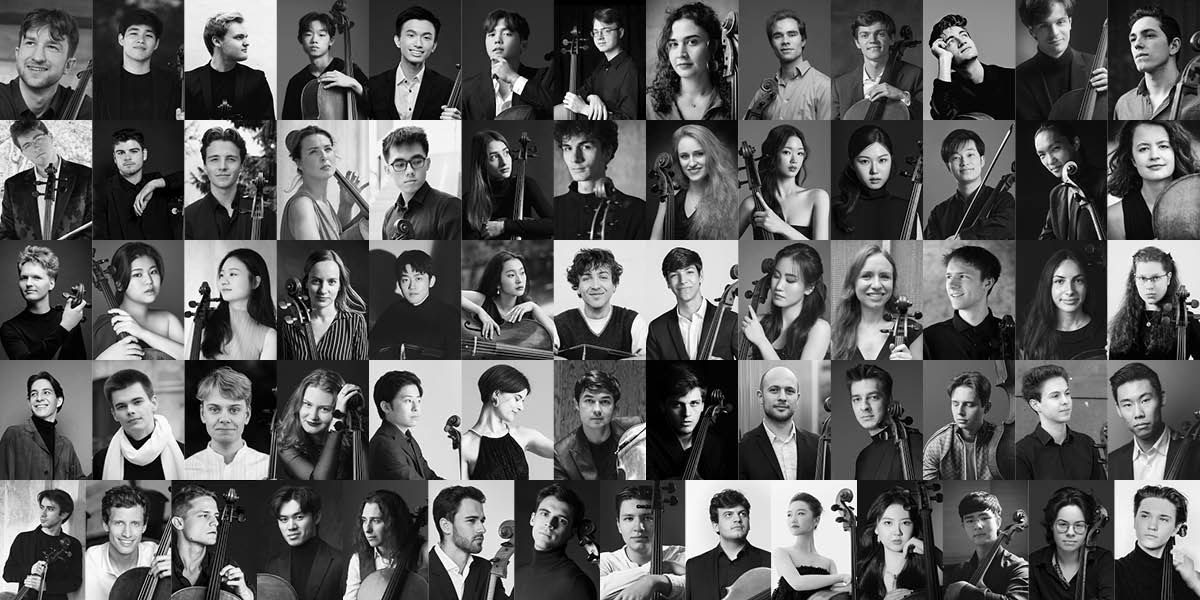
Following this video preselection, 66 candidates were selected to take part in the first public round of the competition.
Discover their names below and their profiles on www.queenelisabethcompetition.be.
Ticket sales
Subscription sales for this Cello Competition opened on 3 February and have been a great success. Individual tickets, which have been on sale since 17 February, are also selling fast, but tickets are still available for each public round. Tickets and subscriptions can be booked via Flagey and Bozar. Booking information is available on our website.
Calendar
At Flagey:
Friday 1 May | Drawing of lots (6pm) which determines the order of appearance of the candidates.
From Monday 4 to Saturday 9 May | First round (3pm and 8pm)
All the candidates who have been selected after the video preselection process can take part in the first public round. They each perform a sonata by Luigi Boccherini, with cello accompaniment, a piece with piano accompaniment chosen from Meditation by Nikolai Roslavets, Ballade op. 3 by Josef Suk and 3 Pièces by Nadia Boulanger; and Lullaby for solo cello by Kaija Saariaho.
From Monday 10 to Saturday 16 May | Semi-final (3pm and 8pm)
At each session, which consists of two parts, the public hears four different semi-finalists. Each of the 24 semi-finalists will perform a recital with piano accompaniment and on another day a concerto by Michael Haydn, Leopold Hofmann or Anton Kraft, accompanied by the Orchestre Royal de Chambre de Wallonie, conducted by Vahan Mardirossian.
Wednesday 3 & Thursday 4 June | Laureates’ recitals (8.15pm)
With laureates of the 2026 cello edition
At Bozar:
From Monday 25 to Saturday 30 May | Final (8.15pm)
Each evening two finalists will perform an imposed work, written specially for the final of this cello competition, and a concerto of his or her own choice with the Belgian National Orchestra, under the baton of Antony Hermus.
Monday 8 June | Laureates’ concert (8.15pm)
The 4th, 5th and 6th laureates of the 2026 Queen Elisabeth Cello Competition will present themselves one more time in the Henry Leboeuf Hall, together with the Antwerp Symphony Orchestra, directed by Shiyeon Sun.
Wednesday 10 June | Closing concert (8.15pm)
The first three laureates of the 2026 Queen Elisabeth Competition will close this third edition dedicated to the cello in a performance with the Brussels Philharmonic, directed by Samy Rachid.
About the Queen Elisabeth Competition
One of the most demanding and also one of the most widely publicised international competitions, the Queen Elisabeth Competition, ever since its creation in 1937, has established itself as a springboard for young violinists, pianists, singers, and cellists on the threshold of an international career. The Competition aims, above all, to serve as an intermediary between those young virtuosos and the world’s great musical venues.
Steadfastly committed to the project initiated by Eugène Ysaÿe and Queen Elisabeth, the Queen Elisabeth Competition seeks to discover complete artists; it owes its reputation to a prestigious jury, strict rules, and unparalleled media coverage, as well as to the friendly and enthusiastic hospitality offered by an entire country and its Royal Family. For the finalists, one of the highlights of the Competition is their stay at the Queen Elisabeth Music Chapel, which offers them an opportunity to spend a whole week studying, without any external assistance, a new work to be performed with an orchestra.

Photo: Queen Elisabeth Competition
2026: a festive year
In 2026, the Queen Elisabeth Competition will experience a truly special edition devoted to the cello, marking three major anniversaries: the 150th anniversary of the birth of Queen Elisabeth, the 75th anniversary of the Queen Elisabeth Competition, and the 150th anniversary of the birth of Pablo Casals, one of the greatest cellists of the 20th century. This year will highlight the artistic and humanistic legacy of the queen, as well as the bonds she shared with the renowned Catalan cellist. A series of concerts, festivals, exhibitions, and participatory projects throughout Belgium will celebrate this triple anniversary, with the Cello Competition session as the highlight of the spring season. One of the exceptional moments of this edition will be the extraordinary loan of Pablo Casals’s Goffriller “Casals” cello (1733) to the First Prize winner of the 2026 Competition for a period of four years.

Photo: Paul Casals Foundation
Find more about Queen Elisabeth Competition at: www.concoursreineelisabeth.be