Browsing: La Scena Online

La Scena Online is the digital magazine of La Scene Musicale.Contents: News, Concert reviews, CD reviews, Interviews, Obituaries, etc; Editor: Wah Keung Chan; Assistant Editor: Andreanne Venne
ISSN: 1206-9973

The title of this violin-piano recital requires some explanation. By 1919, two of the named composers were dead and a third was worn out. Only Leos Janacek was firing on all cylinders – indeed, on more cylinders than he ever had before. If 1919 was a benchmark, it is not evident from their lifecycles. However, the year does mark an end-point for the war era and these sonatas exist in that immediate past, with no thought of present or future. The Janacek sonata, finished in 1915 and revised over six more years, is a masterpiece composed in a vacuum. The…

Share:
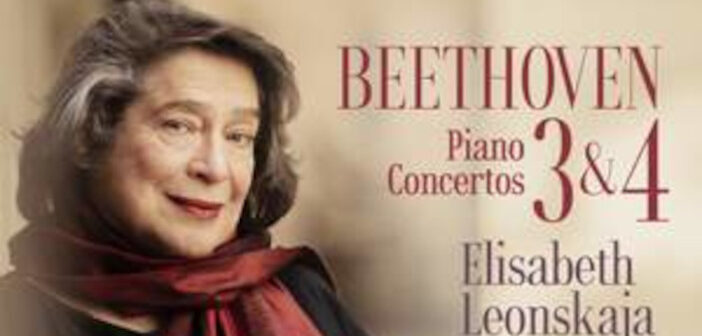
I cannot, in all conscience, give this recording a star rating, or even a detailed review. The soloist is Elisabeth Leonskaja, a legendary pianist whose introspections are perhaps the strongest living reminder of her late friend Sviatoslav Richter. There is an organic element to Leonskaja’s playing, a lack of obvious human agency, that makes Leonskaja at once unpredictable and unarguably at the composer’s service. I have never known her make a recording that was not a unique contribution to the history of the work’s interpretation. Since 1978, when she left the Soviet Union, Leonskaja has lived quietly in Vienna as…

Share:

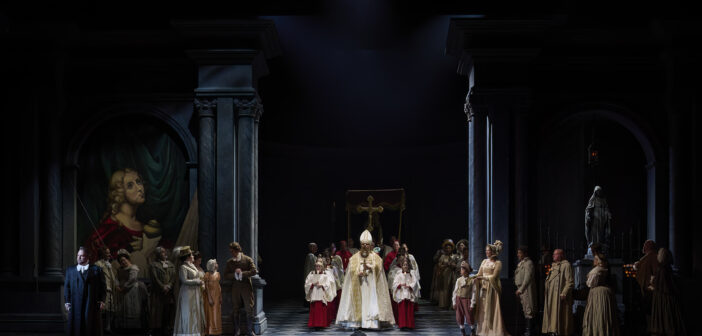
Tosca is a riveting drama of love, lust and betrayal. Add in Puccini’s impossibly lush score and a few show-stopper arias, this opera is the whole package. Directed by Paul Curran, this COC revival of the 2017 production features brand new leads in their COC debuts: Irish soprano Sinéad Campbell-Wallace as Tosca and Italian tenor Stefano La Colla as Cavaradossi, and expectations are high. What you missed La Colla is a fine, smitten Cavaradossi. His warm, creamy sound carried the high notes beautifully. Tosca is a temperamental character – loving and charming one moment, jealous and angry the next. Campbell-Wallace,…

Share:

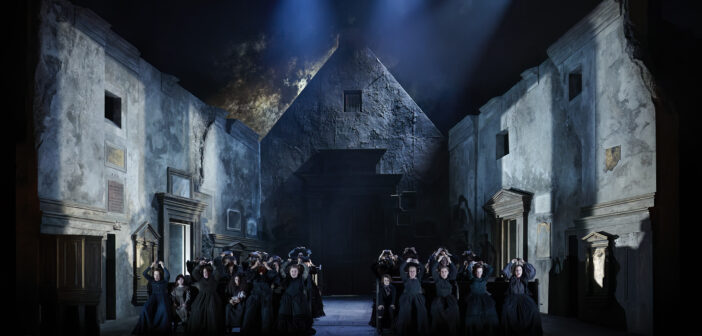
Emboldened by witches’ prophesies and with strong encouragement from his wife, Macbeth turns into a power-thirsty man who uses violence to annihilate everything in his way to seize Scotland’s throne. Verdi’s ominous score is enhanced by dramatic stage effects:  dark sets punctuated by thunder and lightning; ghostly appearances of witches and three demonic children; bloodied bodies rising from the dead.  Although the murders are all swiftly carried out, David McVicar‘s COC/Chicago co-production delivers a longing sense of foreboding and some genuinely frightening moments. What you missed There was all-round good singing from the male leads. American baritone Quinn Kelsey’s debut…

Share:

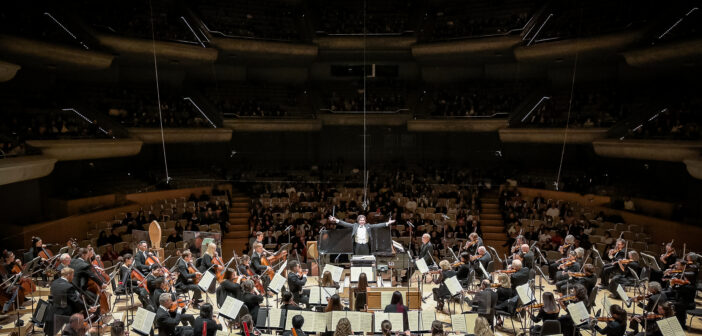
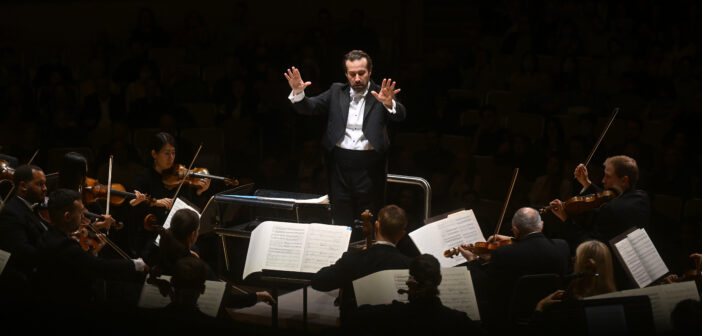
Since assuming the podium as TSO conductor, Gustavo Gimeno’s leadership of the TSO to its rightful place on the world stage has been self-evident. His commitment to twentieth century music on a grand scale and to showcasing Canadian talent is unquestionable. Thursday night’s concert, the colossal Turangalila-Symphonie (10 movements, 4 themes, no break) was the piece de resistance. The Turangalila is a rare treat to perform and to experience. Flanked by the star soloists, piano virtuoso superpower, Marc-André Hamelin on one side, facing off with ondes Martenot expert Nathalie Forget, Maestro Gimeno explained the Sanskrit title-creation, time and joy which…

Share:

Context is a shocking thing. Looking through a list of concerts performed by inmates at the Theresienstadt concentration camp between 1942 and 1944, I was taken aback to find a chamber work by Bruno Walter. Most of the music performed was either by major Austrian and Czech names, with a fair sampling by composers who were themselves incarcerated in the camp – Ullmann, Haas, Krasa, Ilse Weber – all destined for deportation to the Auschwitz death camp. Bruno Walter was an outlier in this company. A conductor trained by Gustav Mahler in Hamburg and employed by him in Vienna, Walter…

Share:

The TSO’s prominence on the global concert stage continues to surge. The April 26 concert featured French conductor Fabien Gabel, French/Canadian-born cellist Jean-Guihen Queyras, and the North American premiere of contemporary French composer Camille Pepin’s latest work, Laniakea. Judging from the lack of empty seats at Roy Thompson Hall, the message has gained momentum: classical music is alive and well when the programming and performers are stellar. Fresh from his debut in Chicago barely a few days ago, Fabien Gabel’s TSO debut opened with the fanfare of Camille Pepin’s Laniakea. Tonal orchestration is accessible. It paints images, through harmony and…

Share:

In 1925, at the age of 60, Denmark’s national composer gave in to depression. ‘If I could live my life again,’ said Carl Nielsen, ‘I would … take a commercial apprenticeship or do some other form of useful work that would lead to a visible final result. The creative artist’s lot is not a happy one.’ Nielsen was working at the time on his sixth symphony, titled ‘the simple symphony’ though it was nothing of the sort. His marriage had broken down and he was feeling unappreciated. His fifth symphony, in two movements, was packed with impotent rage. The sixth…

Share:

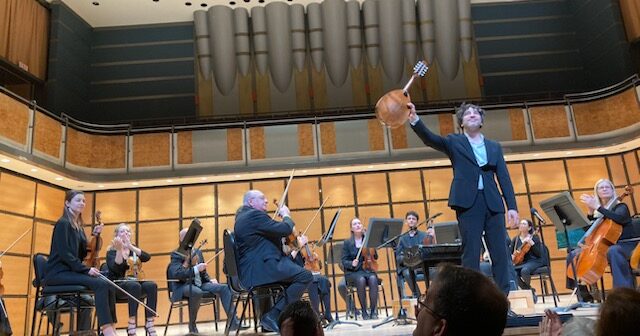
The mandolin is not widely recognized as a regular component of classical music concerts, but in a recent concert in Toronto the Israeli mandolin virtuoso Avi Avital made the best possible case for his instrument. Avital was joined by about 20 string players from the Toronto Symphony for a richly rewarding program of Vivaldi and Bach concertos, along with a recent concerto written for him by Avner Dorman, at the George Weston Recital Hall in North York. A near-capacity audience seemed thrilled with what they heard. The mandolin is historically a very old instrument but its role was mostly confined…

Share:

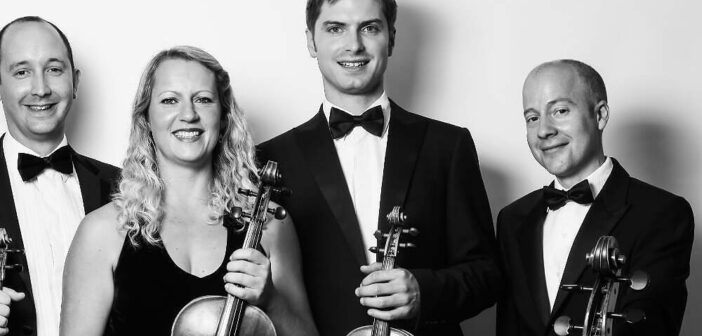
If his violin concerto led you to expect lovely tunes and mushy strings, you may be disappointed with the three quartets, written a decade apart in a career that began in Mahler’s Vienna and ended on the Pacific Palisades. The first quartet, dated 1923 amid Korngold’s operatic success with The Dead City, has an atonal opening that might be aimed at the annual congress of the International Society for Contemporary Music. After a Vienna premiere by the quartet of Arnold Rosé, Mahler’s brother-in-law, the new work was played to the ISCM by a quartet led by Arnold Schoenberg’s brother-in-law, Rudolf…

Share:
1 52 53 54 55 56 172