
This page is also available in / Cette page est également disponible en:
 Français (French)
On Aug. 3, Yannick Nézet-Séguin will bring Festival de Lanaudière’s 2025 season to a close, conducting one of the most transcendent operas in the repertoire: Wagner’s Tristan und Isolde. Despite its status as one of the seminal late-Romantic works, this monumental opera is rarely heard live in Quebec—Opéra de Montréal has staged it only once in its 45-year history. But when it comes, it comes with force. Here’s how to prepare.
The Plot
At its core, Tristan und Isolde is about doomed love instigated by a magic potion and intensified by guilt, passion, and philosophical yearning. Isolde, betrothed to King Marke, is consumed with rage toward Tristan, the man who killed her fiancé. But when they drink what they believe is poison (and instead ingest a love potion) their fate is sealed. After a night of erotic ecstasy, they are torn apart. Tristan dies of wounds; Isolde follows him into death in one of opera’s most transcendental endings, the Liebestod.
The Sound of Obsession
The three opening bars of Tristan und Isolde are some of the most written-about measures in all of Western musical history. A rising minor sixth in the cellos followed by a semitone descent into the recurring “Tristan” half-diminished seventh chord introduces the ambiguous tonality present throughout the opera. Many scholars have commented on the fragmentary nature of the opera, which features delayed harmonic resolution, leitmotifs, and pervasive chromaticism. These qualities transport Tristan and Isolde’s love story into the sublime, transcending pre-established compositional techniques.

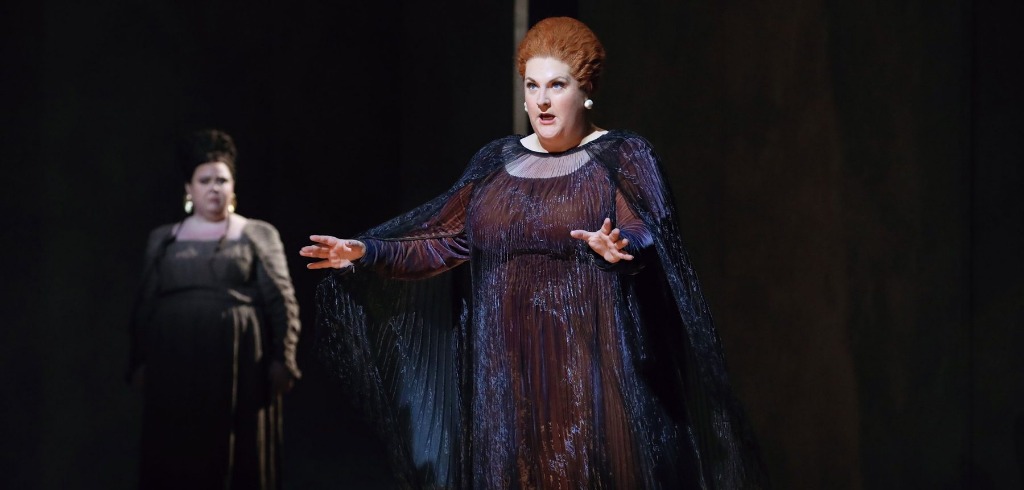
Tamara Wilson (Isolde) in Santa Fe Opera’s Tristan und Isolde (2022). Photo: Curtis Brown Photography
Voices of Steel
Tristan and Isolde are what singers call “stamina roles.” To sing them is to endure a marathon of vocal and emotional demands. They’re roles for operatic athletes.
Many have attempted them, but few have owned them. Start with Birgit Nilsson, whose fire-and-ice Isolde remains the gold standard. Her recordings with Wolfgang Windgassen or Jon Vickers are full of Wagnerian voltage. Speaking of Vickers, Canada’s own heroic tenor, his Tristan is volcanic and sung with overwhelming intensity. For a more lyrical, yet still powerful, approach, Ben Heppner, another Canadian titan, offered a great Tristan in the late 1990s and 2000s.
On the soprano side, Canada has not had an Isolde as internationally acclaimed as her tenors, but Adrianne Pieczonka is renowned for Wagnerian roles like Sieglinde and Senta. Lanaudière’s lineup for 2025 features American soprano Tamara Wilson, who possesses the steel and stamina for the role, alongside Stuart Skelton, an Australian tenor renowned for his heroic, yet sensitive Tristan.
Festival de Lanaudière’s performance is a rare local opportunity to hear this work live, in the hands of one of the world’s great Wagner conductors, Yannick Nézet-Séguin, and the always-luminous Orchestre Métropolitain.
This page is also available in / Cette page est également disponible en:
Français (French)