There are productions that succeed, productions that impress, and—very rarely—productions that bring the art form to a new level. The new Das Rheingold at the 2026 Salzburg Easter Festival belongs decisively to the last category. With the return of the Berliner Philharmoniker under Kirill Petrenko and a staging by Kirill Serebrennikov, this is not merely a strong new Rheingold—it is one of the most accomplished productions I’ve seen on any stage, in any repertoire, in recent years. What distinguishes it is not a single element, but the extraordinary precision with which all its components interlock: musical, visual, physical, and dramatic.
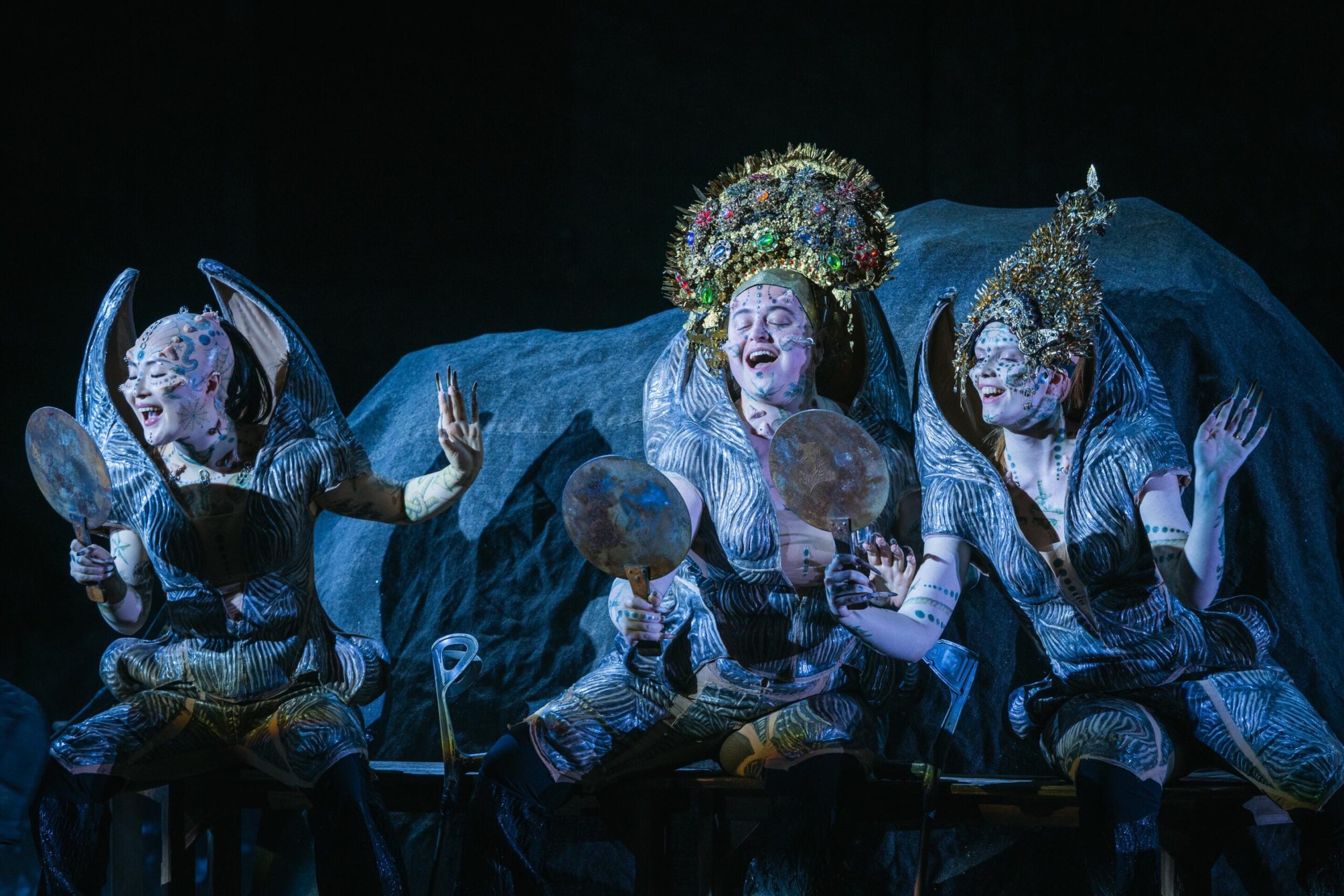
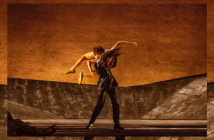
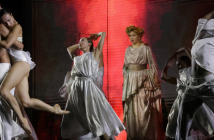
Yajie Zhang (Wellgunde), Jess Dandy (Floßhilde) & Louise Foor (Woglinde) in Salzburg Easter Festival’s Das Rheingold
Photo: Frol Podlesnyi
Petrenko confirms—at an even higher level—what was already evident in his work on the Castorf Ring in Bayreuth in 2013: he is a kind of silent goldsmith of Richard Wagner. There is no grandstanding, no inflation of gesture, no indulgence in orchestral weight for its own sake. Instead, the score is worked from within, patiently, obsessively, until every strand reveals its function. What emerges is not “interpretation” in the conventional sense, but a kind of structural revelation. Motifs are not highlighted—they are allowed to interact, accumulate, and transform with absolute inevitability.
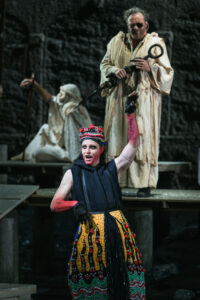
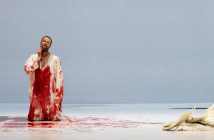
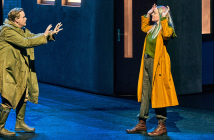
Brenton Ryan (Loge) in Salzburg Easter Festival’s Das Rheingold
Photo: Frol Podlesnyi
With the Berliner Philharmoniker, this approach reaches an almost disconcerting level of perfection. The famous opening in E-flat major—beginning from a single sustained pitch that seems to generate the entire musical world—is shaped not as atmosphere but as genesis itself: sound arising from silence with elemental logic. Throughout the evening, Petrenko achieves a transparency that borders on the miraculous. Inner voices—often buried in Wagner’s orchestration—emerge with clarity, yet without disturbing the overall balance. The brass, so often used as a blunt instrument in Rheingold, is here integrated into the texture, never allowed to dominate crudely.
What is most striking, however, is Petrenko’s control of tension over time. This produces a continuous, almost unbearable sense of forward motion. One has the impression that the entire score is held in a single, vast arc—yet articulated down to the smallest detail.
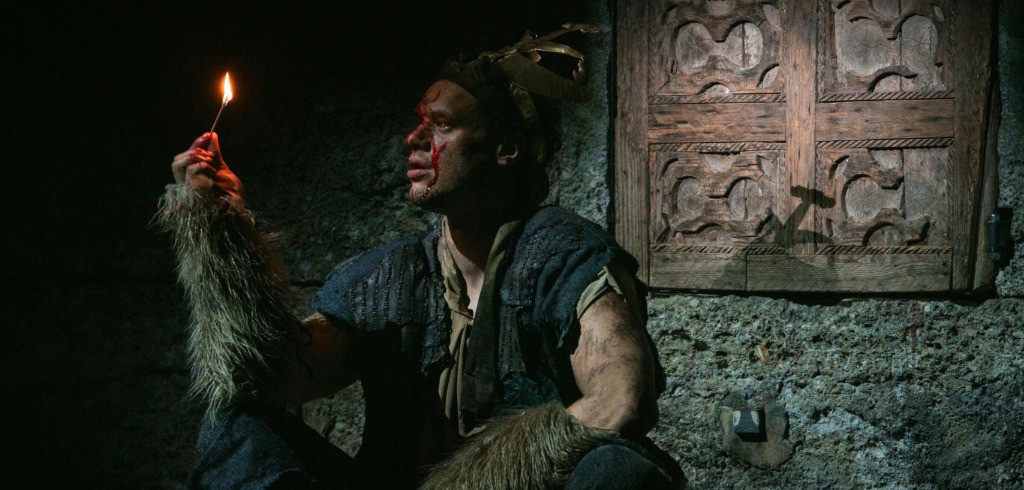
If Petrenko provides the musical intelligence of the evening, Serebrennikov supplies its vision. A filmmaker of rare sensitivity, marked by his years of imprisonment in Russia, he brings to Rheingold a world that feels both desolate and sharply observed: a wasteland in which power persists as system, not myth. In line with Petrenko, his staging refuses spectacle in favor of coherence. Every image belongs to a larger conceptual fabric, and nothing is arbitrary. At the centre of this landscape stands Alberich—not merely a villain, but a lone survivor, a figure who understands the system because he has been crushed by it.
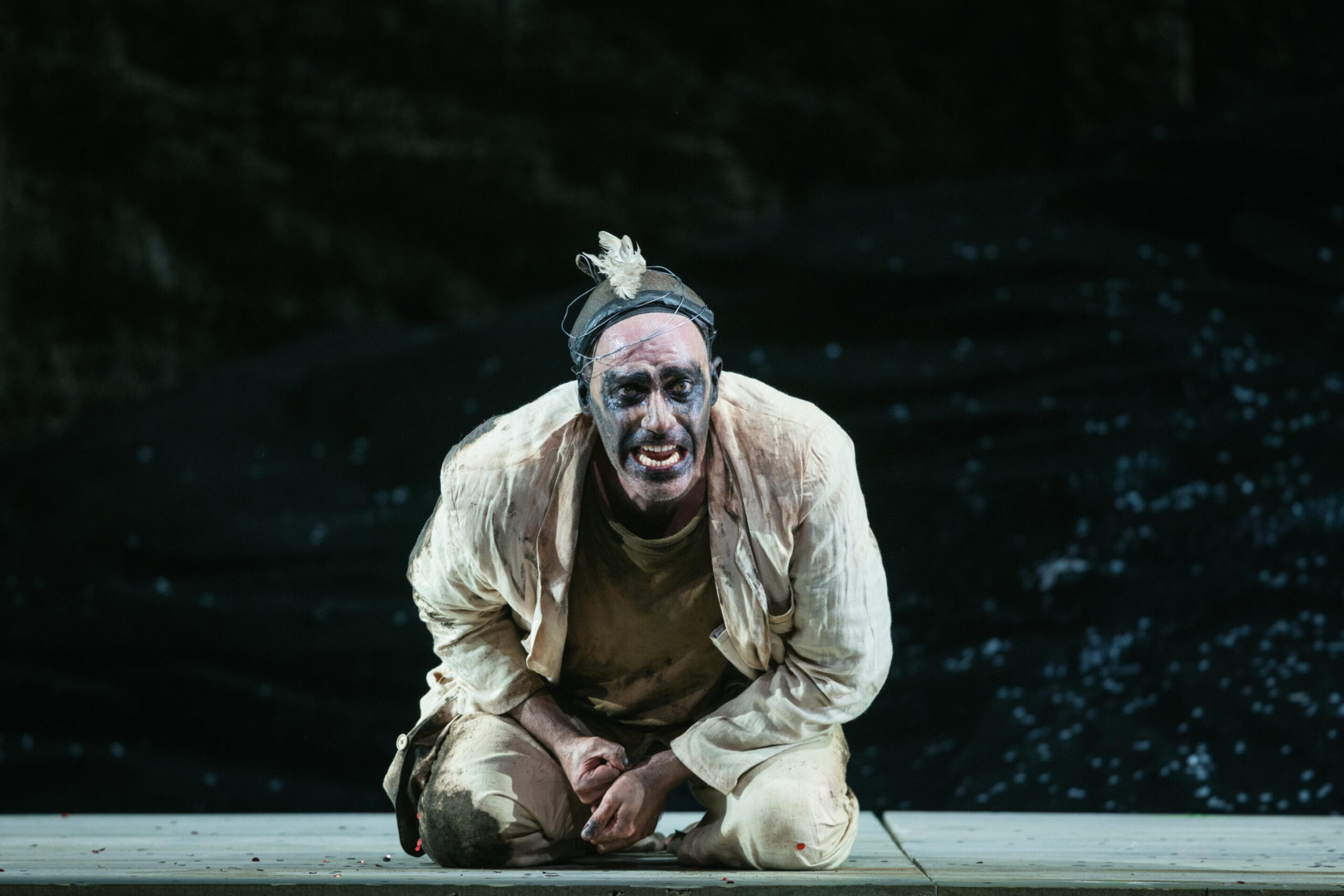
Leigh Melrose (Aberich) in Salzburg Easter Festival’s Das Rheingold
Photo: Frol Podlesyni
This vision is embodied with remarkable consistency by a cast drawn largely from a younger generation—singers who reject the outdated model of the booming Wagnerian voice in favor of precision, intelligence, and textual clarity. Christian Gerhaher offers a Wotan of rare introspection, a ruler who thinks rather than declaims. Leigh Melrose’s Alberich is one of the defining performances of the evening: raw, lucid, and deeply disturbing. Brenton Ryan brings restless intelligence and theatrical fluency to Loge, while Catriona Morison’s Fricka is marked by clarity and focus.
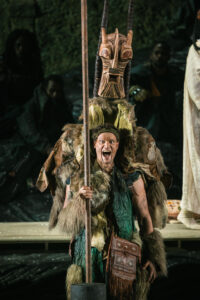
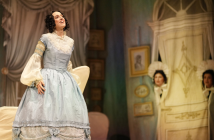
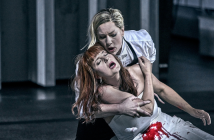
Patrick Guetti (Fafner) in Salzburg Easter Festival’s Das Rheingold
Photo: Frol Podlesnyi
The supporting roles are cast with equal insight: Sarah Brady (Freia), Gihoon Kim (Donner), Thomas Atkins (Froh), Jasmin White (Erda), Thomas Cilluffo (Mime), Le Bu (Fasolt), and Patrick Guetti (Fafner), whose striking voice has unusual carrying power, anchoring the role with imposing presence. Alongside them, the finely blended Rhinemaidens—Louise Foor, Yajie Zhang, and Jess Dandy—contribute to an ensemble of unusual cohesion.
Crucial to the production’s impact is the presence of Compagnie Baninga, whose performers introduce a darker, physical counterworld. Their dancing—urgent, grounded, and uncannily precise—is integrated with the music and drama to a degree rarely achieved in opera. They embody the underclass, the exploited, the system’s hidden foundation.
The creative team reinforces this unity of vision. Serebrennikov himself oversees direction, set, and costumes (with Slavna Martinovic), while Recycle Group provides sculptural elements that evoke a world of ruin and residue. Lighting by Sergey Kucher and video by Yurij Karikh deepen the sense of a fractured, post-mythic environment. Movement direction by DeLaVallet Bidiefono and Ivan Estegneev ensures that the physical language remains inseparable from the dramaturgy.
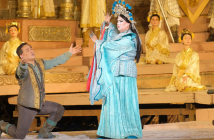
The costumes introduce a concise but pointed layer of Russian symbolism: the gods evoke the stylized world of Léon Bakst; the giants suggest figures from Prince Igor as staged in Sergei Diaghilev’s productions; Loge is shadowed by a strange shamanic creature in bright, The Rite of Spring–like embroidered costumes, accompanied by a shamanic tent; while the remaining figures are grounded in a harsh, dark world of survival, their costumes echoing military fatigues and austerity.
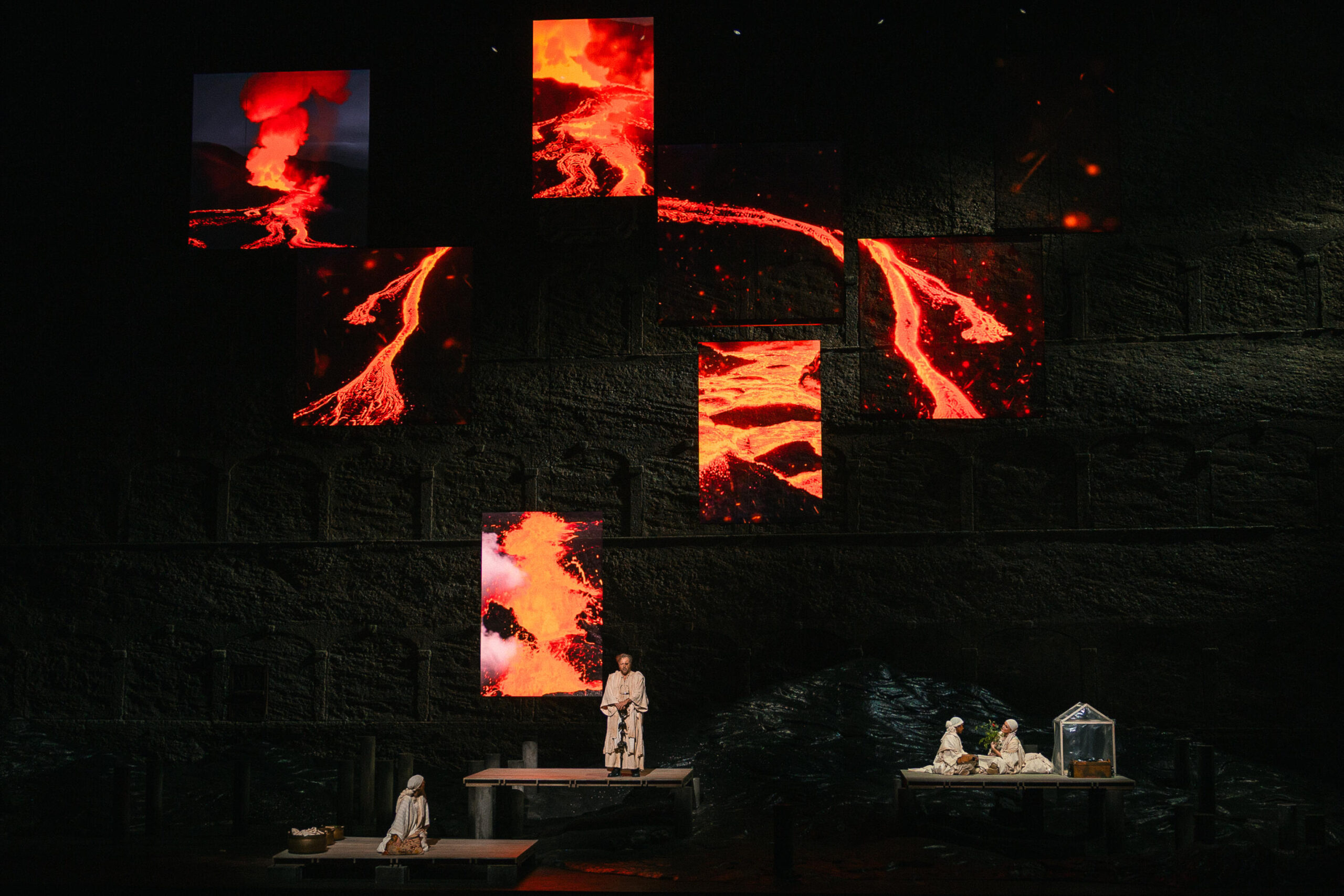
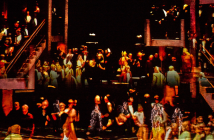
A scene from Salzburg Easter Festival’s Das Rheingold
Photo: Frol Podlesnyi
What ultimately makes this Rheingold exceptional is not innovation for its own sake, but the feeling of necessity. Every element—musical, visual, performative—operates at the highest level, and more importantly, in relation to the others. The result is an entirely new approach to Wagner: stripped of bombast, grounded in reality, and unified by a rare artistic intelligence. It is difficult to imagine a more compelling point of departure—and the next three installments of Kirill Serebrennikov’s Ring, to be unveiled over the coming festival seasons, are now awaited with bated breath.
Salzburg Easter Festival’s Das Rheingold continues its run through Apr. 6.