For opera aficionados, a fatigue sets in, seeing the same repeated warhorses each year: Tosca, La bohème, La traviata, Rigoletto, et al. As excellent as they are as tested works of art, it can be an ordeal to experience them with such frequency, unless one has the great fortune of hearing a superlative cast, or the chance to witness a brilliant director’s fresh vision. A welcome relief from operatic ennui is Ireland’s Wexford Festival Opera, specializing in operatic rarities. A trip to the charming town of Wexford, two hours south of Dublin, revealed a world of marvelous surprises at this year’s festival (Oct. 17-Nov. 1).
The festival usually presents three main operas and four “pocket operas.” The former are presented in the evening, in the O’Reilly Theatre, which enjoys a capacity of 855. The latter are short operas, lasting no more than 90 minutes, either one-act or slightly abridged works. The latter are mostly performed in a smaller venue, the 176-seat Jerome Hynes Theatre. Given the number of seats, one easily meets other festival goers. It also means the limited seats sell quickly, therefore booking ahead is essential.
This edition’s three main operas were Deidamia (1741), Handel’s last Italian opera; Le trouvère (1857), the French language reworking of Verdi’s Il trovatore for the Paris Opéra (by the composer himself); and finally, a rarity by Delius, The Magic Fountain (1895). The pocket operas this year were Zemlinsky’s Der Zwerg (“The Dwarf”) (1922); Rossini’s Il viaggio a Reims (1825); a version of Britten’s A Midsummer Night’s Dream (1960); and La tragédie de Carmen (1981), Peter Brook’s reworking of Bizet’s masterpiece.
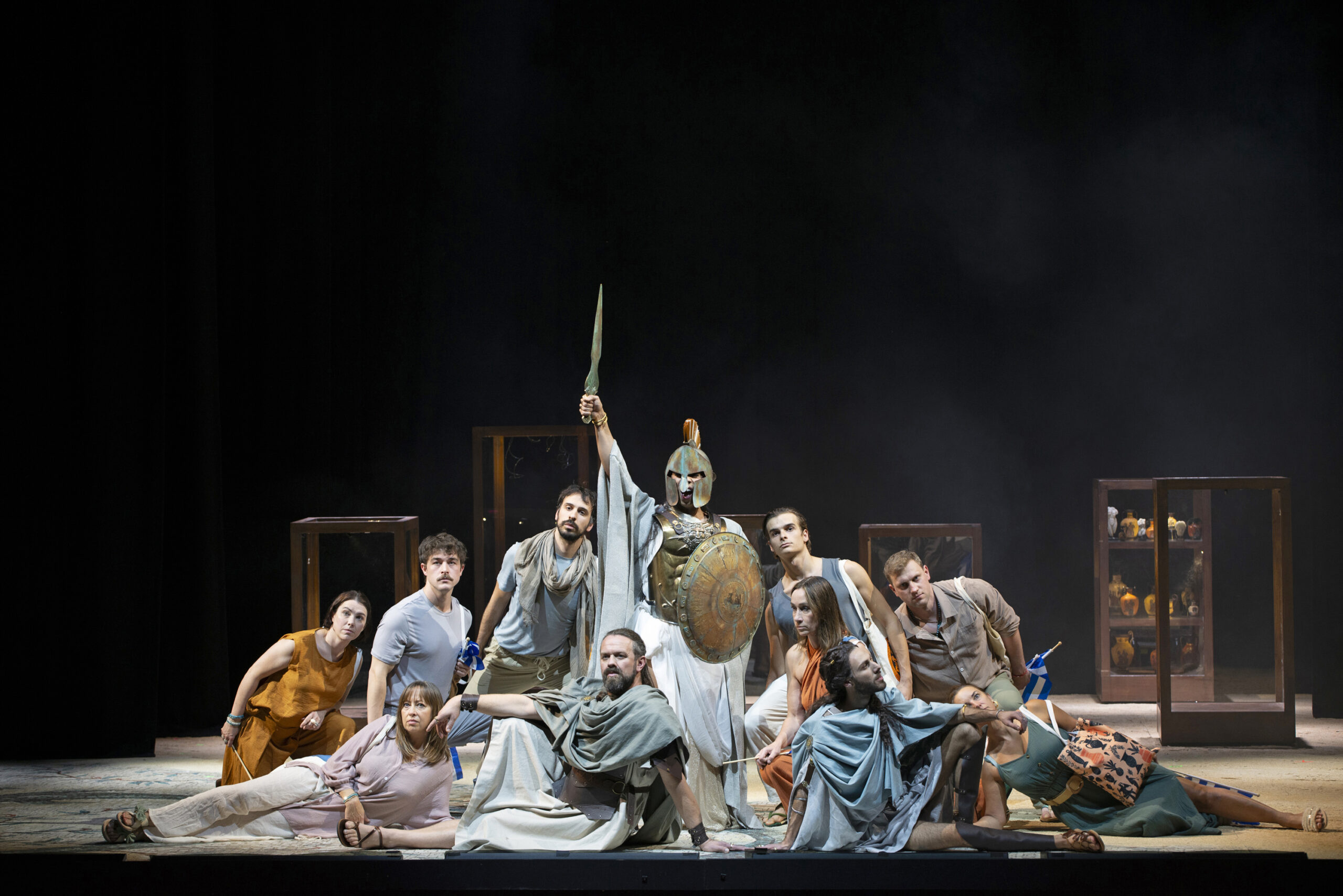
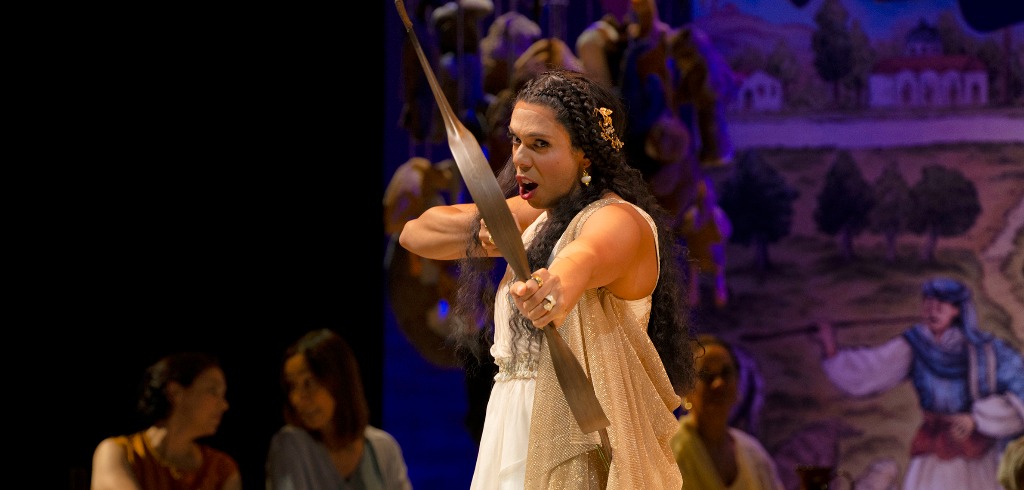
A scene from Wexford Festival Opera’s Deidamia (2025)
Photo: Pádraig Grant
Deidama was pure dynamite, thanks to the phenomenal Brazilian male soprano Bruno de Sá. This singer displays superlative technique and more ease in the upper register than most female sopranos. The timbre of his voice is rich, not the white voice too often heard in male sopranos, and his singing is highly expressive.
De Sá played the Greek mythological hero Achilles, sent to hide, disguised as the maiden Pyrrha, in the court of his father’s friend, king of the Greek island of Skyros. Living among the court’s princesses, he falls in love with Deidamia, the king’s eldest daughter. As the oracle had predicted Troy wouldn’t fall without Achilles’s participation in its siege, Odysseus (in disguise) has come looking for him. The oracle also foresaw Achilles death in battle in Troy, hence the subterfuge and hiding in Skyros.
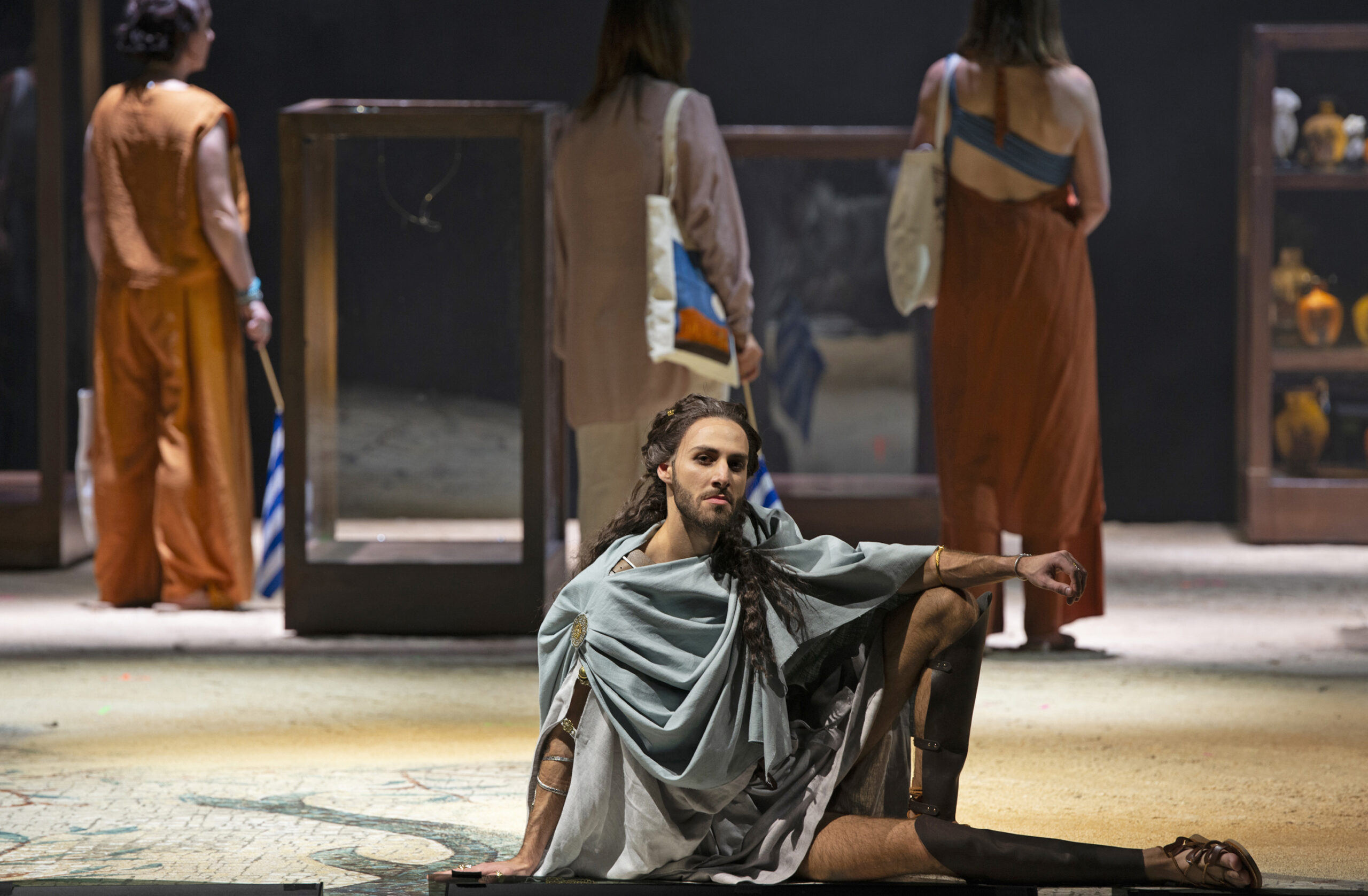
Nicolò Balducci (Odysseus) in Wexford Festival Opera’s Deidamia (2025)
Photo: Pádraig Grant
Italian countertenor Nicolò Balducci was Odysseus. His timbre contrasted well with de Sá, and his technique was nearly as impressive. The title role was sung by Belgian soprano Sophie Junker, whose sweet voice blended appealingly with her two co-stars.
Baroque opera was meant as entertainment more than theatre, and above all, as a pretext to show off the prowess of the mostly castrati singers of the day. For this reason, the genre can sometimes now seem tedious. Though not early music specialists the Wexford Festival Orchestra was expertly guided by Greek early music conductor George Petrou, playing the score with panache.
He also devised a novel staging, removing any trace of dullness from this long opera by juxtaposing the action with a group of modern tourists to the island. This provided an often ironic view, generating smiles and creative imagery onstage.
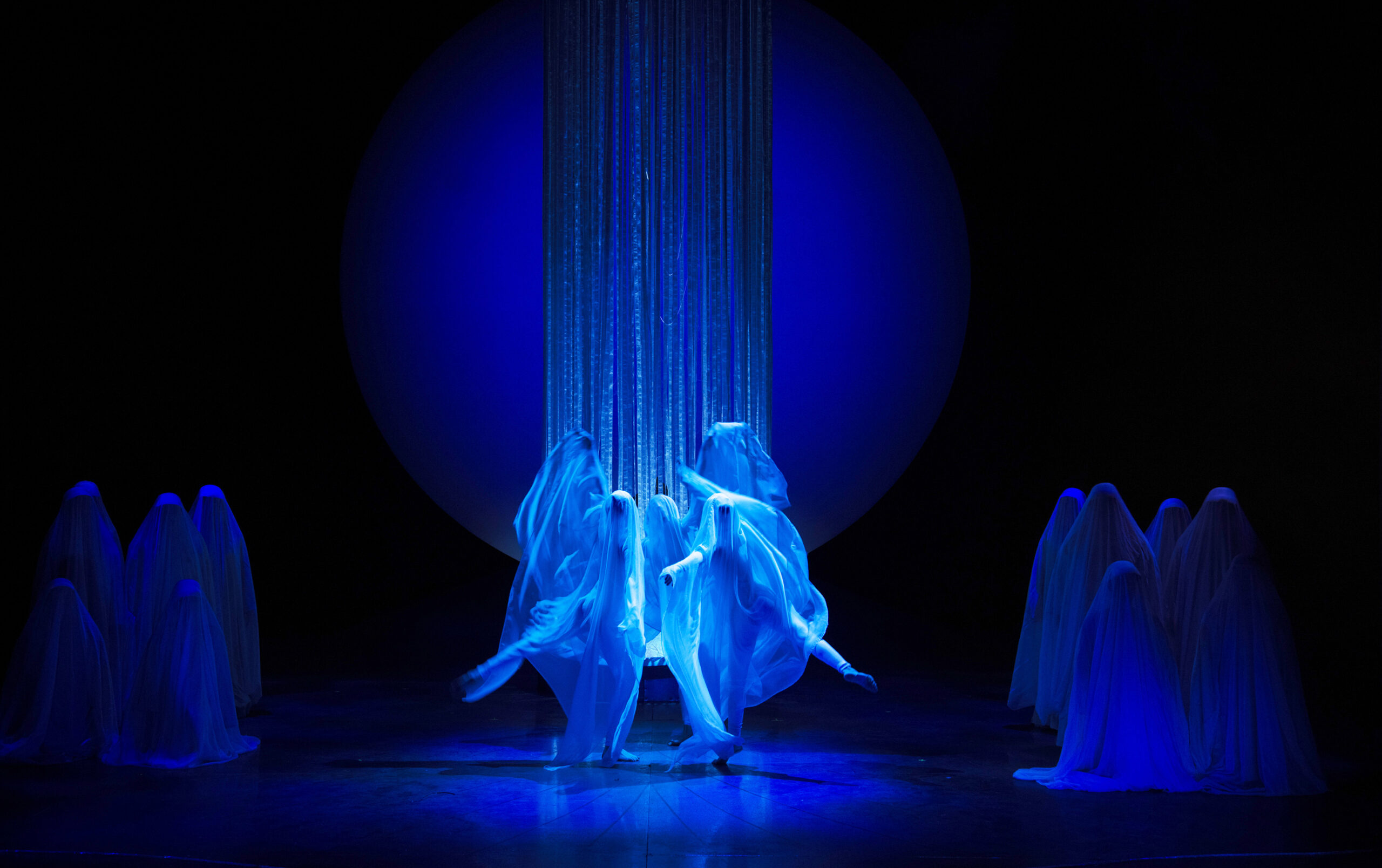
A scene from Wexford Festival Opera’s The Magic Fountain (2025)
Photo: Pádraig Grant
Delius’s opera The Magic Fountain is based on the legend of the Fountain of Youth associated with Spanish conquistador Juan Ponce de León (1474-1521). The British composer wrote the opera, which was only performed posthumously, during a stay in Florida.
Delius’s strict German father had sent him to run an orange plantation, in the futile hope he would acquire enough business acumen to be dissuaded from a musical career. In his opera, explorer Solano is shipwrecked and discovered by a young native woman, Watawa. Solance’s mission is to find the fountain of youth and Watawa, whose kin were massacred by Europeans, is intent on killing him. Despite all odds, the two fall in love, only to die tragically at said fountain.
The Magic Fountain is a young composer’s homage to Wagner. In fact, the opera’s tragic third act is reminiscent of the love duet in Tristan und Isolde. Italian conductor Francesco Cilluffo was able to uncover the passion in Delius’s score. The two leads, American tenor Dominick Valdés Chenes and French mezzo Axelle Saint‑Cirel, were a revelation. The former is a budding Heldentenor who did justice to the demanding “Wagnerian” role. Saint-Cirel, who sang La Marseillaise at the inauguration and closing ceremonies at the recent Paris Olympics, vocalized with passion and sensitivity.
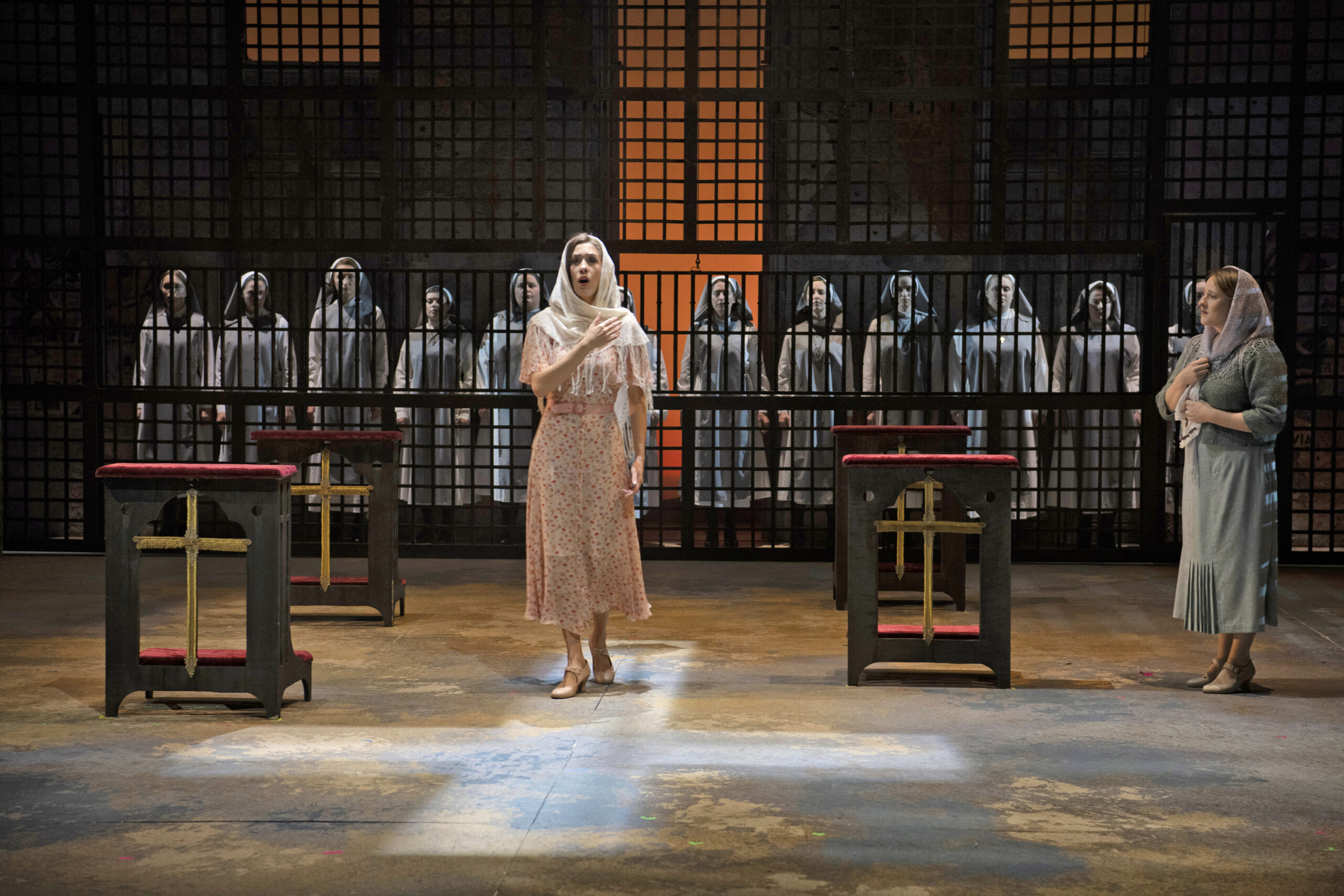
Lydia Grindatto (Léonore), Jade Phoenix (Inés) and Chorus in Wexford Festival Opera’s Le Trouvère (2025)
Photo: Pádraig Grant
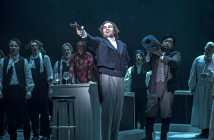
Unlike the French version of Macbeth (1865), Le trouvère, the French version of Il trovatore, does not differ considerably from the Italian original. With no native speakers in the cast, one had some apprehension. Fortunately, they were dazzling.
The most beautiful voice was that of young American soprano Lydia Grindatto, as Léonore. This impressive singer has immense talent: excellent technique, beautiful timbre, superb diction and expressivity. Her rendition of the Act I aria “La nuit calme et sereine” (“Tacea la notte placida”) and its cabaletta “L’amour ardent, l’amour sublime et tendre” and the Act III “Brise d’amour fidèle” (“D’amor sull’ali rosee”) were a masterclass in both bel canto and French singing.
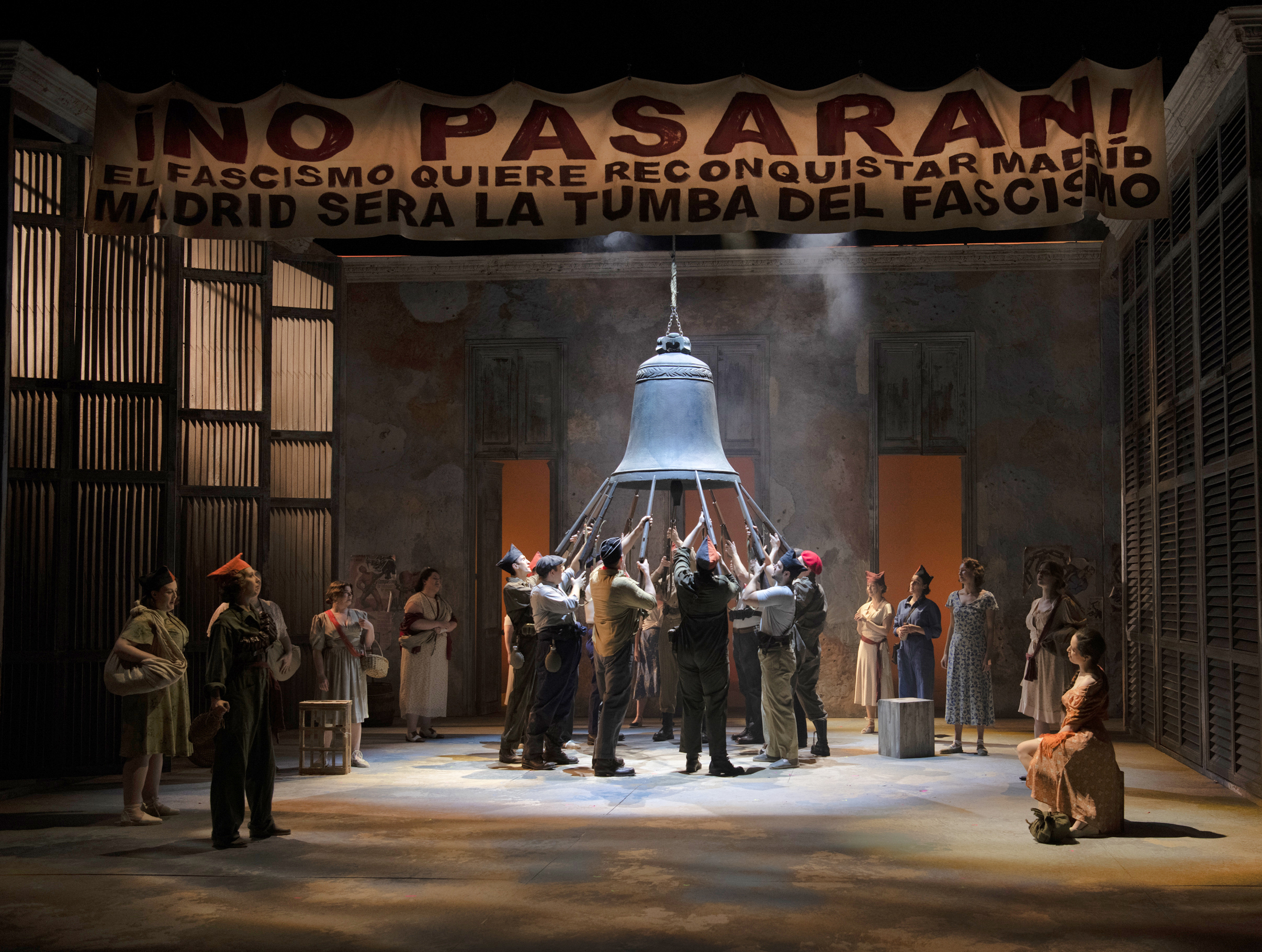
A scene from Wexford Festival Opera’s Le Trouvère (2025)
Photo: Pádraig Grant
Mexican tenor Eduardo Niave was an excellent Manrique, almost as impressive as Grindatto: charismatic, great technique and a beautiful ease with his upper register. Azucène was portrayed by Ukrainian mezzo Kseniia Nikolaieva, whose huge voice was kept in check by the excellent German conductor Manuel Hartinger.
The main difference between Il trovatore and its French adaptation is the ballet in Act III, which partially quotes music from the opera. It’s a rousing piece, and Hartinger did it justice. Sadly, instead of the ballet, news reels from the Spanish Civil War were shown, this production’s “updated” setting. Nonetheless, this was a worthwhile discovery.
The pocket operas were a different experience. Firstly, the choice of works is most interesting, ranging from the accessible La tragédie de Carmen to the more demanding short opera by Zemlinsky’s Der Zwerg. The latter was especially powerful thanks to Chris Moran’s intelligent staging and the musical direction of Canadian Christopher Knopp at the piano.
Another Canadian at the Festival was baritone Philip Kalmanovitch who impressed as Escamillo in La tragédie de Carmen. Endowed with a powerful voice and strong stage presence, he was a dashing Escamillo. Unfortunately, his French diction was quite poor.
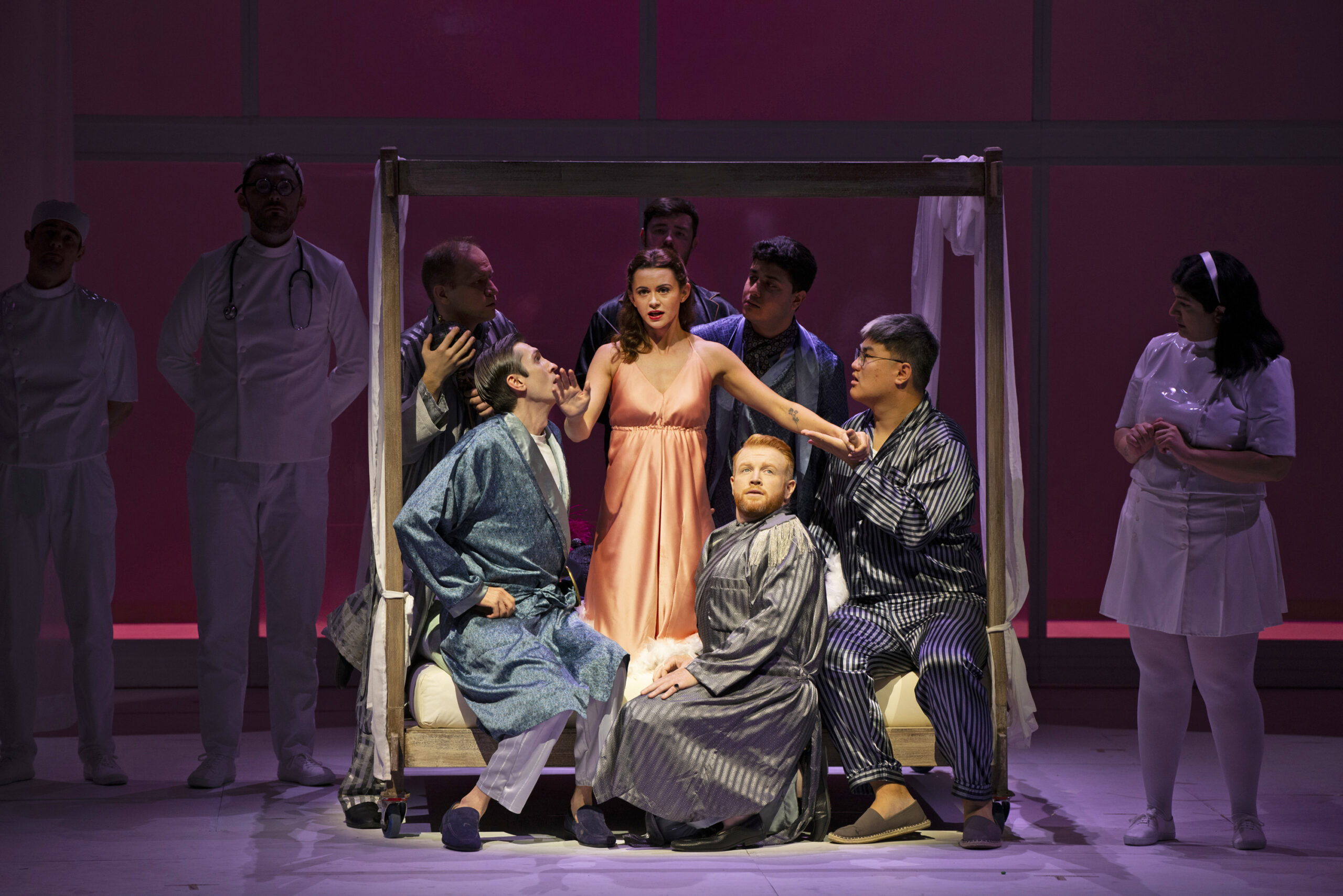
A scene from Wexford Festival Opera’s Il viaggio a Reims (2025)
Photo: Pádraig Grant
Unlike the other “pocket opera”, by popular demand, Rossini’s Il viaggio a Reims was presented in the main theatre. Given its 18 roles, it was a fitting showcase for young singers attending Wexford’s program for emerging voices.
British‑Irish soprano Jane Burnell stood out as Countess Folleville, due to her beautiful voice and magnetic stage presence. As Rossini’s last opera in Italian was written as a pièce d’occasion for the coronation of France’s King Charles X, it purposefully celebrates Europe’s various nationalities. This was fortuitous, as the young singers in the program hail from throughout Europe and beyond: Ireland, Britain, the Netherlands, China, Iran, Azerbaijan and Canada.
Ukrainian-Canadian baritone Ihor Mostovoi sang the role of Italian Don Profondo, who performs the work’s most famous aria “Medaglie incomparabili,” a charming account of the personal effects of his cosmopolitan fellow-travellers at the Albergo del Giglio.
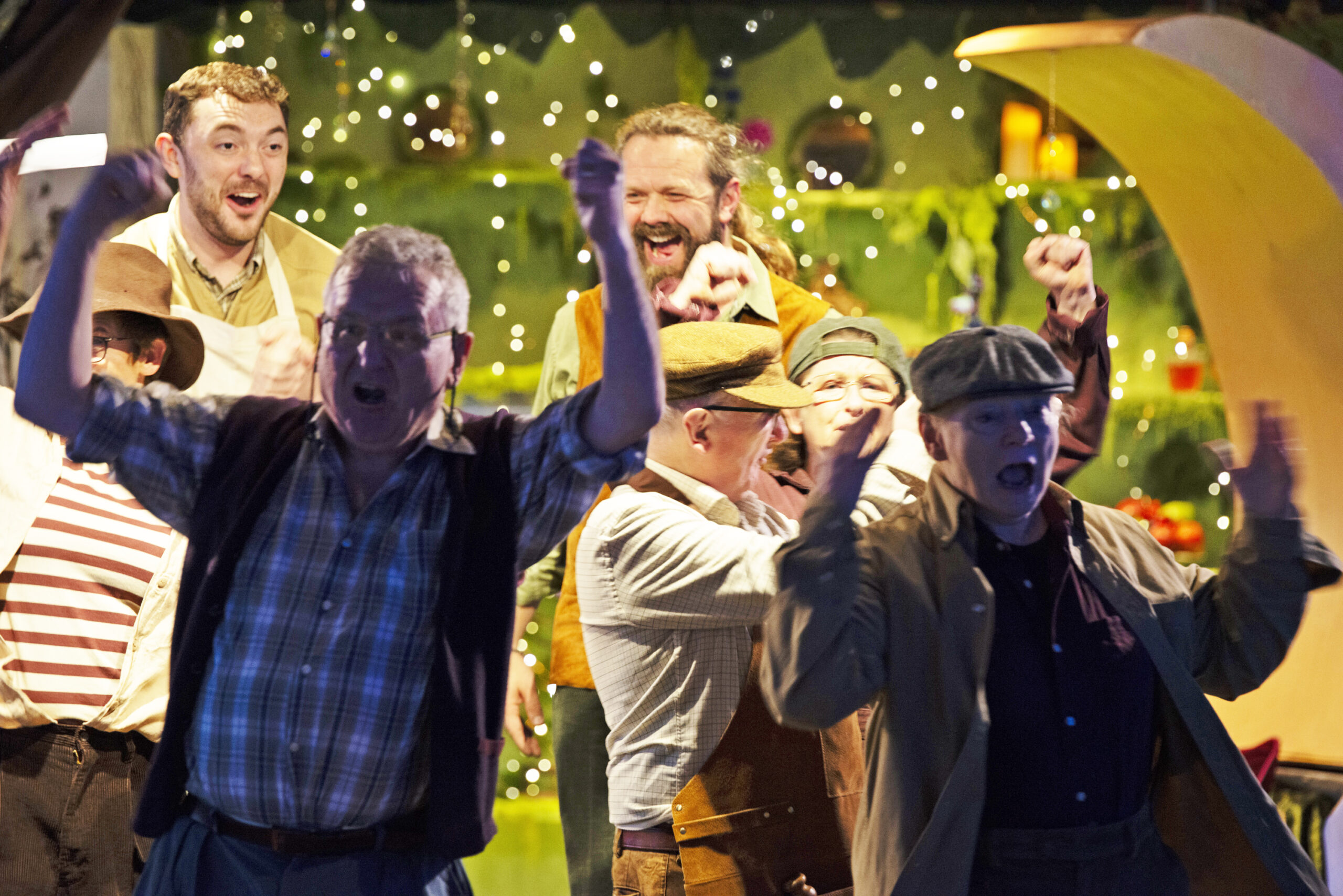
A scene from Wexford Festival Opera’s A Midsummer Night’s Dream (2025)
Photo: Pádraig Grant
Britten’s A Midsummer Night’s Dream, adapted from Shakespeare by the composer and his partner, Peter Pears, was the fourth of Wexford’s pocket operas. Normally long in duration, it was presented here in a brilliantly condensed version as A Little Midsummer Night’s Dream. To my reckoning, it was more effective than its original incarnation.
Performed in an even smaller venue than usual, The Grain Store at Stonebridge, with members of the town’s community participating as extras and chorus, it was an intimate affair. The aforementioned Jane Burnell was a radiant and regal Queen Tytania. Irish counter-tenor Adam McDonagh, a graduate of Wexford’s young artist program, sang Oberon. Though piano substituted for orchestra, thereby severely limiting the effect of Britten’s richly orchestrated music, pianist Knopp led the proceedings with brio; Britten’s inimitable style remained intact.
In addition to these seven operas, there were recitals, masterclasses and other events which I was unfortunately unable to attend, as I arrived at the tail end of this year’s program. But Wexford is onto something special with this fine festival. I plan to return next year, and will be sure to stay the week, ready to enjoy all it has to offer, as well as the town’s charming setting.
Celebrating a 75th anniversary next year, Wexford Festival Opera will run from Oct. 15-31, 2026.