On Nov. 1, a night when downtown Toronto was all abuzz about the final decisive game of the World Series, Koerner Hall was filled with equally excited fans for a glittering evening with Renée Fleming, one of the most-renowned sopranos of our times.
The multi-award-winning superstar is known not only for her diva roles in opera, but also for her performances in Broadway, jazz and indie rock. She was the first woman in the 125-year history of the Metropolitan Opera to solo headline an opening night gala. She has performed not only in the world’s most famous opera houses, but also at the Nobel Peace Prize ceremony and the Superbowl. At age 66, after an illustrious career that has spanned over 40 years, she shows no signs of slowing down. These days, she is a prominent advocate for research on the intersectionality between music education and neuroscience.
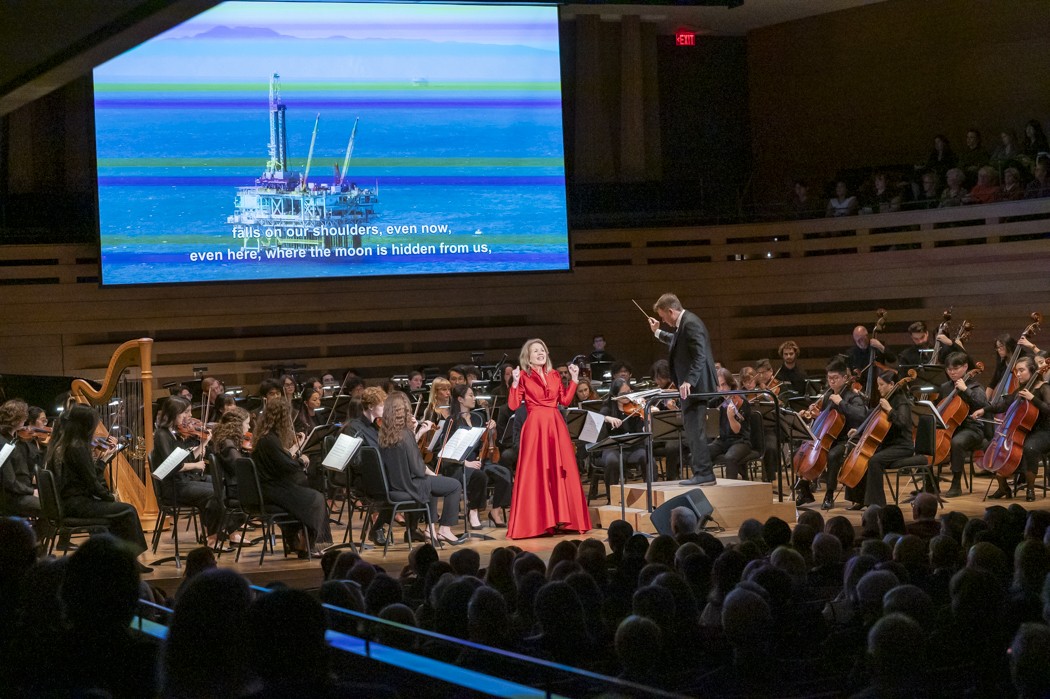
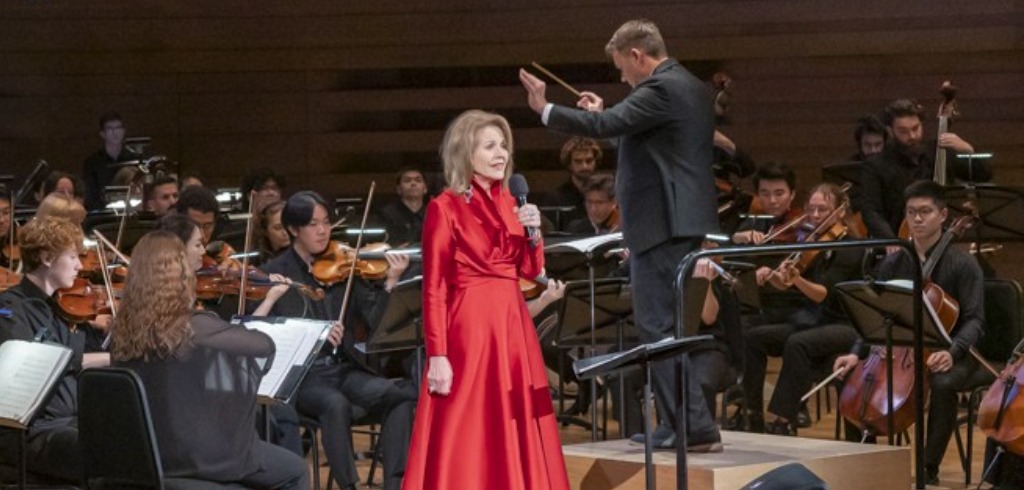
Renée Fleming with Royal Conservatory Orchestra. Photo: The Royal Conservatory/Koerner Hall; Lisa Sakulensky
This concert was made all the more exciting given the participation of the Royal Conservatory Orchestra, under the direction of Fleming’s frequent collaborator, Robert Moody, in lieu of solo piano.
The first half of the program was inspired by her Grammy Award-winning album Voice of Nature: The Anthropocene, which she recorded with Yannick Nézet-Séguin. Just like the album, last night’s program featured selections of music that examined humanity’s relationship with the natural world in the face of climate change. In the background, a National Geographic film with sumptuous images of mountains, glaciers, animals, fish, and birds was projected on screen to enhance the musical experience.
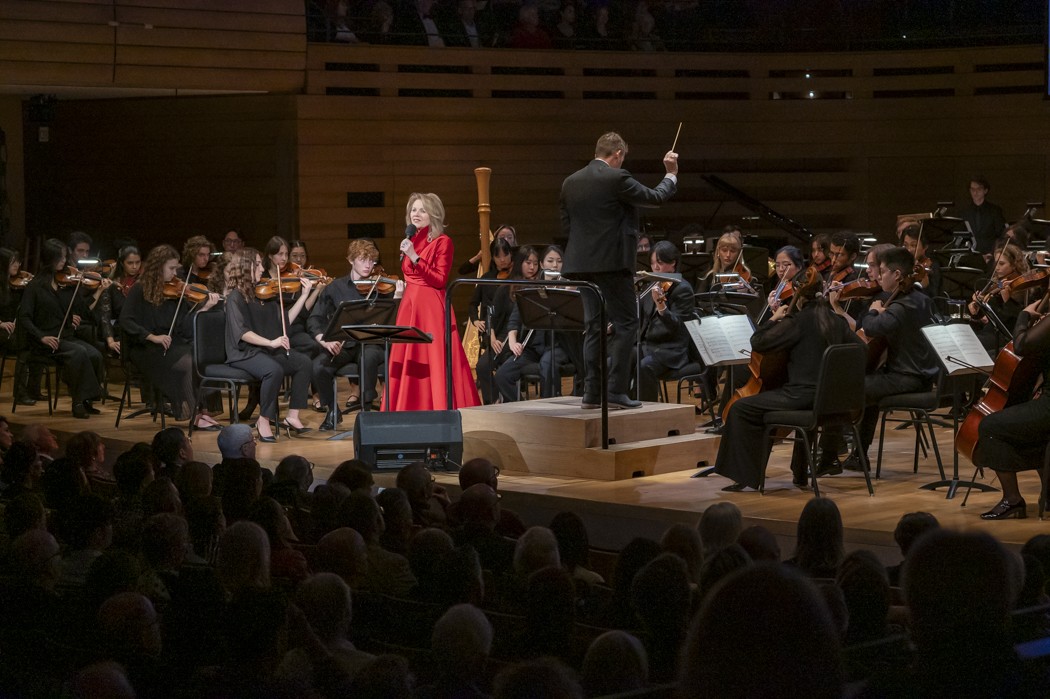
Renée Fleming with Royal Conservatory Orchestra. Photo: The Royal Conservatory/Koerner Hall; Lisa Sakulensky
The genre-spanning selection was an eclectic mix of nature-themed songs by George Frideric Handel, Nico Muly, Björk, Kevin Puts, Hazel Dickens, Maria Schneider and Curtis Green. The most recognizable piece was Joseph Canteloube’s “Baïlèro” which Fleming delivered with an ethereal touch. Another somewhat familiar piece, “Twilight and Shadow” by Howard Shore from Lord of the Rings, evoked images of a magical realm. In Heitor Villa-Lobos’ “Epilogo” from Floresta do Amazonas, Fleming’s haunting vocalise was set against the orchestra’s soaring passages.
Fleming’s signature velvety mid-range and lush top notes were evident throughout, no matter the style. She concluded the first half with a cheeky version of the popular 1965 song “What the World Needs Now is Love.” Against a full orchestra, especially at an acoustically-resonant venue like Koerner Hall, Fleming needed a mic to be heard for most of this portion of the program.
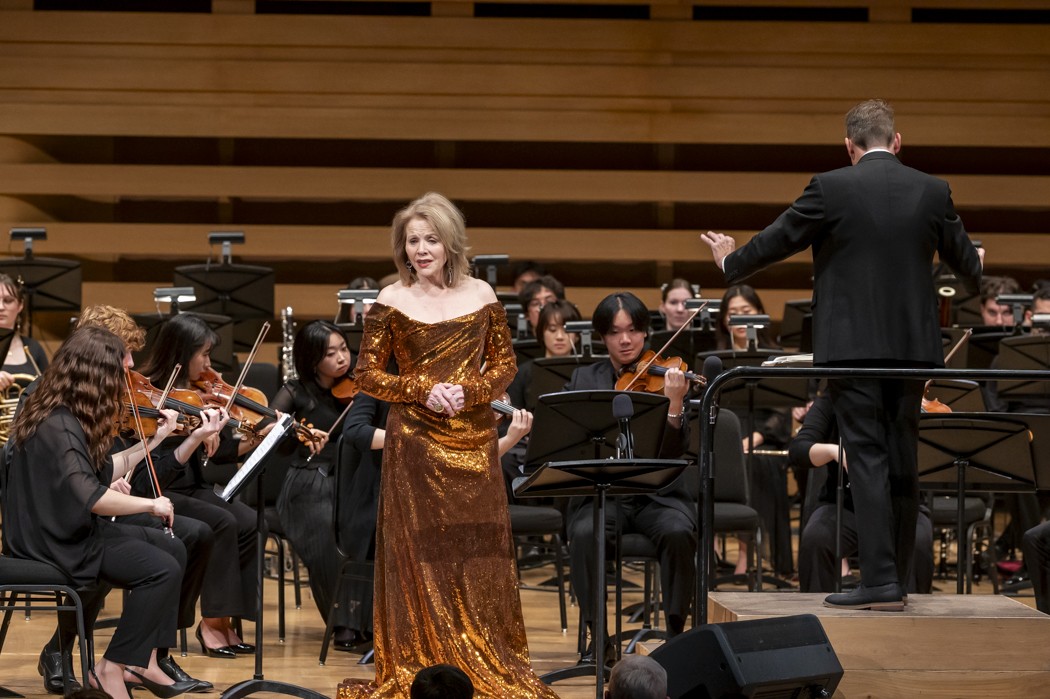
Renée Fleming with Royal Conservatory Orchestra. Photo: The Royal Conservatory/Koerner Hall; Lisa Sakulensky
Returning after intermission, Fleming changed from a resplendent long red gown to a sparkling bronze off-shoulder stunner. The second half was a more traditional program of Lieder and opera. For the two Handel oratorio pieces from Samson and Alexander Balus, Fleming was accompanied by a much smaller orchestra that invoked a chamber-like Baroque sound. This was followed by two very different pieces by Richard Strauss. The whimsical and humorous “Muttertändelei” was in stark contrast to the meditative “Waldeseligkeit” that sings of love and devotion. Both showcased Fleming’s agile, effortless technique and shimmering tone.
Fleming saved the best for last with two operatic arias. The first was “Musette svaria sulla bocca viva” from the lesser known La bohème by Ruggero Leoncavallo. Light-hearted and vivacious, it was one of the few instances she hit an A5, the highest note she would sing all evening. “O mio babbino caro” from Puccini’s Gianni Schicchi, one of her signature arias, was sung at a slightly slower tempo, with such intense emotions and control it was completely heart-wrenching.
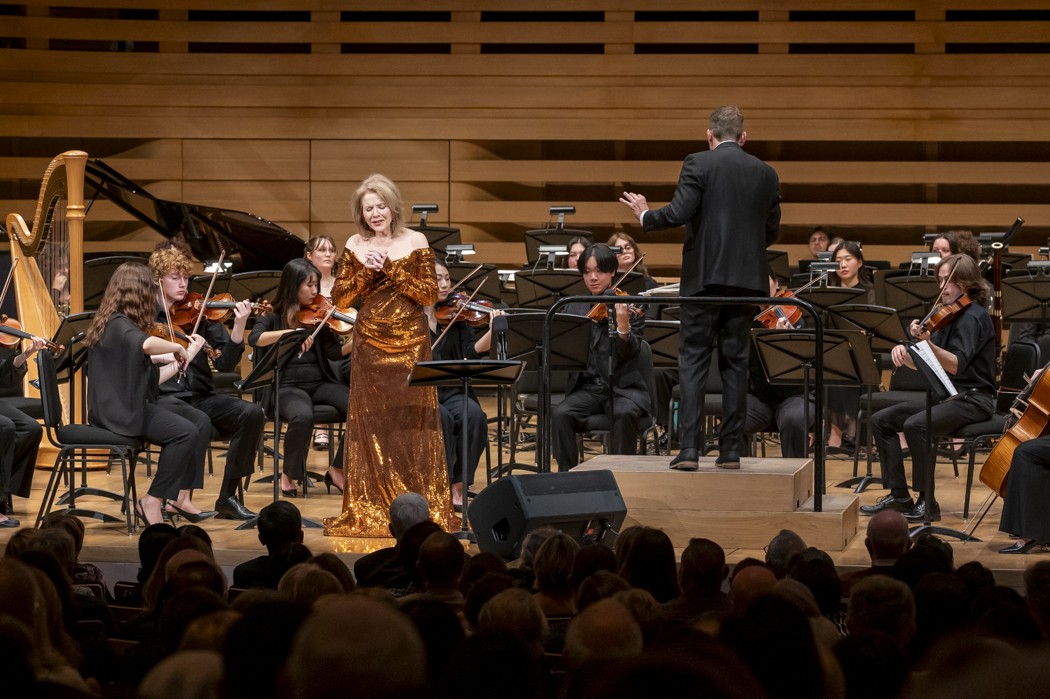
Renée Fleming with Royal Conservatory Orchestra. Photo: The Royal Conservatory/Koerner Hall; Lisa Sakulensky
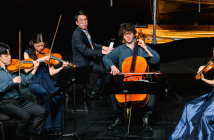
The evening also showcased the Royal Conservatory Orchestra, composed of music students from The Glenn Gould School, and widely regarded as one of the best training orchestras in North America. The very expressive Robert Moody led the orchestra in two operatic overtures: Beethoven’s Fidelio and Rossini’s Barber of Seville. The orchestra played with electrifying energy, and while the brass seemed to have moments of struggle, the string section was particularly strong.
For the first encore, Fleming led the entire audience in a rousing sing-along of “I could have danced all night” from My Fair Lady. She then gave us the most sublime parting gift: Richard Strauss’ “Morgen” was accompanied by magnificent violin and harp solos. Again, Fleming evoked utter tenderness and simple beauty without excessive flourish, her luxurious voice enveloped us like a warm embrace and transported us to a place of peace and love.
Renée Fleming is the epitome of refined elegance. It was a truly unforgettable evening to hear this legendary soprano in Toronto.
For more on Koerner Hall’s season, visit www.rcmusic.com/performance