This page is also available in / Cette page est également disponible en:
 Français (French)
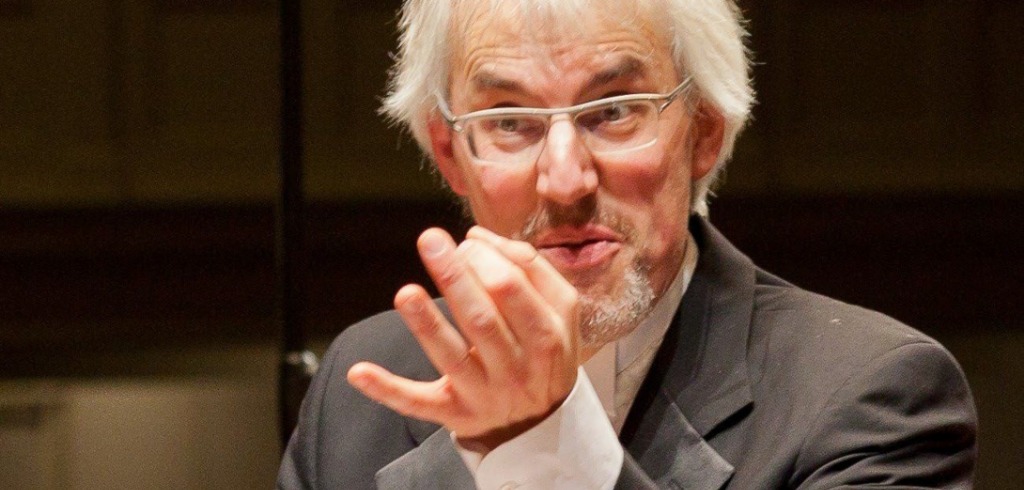
Mécénat Musica Ambassador-in-Residence presents Mécénat Musica in the cultural community and helps cultural organizations join Mécénat Musica. The Ambassador encourages organizations to expand the circle of donors and to help create a culture of permanent capital in the community. Matthias Maute’s collaborative efforts have resulted in 15 cultural organizations joining Mécénat Musica since 2013.
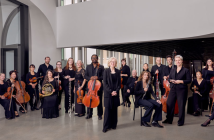
Maute is a two-time Juno Award winner, choir and orchestral conductor, composer and flutist. His Montreal orchestra, Ensemble Caprice, has been described by the New York Times as “an ensemble that invites the listener to rehear the world.”
When he left his native Germany for Quebec in 1999, Matthias Maute found not only a welcoming home, but also an environment conducive to developing his career as a flutist, composer and conductor of Ensemble Caprice. The chamber ensemble he founded in 1989 would certainly not have enjoyed similar success elsewhere.
“It was only in Quebec that I was able to take flight,” Maute says of those first, relatively modest concerts featuring just recorder and viola da gamba. “Here, a program like Mécénat Musica has enabled us to raise an endowment fund in perpetuity.” With a solid group of musicians, led by flutist and Co-Artistic Director Sophie Larivière, Maute has been able to nurture a real ambition for his ensemble. “We were fortunate to arrive at the right time to make the transition from chamber orchestra to orchestra, while continuing to perform repertoire for smaller ensembles.
“There are opportunities in life and you have to seize them. Fortunately, we really invested everything we had to grow, build even bigger projects and expand our activities. We can already say that in 200 years there will still be Ensemble Caprice concerts. Nowhere else can you find comparable programs. Quebec is truly unique in the cultural landscape. I travel a lot and we tour abroad a lot. The world envies us,” says Maute.
Unlike donations earmarked for specific events, projects or annual expenses, under Mécénat Musica donations made to an endowment fund are not paid to cultural organizations, but to the permanent capital held by a foundation for the benefit of that organization. Once a year, the foundation applies for access to government matching funds. This is a matching grant that multiplies, or even increases tenfold over the years, the amounts that continue to be invested. “Mécénat Musica is the foundation that oversees the entire movement, but each organization manages its own accounts. It has changed the lives of more than 50 organizations in Quebec,” says Maute, who is now an ambassador for the movement.
The real impact of Mécénat Musica can be measured by the evolution of Ensemble Caprice, a flexible orchestra capable of tackling everything from chamber works to the great symphonic repertoire. Larivière recalls the first orchestral projects 15 years ago, around the same time as the opening of Bourgie Hall at the Montreal Museum of Fine Arts. “Back in 2009, we performed Johann Sebastian Bach’s Mass in B minor, a concert for which we won an Opus Award,” she says. “We then began a cycle of Beethoven symphonies on period instruments … We realised that we needed to solidify the financial aspect. In 2013, we really took a philanthropic turn. We followed the government’s recommendation to move towards private funding. This opened up even more musical horizons for us and allowed us to realize our dream of playing classical and romantic music on period instruments.”
The additional activities and projects made possible by Mécénat Musica include the participation of Ensemble ArtChoral (formerly Ensemble vocal Arts-Québec). Maute also mentions the concerts at Maison symphonique involving both his orchestra and professional choir, as well as another series at Le 9e grand hall in Montreal’s Eaton Centre. In addition, more than 500 videos and video recordings of musical performances and 78 clips featuring Maute’s original compositions have been produced.
With regard to community outreach, Maute mentions the Mini-Concerts Santé and Mini-Opéras Santé, which, since 2020, have totalled 20,000 events for a population of 170,000 people. The principle behind the initiative is simple: duos of professional instrumentalists and singers go door-to-door in disadvantaged neighbourhoods, following predetermined routes, and offer surprise 10-minute performances, always outdoors and on the pavements. “My mission is to give back as much as possible to the people here. We want to be present in society and share all this musical beauty,” says Maute.
Finally, the most recent project is the recording of 15 Art Choral discs released, or to be released, by ATMA Classique with Ensemble ArtChoral. This series covers more than 400 years of music, from the Renaissance to the present day, with an emphasis on Quebec’s rich repertoire, partly derived from folk music, and the breadth of Canadian music that continues to be created. To do so, Maute has not only drawn on his own compositions, but also called on various local composers. “We have big plans and have been able to grow as opportunities have presented themselves. I am very proud of that,” he says.
Find Ensemble Caprice at www.ensemblecaprice.com.
Translation: Gianmarco Segato
This page is also available in / Cette page est également disponible en:
Français (French)