Established in 1980, the Rossini Opera Festival (ROF) is not only one of the most popular musical events in Italy, but also, in all of Europe. In collaboration with the publishing house Casa Ricordi (founded in 1808), its aim is to celebrate the neglected works of its native son Gioachino Rossini in critical editions by musicologists such as Philip Gossett and Alberto Zedda.
Thanks to the ROF and the many singers who’ve historically championed Rossini, including Marilyn Horne, Montserrat Caballé, Mariella Devìa, Samuel Ramey, Ruggero Raimondi and Juan Diego Flórez, many of the great composer’s more neglected works have been revived. Each summer, the festival programs three to four operas (including at least one obscure work), vocal recitals, and, with an eye to the future, it presents concerts showcasing emerging singers, recent graduates of the Festival’s prestigious Accademia.
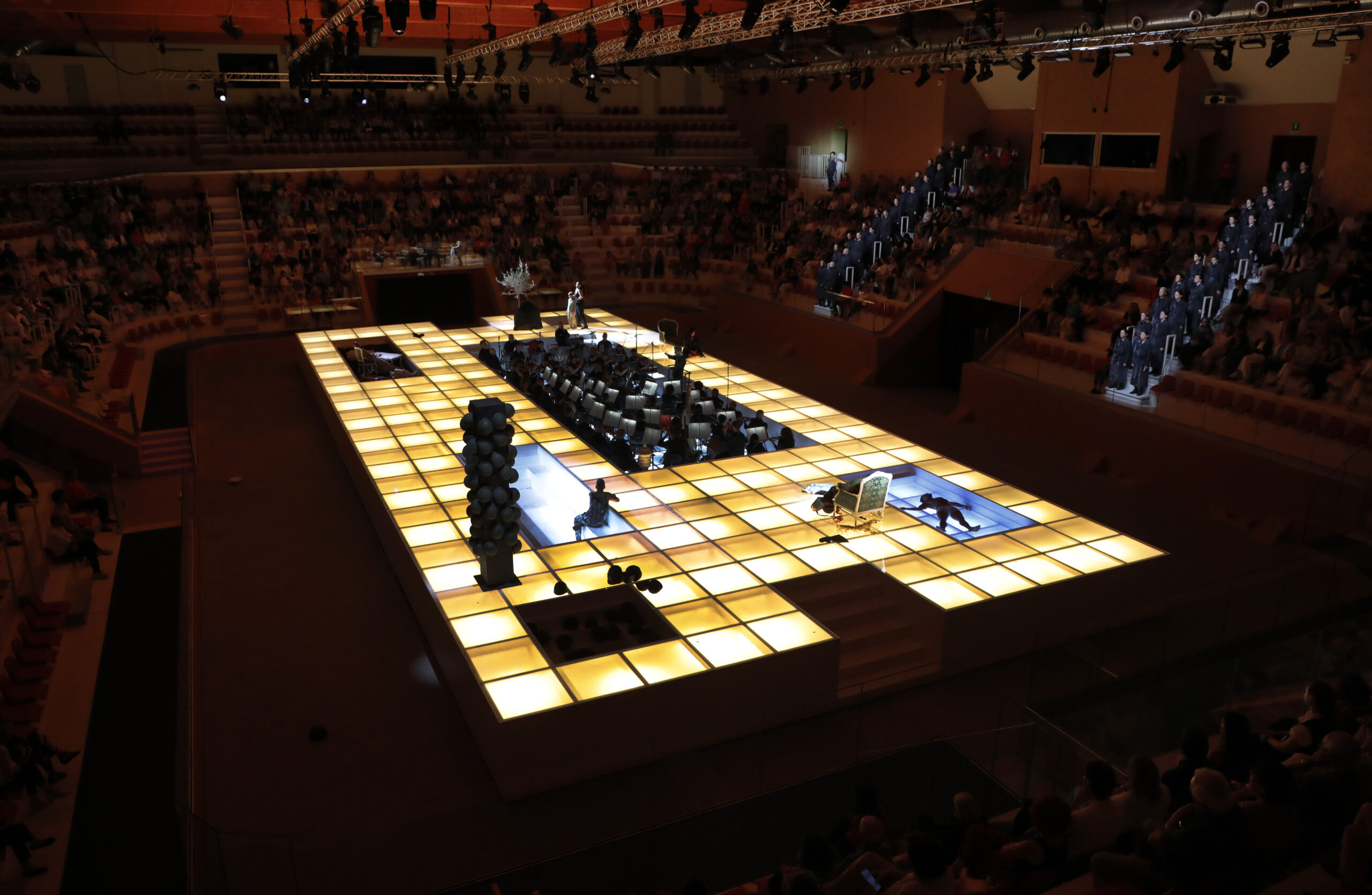
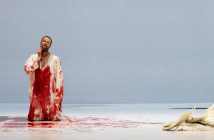
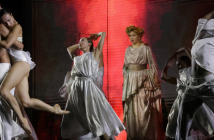
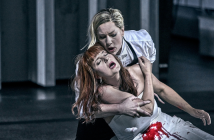
A scene from Zelmira at the Rossini Opera Festival (2025). Photo: Amati Bacciardi
This edition of the ROF included a rarity, Zelmira (1822), a commonly performed comic opera, L’italiana in Algeri (1813), and an early one-act farce, La cambiale di matrimonio (1810). The much-awaited Zelmira (Aug. 10) was vocally dazzling, thanks to an impressive cast, featuring Anastasia Bartoli in the title role. Bartoli is the daughter of Cecilia Gasdia, the soprano who revived Zelmira in 1989 at the Rome Opera. In her third year at ROF, Bartoli is more self-assured and charismatic than in prior appearances. She seems destined for a meteoric career in roles requiring masterful technique and formidable stage presence.
Opposite her was coloratura tenor Lawrence Brownlee, who impressed as Zelmira’s husband Ilo, with his ease in the upper register and impeccable bel canto technique. The role of the villain Antenore was written for baritenor, and Enea Scala was an excellent choice. Even in the minor role of Emma, Zelmira’s confidante, Swiss mezzo Marina Viotti impressed with her warm timbre and expressivity. The score of Zelmira is marvelous, and the opera deserves to be better known.
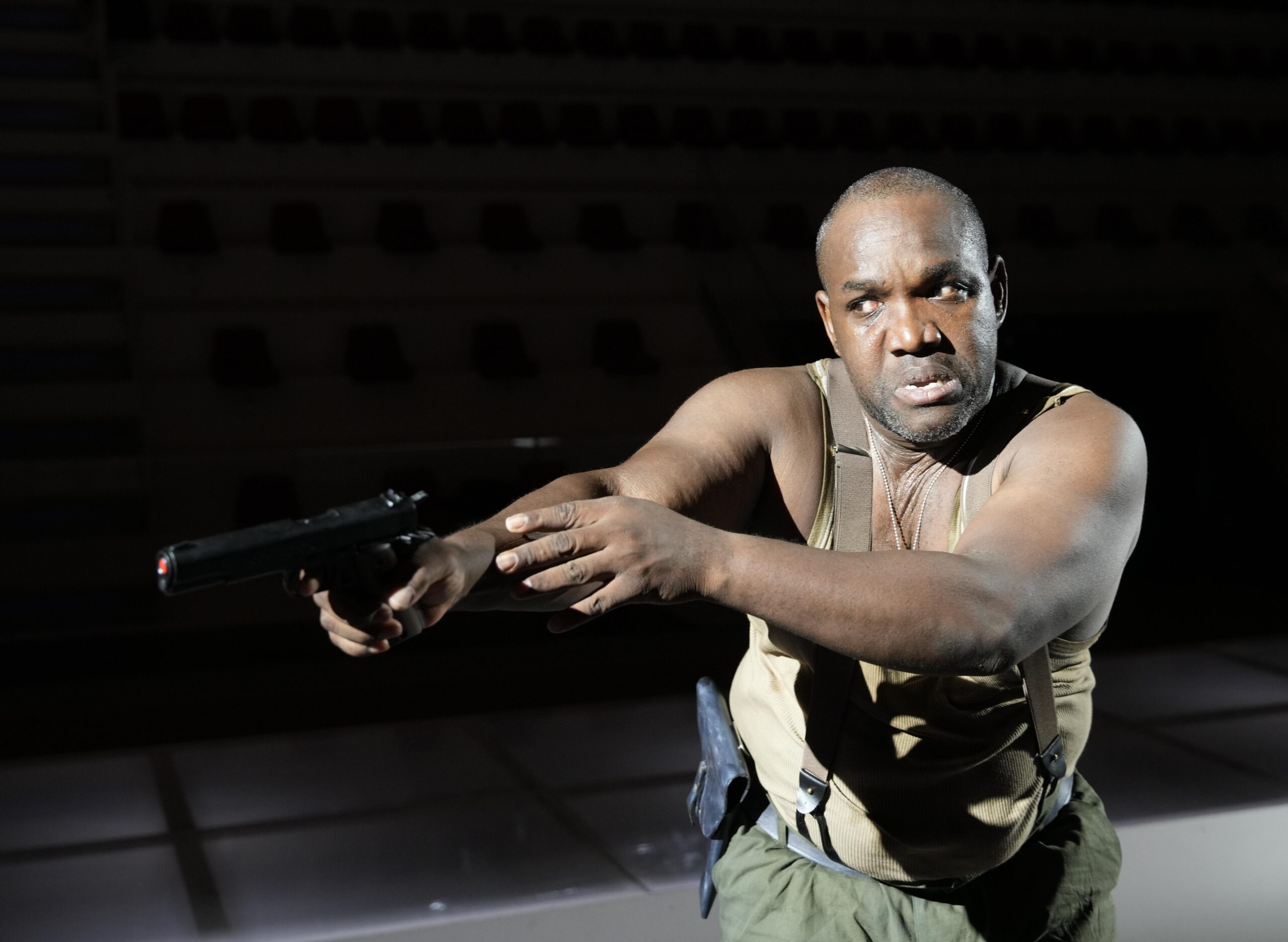
Lawrence Brownlee (Ilo) in Zelmira at the Rossini Opera Festival (2025). Photo: Amati Bacciardi
Alas, once upon a time, Wunderkind Calixto Bieito was the chosen director. Thanks to his staging, the complicated story of the opera became impossible to understand. In addition to his usual linear contours and geometric shapes, he introduced lurid subplots that don’t exist in the libretto, including a zombie and same-sex affairs between Antenore and Leucippo, as well as between Zelmira and Emma. Why, you ask? The only possible explanation is that the opera’s location is the Greek island of Lesbos. Had the staging been less convoluted, this would have been one of the more memorable Rossini performances of the year.
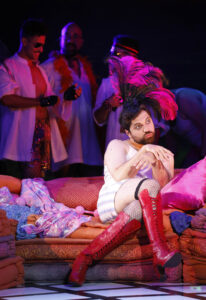
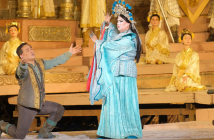
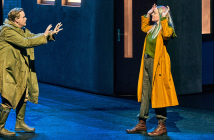
Giorgi Manoshvili (Mustafà) in L’italiana in Algeri at the Rossini Opera Festival (2025). Photo: Amati Bacciardi
Another anticipated production was L’italiana in Algeri (Aug. 12), starring Daniella Barcellona. Staged by Rosetta Cucchi, the story of the bored Bey of Algiers wanting an Italian wife to spice up his life was updated to the present time in an oil-rich satrapy such as Qatar or the United Arab Emirates. A touring company of drag queens is arrested either for soliciting or for irregular work permits. The most charismatic of the lot, Isabella, performed by Barcellona, is the chosen plaything for the ruler, Mustafà. Barcellona, who often plays trousers roles, does the reverse here, portraying a man dressed as a woman. Needless to say, she was vocally up for the challenge. She also revealed an unexpected gift for comedy.
The revelation was Georgian bass Giorgi Manoshvili who impressed both vocally and dramatically. Canadian lyric tenor Josh Lovell, as Lindoro, was a good actor but lacked the virtuosity for the demanding role, especially for the Act I aria, “Languir per una bella.” Another Georgian bass, Misha Kiria, was Taddeo, Isabella’s cowardly and foolish chaperon. He did his usual overacting and sang too loudly. Thankfully, Cucchi’s production was tasteful and avoided excess, which would have been too easy given the plot twist. Nonetheless, it was bereft of insight into gender roles in society.

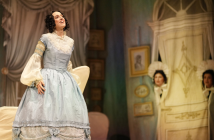
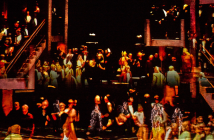
A scene from La cambiale di matrimonio at the Rossini Opera Festival (2025). Photo: Amati Bacciardi
Usually, one would not expect much of the one-act opera La cambiale di matrimonio (Aug. 11), written by the 18-year-old Rossini. However, in the brilliant staging by England’s retired tenor-turned-director (as well as conductor) Laurence Dale, this was the most tasteful and entertaining opera at this year’s festival. The opera is of special significance as it’s the first to ever refer to Canada.
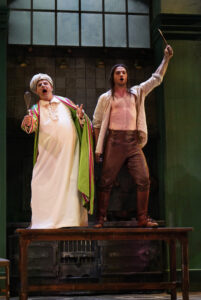
Pietro Spagnoli (Tobia Mill) and Mattia Olivieri (Slook) in La cambiale di matrimonio at the Rossini Opera Festival (2025). Photo: Amati Bacciardi
Avaricious English businessman Tobia Mill plans to sell his daughter Fannì to Canadian trader Slook. However, Fannì is secretly engaged to penniless Edoardo Milfort. The young lovers threaten the Canadian, who softens once he learns of their secret love. He makes young Milfort his heir and by averting a duel with Mill, all ends well, and the young lovers get engaged. Usually, the young lovers, a coloratura soprano and a tenor, are the stars. By having superstar basses Pietro Spagnoli and Mattia Olivieri as Tobia Mill and Slook, the two were the irresistible centre of attention, thanks to their immense charisma and impressive voices.
Dale avoided slapstick, presenting a delectable and entertaining farce. His innovation was in making Slook into an a coureur des bois, in authentic costume. Moreover, the Canadian arrived in London with a Native American servant and a huge brown bear. Slook’s companions, not in the libretto, provided plenty of laughs.
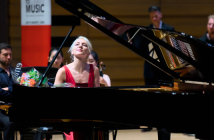
Vasilisa Berzhanskaya. Photo: Amati Bacciardi
I also attended one of the festival’s afternoon concerts, by Russian singer Vasilisa Berzhanskaya (Aug. 13). Her hour-long delight featured bel canto arias by Verdi, Rossini, Donizetti and Bellini. The surprise was that Berzhanskaya, known to many as a marvellous mezzo, had officially rebranded herself a soprano in this concert.
The talented singer is most likely endowed with a voice known as soprano sfogato or “vented” soprano. This was the case with Rossini’s wife, Isabella Colbran (1785‑1845), as with her contemporaries, Giuditta Pasta (1797‑1865), Giulia Grisi (1811‑1869), and Maria Malibran (1808‑1836), creators of several bel canto roles. Berzhanskaya was most impressive in this soprano recital. Scheduled to sing mezzo roles this season, such as Rossini’s La Cenerentola in Turin in January, the question remains: will she pursue a career as both mezzo and soprano?
Host city Pesaro is a much-appreciated seaside resort on the Adriatic. Mornings at the beach, afternoons at recitals, and evenings at the opera make for an altogether dream-like visit. If this weren’t enough, the historic towns of Urbino (birthplace of Renaissance painter Raphael), Ravenna and the Republic of San Marino are but a short distance away.
Rossini Opera Festival www.rossinioperafestival.it/en/