For avid Rossini fans, a logical destination is the Rossini Opera Festival held annually in Pesaro, the composer’s birthplace on Italy’s Adriatic coast. There, the usual fare is a mix of popular and rare operas, sacred works and vocal recitals. But anyone who found themselves in Paris early this summer could enjoy an impromptu Rossini fest at two of the city’s most prominent opera venues.
Three operas, two of the composer’s most popular comic works, Il barbiere di Siviglia and L’italiana in Algeri, and an infrequently performed opera seria, Semiramide, were presented on three consecutive nights. The first was fully-staged at Opéra Bastille and the other two given in concert form at Théâtre des Champs Élysées.

Karine Deshayes. Photo: Aymeric Giraudel
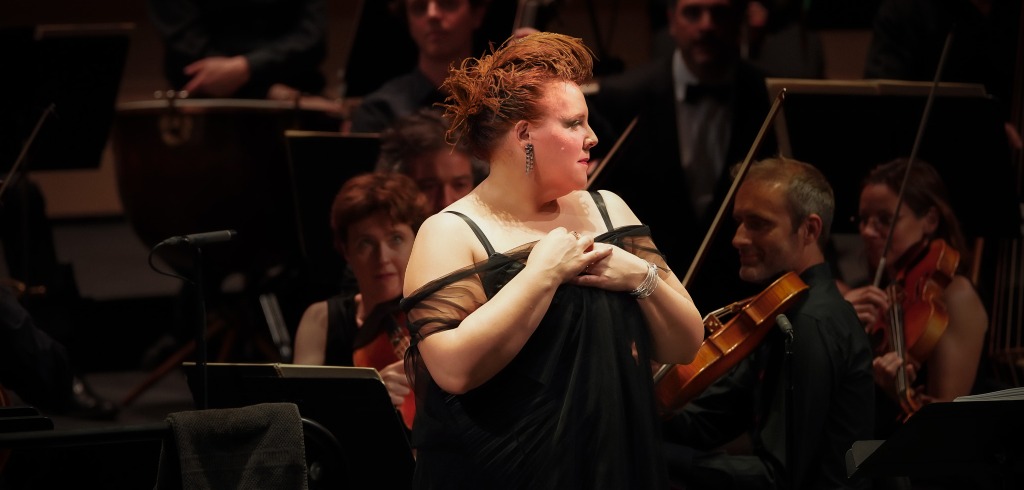
Expectations ran high for Semiramide (seen June 17), a relative rarity that I saw some time ago at the Metropolitan Opera with Rossini greats, June Anderson and Marilyn Horne. The Paris cast featured France’s leading mezzo Karine Deshayes in the title role. In recent years, Deshayes has followed in the footsteps of Isabella Colbran (Rossini’s wife), Giuditta Pasta, Giulia Grisi and Maria Malibran, who created many bel canto leading roles, by singing soprano roles as well her regular mezzo repertoire. In this case, she managed all the high notes, but her timbre did not seem to suit the role.
This was especially evident in the blending problems that resulted from the casting of a countertenor, Franco Fagioli, as Arsace. Their two famous, glorious duets—Act 1’s “Serbami ognon si fido” and Act 2’s “Giorno d’orror”—could not exactly be described as bel canto. Why this casting when Rossini himself was no fan of castrati, and wrote the role for a mezzo-soprano? The answer is possibly the drawing power of the Argentine countertenor. Indeed, a large contingent in the theatre were his fans.
The other main singers, Georgian bass Giorgi Manoshvili (Assur), Russian bass Grigory Shkarupa (Oroe) and British tenor Alasdair Kent (Idreno) were technically competent, but was not enough to save the show. Both basses were splendid and showed a lot of promise, though Manoshvili still has to learn how to tame his huge voice. Kent is a skilled technician but his timbre, appropriate in sacred music, can sound too “white” for Italian opera.
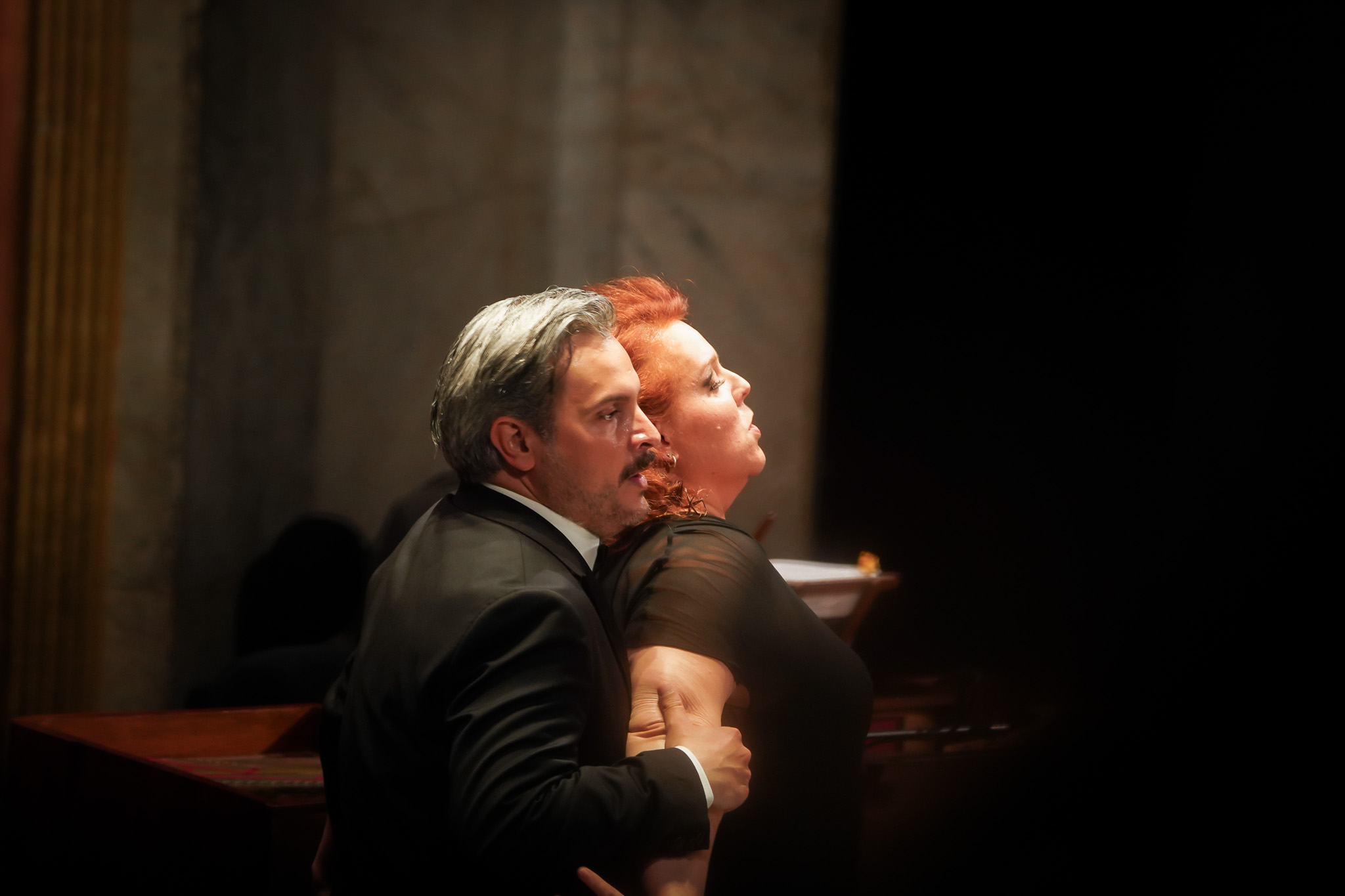
Nahuel Di Pierro (Mustafa) and Marie-Nicole Lemieux (Isabella) in Théâtre des Champs-Elysées’s L’italiana in Algeri. Photo: Cyprien Tollet / Théâtre des Champs-Elysées
The next day at the same theatre was another opera in concert, L’italiana in Algeri, with a splendid cast led by Canadian mezzo Marie-Nicole Lemieux in the titular role. Despite the “in concert” format, Lemieux and the rest of the cast acted more convincingly than in most staged versions of the work. Lemieux’s comic verve is astounding. As expected, she had no difficulty with the technical challenges of the role, be it her Act 1 duet with Mustafa, “Oh! Che muso! Che figura!” or in Act 2’s “Per lui che adoro.”
Of her co-singers, South African tenor Levy Sekgapane was a revelation as Lindoro. In addition to a strong stage presence, he impressed with his amazing technique. No present-day tenor can sing the Act 1 aria “Languir per una bella” as splendidly. He managed to interpolate a high G in the aria’s cabaletta “Contenta quest’alma” to the public’s euphoria. The rest of the cast was equally superb, especially Argentine bass Nahuel di Pierro who portrayed a suave Westernized Bey of Algiers.
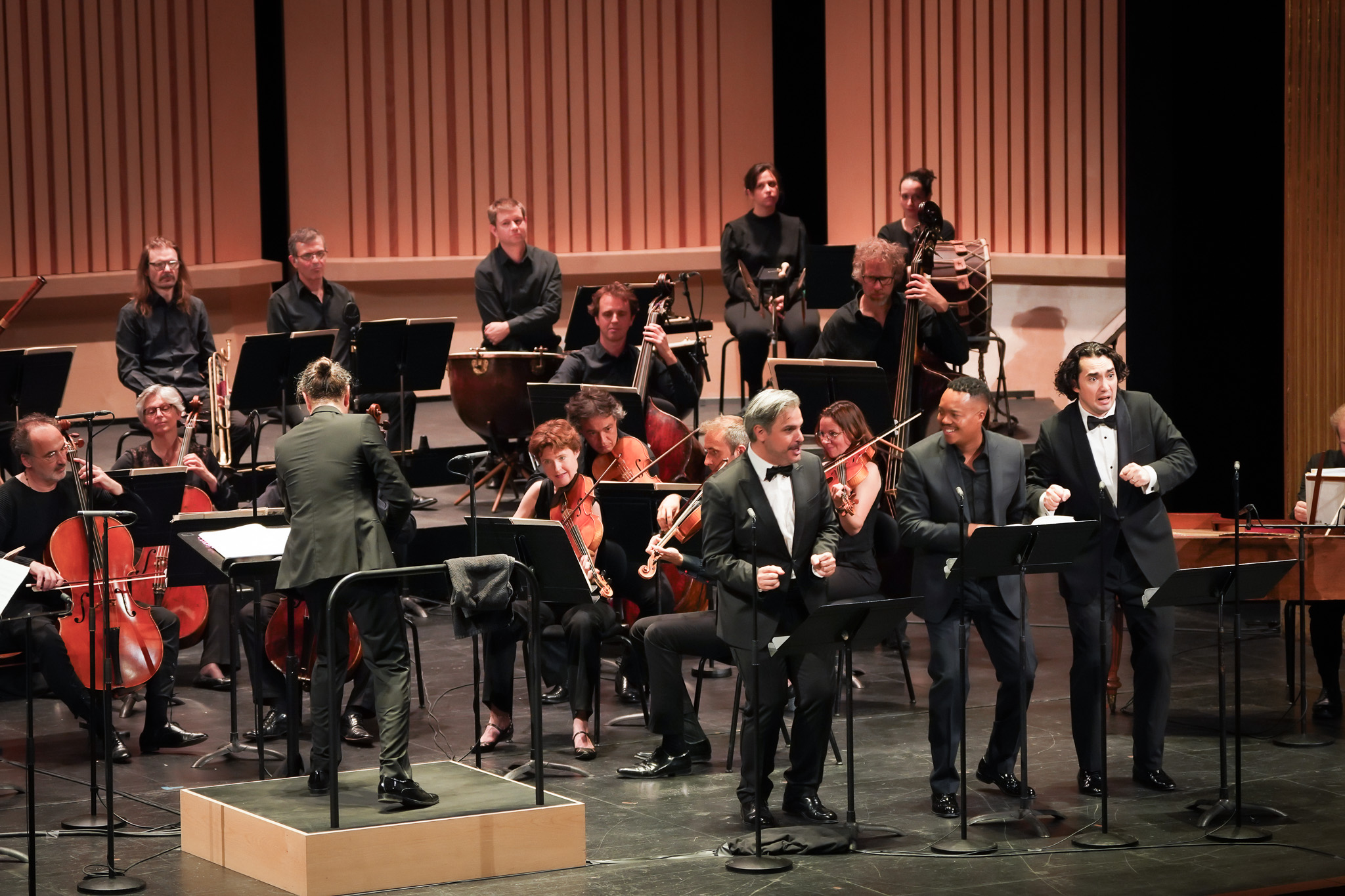
Nahuel Di Pierro (Mustafa), Levy Sekgapane (Lindoro), and Mikhail Timoshenko (Taddeo) in Théâtre des Champs-Elysées’s L’italiana in Algeri. Photo: Cyprien Tollet / Théâtre des Champs-Elysées
The following day, Sekgapane was once again featured, this time as Count Almaviva in Opéra national de Paris’s Il barbiere di Siviglia. Why see yet another production of Rossini’s most oft-produced opera? The answer is Italian stage director and enfant terrible, Damiano Michieletto. I got hooked on his work after seeing his brilliant staging of Les contes d’Hoffmann at Venice’s La Fenice and since then, his Venice Don Giovanni, Paris Don Quichotte, La Scala Médée and Salome and Frankfurt mounting of Rossini’s Otello
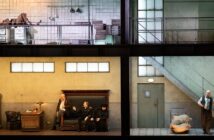
Michieletto sets Il barbiere di Siviglia in a working class neighbourhood in present day Seville. More than an Andalusian city, this Seville evokes Naples or Catania. His staging is inspired by the commedia all’italiana genre of the ‘60s, a sub-genre of Italian neorealismo cinema made famous in films like Mario Monicelli’s I soliti ignoti (1958) and Pietro Germi’s Divorzio all’italiana (1961). This resulted in a delectable light comedy without the usual ubiquitous slapstick and forced humour.
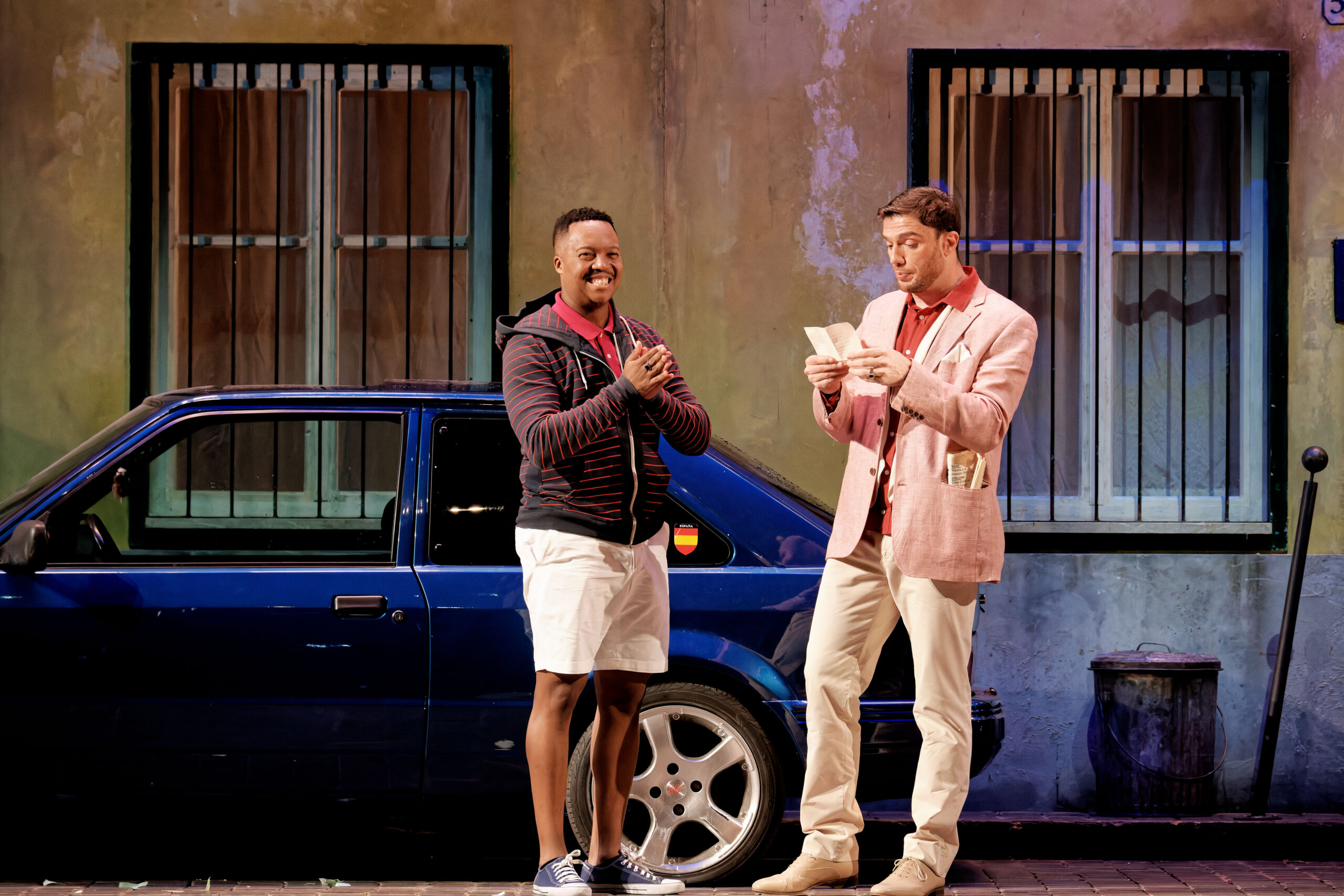
Levy Sekgapane (Count Almaviva) and Mattia Olivieri (Figaro) in Opéra national de Paris’s Il barbiere di Siviglia. Photo: Agathe Poupeney
Except for a lacklustre Rosina, the cast was truly outstanding. Once again, the absolute star of the show was Sekgapane who was funny in addition to being a sensational virtuoso. His final aria, the technically demanding “Cessa di più resistere,” was the performance’s most memorable moment. Sekgapane’s rendition of the aria’s cabaletta “Ah il più lieto, il più felice,” was a masterclass in coloratura tenor singing. Needless to say, it elicited thunderous applause.
Mattia Olivieri’s Figaro was vocally and dramatically spectacular. Fortunately both Olivieri and Michieletto understood that Figaro, despite being the title role, is not the star of the opera. He is merely the go-between and facilitator for the amorous couple Almaviva and Rosina. His signature aria, “Largo al factotum”, was flawlessly sung, but it was lighthearted, with no attempt to make a circus act out of it.
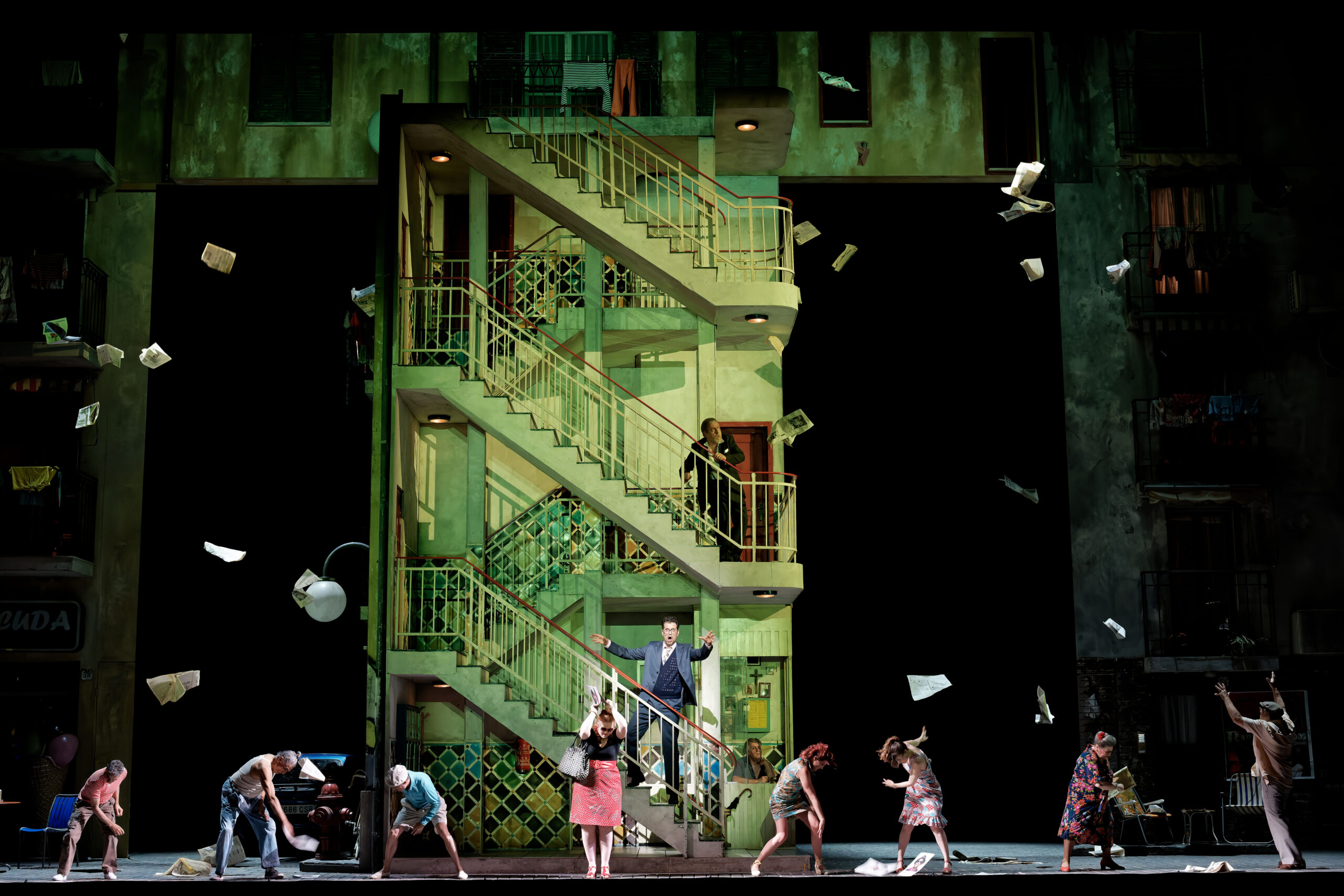
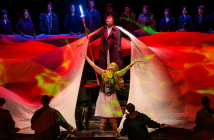
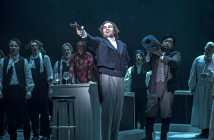
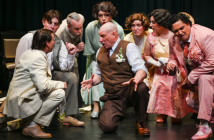
Scene from Opéra national de Paris’s Il barbiere di Siviglia. Photo: Agathe Poupeney
Unfortunately, Isabel Leonard’s light mezzo fails to convey the character’s coyness, an essential attribute of the opera’s heroine. However, being a veteran in the role, she was totally at ease and mercifully eschewed overdone charm. Carlo Lepore, the Don Bartolo, elicited the most laughter thanks to his natural comic timing. Usually Don Basilio, sung by bass-baritone Luca Pisaroni, is a stuffy priest. Michieletto chose to make him into a goofy old bachelor, morally corrupt, but incompetent as an intriguer. This made Don Basilio amusing and almost endearing. Even the frustrated old maid Berta, sung by Russian soprano Margarita Polonskaya, was sympathetically portrayed as a chain-smoking irritable nymphomaniac.
By toning down the comedy and concentrating on the interaction between credible characters, showing their qualités and foibles, this was a most enjoyable and effective Il barbiere di Siviglia.
Damiano Michieletto’s production of Il barbiere di Siviglia continues its run at Opéra national de Paris until July 13.