

-
UNCSA Media3.5
Desert Pass
Zéphyros Winds: Fatma Daglar, oboe and English horn; Jennifer Grim, flute and piccolo; Marianne Gythfeldt, clarinet and bass clarinet; Saxton Rose, bassoon; Zohar Schondorf, horn
UNCSA Media, 2025
Released June 2025, Desert Pass features three contemporary classical works composed by Reena Esmail, Tyson Gholston Davis and David Sanford. With world-premiere recordings of Davis’s Desert Pass and Sanford’s Tatu, Zéphyros Winds showcases the diversity of the woodwind repertoire—how it can both soothe and provoke.
The first piece, Esmail’s The Light is the Same, leads the listener from one section to the next with satisfying and pretty-sounding tones. This composition is an appropriate opener as I found it to be the album’s most accessible piece for audiences new to woodwind music. Esmail notes that it uses two Hindustani raags: first Vachaspati and then Yaman, eventually weaving them together into one blend. These melodic frameworks did not evoke specific feelings in me as they might for listeners familiar with Hindustani classical music. However, the composition had excellent payoff as it built to a playful and energetic ending, engaging until the last moment.
The album’s title track, unfortunately, fell a bit short. Almost immediately, there’s a shrill sound, a sustained note in the upper register, that pierces the ear. This repeats throughout the work as the low progressions are unexpectedly disrupted by a high note that seems to go nowhere.
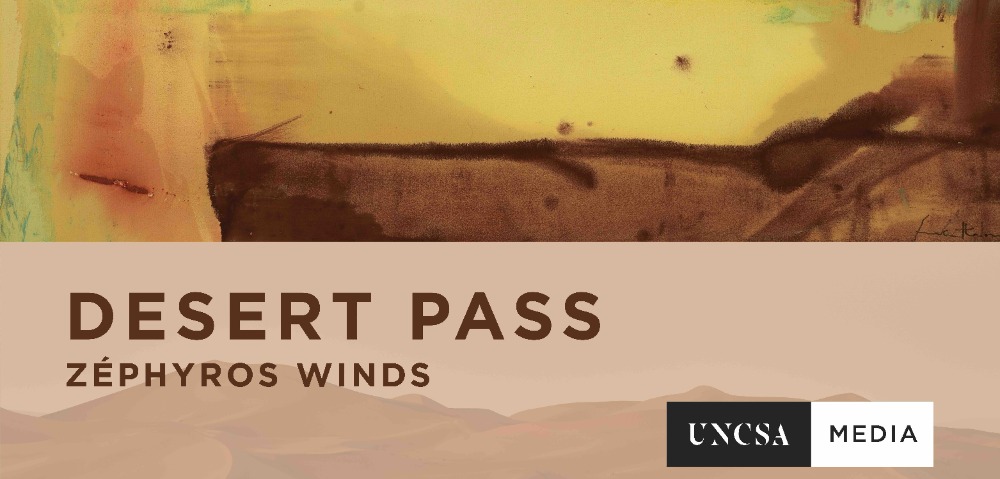
Desert Pass is a response to a painting of the same name by American abstract expressionist Helen Frankenthaler, which is featured on the album’s cover. Similar to abstract art, this composition is polarizing. Perhaps a more well-trained ear would better appreciate its complexities, but to the general audience it would probably be less easy to understand or follow.
Tatu is the final piece, comprising just under half of the album’s total duration at 15 minutes. Its comparative length allows the listener to get more invested in its movements, in the same way a long novel makes one more attached to its characters. Following this metaphor, each section of Tatu felt like a chapter in a book. First, there are the unsettling and mysterious tones that lead into sounds of discovery and sudden urgency. Then the aftermath: a slower section that mimics the inner workings of one’s mind recovering from a moment of panic. When the piece seems to be almost over, Zéphyros Winds plays what feels like a musical epilogue, a final reflection on the journey.
This album’s short and varied tracklist makes it an excellent entry point into the world of 21st-century chamber music for woodwinds. There is plenty to explore in an album that takes its inspiration from a variety of musical traditions.