This page is also available in / Cette page est également disponible en:
 Français (French)
For many singers, this is the busiest time of the year, filled with holiday concerts, semester-end performances—and, for some, many, many productions of Messiah. For alto, mezzo-soprano, and countertenor soloists, this involves the preparation of showpiece arias from Handel’s oratorio including “But who may abide,” with all of its glory and challenges.
The piece appears in Part I of Messiah, and alternates between a pensive, more lyrical, larghetto “But who may abide when he appeareth” section, and a dramatic, coloratura-filled, prestissimo “For he is like a refiner’s fire” section. The contrast between the two sections perfectly encapsulates two very different dramatic effects.
Although the aria first appeared in a form for bass voice in the work’s original 1742 version, this was substantially different from what we usually hear today. Older recordings, made before the vogue for historically-informed performance practice, often reference that earlier version, allotting the aria to the bass soloist. The version most often performed today was actually written for a 1750 Covent Garden performance, for the bravura alto castrato Gaetano Guadagni. The “refiner’s fire” section was specially composed by Handel to show off Guadagni’s coloratura skills, especially his low notes. Considering this history, the aria is now usually given to an alto soloist, though nowadays a countertenor is often preferred, but there is sometimes still debate whether to assign it to a bass!
This virtuosic aria is filled with many challenges and potential pitfalls. Performers must be clear in their communication, matching the atmosphere of each section with phrasing and intention. The tessitura is also quite low for most mezzos and many countertenors, as even at A=440 (standard concert pitch), it is a true contralto aria. If the exacting coloratura written for Guadagni is performed too slowly or is belaboured, it can take away from the drama and imagery of the refiner’s fire. When performed effectively, however, this piece is truly exciting.
Great Recordings
Countertenors:
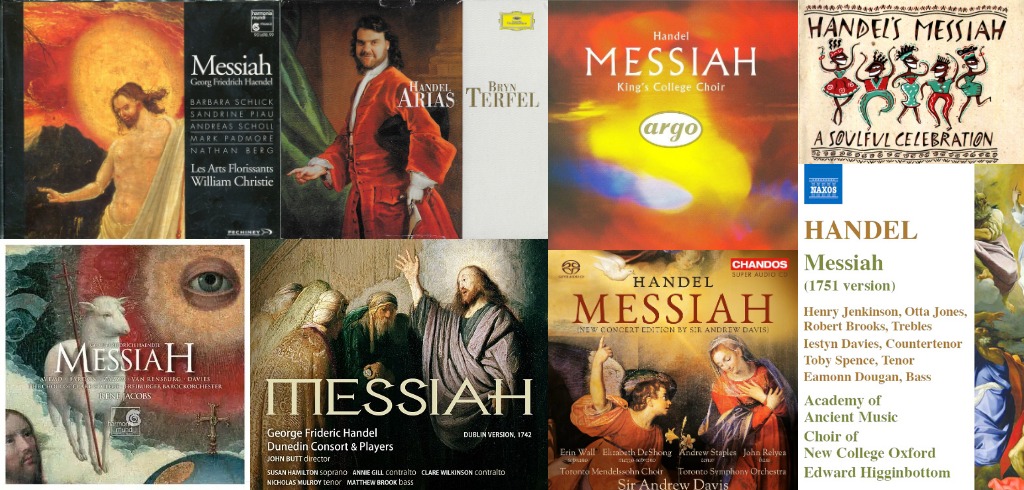
Lawrence Zazzo (2007), conducted by René Jacobs, with Freiburger Barockorchester and the Choir of Clare College (Harmonia Mundi): When countertenor Lawrence Zazzo uses his chest voice, it works really well in the “refiner’s fire” sections, and he adds some beautiful ornamentation that allows the aria to be the showpiece it was written to be.
Andreas Scholl (1994), conducted by William Christie with Les Arts Florissants (Harmonia Mundi): Scholl’s expressive and sensitive phrasing shows a lot of care to the “But who may abide” section, with simple, effective ornamentation.
Iestyn Davies (2006), conducted by Edward Higginbottom with the Academy of Ancient Music and the Choir of New College Oxford (Naxos): Davies, who was recently seen in the Canadian Opera Company’s production of Orfeo ed Euridice in a role that was also originated by Guadagni, has a pure, clear tone that is particularly suited to the aria.
Contraltos:
Elizabeth DeShong (2016), conducted by Sir Andrew Davis, with the Toronto Symphony Orchestra and the Toronto Mendels-sohn Choir (Chandos): DeShong has a much warmer sound than a lot of the counter-tenors that usually record this aria, and her power on low notes makes the quick sections dramatic and exciting.
Hilary Summers (1994), conducted by Stephen Cleobury with the Brandenburg Consort and the King’s College Choir (Argo): Summers marries some of the depth of tone found in DeShong’s rendition with the clarity and pureness found in the countertenor renditions in an attentively beautiful interpretation.
Patti Austin (1992), in Handel’s Messiah: A Soulful Celebration (Warner Alliance): A gospel-inspired version with choir, Austin’s brassy belted rendition is filled with runs that while certainly not Baroque, feel spiritually connected to the improvisational ornamentation methods of baroque music, and bring something unique to the traditional favourite.
Basses:
Matthew Brook (2006), conducted by John Butt with the Dunedin Consort & Players (Linn): This recording is a little different, as it seeks to recreate the original 1742 Dublin Version of Messiah. It is fascinating to hear the simpler, pre-Guadagni, bass “But who may abide” sung lyrically by Brook, but misses the drama created in the more showy 1750 alto version.
Bryn Terfel (1997), on his album, Handel: Arias, conducted by Sir Charles Mackerras with the Scottish Chamber Orchestra (Deutsche Grammophon): Although I still prefer an alto “But who may abide,” Terfel’s interpretation thrillingly captures both the sensitive, plaintive, and more dramatic sections.
This page is also available in / Cette page est également disponible en:
Français (French)