This page is also available in / Cette page est également disponible en:
 Français (French)
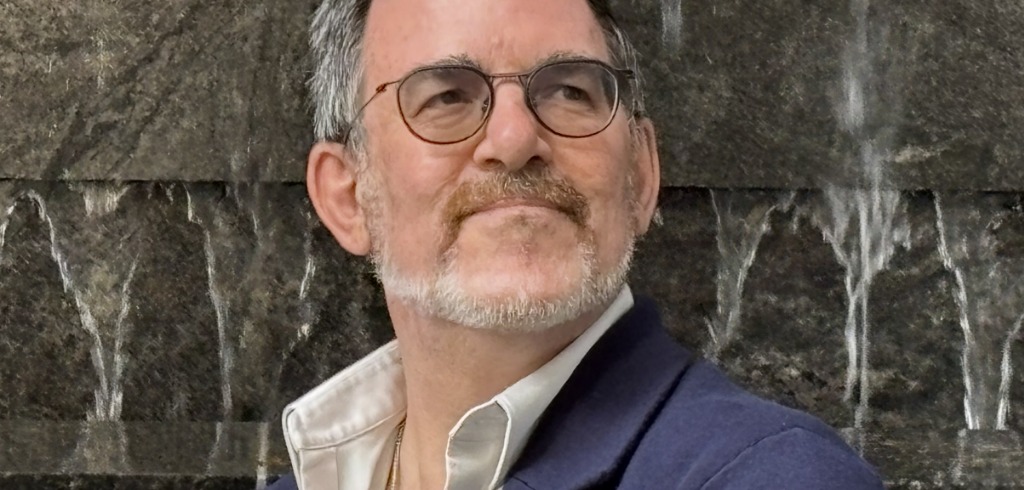
Pianist and vocal coach Francis Perron is a fixture in Montreal’s music scene. He has given recitals with singers such as Christian Immler, François Le Roux and Nathalie Paulin, works with companies like Opéra de Montréal, the Canadian Opera Company, Chants Libres, and Wien Kammeroper. He developed Université de Montréal’s collaborative piano program. Since early in his career, Perron has been devoted to both opera and art song, and wants “to give [his students]as many tools as possible” to be successful in both.
Perron started playing for singers as a teenager and, thinking back to that time when he first “discovered such a world,” he says he realized “this is what I want to do in life. I want to make music with singers.” He was drawn to the ability to marry poetry and music, and work with many people, instead of just “being alone sitting at a piano.” Perron credits teacher Gilles Manny for “[showing]me how to work, how to love details, how to organize my practice.”
By the age of 21, Perron was coaching and working as a répetiteur with Montreal contemporary opera company, Chants Libres. He says, “I discovered that playing the piano was the least of it. Everything I had to know was outside of playing the piano: how to conduct, how to sing, how to play percussion, how to try to make it work, follow the conductor, and help the singer learn their music. … I just went there and I had to survive. And the survival process is where you learn a big deal. Sometimes you cry. You want to quit. Almost every day. But that’s an amazing chance that I had to do it so early.”
Now, Perron works with companies in standard repertoire in addition to new opera productions and workshops. This season, he was head coach for Roméo et Juliette at the COC and is now working on Ana Sokolović’s Clown(s) at Opéra de Montréal. Perron loves to work with composers, conductors and stage directors, and believes it makes him a better art song pianist as well, saying, “If you play a Mozart lied, for example, you know that Mozart wrote so many operas. And you play the piece and you imagine that he would have orchestrated it this way… It really opens your imagination and amplifies the colours that you produce on the piano. … I love to see how I can make this instrument sound like an orchestra or other instruments.”
When he was 25, Perron was teaching at Université de Sherbrooke, a good opportunity at the time, but decided to leave the position in order to study Klavier-Vokalbegleitung (“piano-vocal accompaniment”) in Vienna. He thought, “if I don’t go to Europe to study now, I will never go.” In Vienna, Perron studied at the Universität für Musik und darstellende Kunst with David Lutz, who taught him song interpretation. Perron also acknowledges the influence of Vienna through its very “walls, …the people everywhere, the streets, the history.” In song, Perron describes the relationship between the singer and the pianist as “a good combination of caring and challenging. If you care about people, then you will support them, follow them, drive them, and challenge them.”
After finishing his doctorate at the Université de Montréal (UdeM), Perron worked both there and at Conservatoire de musique de Montréal, and eventually built the collaborative piano program at UdeM. His studio slowly grew from two to 15 pianists and from offering just a master’s degree at first, to adding diploma and doctoral studies.
Additionally, in the last few years, Perron created the McGill-UdeM Piano-Vocal Arts Residency alongside Michael McMahon, supported by the Azrieli Foundation. This nine-month program offers six pianists the chance to immerse themselves in opera and art song repertoire. As Perron describes, “building this was like a dream. …It’s not a program for singers. It’s a program for pianists. Singers learn a lot because all the guests we invite are incredible, [but]it’s really custom-made for the pianists.” What makes the residency stand out is that “a lot of programs are either specialized in opera or art song. We want to do both, because I really believe—and this is something I’ve been doing all my life—that young pianists nowadays must have a lot of tools, because they never know where they’re going to end up. They have to be at ease with opera repertoire, art songs, learn how to play contemporary music, be flexible. I think that’s important,” says Perron.
The pianist refers to his teaching style as “caring and demanding.” Although he wants his students to avoid some of his own mistakes, he understands they must go through the process. Perron also cites his still-active performance career as something that helps him be a better teacher, because while he demands a high level, he says, “I always try to remember what the feeling of being on stage [is like]—and being involved in these things—before I make comments. He tries “not to forget that this is stressful—that they’re trying their best. It helps me choose the direction I want to go with them.”
This page is also available in / Cette page est également disponible en:
Français (French)