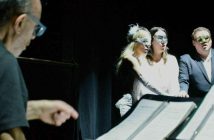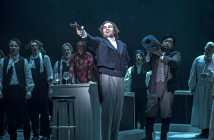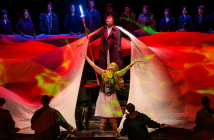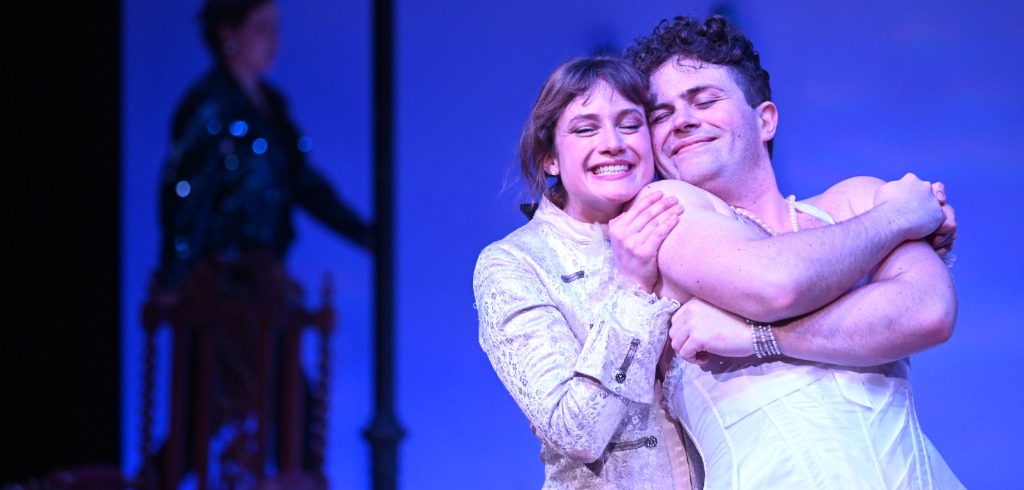
Toronto Operetta Theatre closed their season with Johann Strauss’s 1883 operetta A Night in Venice. Set in Venice during carnival season, it revolves around plot devices that might be considered questionable today. These include a nobleman’s ‘right’ to deflower young women, and what must have been some hilarious cross-dressing at the time…all handled with taste and not too much unnecessary fanfare here. A young cast seized their roles for all they were worth, resulting in a fun afternoon (seen Apr. 19) of light entertainment—not a small thing given the current state of the world.
As with many operettas, the story is complicated—you can read about it in detail here. It’s the classic “regular folk versus gentry” tale in which wily fishmongers, barbers and maids manage to outsmart their so-called superiors. With non-period-specific costuming that still maintained the social hierarchies, TOT’s version came up fresh and witty, reminding us that a social comedy written in the late 1800s can still make its points today.

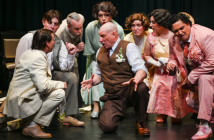
A scene from Toronto Operetta Theatre’s A Night in Venice. Photo: Gary Beechey (BDS Studios)
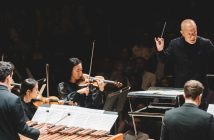
Kate Carver led the small, but expert orchestra. Tempi were flexible and settled down after a perhaps too quick start where the ensemble suffered momentarily. We should count our blessings this company can offer at least a small ensemble, so crucial are the sounds and colours of the many memorable instrumental solos that wouldn’t have the same effect with a piano reduction.
It’s gratifying to see young artists engaging with, and delivering, all that the supposed ‘dying’ art form of operetta has to offer. All the artists on stage seemed to ‘get’ the required sly, arch tone and vocally, knew when it was just fine to hold off on the big vibrato for a more conversational approach.
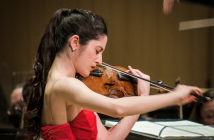
Outstanding among a solid cast was soprano Andrea Núñez as fisher-girl Annina. Clearly the one in charge in her relationship with barber Caramello, she was probably the most polished singer on stage, sending out beautiful, rich tone and sparkling high notes. Her portrayal was subtle, always with a barely-contained smile beneath her icy surface.

Andrea Núñez (Annina) in Toronto Operetta Theatre’s A Night in Venice. Photo: Gary Beechey (BDS Studios)
Tenor Ryan Downey handled Caramello’s bluster well. He has a big, trumpety sound that worked best when unleashed with full abandon.
In an unusual three-tenor show, Marcus Tranquilli was the comic relief, sensibly underplaying the women’s determination to pass him off as one of the potential one-night stands for Coximo, Duke of Urbino. Tranquilli impressed in TOT’s Mikado earlier this season, and is really developing a commanding presence to go with his pleasant, light tenor.
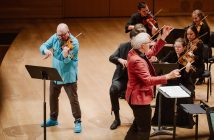
Tenor Jeremy Scinocca as the Duke gets the best, big romantic tunes. He has a decidedly Italianate timbre which suited the character and his music. It’s an intriguing, old school sound that still lacks the last degree of polish, but shows enormous potential for the light, lyric Italian repertoire.

Jeremy Scinocca (Duke of Urbino) in Toronto Operetta Theatre’s A Night in Venice.
Photo: Gary Beechey (BDS Studios)
I love how mezzo-soprano Meghan Symon now seems to have cornered the acerbic “older” lady roles in TOT productions. Her physical height and don’t-mess-with-me demeanour are perfectly suited to these gifts of a role. Sean Curran made a welcome return in the mostly spoken role of Senator Delaqua—as typically slippery a politician as you’d find at Queen’s Park today.
Mezzo-soprano Madeline Cooper as ladies’ maid Ciboletta (Yum-Yum in TOT’s Mikado) had great presence and a pretty vocal instrument.
The small chorus moved and sang well. Director Guillermo Silva-Marin always knows how to make a group of non-dancers look good! This Sunday matinee was well-attended by an enthusiastic crowd.
For more on Toronto Operetta Theatre visit www.torontooperetta.com