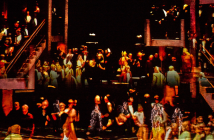
Opéra de Montréal closes its 2024-25 season with a celebration of the Puccini anniversary. One cannot go wrong with a production of La Bohème which the company has historically rolled out when it needs a sure crowd pleaser. It’s arguably Puccini’s most popular opera with several of his best known hits. This production assembled a strong ensemble of predominantly Canadian singers.
What you missed?
The revelations on opening night were the two female leads, both graduates of the company’s Atelier Lyrique young artist program.

Frédéric Antoun (Rodolfo) and Lauren Margison (Mimì) in Opéra de Montréal’s La Bohème. Photo: Vivien Gaumand
Montreal audiences have been following Lauren Margison since 2017 when she was a member of the Atelier Lyrique. Back then she sometimes oversang with a somewhat grainy tone. Since then, she has spent time at the COC Ensemble Studio, sang several productions at Germany’s Staatstheater Mainz and completed a masters degree at the University of Montreal. As a semifinalist in the 2022 Concours musical international de Montréal (CMIM), she already showed signs of great progress, demonstrating a beautifully clear tone.
As Mimì, Margison sang with radiant control, rich nuance, and a newfound depth of interpretation. The lack of vibrancy of earlier years has been replaced by a confident, technically secure soprano, capable of floating pianissimi and surging climaxes. But beyond technique, she sang with soul. From the soft-spoken shyness of “Si, mi chiamano Mimì” to the desolate goodbye in the final act, this was a performance that felt lived-in. The promise is now fulfilled, she has arrived.
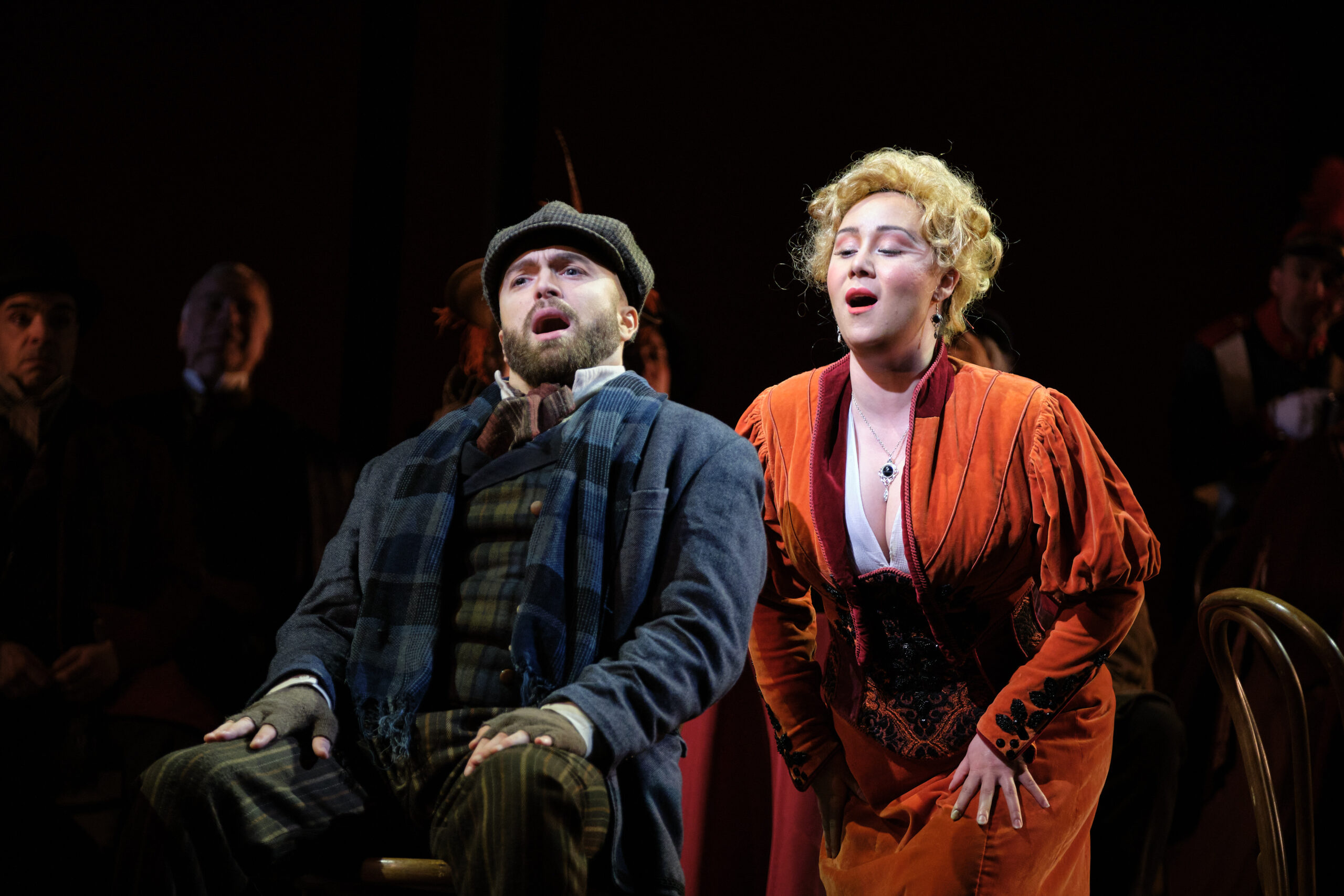
John Brancy (Marcello) and Andrea Núñez (Musetta) in Opéra de Montréal’s La Bohème. Photo: Vivien Gaumand
Montrealers discovered Andrea Núñez as a coloratura soprano at the Talent 2017 gala in November of that year which won her a spot on the 2018-20 Atelier Lyrique roster. Although she always had vocal ease throughout her range, her Musetta showed new richness in her sound, and her projection easily filled Salle Wilfrid-Pelletier. Núñez was also able to sing the flirty and flighty character with class in the second and third acts and compassion in the final act when she comes to Mimì’s aid. Her “Quando me’n vo’” was a tour de force.
Montreal tenor Frédéric Antoun sang a sympathetic Rodolfo with warm legato and even vibrato, but seemed vocally cautious on top, particularly in “Che gelida manina.”
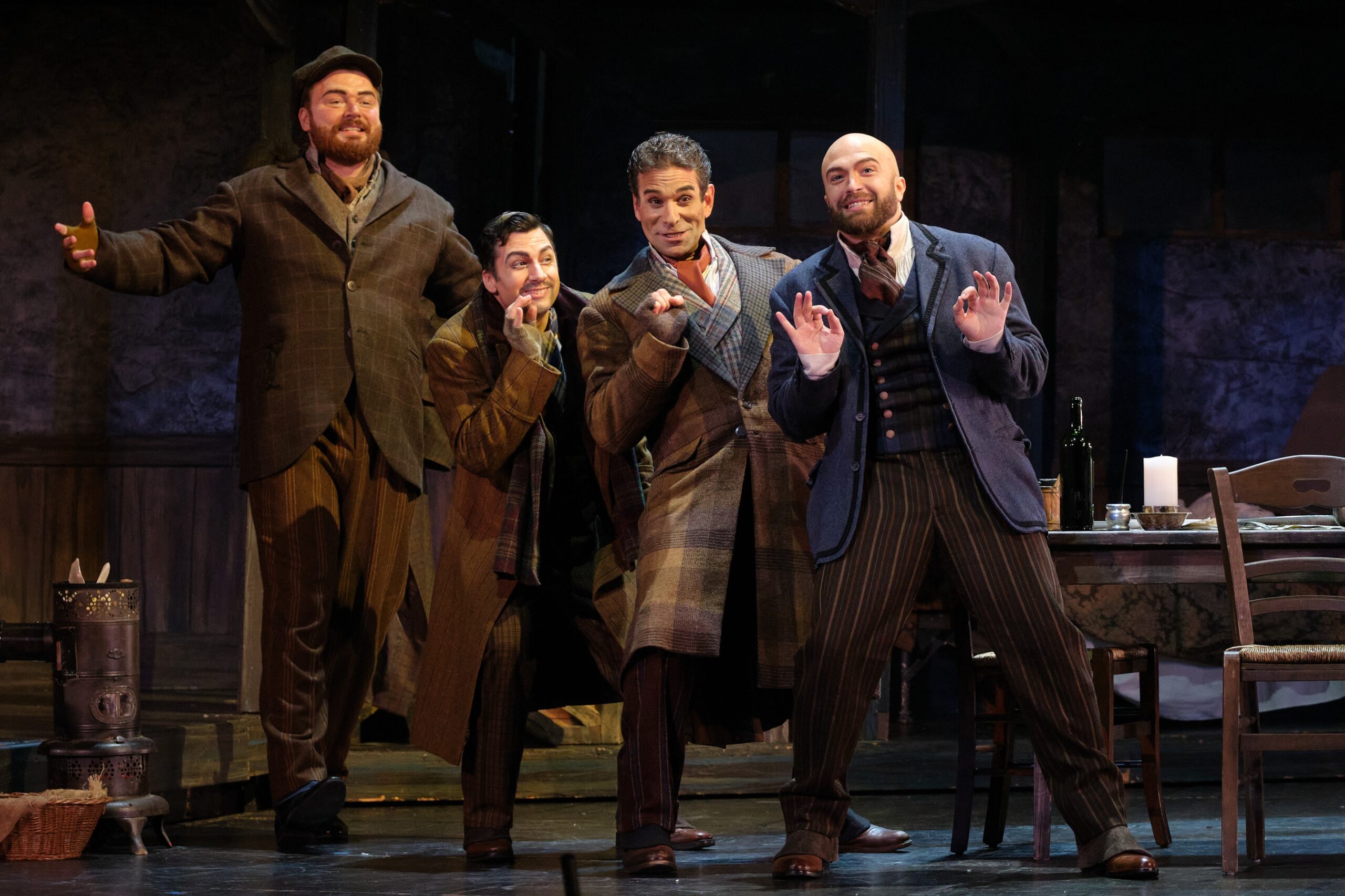
L-R: Mikelis Rogers (Schaunard), Jean-Philippe McClish (Colline), Frédéric Antoun (Rodolfo), and John Brancy (Marcello) in Opéra de Montréal’s La Bohème. Photo: Vivien Gaumand
American baritone John Brancy’s victory in the 2018 CMIM Art Song Division brought him to the Montreal audience’s attention. He was a solid Marcello, Rodolfo’s painter roommate and Musetta’s jealous lover. His voice was strongest in the Act IV duet with Rodolfo.
Current Atelier Lyrique member, baritone Mikelis Rogers, sang the musician Schaunard with a bright, tenor-like timbre. Bass-baritone Jean-Philippe McClish sang a touching coat aria in the final act, although his timbre can be too woolly.
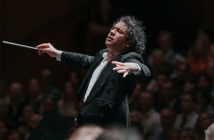
Simon Rivard led Orchestre Métropolitain in a fluid and moving performance, although the start of the final act Rodolfo-Marcello duet was rushed. The Act II chorus prepared by Claude Webster was tight and clear.
François Racine gave an effective staging on sets provided by Arizona Opera.
La Bohème continues its run on May 13, 15, 18 (matinée), and 20, 2025. www.operademontreal.com