

This page is also available in / Cette page est également disponible en:
 Français (French)
After young adulthood, structured forms of education might no longer be a regular part of your routine. But there are many benefits to lifelong learning, including improved cognitive health, increased personal fulfillment, and a sense of community and connection with others. For those seeking learning opportunities in music and the arts as older adults, here are some options to consider.
University Courses
If you have an interest in academic study, many Canadian universities offer courses for those continuing their education. Often, these programs will have smaller class sizes, which allow students to form deeper connections with their peers and professors and encourage active participation and discussion.
For example, the McGill School of Continuing Studies has the McGill Community for Lifelong Learning. In this program, seniors participate in informal study groups and lectures. There are no exams, grades or prerequisites, so participants can fully embrace the joy of learning without the stress of memorizing information or meeting onerous requirements. The program offers courses on a variety of topics including music, visual arts, creative writing, literature, theatre, and many more.
Similarly, the University of Toronto has a 65+ program where students who are 65 or older can take undergraduate degree-level courses in the Faculty of Arts & Science, even if they would not otherwise meet the prerequisite requirements. After completing four credits, they are then eligible to apply for admission as degree students.
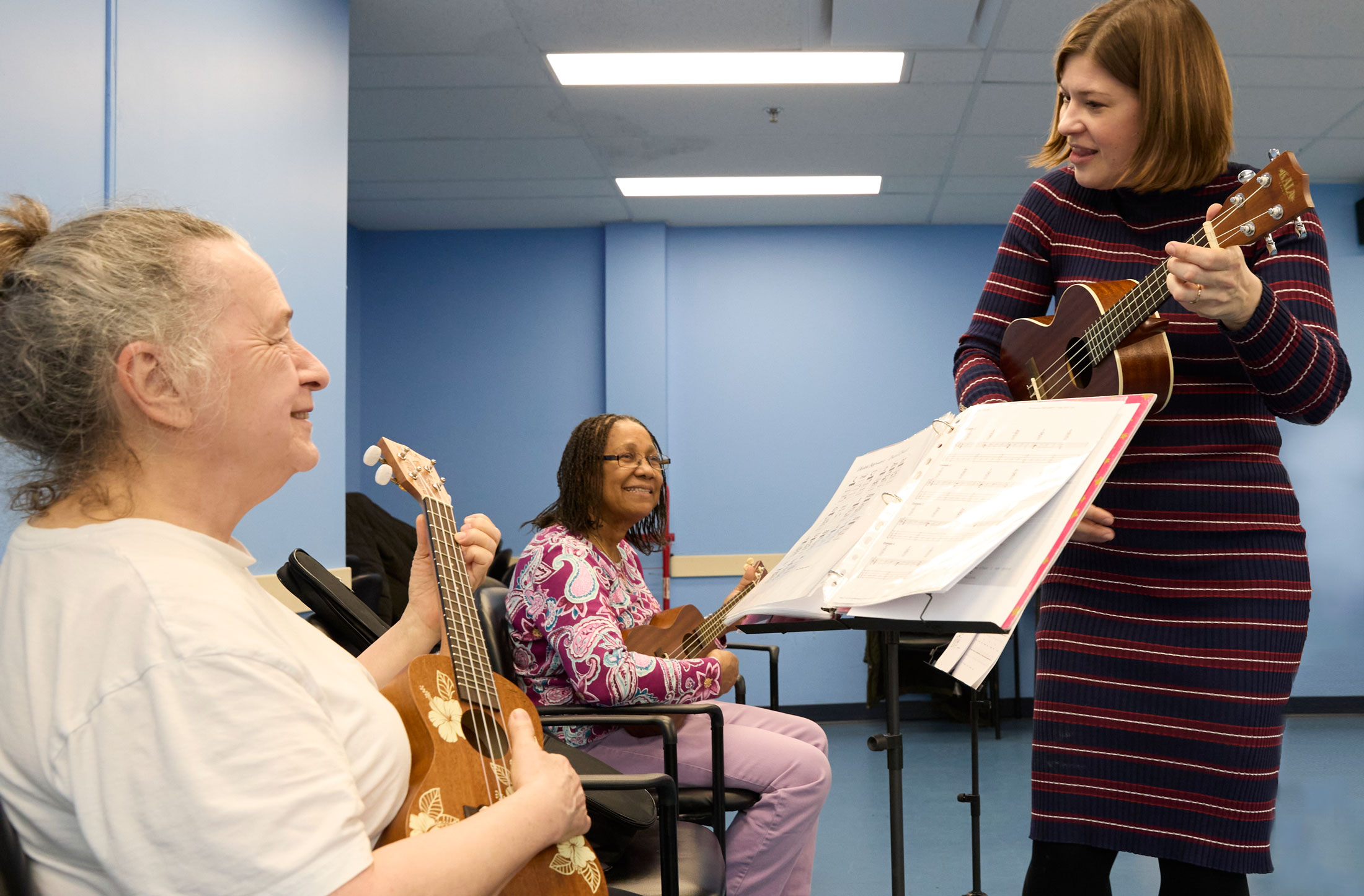
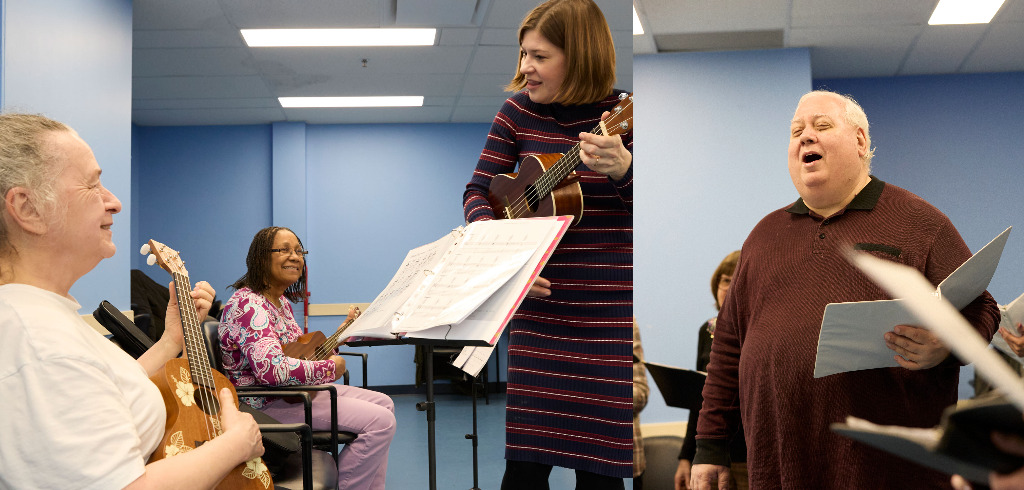
The Cummings Centre’s group ukulele class. Photo: Courtesy of the Cummings Centre
Community Centres
While post-secondary institutions may be the first place you think to look for classes, they are not the only option. There are plenty of local community centres with educational programs intended for older adults.
The Cummings Centre in Montreal, for instance, provides participants with engaging programs, services and volunteer opportunities. They offer classes and lectures on a variety of topics, including performing arts and music appreciation.
Program Manager Victoria McNeill said: “We try to take the judgment out of the space … and stray away from the potentially damaging structures of a more traditional classical Western learning environment.” Instead, the community centre seeks to encourage curiosity, allowing older adults to pursue the arts in ways that might have been discouraged in their younger years.
The Cummings Centre partners with many local artists and organizations to bring their programs to life, connecting seniors not only to each other but to the Greater Montreal arts community.
When asked about the benefits of continued learning, McNeill explained that music-making, in particular, enhances our cognitive health and spatial awareness. “It’s good for our brains in that regard. [Then there’s also] the community and social connections that come from group music experiences, concerts, lessons and lectures.”
Community-centre programs are a great choice if you want flexibility in the learning environment, teaching methods and topics. McNeill shared that members will occasionally change what they study each semester—for example, switching from classes in tap dance to choir if it interests them.
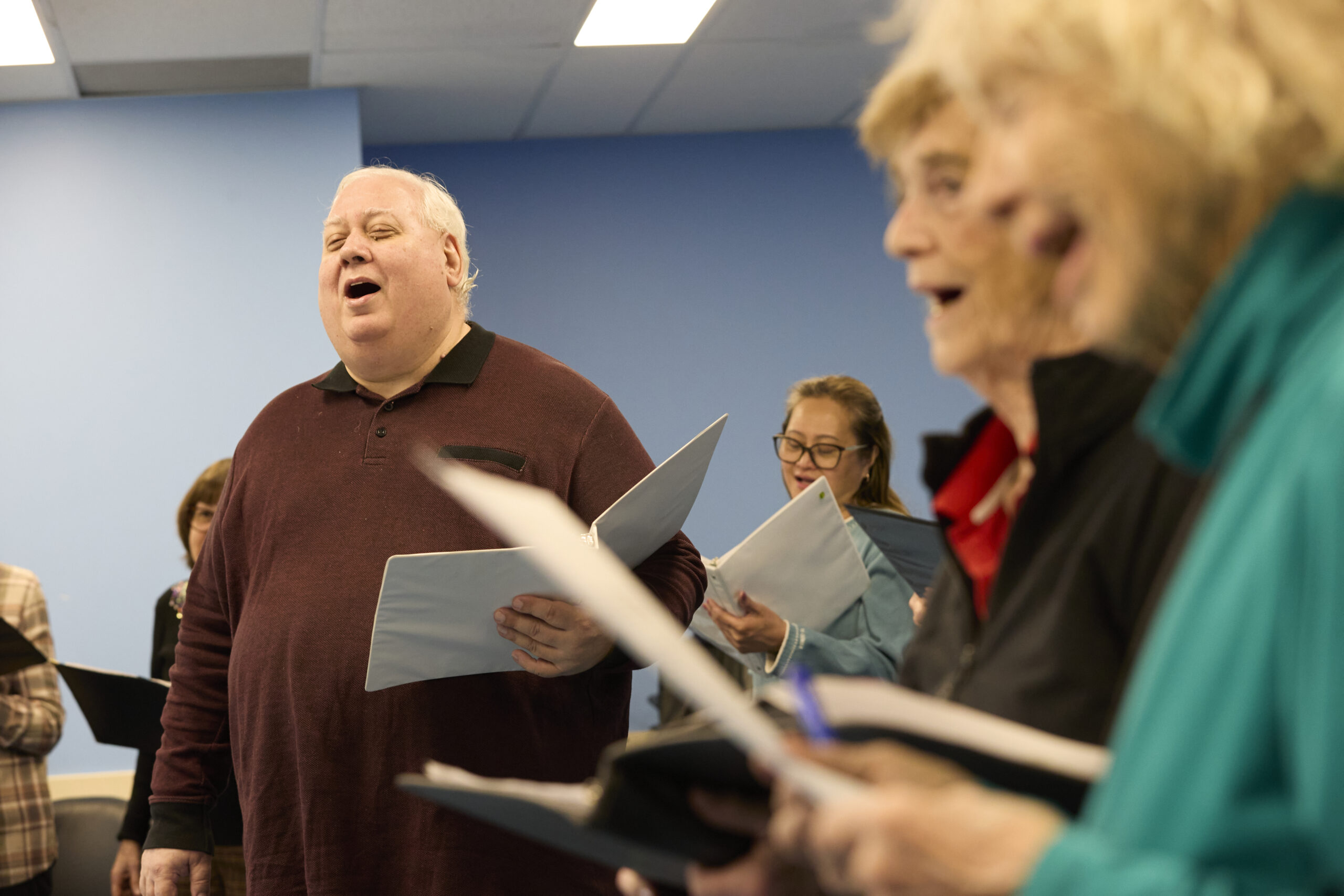
Cummings Centre World Choir. Photo: Courtesy of the Cummings Centre
Community-led Groups
Community-led clubs are another option for continued learning. These groups can be more difficult to find because they can be quite small and don’t always appear at the top of online search results.
The Impromptu Lecture Club (ILC) in Toronto, for example, relies on word of mouth to recruit new members. Even so, their membership has increased from 70 people to just under 400 in the past eight years. Run on a volunteer basis by Shirley Rochman and Margaret MacDonald Jones, the popularity of this club showcases the demand for educational programs in later life.
This fall, the ILC will have several lecture series covering creativity and aging, realism and women’s lives in Jane Austen’s novels, as well as the kitchen-sink dramas of the 1950s and ’60s. Participants are taught at a high academic level, led by university professors and classical-music scholars who have spent years studying their subjects.
Clubs such as the ILC are a valuable part of the community. They are passion projects for the organizers and lecturers. Rochman said the ILC has helped provide a space for some professors to teach courses that they couldn’t at a traditional university due to barriers such as lack of interest or funding.
MacDonald Jones said the club’s advantages are “the quality of the lectures, the convenience, the topics—certainly there’s relevance and resonance to our current times—and then … there’s the community aspect that you don’t necessarily get attending a [large lecture series].”
Narrowing Down the Options
Whether it be university courses, community-centre classes, or volunteer-run clubs, there are many educational programs for older adults. Pinning down which one to attend might come down to location, affordability or timing.
Following the trends of the day, many organizations offer an online option (e.g. Zoom calls or recordings). In addition, most programs mentioned here take seniors’ financial limitations into account and try to keep rates as affordable as possible. These efforts make their programs accessible to a larger audience.
With online options and reasonable fees, choosing between these programs can be as simple as identifying what suits your learning style and interests. So research, be curious, and enjoy lifelong learning!
www.mcgill.ca
www.utoronto.ca
www.cummingscentre.org
[email protected]
This page is also available in / Cette page est également disponible en:
Français (French)