Browsing: CD and Book Reviews

Rebelle: Hommage à Célestine Galli-Marié Eva Zaïcik, mezzo-soprano; Orchestre national de Lille, Pierre Dumoussaud, conductor; Ferdinand Poise, Ambroise Thomas, Georges Bizet, Louis Deffès, Jacques Offenbach, Victor Massé, Ernest Guiraud, Émile Paladilhe, Jules Massenet, Albert Grisar, Jules Cohen, composers Alpha Classics, 2025 In this year of the 150th anniversary of the creation of Bizet’s Carmen, Palazzetto Bru Zane, the originator of so many fine rediscovery projects, has had the excellent idea of focusing on the role’s creator, Célestine Galli-Marié, via a rising mezzo-soprano of today, Eva Zaïcik. An excellent idea, because this legendary performer left her mark not only on opera’s…

Share:

Strauss: Salome  Malin Byström, soprano; Katarina Dalayman, mezzo-soprano; Gerhard Siegel and Bror Magnus Tødenes, tenors; Johan Reuter, baritone; Bergen Philharmonic Orchestra; Edward Gardner, conductor Chandos, 2025 The Bergen Philharmonic Orchestra’s trip to the Edinburgh Festival in 2022 included a strongly-cast concert version of Richard Strauss’s Salome which was recorded and has now been issued on SACD by Chandos. It’s very good. Malin Byström, in the title role, is a powerful presence who can be subtle, even lyrical, where needed—such as in the wheedling discussion with Herod over her “reward.” Johan Reuter is rock-solid as Jochanaan and the recording engineers have…

Share:

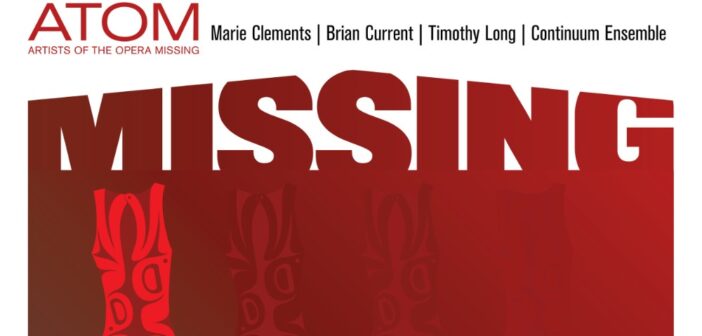
Current/Clements: Missing Caitlin Wood, Melody Courage, sopranos; Andrea Ludwig, Marion Newman, Michelle Lafferty, mezzo-sopranos; Asitha Tennekoon, tenor; Evan Korbut, baritone; Continuum Ensemble, Timothy Long, conductor Bright Shiny Things, July 2025 Missing is an 80-minute opera about missing and murdered Indigenous women and girls with a libretto by Marie Clements and music by Brian Current. It’s sung in English and Gitxsan and great care has been taken that the Gitxsan linguistic and cultural elements are accurate and appropriate. The work has some history. It’s a West Coast Canadian-based project, as its Highway of Tears and Vancouver settings suggest, and the libretto…

Share:

Lalo: Le Roi d’Ys  Judith van Wanroij, soprano; Kate Aldrich, mezzo-soprano; Cyrille Dubois, tenor; Jérôme Boutillier and Christian Helmer, baritones; Nicolas Courjal (bass); Hungarian National Philharmonic Orchestra; Hungarian National Choir; György Vashegyi, conductor Bru Zane, 2025 Édouard Lalo’s opera Le Roi d’Ys had a somewhat tortuous journey to the stage before premiering at Paris’s Opéra-Comique in 1888. In the intervening 10 years between its composition and premiere, Lalo pared it down from the traditional five acts with ballet to a very tight three-act structure lasting only an hour and 45 minutes. Also, unusually for a work that played at the…

Share:

Foccroulle/Jocelyn: Cassandra  Katarina Bradić, Susan Bickley, mezzo-sopranos; Jessica Niles, Sarah Defrise, sopranos; Paul Appleby, tenor; Joshua Hopkins, baritone; Gidon Saks, bass-baritone; La Monnaie Symphony Orchestra and Chorus, Kazushi Ono, conductor Fuga Libera, 2025 Cassandra is a 2023 opera in prologue and 13 scenes composed by Bernard Foccroulle, with libretto by Matthew Jocelyn. It weaves together the story of the Trojan Cassandra, as told by Aeschylus and others, with the story of Sandra, a climate scientist just completing her PhD about the disappearance of ice in the Antarctic. So, two women with an accurate but horrifying message that no one wants…

Share:

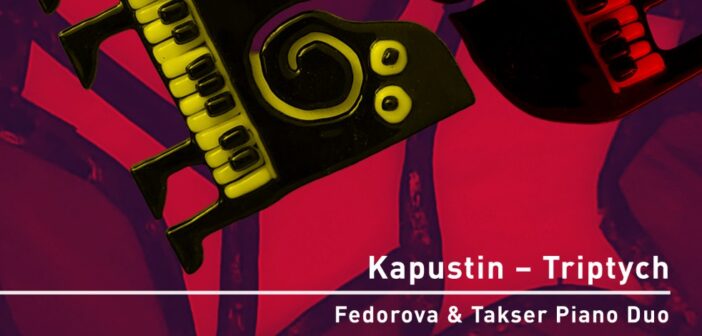
The Fedorova & Takser Piano Duo show off their eclecticism in this single release of the first official recording of a work by the late Russian composer and pianist, Nikolai Kapustin (1937-2020) known for his fusion of jazz and classical forms. Three for Two. Triptych for Two Pianos, Op. 145, was composed in 2012 but not published until 2024 by the renowned Schott publishing house.  As its name suggests, the work is divided into three movements, each of which allows the performers to show off the full extent of their abilities. The first movement stands out for its virtuosity, its…

Share:

Pianists Daria Fedorova and Ilya Takser, both graduates of the Conservatoire de musique de Montréal, form a dynamic duo who concertize across Canada. Partners in life and on stage, here they present an original repertoire of works for piano four-hands, ranging from Bach’s Sicilienne—their own four-hand transcription—to Canadian composer David McIntyre, born in 1950, via Schumann, Brahms, Debussy and many other great names in piano music. The album immediately envelops us in Edward MacDowell’s charming and generous romanticism with his Three Poems, setting the tone for all the duo’s original pieces and transcriptions. You’ve probably never heard such a romantic…

Share:

What’s this record doing on my deck? I have listened to Furtwängler’s own recordings of his overlong second symphony and have heard it performed live by Daniel Barenboim with the Berlin Philharmonic without walking out. The works spends three-quarters of an hour going nowhere. Furtwängler composed it in Switzerland after fleeing Berlin in January 1945, abandoning his musicians to a desperate fate. The work propounds motifs of fate and destiny beloved of German composers from Schumann to Strauss, alternating massive ffffs and church-organ simulations, all the tricks of the orchestral trade. There are some tender woodwind strands in the third…

Share:

The second cello concerto of Dmitri Shostakovich has never matched the first in public appeal or soloist appreciation. Premiered on the composer’s sixtieth birthday, at a concert where he was proclaimed a Hero of Socialist Labour, the concerto is ambivalent both in meaning and in its balance between soloist and orchestra. There are stretches where the cello is left to find its own way home as a huge orchestra sits idly by. Quite possibly a metaphor for Socialist Labour. Mstislav Rostropovich, for whom the work was written, made a hash of its first recording and the work has, to some…

Share:

Like every reviewer I love surprises, and nothing has surprised me more in a month of Easter Sundays than this delicate and brilliant pairing of Japanese and Viennese classical songs. The album notes are skimpy and mostly in Japanese so I’m guessing here, but I’ll credit the selection of songs as well as the performance to Misaki Kobayashi, apparently a soprano in the Berlin radio choir. The pairings are so smart they are practically symbiotic. Kobayashi opens with a springtime song by Rentaro Taki (1879-1903) and matches it with Beethoven’s little-sung Ich liebe dich. Who’d have thought? It works brilliantly.…

Share:
1 3 4 5 6 7 60