
This page is also available in / Cette page est également disponible en:
 Français (French)
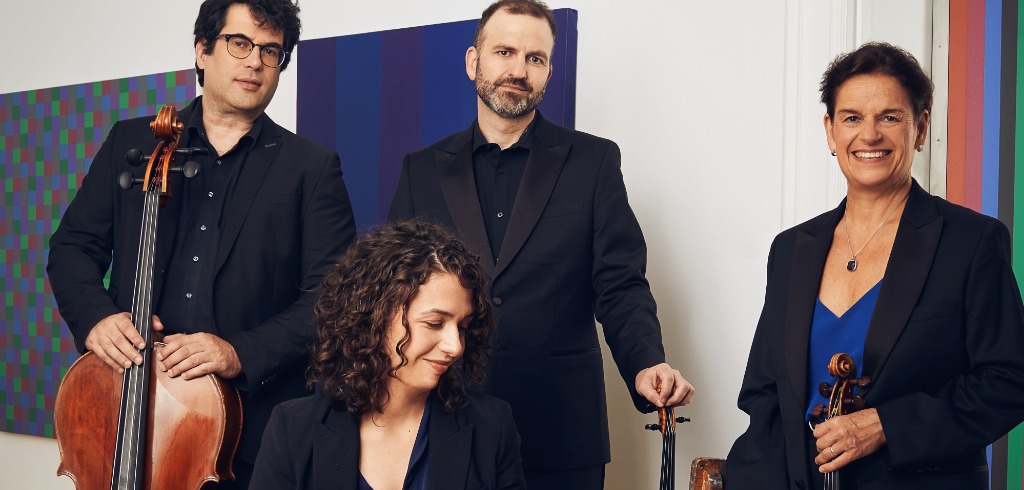
In a packed 29th season, Quatuor Molinari offers a host of promises and surprises. “It’s synonymous with both change and continuity,” explains Olga Ranzenhofer, artistic director and violinist. “The viola player Cynthia Blanchon will join us, so that will change the group’s dynamic, but we’ll stick to our mission of playing the great pieces for string quartet of the 20th and 21st centuries.” The group’s programming is rich and ambitious, mixing grand masters and new names.
The first concert of the season, Passages, is on Oct. 7 at the Conservatoire de musique de Montréal. It features two guardians of the repertoire, Béla Bartók and Dmitri Shostakovich, whose quartets are characterized by their dramatic intensity and profound exploration of sound. In Bartók, the rhythmic energy and folklore-inspired motifs merge with radical modernity, while Shostakovich has a more interior vision often imbued with a poignant gravity.
The inclusion of a work by André Boucourechliev (1925-1997) brings a different musical colouring. This lesser-known French composer offers a unique language in which you can detect the shadow of Beethoven, notably in its search for the expressive spirit. These selections are indicative of how the quartet offers audiences fertile contrast, from the much-revered to the newly-discovered.
Other events this fall will include a concert on Nov. 2 at the Guido Molinari Foundation as part of the series Music to see, a mix of music and visual arts, as well as a program in December honouring Canadian composers, including a premiere by Blair Thomson. Also, the group’s Dialogue on Stage feature plays an essential part. “These friendly meetings with the musicians, which take place before the concerts, give audiences a chance to put the works in historical and stylistic context and chat with the players in a relaxed atmosphere,” says Ranzenhofer.
Outside the concert hall the quartet has a variety of ways to connect with its audiences. Its podcast, Le studio du Quatuor Molinari with Jean Portugais, and their online video library (www.vqqm.ca) provide a chance to think and learn more about the music and go behind the scenes. With its talks, open rehearsals and its connection with young people at the Conservatoire, Quatuor Molinari continues to demystify the masterpieces of its 125-year repertoire.
Translation: Cecilia Grayson
This page is also available in / Cette page est également disponible en:
Français (French)