This page is also available in / Cette page est également disponible en:
 Français (French)
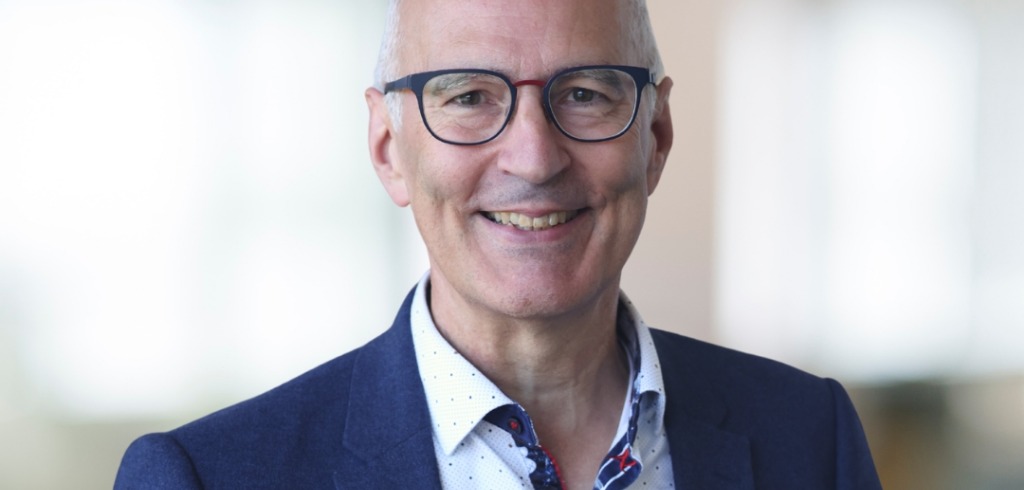
At the dawn of his second year as director of the Conservatoire de musique de Montréal, Luc Chaput looks back on a career marked by passion and a deep familiarity with the institution. “I began at the Conservatoire de Montréal as an oboe student when I was in 10th grade. I travelled twice a week from Joliette for four years, and studied pure and applied sciences in Joliette at the same time. I then made the choice to pursue music full-time.” Through his experience as a passionate student, he developed an intimate knowledge of the school’s strengths, but also of the challenges it faces.
Having returned in an administrative capacity, he is now putting this knowledge to good use. “The institution still excels as much as it did when I was a student, and I recognize the human dimension of the school that existed in the 1980s and 1990s. The institution is in good health,” Chaput says. But challenges remain, such as retaining students between secondary school, college, and university. He wants to increase representation in schools and focus on open houses to maintain the high standards that have built the Conservatory’s reputation.
One of the elements he considers unique to the Conservatory is the amount of time each student spends with his/her teacher and accompanist. “This is unique in North America and has a huge impact on academic success.” Chaput also highlights the Artist Health and Wellness Office, an anonymous and comprehensive service providing physical and psychological support to students and staff. The close relationship between staff and students is one of the Conservatory’s great strengths: “We work on-site,” he says. “My office is always open, and I walk the halls to meet with students. The team is there for them, and supports them throughout their studies. In a functional and friendly manner, we help them develop a strategy and guide them along their path. We want to do everything we can to help them succeed, and our role is to assist them as much as possible so that they can focus on their learning.”
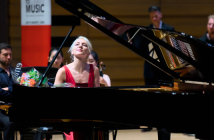
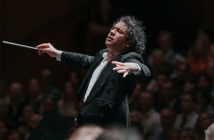
The Conservatory’s 2025-26 artistic season reflects this philosophy. Rich and diverse, it demonstrates the vitality of an institution that places its students at the heart of its mission. The Conservatory Symphony Orchestra will perform four times, under the baton of guest conductors trained in Montreal. Jean-Michel Malouf opens the season on Oct. 4 with Dvořák’s Symphony No. 6, while Jean-Marie Zeitouni conducts Poulenc’s Gloria alongside school’s choirs in November. In February, Andrei Feher will take up the baton for Brahms and Schumann, and Simon Rivard will conclude their season in March with a program based on Romeo and Juliet, a benefit concert combining music and theatre. An eagerly-awaited special concert takes place at the end of the season when Rafael Payare conducts the Orchestre symphonique des conservatoires du Québec at Maison symphonique. This concert is “a unique opportunity for young people from the conservatory network to meet and work alongside one of the greatest conductors of our time, a dynamic personality who is committed to young people,” says Chaput.
Student ensembles play a central role at the Conservatory: string orchestras, brass and percussion ensembles, baroque ensembles, choirs, jazz combos, chamber music, and song recitals. Contemporary creation is not left out: series such as Électrochoc and Multiphoniques provide a context in which student compositions can be featured. Ensembles in residence complete the picture with panache: Trio Hochelaga, Quatuor Molinari and the Paramirabo ensemble will each offer several concerts, allowing students to come into direct contact with high-level professional musicians. The opera workshop will present a program entitled Le jardin secret de Mozart (Mozart’s Secret Garden) in four performances that showcase the Conservatory’s young singers. Master classes, public rehearsals, and open houses offer the public a window into the training process.
Beyond organization and management, Chaput’s vision remains marked by a deep conviction: “You mustn’t set limits for yourself,” he says. “First, you have to dream. Dreams are what drive us forward and help us progress. I want us to stay passionate. We mustn’t be afraid to try new things and think outside the box. It’s exhilarating when it works.” This philosophy guides his actions and inspires the young musicians he works with every day throughout their training. “I tell them that they may not land their dream job right after graduation, but one thing is certain: they will get noticed. The news from our alumni proves it every year.”
In short, after Chaput’s first year at the helm, the Conservatory continues to embody a space where tradition and innovation, rigour and openness, dreams and concrete achievements come together.
www.conservatoire.gouv.qc.ca/fr/conservatoires/musiquemontreal
Translation: Eva Stone-Barney
This page is also available in / Cette page est également disponible en:
Français (French)