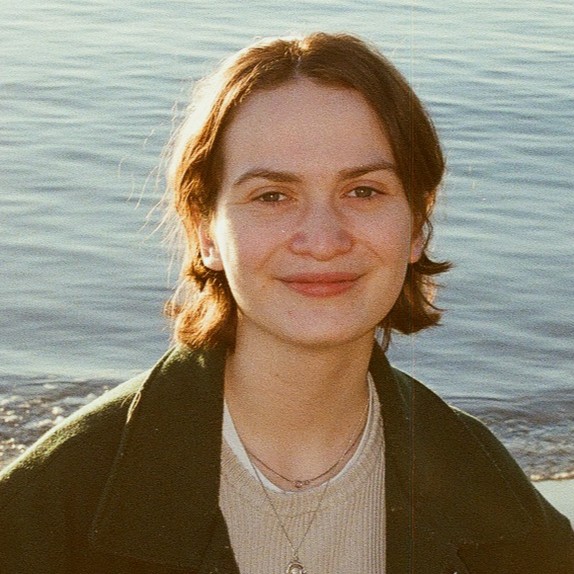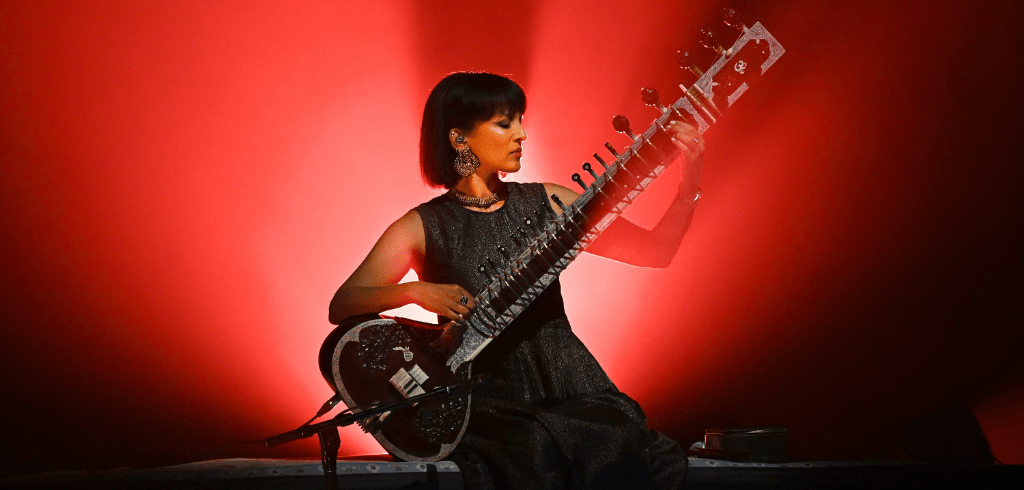

“The sitar was an important part of my life before I even played it because it was so key in my family,” says sitarist and composer Anoushka Shankar. Shankar’s father, sitar virtuoso and composer Pandit Ravi Shankar, played a pivotal role in bringing the world’s attention to Hindustani classical music. He was also A. Shankar’s first sitar teacher.
Growing up, Shankar was surrounded by a variety of artistic influences. Her parents, who were from different areas of India, both passed down a love for the music and dance styles from their regions. “I listened to a mix of Hindustani, Carnatic and Western classical music in the house, so I think all of that had quite an imprint” she says. “And I mention that because, very often in India, that divide isn’t necessarily crossed, especially in formative years.”
In her teenage years, Shankar started to make her own music choices, often seeking out sounds that were distinct from classical music traditions. “I was really into different forms of electronic music; I loved Metallica, Rage Against the Machine, a little bit of Nine Inch Nails—” she says. “I grew up in California, so [I listened to] a lot of 90s R&B, hip-hop and jazz. It was a big old cocktail, but the most formative was these various forms of classical music styles.”
These influences inspired Shankar to explore the sitar’s scope. She makes a comparison to instruments like the guitar or piano that are no longer associated with one musical style and envisions a similar future for the sitar. “I’ve always been really interested in continuing that evolution and thinking of [the sitar]in terms of an instrument. It’s not the music tradition.” Over the years, Shankar has blended genres within her music, collaborating with artists such as composer and musician Karsh Kale, electronic music producer Gold Panda, percussionist Manu Delago and many others.
She encourages emerging artists to find a similar freedom in their own creations. “Whatever form of music or art you’re wanting to make, it has value,” she says. “If you’re wanting to make it, that means someone out there wants to hear it exactly the way you want to make it. Regardless of any cultural weight or trappings, don’t hold back from what it is you feel you need to make. It’s important.”
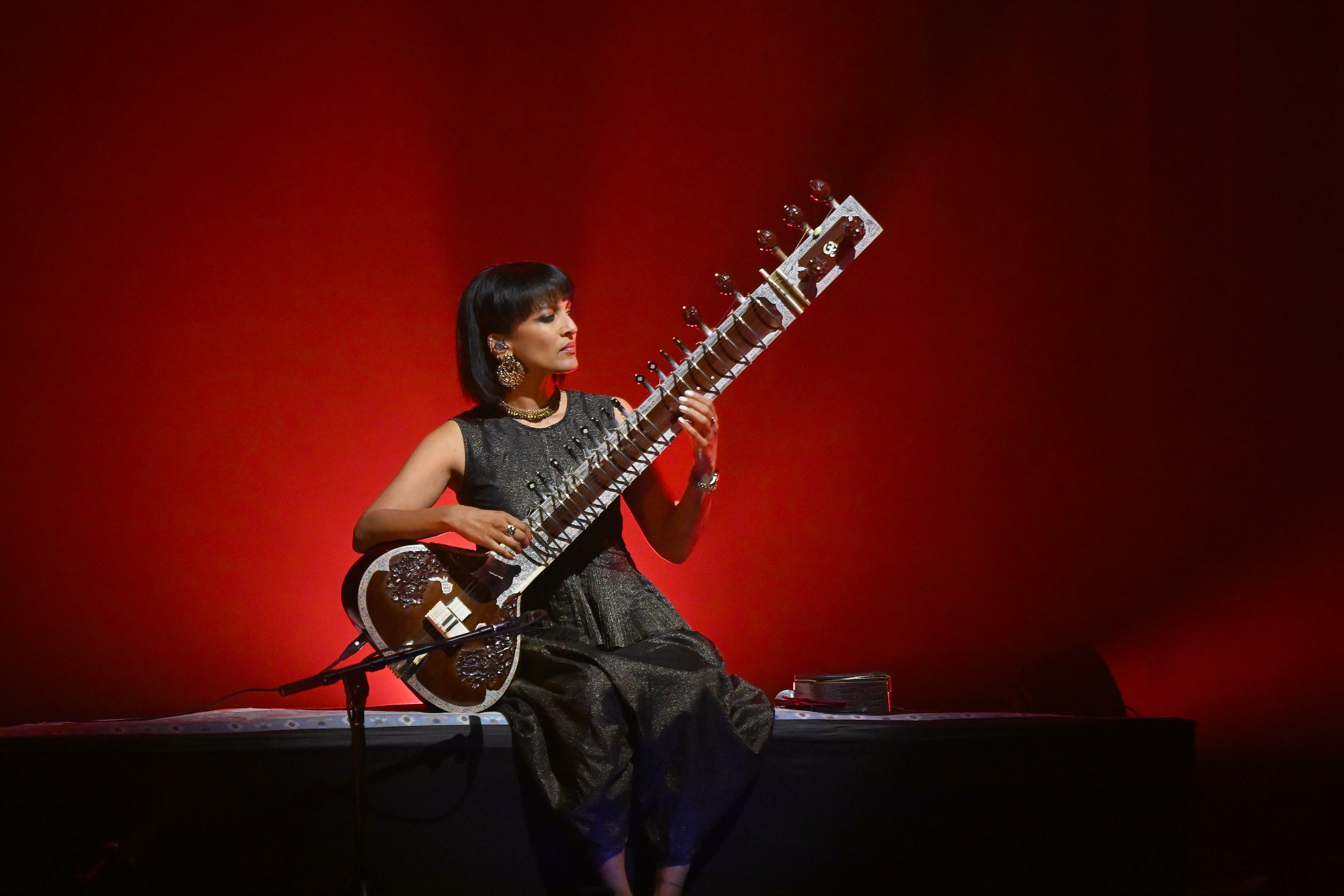
Photo: Jag Gundu
Approaching Legacy with a Light Touch
On May 21 & 23, Shankar makes her Toronto Symphony Orchestra debut, performing her father’s Sitar Concerto No. 2., which she calls his “most ambitious orchestral work. … Each movement is based on a raga, so … it’s almost like the orchestra is playing Indian classical music, but the form is obviously what makes it feel so unique.”
The orchestra will also perform the Canadian premiere of “Meetings Along the Edge” from Passages, a collaboration between Philip Glass and Pandit Ravi Shankar. Shankar shares that she has a deep love for this album: “It’s really special. And [this piece is]a beautiful meeting of traditions.”
With this concert, the idea of legacy enters the conversation. “Legacy and all of that has to be very light touch,” says Shankar. “I don’t wear it as a weight that there’s something to carry forward and pass on, for better or worse, because there are some really beautiful things to pass on that are very important. But I feel like this chapter has been more about exploring my own voice and my own creativity.”
This philosophy, perhaps, can be traced back to Shankar’s musical upbringing. “I was shown that [Indian classical music] has always been a living tradition. It’s always present, it’s always of the moment while being connected to a thread that’s ancient. So, I think with every generation, as it’s passed on, it takes on a piece of something. And I feel like that helps me feel confident in doing it my way.”
And with over 30 years of live performance and 14 Grammy nominations, Shankar proves that honouring your vision and story will resonate with audiences.
Anoushka Shankar joins the Toronto Symphony Orchestra on May 21 & 23. For more information, visit www.tso.ca