Over every mountain-top
Lies peace,
In every tree-top
You scarcely feel
A breath of wind;
The little birds are hushed in the wood.
Wait, soon you too
Will be at peace.
Johann Wolfgang von Goethe, The Book of Lieder, trans. Richard Stokes (London: Faber, 2005).
The great German polymath, Johann Wolfgang von Goethe wrote these lines, The Wanderer’s Nightsong in 1776. One of his most famous poems, it masterfully delivers a feeling of all-enveloping serenity, not even broken by birdsong. Over 50 years later, in 1828 Franz Schubert (1797–1828) wrote his last sonata (Bb major, D. 960) months before his death.
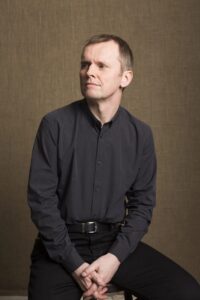
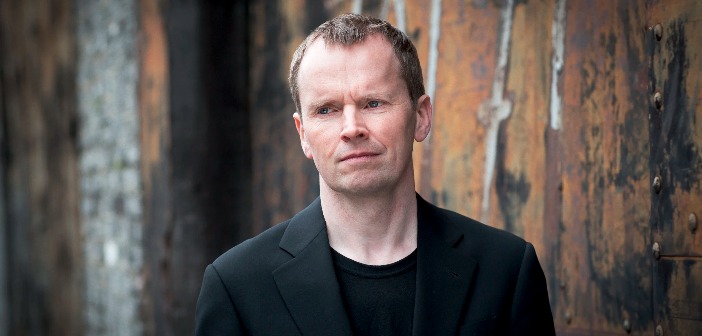
Steven Osborne
Photo: Ben Ealovega
Its first movement, just like Goethe’s poem (which Schubert incidentally set to music), slows down time and, if played right, sinks the audience into the same quiet reverie. It was with this sonata that the anticipated Scottish pianist, Steven Osborne opened his recital for the Ladies’ Morning Musical Club at Montreal’s Oscar Peterson Concert Hall on March 1. Schubert’s last, and arguably greatest sonata was seemingly not enough of a challenge for Osborne, as he filled out the second half with the monumental Variations on a Waltz by Anton Diabelli, op. 120 (written in 1823) by Ludwig van Beethoven (1770–1827).
What you missed
Goethe was an early writer in the proto-Romantic Sturm und Drang (storm and stress) movement that emphasized individuality and strong emotion. Both Schubert and Beethoven (in his later works) found themselves at the tail end of Sturm und Drang in music. Schubert’s sonata runs the emotional paces from serenity to feverish agitation and joy. There’s a danger of losing the audience given the quiet nature and length of the first movement, the almost mandatory repeats, and the very sombre tempo of the second movement.
Osborne did not have to worry about this. He set a very honest, approachable tone with a brief verbal introduction to the piece. Once he began playing, although it took several minutes, the audience settled into a kind of listening that could be described as almost rapturous. He even managed to force the ubiquitous candy-openers and plastic-water-bottle users not to stir during the entire second movement—a rarity today.
As the sonata continued with its virtuosic, sometimes rustic third and fourth movements, Osborne went all in. Pianissimo trills were on the edge of what is executable and sudden sforzatos made the audience jump. The quick, dotted-rhythm octave jumps in the last movement were attacked head on.
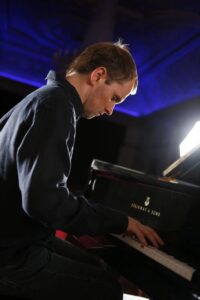
Photo: Ben Ealovega
Beethoven’s variations were no less inspiring. Osborne warned the audience that the work is long (he took about 50 minutes), but listeners were engaged to the end. These particular variations arose from a challenge issued by editor and publisher Anton Diabelli (1781–1858) who asked a raft of composers to write a variation on a given theme. Beethoven refused, but subsequently wrote 32 variations all on his own, resulting in one of the great piano works in the repertoire.
Pre-Romantic emotion is very evident in the Variations, but what fascinates is how we can hear their resonance in practically all major piano writing since. Chopin’s filigree, Bartók’s angular chordal playing, Prokofiev’s percussiveness, and especially Liszt’s virtuosity are all foreshadowed. I see these variations as being the grandparent of much of the writing for piano that came after.
Osborne’s performance of the Beethoven was thus a microcosm of what he is capable of as a pianist. He offered up bravura, passionate melodies, comic interludes (with a poignant, mid-playing nod to the audience), and introspection.
Gripes
Osborne’s all-in, intuitive approach results in some (very infrequent) missed notes. The 20th and 21st centuries have created listeners who expect recording-level accuracy from live performances. I believe most listeners, myself included, prefer Osborne’s approach of pushing to the boundaries of what is possible, even if that means a sometimes inaudible note in a trill or adjacent hangers-on in an octave jump. This conveys a dedication to the message of the music rather than the caution that is needed to get everything perfect. His more frequent use of the una corda (left) pedal was surprising to those who have been taught to use it only occasionally for added colour.
When a pianist of Osborne’s calibre comes to play in Montreal, it comes with the significant baggage of expectations. This can be difficult for the artist, as they must try and live up to them. But expectation can build up excitement among listeners which reaches its crescendo at the performance. The latter was the case for Sunday’s performance. The expectation was palpable in the full hall—many audience members clearly knew the works intimately, but Osborne managed to exceed expectations and do more than justice to two challenging, seminal works of the piano repertoire.
LMMC continues its 2025-26 season with the Czech group Trio Bohémo on March 22.