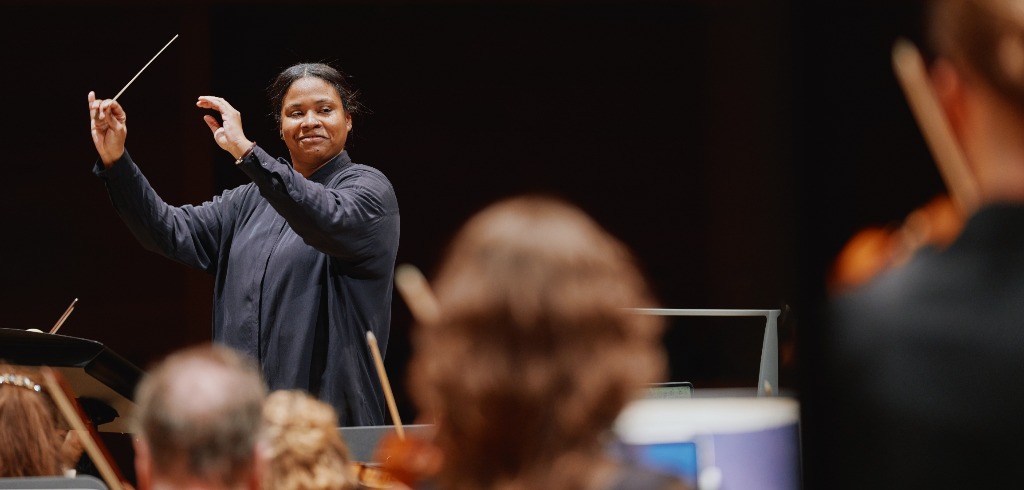

Last year, I had the pleasure of witnessing—and writing about—Glass Marcano’s Canadian debut with Orchestre Métropolitan (OM), here in Montreal. The Venezuelan conductor’s return to Maison Symphonique with OM—and a new collaboration with pianist Tony Siqi Yun—was just as rewarding, with a diverse program of Dvořák, Prokofiev and Ortiz. Marcano’s humble origins have foregrounded her hard work and determination. She is a multitalented powerhouse whose accomplishments extend to fields outside of music like law. This concert proved that her energy remains undiminished since her last Montreal appearance.
Marcano and the OM kicked off the afternoon with Antonín Dvořák’s Symphony No. 9 in E minor, “From the New World.” Living in the US in 1893, the Czech composer allegedly drew on Indigenous and African American music styles, aiming to shape a future American symphonic tradition rooted in genres from people of colour—a notion deemed “preposterous” in a segregated society.
Still, the extent of those influences remains contested, with Dvořák himself supposedly later reneging on his claim that he used “Indian and American motifs” in the symphony. Regardless, Harry T. Burleigh, a pupil who introduced many African American spirituals to Dvořák, surely shaped the “spirit” from which he wrote, even if no native American melodies were directly incorporated.
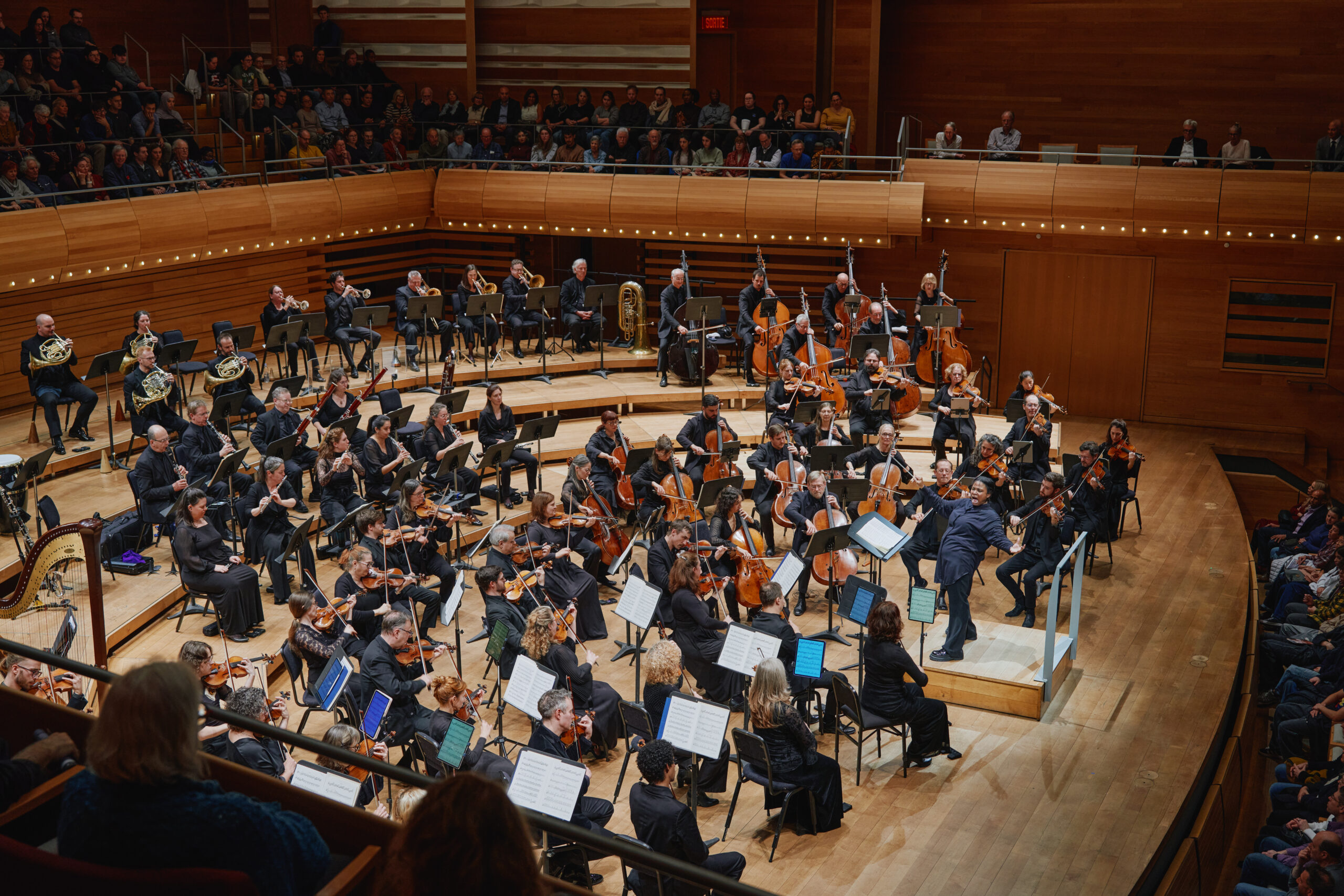
Orchestre Métropolitan conducted by Glass Marcano
In Dvořák’s symphony, Marcano effectively elicited the sentiments of nostalgia and tragedy she prefaced in her opening remarks. The first movement opened with slow and melancholic strings before gaining in momentum with horns and rapid dynamic swells. Higher strings offered some folksy and dance-like melodies at a beautiful leisurely pace, later echoed in other sections of the orchestra.
The second movement, Largo, contains one of Dvořák’s most famous melodies. Played by the English horn, the “Goin’ Home’” theme (named and given lyrics by another pupil after Dvořák’s death) is achingly slow and emotional, familiar and distant at once, reminiscent of the man an ocean away from home.
Marcano’s rendition was gentle and clean, the movement full of hushed harmonies and countermelodies. I only wish the English horn had held the fourth note of the main theme for even a split second longer each time, matching the written dotted-eighth and sixteenth rhythm rather than two eighths—a simple change that would’ve deepened yearning and nostalgia evoked in the Largo, still used as a hymn to commemorate the dead.
The faster scherzo movement, driven by intense brasses and timpani rolls, felt unpredictable, yet vivid. The flute and piccolo reminded me of fluttering birds, and Marcano’s now-smoother movements paved the way towards the wild western-tinged phrases with hints of Dvořák’s Slavic nationalism.
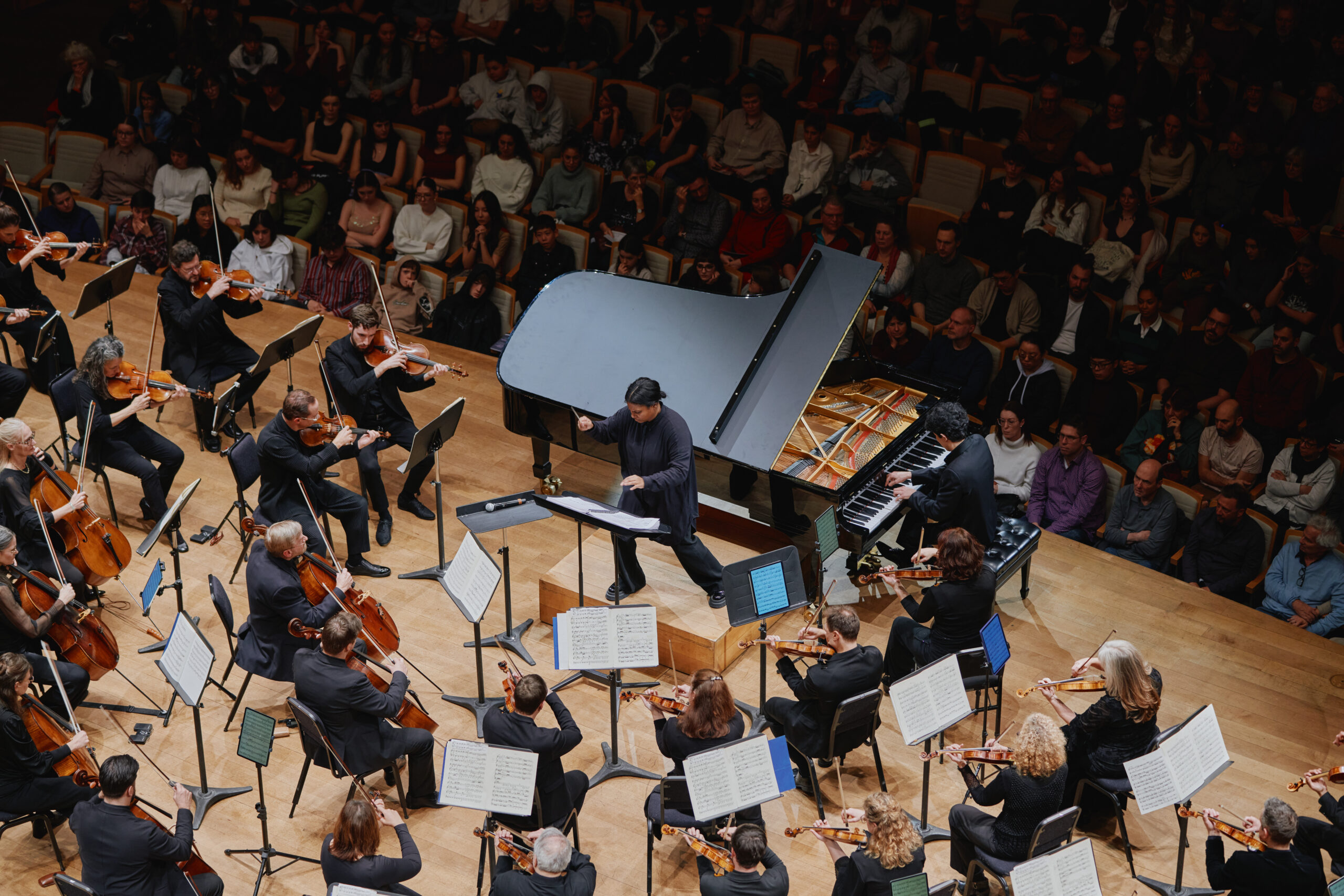
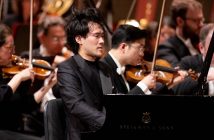
Pianist Tony Siqi Yun with Orchestre Métropolitan conducted by Glass Marcano
The final movement began with a Jaws-like theme, the low strings sawing out a minor-second motif before swelling and igniting the iconic horn theme, striking and punching. With renewed vigour, OM wove the Largo themes and passages from the scherzo back into the movement, recapitulating the entirety of Dvořák’s piece before a dramatic coda with piercing brass, frantic strings, and thundering timpani—neatly swept up by Marcano in one big flourish.
Toronto pianist Tony Siqi Yun was on hand to play Sergei Prokofiev’s Piano Concerto No. 3 in C major. At 23, he is a recent graduate of Julliard and has already won several prestigious awards world-wide. This is not his first rodeo with OM: his mentor is Yannick Nézet-Séguin, and they’ve played together with the orchestra at Carnegie Hall. The training shows.
From its ever-accelerating first movement, to the creeping Rhapsody-in-Blue-dance (and perhaps he and Gershwin influenced each other’s knack for blending genres, as musical contemporaries) of the second, to the “mocking” back-and-forth “quarrel” (as per Prokofiev) of the third, virtuosity was demanded. Prokofiev himself was a brilliant pianist, and the concerto proved both a challenge to write and play.
Pianist Tony Siqi Yun
Yun’s phrasing and control of the piece were delightful, even if at times solo passages were partially overshadowed by the strings. His interpretation of the concerto was masterful and incredibly unpretentious. That’s not to say there was no drama in his performance, but his style seemed almost casual, his attention to the orchestra evident. He followed up the concerto with a slow, romantic, and too-short encore before exiting to loud applause.
Marcano saluted fellow Latin American Gabriela Ortiz by ending the concert with the Mexican composer’s Kauyumari (2021). Meaning “blue deer,” kauyumari is a spiritual guide for the Huichol people of Mexico, who believe the blue deer transforms into a hallucinogenic cactus called peyote that, once symbolically hunted and ingested, allows the Huichol to communicate with their ancestors and to guard the planet.
Though brief, this piece was very enjoyable. Soft percussion opened the piece, followed by muted brass and a sharp, echoed trumpet. The introduction felt like a cinematic sunrise, each instrument waking up one by one, a cascade of a simple melody. Complex and percussive rhythms began to overlap, Marcano carrying the evolving theme through to the grand end.
As Marcano returned to the stage, she had changed into a jacket adorned with the Venezuelan flag. She and the OM offered an orchestral rendition of the Venezuelan song “Alma Llanera” as a rhythmic and swaying encore. Her pride was infectious, with audience members bearing Venezuelan flags rising to sing along, sweetly closing the night.
For more on Orchestre Métropolitan’s season visit www.orchestremetropolitain.com/en/