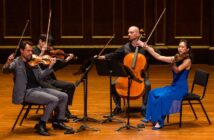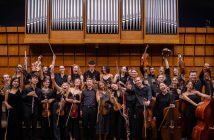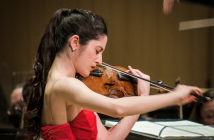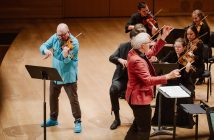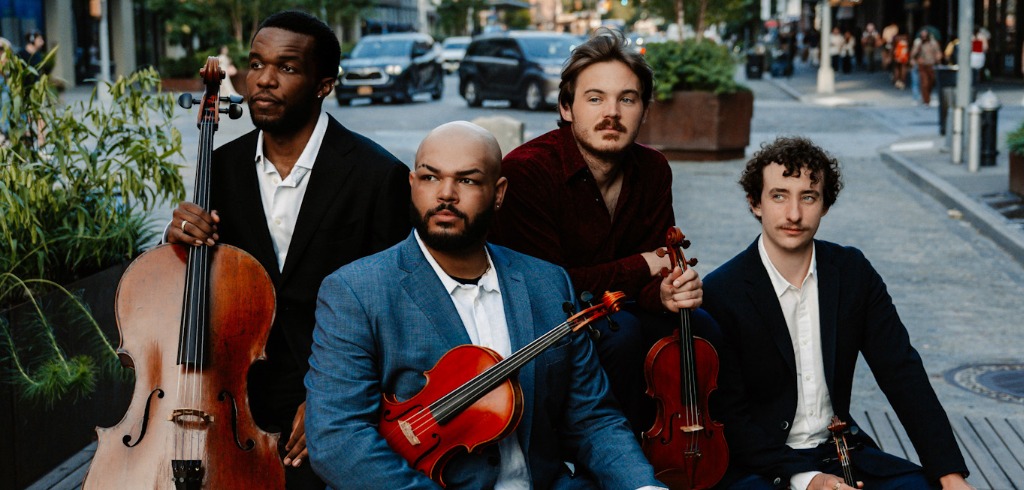
The Ladies’ Morning Music Club (LMMC) has a somewhat anachronistic name, betraying its founding more than 100 years ago. It grew out of a need to satisfy Montreal’s thirst for music, and the organization has long shepherded the musical taste of the metropolis by bringing in major solo artists and chamber groups. Their concert series have been particularly important in facilitating this city’s relationship with the string quartet, and the Sunday afternoon performance of the Isidore String Quartet on Sept. 28th in Oscar Peterson Hall was another page in that story.
The quartet, returning to Montreal after their success here several years ago, aptly raised the curtain with Joseph Haydn’s String Quartet, op. 76, No. 4 (“Sunrise”), followed by Beethoven’s Quartet in B-flat major, Op. 18, No. 6. After the intermission, they gave a resounding performance of Dvořák’s Quartet in G major, Op. 106, No. 13.
Speaking of quartet history, Dvořák’s G-major quartet was first premiered in Prague in 1896, which was coincidentally the very same year that the first major, international string quartet, the Kneisel Quartet—one of the preeminent ensembles of the day—was invited by LMMC to perform in Montreal. Franz Kneisel, violinist and namesake of the ensemble, had been hired to teach at the newly formed Juilliard School of Music, which eventually produced the world-renowned Juilliard Quartet, which in turn had as one of its prominent members Isidore Cohen (who joined the quartet in 1958) for whom the present-day Isidore Quartet is named.
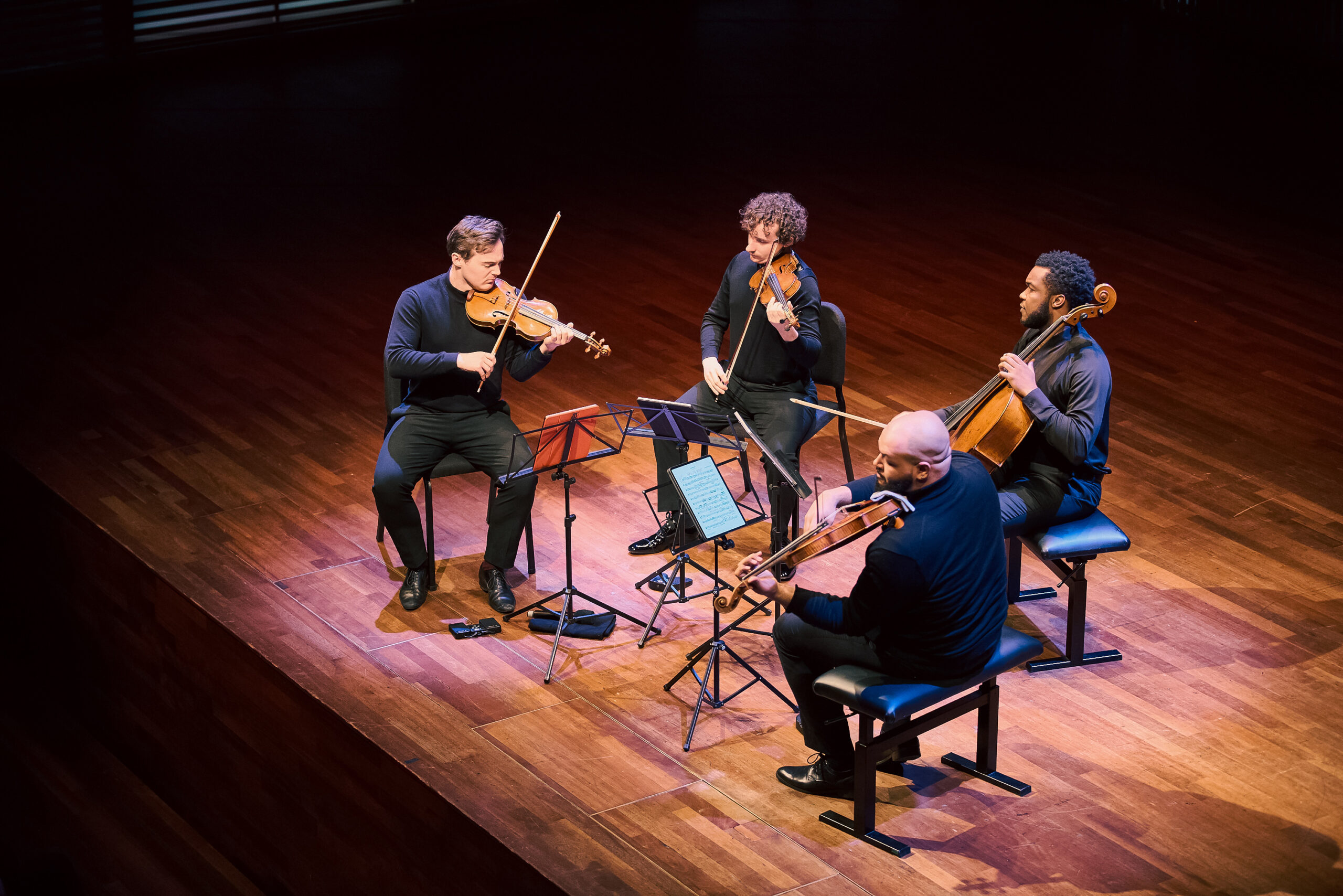
Isidore String Quartet (2024). Photo: Eduardus Lee
What you missed
Much of the above string-quartet history is ancient, but there is nothing ancient about the Isidore Quartet—their oldest member is only 26. Despite their youth, they played with a clear vision and strong ideas about how they wanted the music to land with the audience. The ensemble playing was immaculate, and it was heartwarming to hear a wide range of strongly felt expressiveness without the spectacle of over–the–top theatricalities that often accompany it.
Each of the works featured a nod to folk music. It has been suggested Haydn’s quartet references an English folk tune, Beethoven’s evokes the Viennese countryside, and Dvořák’s composition clearly delves into the Czech rusticality he so loved. The Isidore Quartet charmingly served us each of these on a platter.
Dvořák’s quartet was written at the threshold of the 20th century, but the composer was rooted firmly in the Romantic tradition of which he was the tail end. Nevertheless, the Isidore players were able to look forward instead of back, and delivered an almost modernistic take by pushing some boundaries with the verve of their attack and sound quality—at times raw and certainly unapologetic.
The Isidore Quartet rotated its two violinists between first and second violin, and it was a fascinating experience to hear the difference in sound due to the change.
Gripes
Liberties were taken. While this is often a good thing, I had to go home and check whether the first movement of Haydn’s work is written in a single tempo—it is, there are no prescribed changes. The Isidore played almost too fast and loose with the contrast between the “sunrise” theme and the more involved passages. Perhaps it took me a while to settle down in my chair, but it took two movements for the ensemble to really draw their audience in. Once it did, however, one could see how listeners became ever more engaged.
Dvořák purists might argue that the interpretation bordered on chaotic, but quite frankly, I would rather have chaotic than academic. The reaction of the audience would suggest they agreed with me.
Overall, it is encouraging to hear artists relatively early on in their career who have developed a thoughtful, committed interpretation that shows they are not afraid to fill out the blueprint given by the composer, even at the risk of stepping on some toes.
The LMMC continues its 2025-26 season with another solid offering in the Verona Quartet and pianist Henry Kramer on Oct. 19th.