
This page is also available in / Cette page est également disponible en:
 Français (French)
-
Chandos3
Many composers have tried to improve on Schubert. Mahler made a string-orchestra version of the Death and the Maiden string quartet, Joseph Joachim orchestrated a four-hand piano sonata, Liszt made the Wanderer Fantasy into something resembling a piano concerto. Even atonal Anton von Webern had a go. All with the best of intentions and without harm to the crystalline original, but you do wonder what value they added. Schubert, like apple strudel, does not need sweetener.
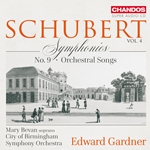 What we have on this album are little-known orchestral settings by famous composers of four perfect songs. Benjamin Britten tacked on two clarinets and strings to the Trout. Max Reger insinuated horn and woodwind in Im Abendrot. The wonderful Geheimes (Secret) is shared by Brahms with strings and horn. And Berlioz pulls out every single one of the orchestral stops in the galloping Erlkönig.
Soprano Mary Bevan gives radiant voice to these settings, contriving with great poise not to get trampled underfoot by Berlioz or romantically compromised by Reger. The Britten score, dated 1942, is emotionally detached, not much interested in making a catch. Sweetest of all is a voice-and-ensemble Romanze that Schubert composed as an entr’acte in Rosamunde, perfect in itself.
The accompaniment comes from Edward Gardner and the high-quality City of Birmingham Symphony Orchestra. Once the songs are done, they let themselves down badly in the final tracks with a pedestrian account of Schubert’s Great C Major Symphony, falling roughly midway between Beecham grandeur and Gardiner gyrations. This performance lacks character. Schubert needs to leap off the page.
This page is also available in / Cette page est également disponible en:
Français (French)